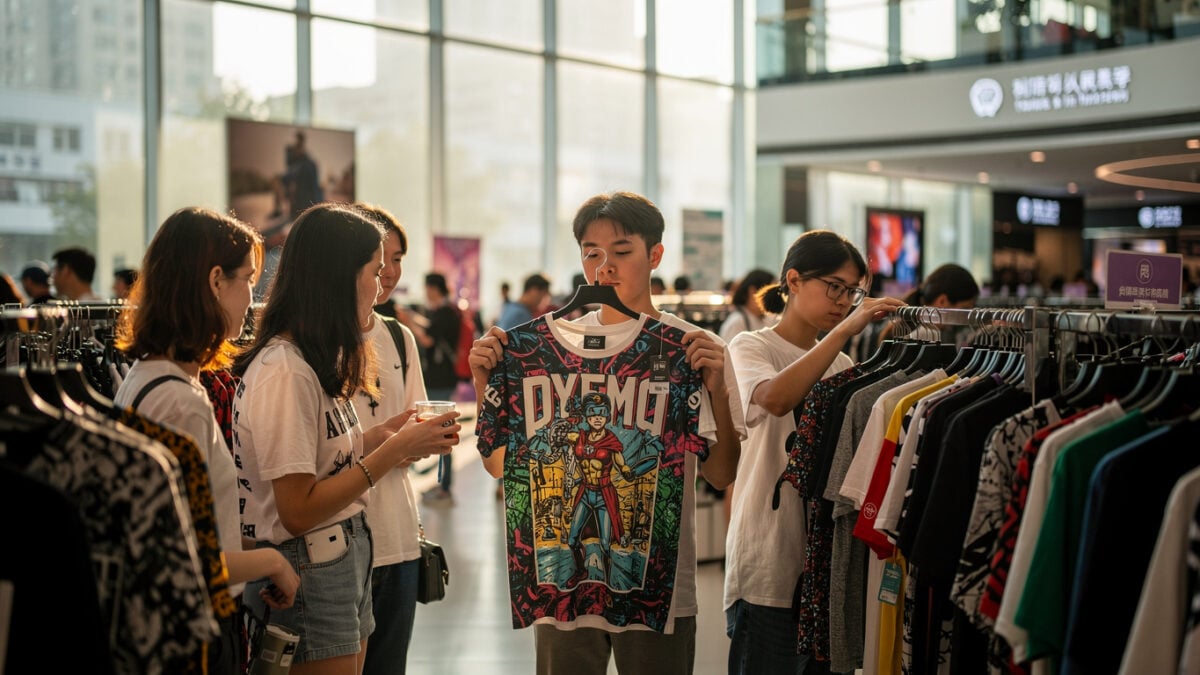
WEGO, a Tokyo-based fashion retailer, canceled its My Hero Academia clothing collaboration on September 12 after a consumer backlash in China over the September 18 launch date, which fell on the 95th anniversary of the Mukden Incident. The Japanese parent company cited “various reasons” for the withdrawal, while its Chinese subsidiary issued a formal apology on September 11, acknowledging that the parent had not sufficiently vetted the collaboration.
The episode is the latest in a series of Chinese consumer backlashes against Japanese brands, driven by deep-seated historical sensitivities. It raises immediate questions about whether foreign firms will now systematically avoid sensitive anniversaries in their marketing calendars.
Chinese social media users identified the character name Maruta Shiga as problematic. The launch date was September 18, the 95th anniversary of the Mukden Incident. Within hours of WEGO’s announcement of a My Hero Academia-themed clothing range, these users had connected the two — the “maruta” term once used for Imperial Japan’s human experiment subjects, the date that marks the start of Japan’s invasion of Manchuria — and a fashion collaboration designed to court a new generation of mainland shoppers was already coming apart.
The backlash forced WEGO’s Chinese subsidiary to apologize late on September 11, and the parent company announced the cancellation on September 12. The speed of the reversal illuminated something that goes beyond a single product line. It showed how a marketing calendar that ignores China’s historical memory can turn an ordinary launch into a reputational crisis overnight. The question now is whether WEGO’s retreat is a one-off misstep, or the first sign that Japanese brands will have to screen every launch date against a century of history.
The apology that admitted a vetting failure
In its apology, WEGO’s China subsidiary said the Japanese parent had not “sufficiently vetted the collaboration’s content” before the announcement. It is a rare public acknowledgment that a brand’s internal review process missed a known sensitivity — and it points to a recurring problem for Japanese firms in China, where product decisions made in Tokyo can detonate on Weibo within minutes.
This particular backlash was unusually explosive because the launch date coincided with the 95th anniversary of the Mukden Incident, while the same My Hero Academia franchise had been subject to Chinese consumer boycotts since 2020, which consumers attributed to character names interpreted as references to wartime experiments. The combination of a symbolic anniversary, an anime already marked as controversial, and WEGO’s expanding mainland presence — including a flagship store set to open in Shanghai on September 29 — led some online commenters to view the timing as deliberate, even though the company’s apology stopped short of explaining the date choice.
The sequence below shows how a single date and a character name converged into a corporate retreat.
Wu Qianzhou, who studies consumer culture at the University of California, Davis, notes that “nationalism is not the primary determinant in purchasing decisions.” But when history is made visible in marketing, he says, brand risk spikes. Kendra Schaefer of Trivium China describes a pattern in which online backlash translates into coordinated consumer pressure, forcing companies to react quickly or face lasting reputational damage. Nikkei Asia’s editorial analysis calls it a dual-market problem: a product decision made for Japan can trigger China-facing backlash immediately.
The informal regulation layer that foreign brands still misread
The cancellation is the surface event. The deeper mechanism is that consumer nationalism in China now functions as an informal layer of brand risk control, one that activates when a launch date or character name connects to an already loaded historical memory. The backlash is rarely about the product itself. It is about whether a company appeared to ignore a boundary Chinese consumers already treat as settled.
Analysts at the Brookings Institution describe this as a market-discipline mechanism that works most effectively when official politics and online sentiment align. For Japanese firms, the risk is structural: a marketing calendar drafted in Tokyo cannot assume the same calendar carries no meaning in Shanghai. September 18 is a routine Friday in Japan. In China it is a day of remembrance that has derailed product launches before.
WEGO’s Shanghai Huaihai Road flagship is still scheduled to open on September 29. Whether it does so without incident will be the first indication of whether the company can move past this month — or whether the calendar risk that brought down a T-shirt collaboration now extends to an entire storefront.
Beyond the headline
The Pattern
This is part of a recurring China market pattern in which anniversaries and historical references become commercial tripwires. The practical lesson for brands is that the backlash is rarely about a single product; it is about whether the company seems to have ignored a known historical sensitivity that consumers already treat as off-limits.
The Bigger Picture
The deeper mechanism is that consumer nationalism in China now acts as an informal regulatory layer on top of normal brand risk controls. Companies can survive ordinary criticism, but they struggle when online outrage links a product decision to a date or symbol already loaded with historical meaning.
The Reach
For Western retailers in China, the mechanism is calendar risk: a routine launch schedule can collide with a politically charged anniversary and instantly reframe the campaign as disrespectful. The implication for brand managers is not abstract diplomacy but the need for stricter local review of release dates, naming, and creative assets.
What the WEGO withdrawal means for four kinds of decision-maker
With WEGO’s flagship store opening in Shanghai still scheduled for September 29, the immediate question is whether the brand’s China launch can proceed without further incident — and what other companies must learn before they face a similar calendar collision.
- Western fashion brand manager with China operations
You need to re-evaluate your product launch calendar, naming conventions, and creative asset vetting processes for China now. The WEGO case shows that a release date alone can trigger a boycott. Build a mandatory review step that screens every campaign against known historical anniversaries and sensitive character associations before anything goes public.
- Western investor in Japanese consumer brands with China exposure
Ask portfolio companies to show you their risk management protocols for historical and cultural sensitivities in China. Revenue disruptions from backlash are often sudden and severe. Factor the cost of a potential product cancellation and reputational repair into your valuation models for any brand with a growing China footprint.
- Global IP rights holder considering licensing in China
Conduct thorough due diligence on the historical and cultural baggage of your IP before entering a Chinese licensing agreement. The My Hero Academia franchise had already weathered a 2020 boycott; that history resurfaced the moment the WEGO collaboration was announced. If your IP carries past controversies in China, a new partner may inherit them with the first product launch.
- Western supply chain manager for apparel sourcing from East Asia
Sudden product cancellations can disrupt production schedules, create excess inventory, and strain supplier relationships. Build greater flexibility into your production timelines and contracts for China-bound products. Include clauses that anticipate last-minute withdrawals triggered by unforeseen cultural or historical sensitivities, not just quality or delivery defaults.
Explainer
- WEGO
- A Tokyo-based fashion retailer with a growing mainland China presence. It operates several hundred stores in Japan and has been expanding into East Asian markets. In 2026 it planned to open a flagship store on Shanghai’s Huaihai Road, a move that increased its visibility and vulnerability to Chinese consumer sentiment.
- My Hero Academia
- A globally popular Japanese manga and anime franchise. Since 2020 it has been caught in Chinese consumer boycotts after character names were interpreted as references to Imperial Japan’s wartime human experimentation units. Controversy has resurfaced each time new licensing deals bring the franchise back into the Chinese market.
- Mukden Incident
- A staged explosion on a Japanese-owned railway near Mukden (now Shenyang) on September 18, 1931, used as a pretext for Japan’s invasion of Northeast China. The date remains a national day of humiliation in China. Anniversaries are marked officially and popularly, and any foreign brand scheduling a launch on that date risks immediate consumer backlash.
- Maruta Shiga
- A character name in the My Hero Academia franchise that Chinese social media users identified as problematic during the WEGO backlash. “Maruta” was the term Imperial Japanese forces used for human test subjects in biological warfare units. Some Chinese social media users also claimed the surname Shiga alluded to bacteriologist Kiyoshi Shiga, though this connection has not been independently verified. The name, combined with the launch date, turned the WEGO collaboration into a flashpoint.
RELATED STORIES