Britain widened its Saudi Arabia travel advice on 11 October 2026, adding Jeddah, Dammam and every Saudi airport except Medina International Airport to its advice against all but essential travel. The Foreign, Commonwealth and Development Office widened the warning the day after an attack on King Khalid International Airport in Riyadh. The U.S. Mission Saudi Arabia said it was aware of attacks on the airport and told its citizens to avoid the area.
No airport was closed by the order, and no visa rule changed with it. What changed is who will insure the trip — and what happens when nobody will.
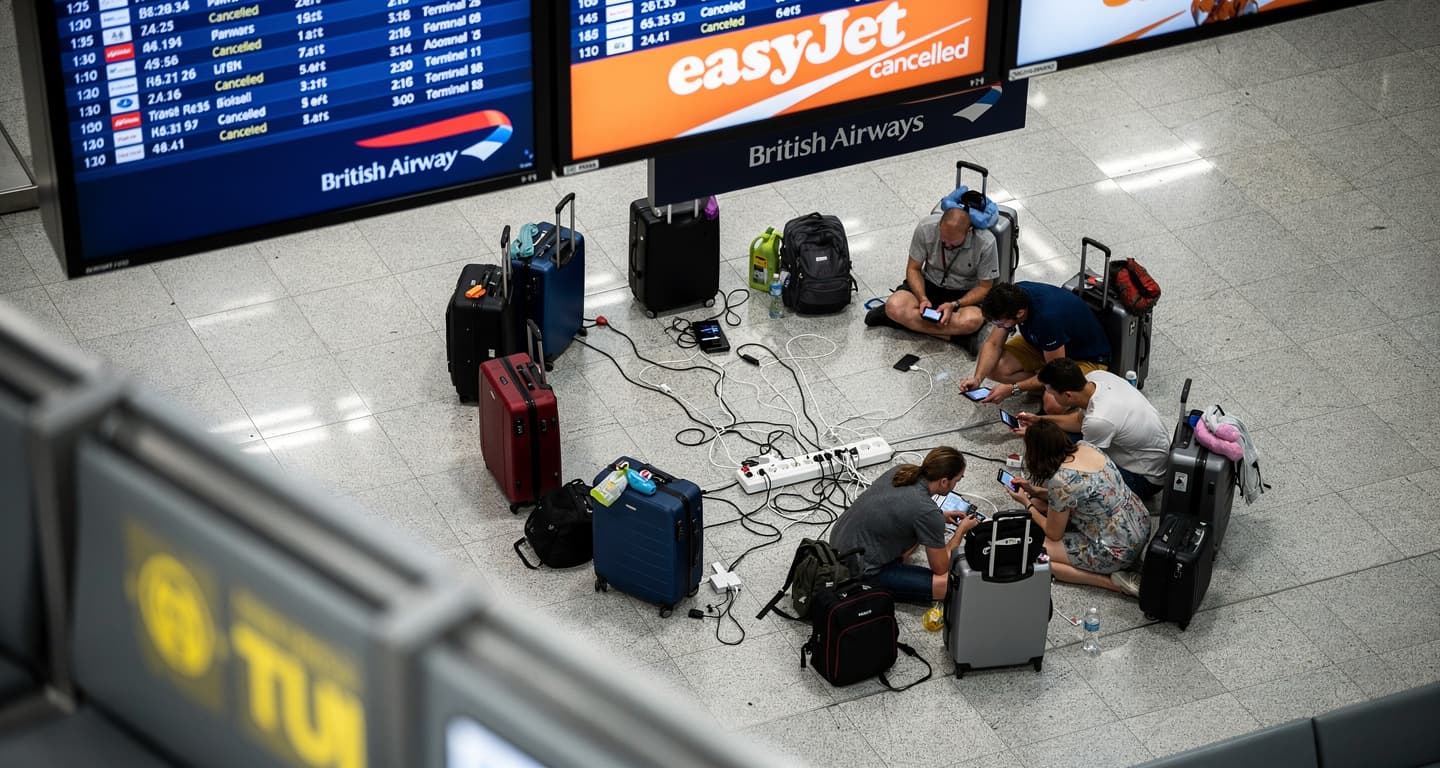
At King Khalid International Airport in Riyadh, flights stopped on 10 October 2026. According to the Saudi General Authority of Civil Aviation and Reuters, the site was targeted and operations were suspended until further notice. The U.S. Mission told Americans to stay away from the airport and the streets around it.
Britain’s answer came the next day, and it grounded nothing.
The Foreign, Commonwealth and Development Office widened its warning rather than close a border. That is the shape of travel risk now: the paperwork moves faster than the aircraft. An advisory tells insurers and employers how to price a trip. It does not cancel a seat or refund a fare.
So the choice falls back on the traveller. Fly through a gateway your policy may no longer cover, reroute to the one airport Britain left off the list, or leave the country by road. Each option costs something different, and none of them is free.
What the guidance will not give you is a date. When it lifts, and on what security condition, stays unpublished.
The advice reaches every gateway but one
Riyadh’s airport was the target. Reuters reported at least 12 people killed and more than 300 wounded, citing Saudi authorities, and said flights were diverted as operations stopped. Other outlets gave different tolls, including at least 14 killed. The Saudi General Authority of Civil Aviation called the site targeted and suspended operations until further notice.
Two tiers decide outcomes here. Britain’s all but essential travel line sits below a full ban, and that single step is what insurers and tour operators read first. It shifts the risk. It compels nothing.
Standard cover can collapse the moment you travel against advice. Most policies carry a war-risk exclusion, and terrorism or civil unrest clauses do the same work. The wording follows the route, not your intentions.
Medina is the exception, and it is a narrow one.
Medina International Airport is the only exemption, and it stops at the airport itself. The city, the province and every other Saudi gateway stay inside the warning. Landing there clears nothing on the route onward.
Entry rules did not move with the warning. The annual tourist eVisa covers Umrah but not Hajj, allows multiple entries and caps your stay at 90 days. Re-check it close to departure, because visa rules shift without notice.
Washington runs its own, tighter rules. The U.S. Mission security alert requires special authorization before its government staff can use Riyadh’s airport at all.
| Entity | Current rule | New rule | Effective date |
|---|---|---|---|
| Jeddah and Dammam | Essential travel permitted | Advice against all but essential travel | 11 October 2026 |
| Saudi airports, all except Medina | Essential travel permitted | Advice against all but essential travel | 11 October 2026 |
| Medina International Airport | Outside the warning | No change — sole exempt airport | 11 October 2026 |
| King Khalid International Airport, Riyadh | Normal operations | Travellers told to avoid until security is restored | 11 October 2026 |
| Yemen border, within 10 km | All travel advised against | No change | In force before 11 October 2026 |
| Source: UK Foreign, Commonwealth and Development Office Saudi Arabia travel advice, updated 12 October 2026; U.S. Mission Saudi Arabia security alert, 10 October 2026 | |||
Overland exits are named but not simple. Jordan, the United Arab Emirates, Qatar, Kuwait and Bahrain appear as possible routes, and the car you take must be registered to you and wholly owned. A Saudi visa built for air arrival may not work at a land border.
The warning outgrew the border
For months, Britain’s caution about Saudi Arabia was mostly a border story. The strip within 10 kilometres of Yemen carried a full all-travel warning, and most of the country sat well outside it.
Missile and drone strikes have hit Saudi sites since 13 July 2026, official records show. The threat list behind the guidance now runs past airports to Red Sea shipping, energy plants, ports and military bases.
What changed on 11 October is the reach. Two commercial hubs, one gate on the Red Sea and one on the Gulf, now carry the same warning Britain applies to a war-adjacent border zone.
Two parties decide what happens next, and neither answers to the advisory. Insurers judge each claim against policy wording. Airlines, agents and tour operators apply their own change rules. That is how a warning redraws a map without cancelling a flight.
Regionally, the direction of travel has gone both ways before. Britain lifted its blanket warning for the United Arab Emirates earlier in 2026, and Dubai’s visitor recovery followed within weeks — though live terrorism warnings kept shaping insurance cover there.
No date exists for lifting the Saudi warning.
The Riyadh instruction stays tied to security conditions on the ground. Until that changes, the calculation sits with the person holding the ticket. Britain has told you where the risk is. It has not told you what to do with it.
Beyond the headline
The pattern
Repeated strikes, not one bad afternoon, pushed this warning outward. Britain is tracking a trend across airports, ports and shipping lanes, and the advisory is a symptom of that trend rather than a response to a single event. Each new incident widens the map that travellers, insurers and airlines must price.
The regional split
Jeddah is the main gate for pilgrim traffic from Indonesia and Malaysia, two of the largest Umrah markets in the world. For the operators running those packages, the warning is not a caution — it is a rebuild: new ground transport out of Medina, revalued insurance for every passenger, and supplier contracts renegotiated mid-season.
What isn’t being said
The advisory names the places to avoid and stops there. It sets no security threshold for lifting the warning, no timeline, and no guidance on whether carriers will hold their Saudi schedules. Those three unknowns will shape the answer more than the warning itself.
The warning hands the decision back to you
With the advisory in force and no lifting date published, four groups are making calls they did not expect to make this month.
- British business traveller with a rebooked Riyadh or Jeddah trip in the next 30 days
Your ticket now routes through an airport your policy may treat as excluded. Get your insurer’s answer in writing before you fly, not after. If the route is not covered, ask whether a Medina routing or a land departure changes that, and get that confirmed too.
- UK-based Indonesian or Malaysian pilgrimage tour operator with Jeddah-routed Umrah packages
Your packages need re-routing through the one exempt airport, and your supplier contracts need re-cutting. Price the ground transport from Medina before you promise a departure date. Decide now whether you absorb the extra cost, pass it to pilgrims, or pause the season.
- Western expatriate employee working in Saudi Arabia who needs to arrange a departure
Check whether your exit and re-entry visa allows a land crossing at all — several are built for air travel only. Confirm your vehicle is registered to you and wholly owned, and agree a fallback plan with your employer while the airports you normally use sit under warning.
- US-based corporate insurance or risk manager covering a Saudi-based workforce
Notify your carriers of the material change in risk before your next renewal. Check whether your current travel and war-risk policies still respond to a Saudi airport incident, and issue internal travel restrictions if they do not.
FAQ
Does the Medina exemption cover the city or only the airport?
Only the airport. The FCDO wording applies the exception to Medina International Airport itself, not to the city or the province. Pilgrims landing there still move through areas covered by the wider warning, and onward road movement depends on separate local risk assessments, airline rules and border checks in force at the time.
What happens to travel insurance if you fly anyway?
Cover can be denied or disputed. Policies routinely exclude war, terrorism or civil unrest, and an all but essential travel warning gives an insurer a clear basis to argue you travelled knowingly into risk. The outcome turns on the exact policy wording and whether your route falls inside the advised-against area, even if you rebooked before the incident.
How long will the expanded warning stay in force?
No lifting date has been published. The Riyadh airport instruction is tied to security conditions on the ground, and the wider warning to the missile and drone threat picture across Saudi sites. The next FCDO update is the first place a change would appear, so check the GOV.UK page before any booking.
Explainer
- Umrah
- A pilgrimage to Mecca that Muslims may perform at any time of year, unlike the fixed dates of Hajj. It draws millions of visitors annually, with Indonesia and Malaysia among the largest source markets. Saudi Arabia’s tourist eVisa admits Umrah pilgrims directly, which is why a warning covering Jeddah reaches far beyond business travel.
- Hajj
- The annual pilgrimage to Mecca, required once of every able Muslim and capped by quota for each country. It runs on fixed dates in the Islamic calendar and needs a separate permit that a tourist visa cannot supply. Saudi Arabia allocates Hajj places by nationality, which is why a routing warning lands differently on Hajj operators than on year-round Umrah traffic.
- eVisa
- Saudi Arabia’s online tourist visa, open to nationals of 68 countries including the United Kingdom. It is multiple-entry and valid for a year, with stays capped at 90 days. Unlike a Hajj permit, it covers Umrah, which makes it the document most exposed to any change in flight routing.
- War-risk
- An insurance exclusion that voids cover for travel into areas of armed conflict or terrorism. It attaches to a route rather than to a traveller’s intent, so rebooking before an incident rarely rescues a claim. Most standard policies pair it with separate terrorism and civil-unrest clauses, which is why the same trip can be covered on one policy and excluded on another.
RELATED STORIES