Nidal Malik Hasan, a former US army psychiatrist convicted of killing 13 people at Fort Hood, is scheduled to die by firing squad on 3 December 2026. The Pentagon has announced the event will be livestreamed, though it has not specified how or on which platform, and no final decision has been confirmed. The Albanese government says platforms are responsible for keeping the footage away from Australian viewers, particularly younger ones.
No penalty and no enforcement mechanism have been named. Officials say the killing’s lawful status may put it beyond the powers Australia has used against unlawful violence before.
Australia’s online safety laws were written to chase footage of crimes. They may now be asked to block a killing that is entirely lawful where it happens.
Nidal Malik Hasan, a former US army psychiatrist, is set to die by firing squad in the United States. The Pentagon has announced the event will be livestreamed, though it has not specified how or on which platform, and no final decision has been confirmed. Canberra’s answer has been to say that platforms carry the responsibility for keeping it off Australian screens — without naming a penalty, a mechanism, or the power it would use.
That silence is the story.
The Online Safety Act 2021 gives the eSafety commissioner authority over material that would be refused classification: crime, cruelty, violence, abhorrent phenomena that offend standards reasonable adults accept. A state-sanctioned execution by a treaty ally sits awkwardly inside that definition, and officials have conceded as much, saying the lawful character of the killing may put it in a different category from the unlawful violence the regulator has acted against before.
Ministers are finalising a bill to widen platform obligations before the scheduled execution, which turns an abstract reform debate into a live test of it. The question is not whether Australians find the footage repellent. It is whether the government can do anything about it at all.
The statement and the silence behind it
The Albanese government’s position, put by a spokesperson, is that platforms carry the responsibility for keeping the footage away from Australians, and especially from younger viewers. No penalty was attached to that expectation. No proactive measure was described. Officials said what action might be available was still under investigation, and conceded the killing’s lawful status may put it in a different category from the unlawful violence regulators have handled before.
The government’s statement is not a policy. It is a hope, addressed to companies it has not said it can compel.
Greens communications spokesperson Sarah Hanson-Young wrote to Communications Minister Anika Wells and the eSafety commissioner urging pre-emptive action, asking the government to caution YouTube, Meta, TikTok and streaming services directly. “I think this is incredibly shocking and barbaric, and Australians don’t want this on our screens,” she said.
The opposition has split its response. Shadow communications minister Sarah Henderson asked eSafety whether broadcasting rules reach the execution at all. Shadow treasurer Tim Wilson called the streaming enormously problematic while warning a ban could lead to internet censorship; One Nation’s Barnaby Joyce asked how a livestream could be blocked without creating a portal of censorship.
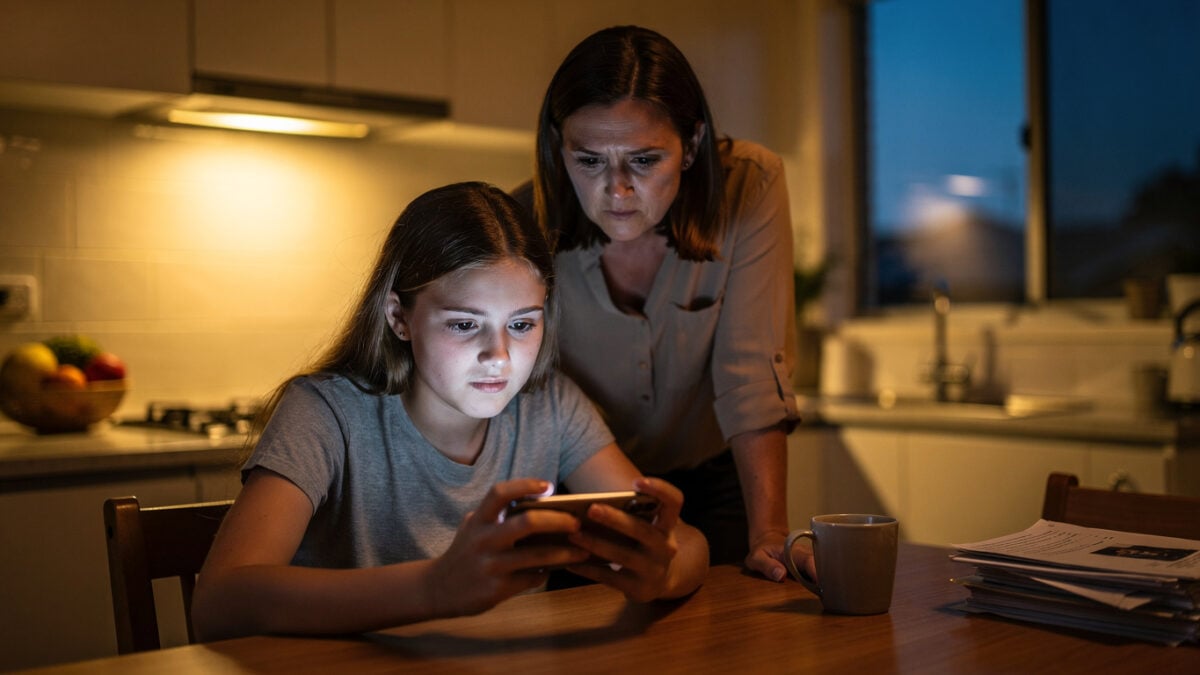
The UN Office of the High Commissioner for Human Rights has warned that broadcasting the killing would breach the absolute prohibition of torture. For an Australian parent whose teenager follows the news on TikTok, the government’s assurance is not a guarantee. It is a promise made on someone else’s behalf.
The enforcement machinery exists on paper. Multimillion-dollar penalties are available against companies that fail to stop extreme violent material spreading, and the first court test of that power — against the messaging platform Telegram — is listed in the Federal Court for February 2027.
Broadcasters face a clearer, older obligation. A department spokesperson said large television stations must follow rules on violent or distressing content and would be expected to exercise strong editorial control — a standard that predates the internet and does not reach a livestream on a social platform. Whether the newer powers reach it is the question the coming bill leaves open.
| Entity | Current rule | Proposed or pending change | Effective date |
|---|---|---|---|
| Social platforms | eSafety can issue removal notices and direct internet service providers to block refused-classification material | Draft Digital Duty of Care Bill would add a preventative duty to reduce foreseeable harm | Not yet legislated |
| Broadcasters | Must exercise editorial control over violent or distressing content | No change proposed | In force |
| Messaging services | Multimillion-dollar penalties available for failing to stop extreme violent material | First court test, against Telegram | Hearing listed for February 2027 |
| Source: Australian Online Safety Act 2021; Department of Infrastructure, Transport, Regional Development, Communications, Sport and the Arts; U.S. Embassy in Canberra | |||
The bill is the real battleground
Canberra is finalising a digital duty of care that would move the regime from reacting to harmful content toward preventing it. Providers would have to make their services safer and cut foreseeable harm — a wider obligation than the takedown powers eSafety has held since the Online Safety Act took effect. The draft has already drawn scrutiny over how far it reaches. The bill’s unresolved default-setting question shows how much of its practical force turns on design choices still being negotiated.
The US Embassy in Canberra has pushed back on precisely that shift. In its submission to the consultation, it argued the model risks suppressing protected expression and duplicating authority the regulator already holds — a position filed with the Australian government.
Australia’s blocking powers grew case by case, each expansion answering material that was criminal or plainly violent. Nothing in that history settles what to do with footage of a killing a treaty ally carries out lawfully.
The bill now before ministers is the first chance to give the government’s expectation an instrument — or to confirm that Australia cannot.
Beyond the headline
The pattern
Australia’s online-safety powers were not designed in one piece. The ability to declare an online crisis event followed the 2019 Christchurch attack, when footage of the shootings spread faster than regulators could respond. The 2024 stabbing of a bishop in a Sydney church produced the first serious platform challenge, brought by X, which pushed eSafety from demanding removal to seeking only a domestic block. Last year’s Charlie Kirk shooting video went further: X contested the classification, and the Classification Review Board downgraded it from refused classification to R18+.
The timing
The execution falls within weeks of the bill’s introduction to Parliament, and Communications Minister Anika Wells is due to address the National Press Club as the drafting concludes. That collision gives both sides of the reform debate a ready-made example: proof the regime needs sharper teeth, or proof that widening it invites censorship.
The response gap
The spokesperson’s statement set an expectation: that platforms would keep the footage from appearing on Australian screens or in teenagers’ feeds. Meeting it would require either a voluntary platform decision or a regulatory instrument that has not been identified. Between those two options sits the entire question of whether Australia’s online-safety regime has teeth outside the categories it was built for.
Four groups who cannot wait for the law to settle
The legal question will not resolve before the execution does. Four groups face decisions in the meantime.
- Australian parent of a teenager active on TikTok and YouTube
You have been told platforms will keep this off your child’s feed, but no mechanism has been named to make that happen. Decide now whether to restrict or monitor their social media use around the execution date, rather than assuming a protection that may not arrive.
- Compliance lead at a streaming or social platform operating in Australia
Your platform is named directly in the government’s expectation, under a regime that can seek multimillion-dollar penalties. Assess before the execution whether carrying or failing to geo-block the livestream creates exposure under the Online Safety Act, and build a defensible moderation posture now.
- Western investor holding ASX-listed big tech or digital media positions
Reprice regulatory risk for Australian-exposed platform and media holdings based on whether eSafety demonstrates it can act against a lawful foreign broadcast. If it cannot, the compliance cost of the coming duty of care looks lighter than the rhetoric suggests.
- Digital rights lawyer or free-expression advocate tracking Anglophone platform regulation
Prepare submissions on the duty of care bill using this case as the concrete test of where Australia’s blocking powers end and censorship risk begins. The US Embassy’s filing against the draft is already on the record as the opposing argument.
Explainer
- Refused classification
- The highest restriction category in Australia’s national classification code, applied to material that offends standards reasonable adults accept. It covers depictions of crime, cruelty, violence and abhorrent phenomena, and it is the trigger for most of eSafety’s blocking powers. Material rated refused classification cannot legally be sold, hired or publicly exhibited anywhere in Australia.
- eSafety Commissioner
- Australia’s statutory online regulator, established under the Online Safety Act 2021 and headed by Julie Inman Grant. It can issue removal notices, direct internet service providers to block material, and seek penalties against platforms that fail to act. The office began in 2015 as the Children’s eSafety Commissioner before its remit was widened to cover all Australians.
- Digital duty of care
- A proposed legal obligation that would require online platforms to take proactive steps to make their services safer and reduce foreseeable harm. It would shift the regime from reacting to harmful content toward preventing it, widening what platforms owe their users. Consultation on the exposure draft drew submissions from industry and from foreign governments, including a detailed objection from Washington.
- Online Safety Act 2021
- Australia’s core online regulation, which consolidated earlier rules and gave the eSafety commissioner its current powers. It created a graduated system of removal notices, blocking directions and civil penalties for platforms that fail to act on the most serious material. It replaced a patchwork of earlier regimes, including the Enhancing Online Safety Act 2015.
RELATED STORIES