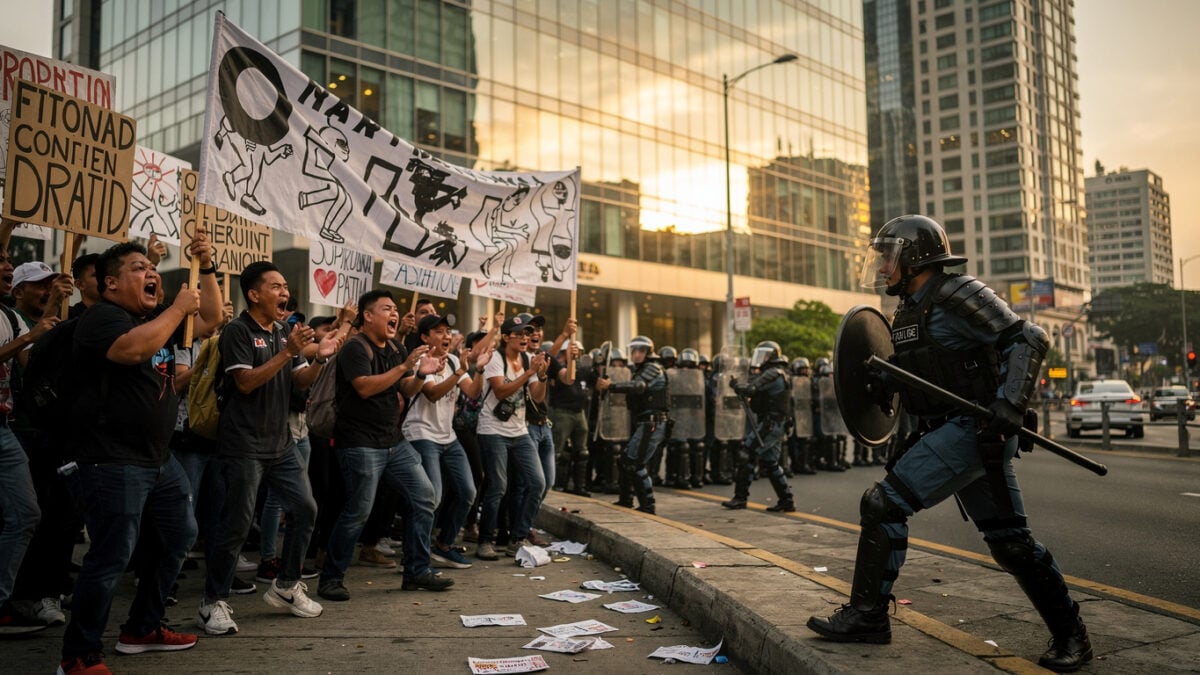
On September 10, 2026, the inaugural Luzon Economic Corridor Investment Forum drew more than 600 investors to Taguig City. Outside the Grand Hyatt, protesters clashed with police. The forum was co-hosted by the Philippines, the United States, and Japan. It produced new agreements but also exposed a local-benefit test that could delay or reshape the corridor.
Karapatan called the event a “US-backed open house for the plunder of Philippine resources.” The question now is whether promised benefits reach communities or stall at the gate.
The Luzon Economic Corridor began as a transport and logistics plan. By the time Ferdinand Marcos Jr. presented it to investors on September 10, 2026, it had expanded into energy, critical minerals, and high-tech production. That shift changed the politics.
The corridor spans a region that accounts for roughly half of Philippine GDP. Outside the Grand Hyatt in Bonifacio Global City, demonstrators fought with police. The official line is that the projects are additive: power, water, infrastructure, jobs. The street’s answer is that someone else will pay for them.
The same criticism has attached to Pax Silica, a separate American-led AI supply chain proposal. The local-benefit test is no longer rhetorical. It is now a condition for rollout. Investors heard about deal signings and project pitches. Protesters heard about resource extraction.
The expansion was supposed to make the corridor more attractive. It made it more contested. That is the gap the next forum will have to close.
The local-benefit test turns physical
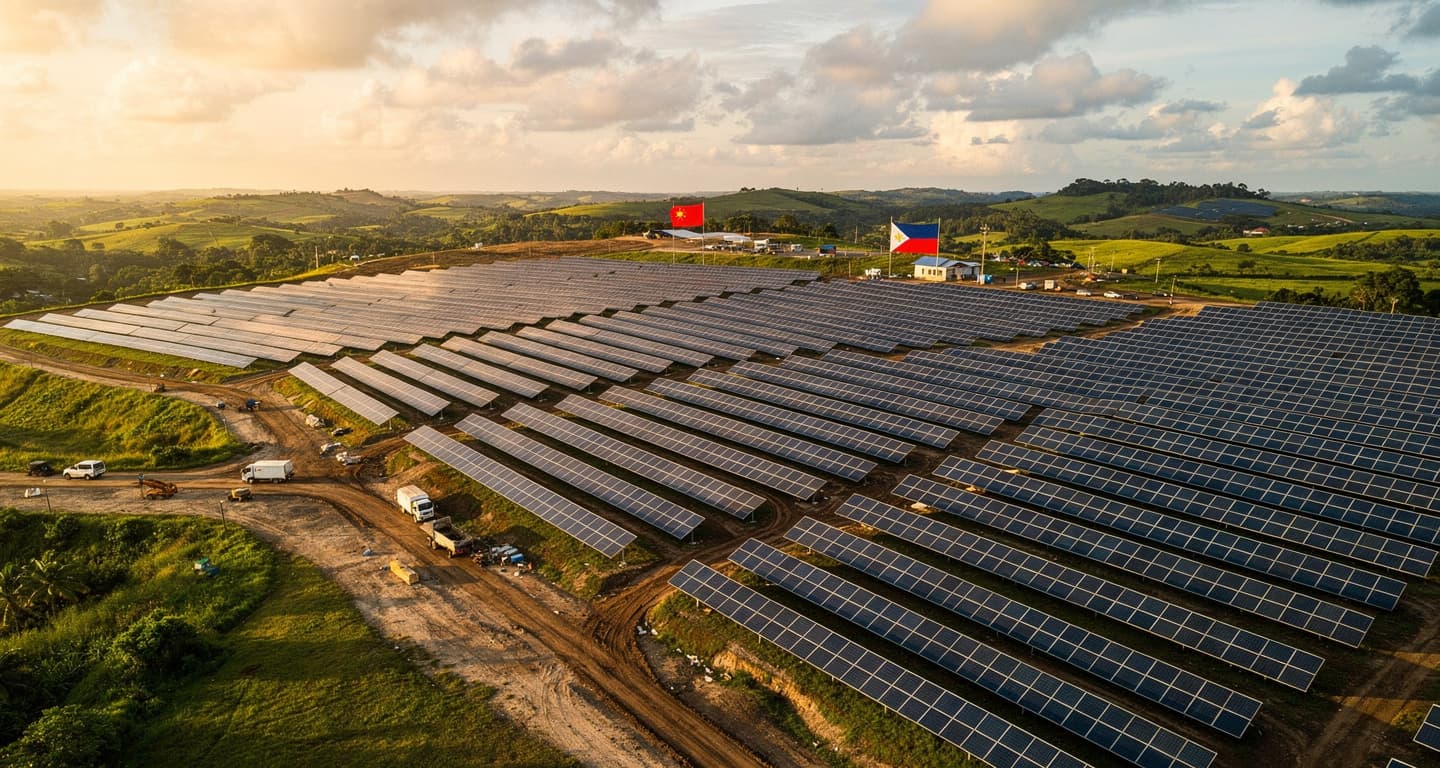
The U.S. Embassy in the Philippines announced several new agreements at the forum, including USTDA support for a Subic Bay ship-repair expansion, AI-enhanced Wi-Fi pilots, and a $60 million Philippines Energy Threshold Program through the Millennium Challenge Corporation. None of those announcements specifies local hiring quotas or compensation terms.
Karapatan reported that five paralegals were arrested and that over two dozen supporters were injured during the dispersal. According to Southern Police District spot reports, police filed charges including direct assault and violations of the Public Assembly Act.
A December 2025 Pulse Asia survey found 82 percent of respondents chose the United States as a country to work with in protecting national interests, while a June 2026 Social Weather Stations survey showed 60 percent had much trust in the US. SWS classifies U.S. and Japan net trust as good. The pushback is project-specific, not anti-American. That distinction changes how capital should price the corridor.
Angela Ignacio, undersecretary of finance, called Pax Silica “a work in progress” whose details remain under deliberation. Heather Variava of the U.S. State Department says both initiatives are meant to be additive, with legal requirements in both countries.
Senator Raffy Tulfo warns that Pax Silica’s water and energy demands need a national land-use plan before big AI investment proceeds. Senator Imee Marcos filed a resolution seeking a Senate probe into water, power, farming, and food security. The Conference of Major Superiors in the Philippines urges care for resources, not short-term gains.
The corridor is no longer a road-and-port story.
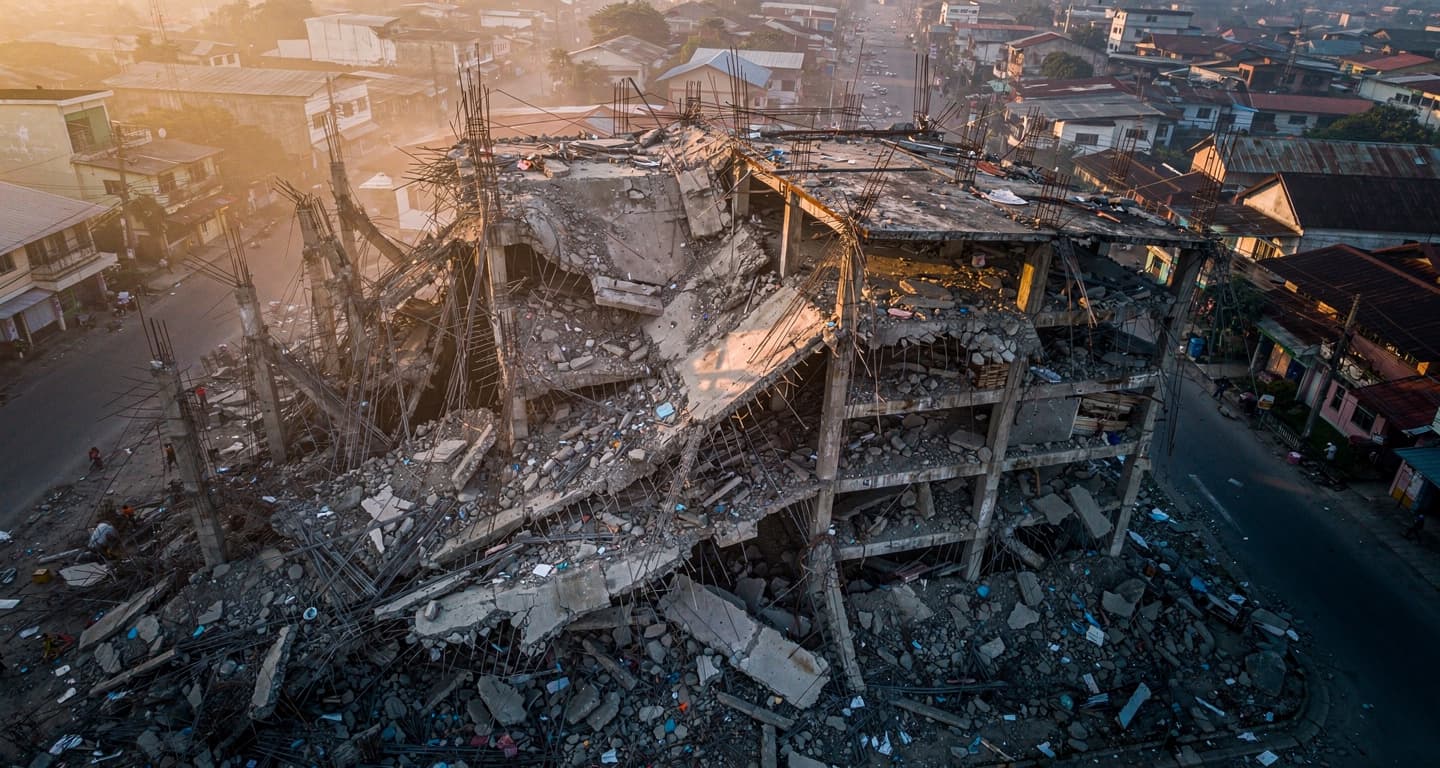
For a farmer near New Clark City, the promise of jobs competes with the risk of displacement. Compensation terms remain unpublished.
The gap between ambition and safeguard
The shift from transport to critical minerals changed the political calculus. The corridor is no longer a road-and-port story; it is a land, water, and power story. Under the Free and Open Indo-Pacific agenda, the three governments frame it as coordinated investment. Philippine law offers no single project statute.
Pax Silica sits under Senate resolutions and Executive Order No. 122, the mining framework.
That gap between ambition and safeguard is the structural cause.
Indonesia, Malaysia, and Vietnam are watching. Philippine scrutiny of water, power, and relocation commitments may embolden civil-society groups elsewhere to demand tougher consultations. Governments courting similar hubs could tighten safeguards to differentiate, or streamline approvals, splitting the region between high-standard and permissive regimes. That split is already visible in how neighbours position their own AI and semiconductor bids.
The next test is whether the corridor’s expansion produces verifiable local benefits before the next forum. If not, the protest outside the Grand Hyatt will not be an isolated event.
The local-benefit test will decide which side of that split the Philippines lands on.
Beyond the headline
The Bigger Picture
US-backed industrial projects in the Philippines are now judged by concrete local-benefit mechanisms, not job promises. Water and power demands, land use, and relocation plans now function as a social-license filter. Corridor-scale investments must show value created onshore, not just export-oriented supply chains.
What Isn’t Being Said
Official messaging stresses added power, infrastructure, and high-value jobs. It is quieter on near-term adjustment costs: rising utility prices, contested land conversions, and exposure to militarized logistics networks. Those trade-offs turn a growth story into a renegotiation of whose resources are mobilized.
The Reach
Coalition partners are attaching green-economy and digital-economy funds to the corridor. Conditional financing tied to climate and connectivity objectives can reshape how Western utilities, grid operators, and logistics firms engage with Philippine projects. Standards set in Luzon may become benchmarks for similar investments across Southeast Asia.
Four decisions for capital and communities
With the corridor’s first forum now behind it and Senate scrutiny of Pax Silica underway, four groups face immediate choices.
- Western investor in Philippine infrastructure & critical minerals
You should re-run due diligence to include social license assessments and community engagement before committing to corridor-linked projects. Review the Philippine PPP Center’s project list at ppp.gov.ph to see which transport, energy, and New Clark City developments are moving toward implementation. Treat protest risk as a timeline risk, not a public relations issue.
- Philippine government official overseeing foreign investment
You need clearer local-benefit provisions: job quotas, compensation terms, and environmental safeguards published before forums, not after clashes. Monitor Senate environment and finance committee hearings at senate.gov.ph to track evolving safeguards. The next forum will be judged by what was delivered since September 10, 2026.
- Western supply chain manager for AI/semiconductor industries
You should diversify sourcing and pressure developers to implement robust social and environmental safeguards. Delays in Philippine critical minerals or Pax Silica sites could disrupt timelines. Use the PPP Center list to identify alternative corridors and monitor Senate hearings for land-use legislation.
- NGO worker focused on human rights and environmental justice in Southeast Asia
You should verify Karapatan’s claims against police statements and hospital records. Collaborate with local groups to push for community protections and accountability. Track Senate resolutions on Pax Silica and Executive Order No. 122 implementation.
Explainer
- Luzon Economic Corridor
- A trilateral investment partnership led by the Philippines, the United States, and Japan. It coordinates investment in transportation, energy, digital infrastructure, and advanced manufacturing along the Subic–Clark–Manila–Batangas corridor. Partner nations now include Australia, Canada, Denmark, France, Italy, South Korea, Sweden, the United Kingdom, the European Union, and Spain.
- Pax Silica
- A U.S.-led international initiative to secure AI-related supply chains. The Philippines joined around two dozen signatories via a declaration. The proposed hub covers 4,000 acres at New Clark City.
- USTDA
- The U.S. Trade and Development Agency, an independent U.S. government agency that links American companies to infrastructure projects abroad. It sponsored the inaugural Luzon Economic Corridor Investment Forum. USTDA support at the forum included a Subic Bay ship-repair expansion and AI-enhanced Wi-Fi pilots.
- Millennium Challenge Corporation
- A U.S. government agency that provides grants to countries meeting governance criteria. At the forum, the U.S. and Philippines signed a $60 million Philippines Energy Threshold Program through MCC. MCC compacts typically require host-country policy reforms before disbursement.
RELATED STORIES