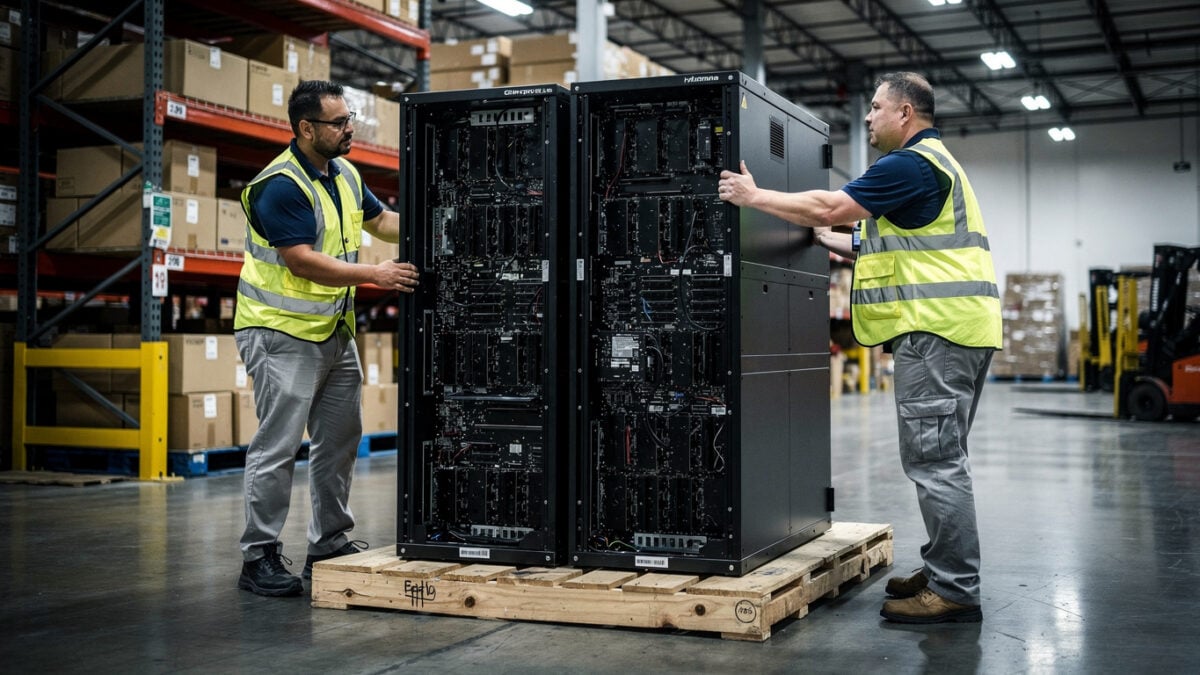
The owner of a California computer reseller was arrested on October 1 and charged with smuggling more than $300 million in export-controlled Nvidia servers to China. Greg Lui, 38, of San Gabriel, allegedly used his company Earthmade Computer Inc. to buy high-end GPUs and route them through Malaysia and Singapore without the required US licenses.
The indictment, returned September 29, marks one of the largest enforcement actions against AI chip diversion. Prosecutors say the scheme relied on false end-user documents and transshipment hubs where no US license was needed for the first leg—exposing a structural gap in export controls that the case now tests.
The servers left Los Angeles bound for Kuala Lumpur. The packing list flagged export-controlled GPUs and warned against sending them to China without a license. Federal prosecutors say that is exactly what happened next.
Greg Lui, who ran Earthmade Computer Inc. from a City of Industry office, is accused of orchestrating a scheme that moved about $300 million in Nvidia hardware to Chinese buyers. The indictment, unsealed Thursday, alleges he used Malaysian and Singaporean intermediaries to receive the shipments and then re-export them, sidestepping US rules that treat advanced AI accelerators as strategically sensitive.
The hardware included A100, H100, and even gaming-grade RTX 4090 and 5090 GPUs—chips whose AI capabilities have drawn Washington’s tightening controls. Lui’s arrest is the latest signal that the Justice Department is treating evasion of those controls as a national-security crime, not a paperwork error.
The indictment traces a paper trail from California to Kuala Lumpur
The charging document lays out a financial architecture that prosecutors say turned a small computer reseller into a conduit for restricted technology. Between January and October 2024, Earthmade received more than $176 million from two unnamed Malaysia-based shipping companies. Those payments, the indictment alleges, funded purchases of servers loaded with Nvidia GPUs that were then sent to Malaysia and Singapore.
One transaction detailed in the filing: in January 2024, Lui ordered 27 servers equipped with H100 GPUs for approximately $7.6 million. The shipment moved from Los Angeles to Kuala Lumpur. In March 2024, a co-conspirator emailed a Malaysian government official confirming the servers had been transshipped to a China-based buyer.
The indictment’s real signal is not the arrest but the financial paper trail it exposes—a trail that will force banks and freight forwarders to become de facto export-control enforcers over the next year.
“Controlling the export of advanced SI technology is critical to safeguarding our national security,” said Roman Rozhavsky, assistant director of the FBI’s Counterintelligence and Espionage Division. Rozhavsky added that the FBI’s investigation found Lui allegedly sold hundreds of millions of dollars’ worth of American advanced-computing technology to Chinese entities in violation of US export control laws.
The indictment classifies the controlled items under Export Control Classification Number 4A090.a, according to the charging document. That category covers high-end computing equipment subject to strict licensing requirements for China.
The transshipment architecture that makes diversion possible
The alleged scheme exploited a structural feature of US export controls: the rules require a license for shipments to China, but not for Malaysia or Singapore. That creates a two-step path. First, send the hardware to a country where no license is needed. Then, re-export it to the restricted destination. The indictment says Lui and his co-conspirators used that path repeatedly.
This architecture is not new. Southeast Asian hubs have long served as transit points for controlled goods. What is changing is the intensity of enforcement. The case follows an August enforcement action against a Singapore-based freight forwarder for similar shipments, signaling that prosecutors are now targeting logistics intermediaries as well as the buyers.
The race for AI computing power gives the controls their urgency. Washington sees advanced GPUs as the foundation of super intelligence, and China’s access to them as a direct threat. But the indictment names one man. The architecture that made his alleged scheme possible—the gap between first-leg permissibility and re-export reality—remains unchanged.
Beyond the headline
The Money Trail
The alleged scheme’s financial architecture mattered as much as its shipping route: payments from Malaysian entities entered a US company’s accounts before being used to acquire restricted servers. That creates a paper trail linking financial institutions, freight forwarders and hardware suppliers—turning export enforcement into a banking and procurement-control problem, not only a customs problem.
What Isn’t Being Said
The public charging materials identify a US defendant and unnamed Malaysian companies, but do not establish whether Malaysian or Singaporean authorities have opened parallel cases. That omission matters because the alleged diversion depended on activity after the servers left the United States; accountability across the transit jurisdictions will determine whether this was an isolated prosecution or a broader regional enforcement effort.
The Reach
US chip manufacturers are the actor whose compliance systems face the clearest downstream consequence: alleged false end-user documents can force suppliers to scrutinize intermediary buyers, shipping destinations and payment flows more intensely. The mechanism is expanded supply-chain due diligence, with the implication that legitimate server sales through Southeast Asian distributors may take longer and require more documentation.
Compliance is now a national-security function
With federal prosecutors treating AI chip diversion as a national-security crime, companies that touch the hardware supply chain face new compliance risks.
- Western semiconductor procurement manager
Re-evaluate end-user verification for any shipment routed through Malaysia, Singapore, or Hong Kong. The indictment shows that first-leg documentation is not enough; you need post-sale visibility into re-export risk. Review the Commerce Department’s Bureau of Industry and Security guidance and update your due-diligence checklists before the next order cycle.
- US-based investor with APAC emerging market exposure
Assess portfolio companies that operate logistics or data-center infrastructure in Malaysia and Singapore. The case signals that US enforcement will scrutinize financial flows tied to transshipment, raising compliance costs and potential legal exposure. Track the federal docket for USA v. Lui, case 26-cr-00618, via PACER to gauge how broadly prosecutors define co-conspirator liability.
- US government contractor or defense technology supplier
Ensure internal compliance programs can detect indirect involvement in unauthorized re-exports. The indictment’s focus on false end-user documents means your own customer-screening processes must verify not just the first buyer but the ultimate end use. Align with the National Security Division’s stated priority: preventing American chip advantages from reaching military adversaries.
- Logistics and freight forwarder operating in Southeast Asia
Enhance cargo screening for controlled GPU shipments. The alleged use of Malaysian and Singaporean transshipment companies to route hardware to China puts your firm at risk of being named in future enforcement actions. Verify declared end-users, payment origins, and re-export documentation before accepting shipments of high-end computing equipment.
Explainer
- Export Control Reform Act
- The primary US law authorizing controls on the export of dual-use items that could threaten national security. It empowers the Commerce Department to require licenses for shipments of sensitive technology to certain countries. The act was central to the charges against Lui, who prosecutors say violated its provisions by sending controlled GPUs to China without authorization.
- Export Administration Regulations
- The detailed rules implementing the Export Control Reform Act, maintained by the Bureau of Industry and Security. They specify which items are controlled, to which destinations, and under what licensing conditions. The regulations classify advanced GPUs under ECCN 4A090.a, making a license mandatory for exports to China.
- Bureau of Industry and Security
- The Commerce Department agency that administers US export controls on dual-use technology. Its Office of Export Enforcement investigates violations alongside the FBI. In the Lui case, BIS is a key investigative partner, signaling that the matter is being treated as both an export-compliance and a counterintelligence issue.
- Super intelligence
- A term used by US officials to describe the most advanced forms of artificial intelligence, which they argue could confer decisive military and economic advantages. The Justice Department has adopted the phrase to frame export-control violations involving high-end GPUs as threats to national security, elevating the stakes of enforcement actions like the Lui indictment.
RELATED STORIES


