Riyadh’s King Khalid airport has been shut since October 10, 2026, according to Saudi Arabia’s General Authority of Civil Aviation, which halted operations there and has not set a reopening date. Four Indian carriers — Air India, Air India Express, Akasa Air and IndiGo — have cut Saudi services through October 17, removing Riyadh, Dammam, Jeddah and Medina from parts of the network. The closure set off the wider travel disruption now running across the Gulf corridor.
Riyadh has waived overstay fines for Indian nationals who could not leave because no flight existed. Saudi civil aviation authorities have cited a toll of 12 dead and more than 300 wounded, a figure that has not been independently verified.
No official statement or independent reporting has identified who carried out the attack on Riyadh’s King Khalid airport. That gap is now the most telling fact in the story.
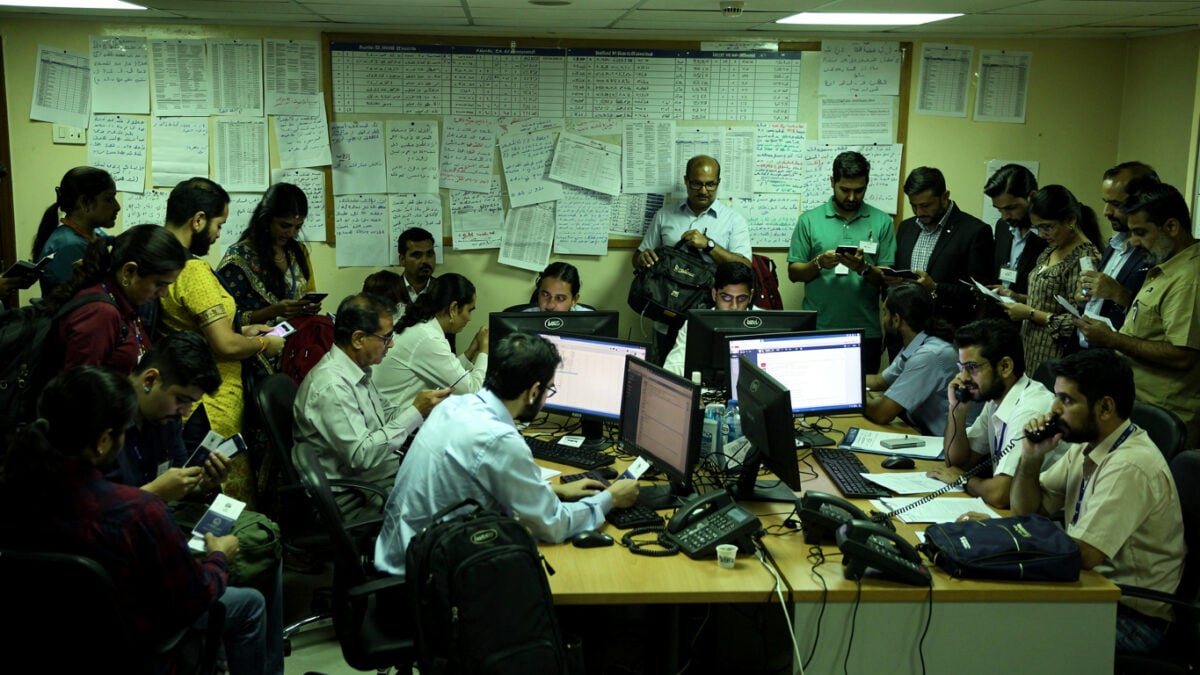
India’s answer has been faster than the picture it addresses. Within days of the October 10 strike, the embassy in Riyadh and the consulate in Jeddah had both stood up round-the-clock control rooms, and both are pushing travellers toward their airlines rather than toward the government. The ambassador attended the funeral of an Indian national killed in the strike, and the mission has published its own count of the injured.
Two speeds now run side by side. A consular machine that activated within hours, and a security picture that has not moved at all — no identified author, no confirmed cause, no independently verified number of dead.
That is the difference worth watching. The response is legible. The threat is not.
The response outran the evidence
India’s carriers moved first. Air India and Air India Express have taken Riyadh, Dammam and Jeddah off their networks through October 17, the date the embassy states in its advisory. Akasa Air has dropped Riyadh and Jeddah. IndiGo has pulled Riyadh, Dammam, Jeddah and Medina.
It is not the first time Indian carriers have been pulled off Gulf routes. In July, the country’s largest pilots’ union asked regulators to suspend flights to Dubai and Abu Dhabi after European authorities flagged Gulf airspace. The regulator did not act on that request. This time the airlines moved without being asked.
The retreat is not mirrored on the Saudi side. Saudia still runs scheduled departures from Dammam, Jeddah and Medina, and Flynas keeps its Dammam-Lucknow service. The airport network has narrowed rather than closed.
Saudi Arabia’s General Authority of Civil Aviation (GACA), the regulator, said the halt was needed to “verify the safety and operational readiness of the airport’s facilities.” That is a description of a procedure, not a promise of a date. No reopening timetable has been published.
The waiver is the tell. Riyadh will not fine Indian nationals who overstayed because no flight existed — a concession that only makes sense if the disruption is expected to outlast the flights.
The relief covers visit, tourist, Umrah and business visas, according to the Indian mission, and it carries a condition: those travellers should leave as soon as services resume.
The embassy counts 11 Indian nationals injured. Four are in intensive care, four in general wards, and three have been discharged.
One of the dead was Mohammed Yousef Ali. His funeral rites were completed in Riyadh on October 12, as his family wished, with the ambassador and embassy officials present.
The count is the embassy’s, and it stands alone. No independent tally of Indian dead and injured has been published, and the death of Mohammed Yousef Ali has been reported by multiple independent outlets.
Saudi civil aviation authorities have cited a total of 12 killed and more than 300 wounded, a figure that has not been independently verified and should not be read as Indian losses.
What none of the official statements explains is why the closure is outlasting the strike that caused it.
| Entity | Current rule | Change in force | Effective date |
|---|---|---|---|
| Saudi Arabia — overstay penalties | Fines apply to expired visit, tourist, Umrah and business visas | No fine for Indian nationals who overstayed only because flights were unavailable | From October 13, 2026, until flights resume |
| Indian carriers: Air India, Air India Express, Akasa Air, IndiGo | Scheduled Saudi services | Suspensions to Riyadh, Dammam, Jeddah and Medina, varying by carrier | Through October 17, 2026 |
| King Khalid International Airport, Riyadh | Commercial operations | Suspended pending safety and readiness checks | From October 10, 2026 |
| Saudia and Flynas | Full Saudi network | Scheduled departures continue from Dammam, Jeddah and Medina | Ongoing |
| Source: General Authority of Civil Aviation (Saudi Arabia); Embassy of India, Riyadh; Consulate General of India, Jeddah | |||
A response built to be repeated
None of this is improvised. India’s missions in the kingdom issue advisories and run control rooms as routine practice, and they do so because the population they serve is permanent: Saudi Arabia hosts one of the largest Indian expatriate communities anywhere, with the Umrah pilgrimage layered on top.
The disruption travels further than that corridor. European and North American carriers lean on Gulf hubs to feed long-haul routes, so when Riyadh’s traffic is pushed sideways onto other airports, seats tighten across connected itineraries. That shows up in schedules before it shows up in fares.
What changes between incidents is the scale of the response, not its existence. The apparatus activated this month was built for exactly this, and it will be activated again.
The one question this apparatus cannot answer is the one the story opened with. Airports reopen and flights resume. What produced the attack, and who is answerable for it, is no clearer now than it was on the first morning.
Beyond the headline
The human cost
The immediate burden lands on Indian workers and Umrah pilgrims already inside Saudi Arabia, not on future travellers. They face a narrow choice between waiting for services to restart, paying for extra hotel nights, or finding a route out that does not yet exist.
The response gap
India’s response is fast, but it is still containment: advisories, control rooms and checks with airlines. What is missing is a public timetable for normalisation and a count of how many nationals remain stuck, which leaves families and employers planning blind.
What isn’t being said
No government with an interest in the answer has said publicly what it believes happened at King Khalid airport. The consular response is the part everyone can describe. The security picture is not, and that asymmetry will outlast the flight suspensions.
Rebooking rules while Riyadh stays shut
With the airport closed and no reopening date published, anyone moving through the Gulf corridor in the next week needs a plan that assumes the timetable slips.
- If you are booked on an Indian carrier through Saudi Arabia
Read the airline’s rebooking and refund notice before you do anything else; Air India, Air India Express, Akasa Air and IndiGo have each posted route-specific guidance. Confirm your seat through the carrier’s own channel rather than a third-party site, and keep the booking reference where the embassy can use it.
- If your itinerary connects through another Gulf hub
Treat any new Gulf booking as provisional until the carrier confirms the seat and you have checked the entry rules that apply to you. Schedules are being reshuffled around the Riyadh closure, and availability on connecting itineraries is thinner than the seat maps suggest.
- If you have staff or family on the Umrah corridor
Tell travellers to stay in contact with their Umrah provider on accommodation and itinerary changes, and to verify flight status directly with the airline before leaving for the airport. Passport and attestation work through VFS is unaffected, so document renewals can still proceed.
FAQ
Can stranded travellers leave through another Gulf country?
Other Gulf hubs are the obvious route out, but the constraint is capacity, not geography. Airlines are still reshaping connections and seats are moving daily. Treat any new ticket as provisional until the carrier confirms it and you have checked the entry rules that apply to you.
Which visa holders are covered by Saudi fine relief?
The waiver applies to Indian nationals who entered on visit, tourist, Umrah or business visas and overstayed only because flights were unavailable, according to Saudi authorities. It is tied to the disruption rather than to the individual, and travellers are told to exit as soon as services restart. Whether it extends past the current suspensions has not been stated.
What support is available from India’s missions?
Both missions remain fully staffed, and normal operations continue at the embassy in Riyadh and the consulate in Jeddah. Outsourced passport and attestation services run by VFS are unaffected, so document work can proceed. Flight updates are posted on the consulate’s social media channels, which stay in touch with airlines and local authorities.
Explainer
- GACA
- The General Authority of Civil Aviation is the Saudi government body that regulates the kingdom’s airports and airlines. It issues the operational directives that open or close commercial airport facilities, and its remit covers the licensing of foreign carriers serving Saudi airports. Its role has grown alongside the kingdom’s aviation expansion, which is central to its plan to reduce dependence on oil revenue.
- Umrah
- Umrah is the Islamic pilgrimage to Mecca that can be undertaken at any time of year, unlike the Hajj, which falls in a fixed month. Saudi Arabia issues dedicated Umrah visas and hosts millions of pilgrims annually, with arrivals concentrated in Jeddah and Medina. Many Indian pilgrims travel on package arrangements through licensed tour operators, which is why cancellations route back through those operators rather than the airlines alone.
- VFS
- VFS Global is an outsourcing company that runs visa application centres and document services for governments worldwide. It handles passport submission and attestation for several Indian missions, including those in Saudi Arabia. Its work sits outside the consular officer’s own caseload, which is why document services can keep running while a mission is handling an emergency.
- IndiGo
- IndiGo is India’s largest airline by passengers carried, a low-cost carrier that built its network on dense domestic routes. It has expanded into Gulf services, which now form a core part of its international schedule. Its reliance on point-to-point Gulf flying means a single airport closure can remove several city pairs from the network at once, rather than one connecting route.
RELATED STORIES


![Top 10 Volcanoes to Climb in Indonesia [Prices & Trekking Experience] - Uncategorized () - October 2026 - Indoneo](https://www.indoneo.com/wp-content/uploads/2024/06/polina-kuzovkova-Bjr5aSbHeSI-unsplash.jpg.webp)