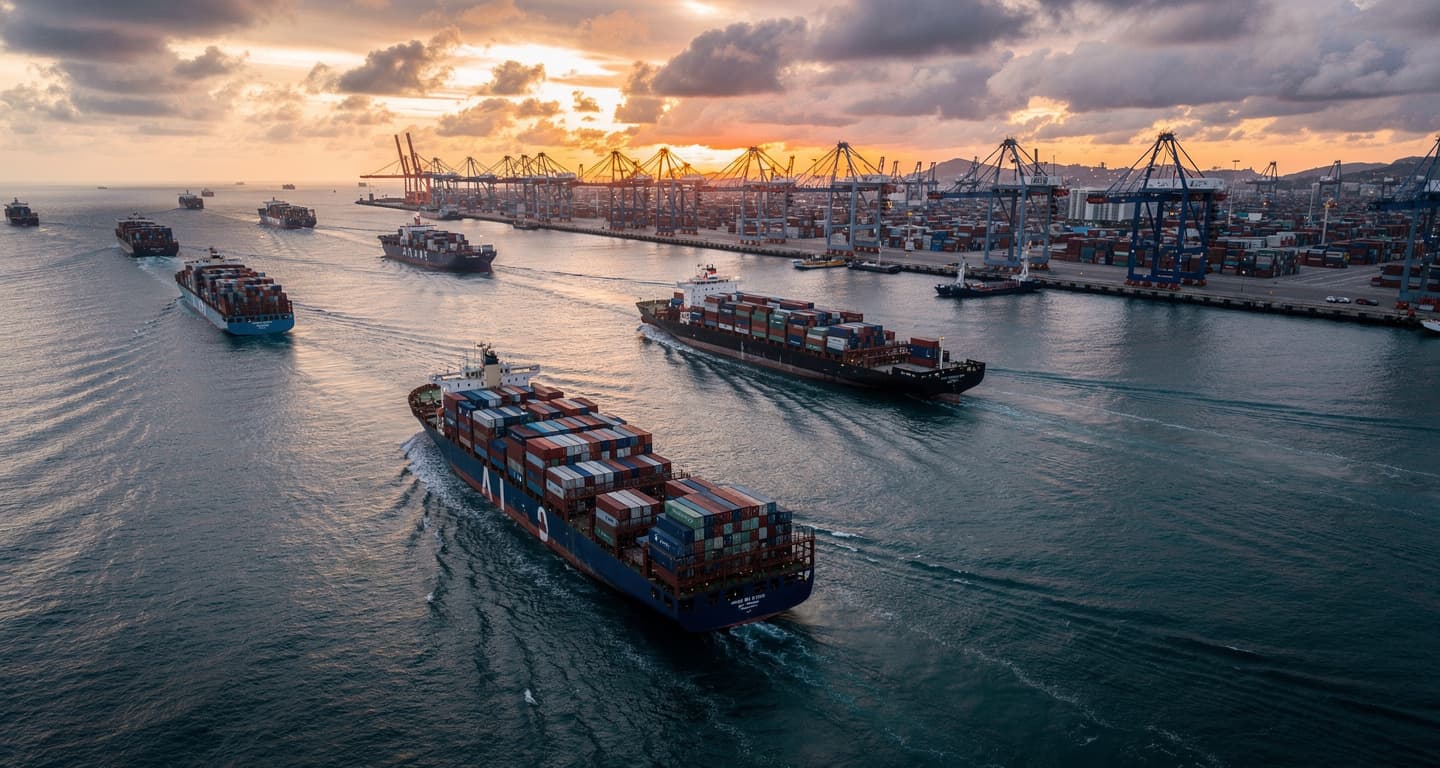
The US Navy launched Pacific Partnership 2026, its largest annual Indo-Pacific humanitarian mission, on May 27, 2026, when the hospital ship USNS Mercy left San Diego bound for Southeast Asia. The five-month deployment will visit Indonesia, Malaysia, the Philippines, Vietnam and East Timor, with roughly 300 personnel drawn from the United States and eight partner nations including Australia, Japan and South Korea.
The shift from last year’s Pacific Islands focus is deliberate, timed to the mission’s 20th year. Washington frames the medical and engineering aid as proof of commitment; Beijing watches the same ships dock in ports it has spent a decade courting.
The US Navy has run this play before. After the 2004 Indian Ocean tsunami, American ships arrived with doctors and water, and the goodwill outlasted the relief. Two decades on, Washington is reaching for the same instrument and pointing it, this time, at ASEAN‘s coastline.
The USNS Mercy sailed from Naval Base San Diego on May 27, 2026, carrying the start of Pacific Partnership 2026. The destination is the news. Last year’s mission worked the Pacific Islands — Fiji, Tonga, Samoa. This year the ports are Southeast Asian, the region every recent US strategy document names as the place the contest with China will be decided.
That is the tension under the medical clinics and engineering projects. A humanitarian mission is being asked to do strategic work, in a region whose governments want the help and not the choosing it might imply.
A relief mission carrying a strategy
The hardware tells you the ambition. The Mercy is a converted oil tanker turned floating hospital, the kind of platform no other power can sail into a disaster zone at scale. Commander, Destroyer Squadron 1 leads the mission under US Pacific Fleet, with the deployment scheduled to run five months across stops in Indonesia, Malaysia, the Philippines, Vietnam and East Timor.
Capt. Robert Reyes, the mission commander, has said the multinational team will work alongside host nations to improve disaster-response readiness and strengthen relationships through medical, engineering and community work. That is the official register. The strategic one comes from higher up.
Adm. Samuel Paparo, who commands US Indo-Pacific Command, has argued that sustained presence operations — humanitarian missions included — are central to competing with China by showing reliable engagement with regional partners. The aid is the message. The point is to be seen turning up, year after year, when the storm hits.
None of this is improvised. The 2022 Indo-Pacific Strategy commits Washington to backing ASEAN-led structures and expanding disaster-response cooperation with Southeast Asian states as part of its answer to China. Pacific Partnership is that paragraph turned into a ship.
The arithmetic of who shows up matters more than the brochures. The harder question is whether being seen translates into anything that lasts.
The slow contest under the goodwill
The real story is a shift in method. For years the US relied on deterrent patrols — ships passing through, making a point, leaving. Pacific Partnership belongs to a different logic: continuous, low-friction cooperation on health, ports and disaster readiness. Whoever trains the local militaries and writes the response playbooks sets the norms for the next crisis.
That layer matters for places far from the South China Sea. Roughly a third of global shipping passes through these waters, and sustained US engagement helps anchor rules-based disaster response there — reducing the chance that Beijing’s crisis-management norms become the default for events that hit energy and electronics supply chains feeding Europe.
Gregory Poling of the Center for Strategic and International Studies argues such missions let Southeast Asian states diversify their security partnerships and lean less on China. Collin Koh, at Singapore’s S. Rajaratnam School of International Studies, adds the caveat that matters: these governments welcome the capacity-building but will resist any framing that forces overt alignment against Beijing.
So the old pattern holds, with one update. The ships arrive, the goodwill is real, and the hosts pocket the benefit while keeping their distance from the geopolitics. Washington has the better instrument. Whether it converts goodwill into something durable is the question 2004 answered briefly, and every year since has reopened.
Beyond the headline
The power behind it
Control over how help arrives after disasters is quietly shaping the region’s strategic map. Whoever trains local militaries, writes the response playbooks and pre-positions medical assets effectively sets the operating norms for future crises. Those norms decide whose forces can move fastest and most legitimately through crowded Southeast Asian sea lanes when something goes wrong.
The bigger picture
This mission sits inside a wider move from one-off exercises to continuous presence. Washington and its allies are building a web of daily cooperation on health security, infrastructure and climate adaptation. That softer layer increasingly shapes whether regional elites bet on a US- or China-centred order.
The reach
For European manufacturers that rely on Southeast Asian ports to assemble and ship electronics, the reliability of local emergency response has become a quiet competitiveness issue. When US-led missions upgrade hospitals, ports and communications in storm-prone areas, they reduce the odds that a typhoon or earthquake shutters a critical export hub long enough to disrupt just-in-time production back in Europe.
Reading a mission that hides its strategy in plain sight
With port visits running through October 2026 and host-government statements still to come, the mission’s real meaning will surface in how it is framed and what follows it.
- Policy and security analysts
Read the 2022 Indo-Pacific Strategy on the White House site to see how humanitarian missions fit Washington’s competition with China, then track official port-visit releases on the US Pacific Fleet pages to spot which countries deepen follow-on training. The gap between the strategy and the statements is where the story lives.
- Supply-chain and trade watchers
Watch the late-2026 ASEAN Defence Ministers’ Meeting-Plus for any institutionalised disaster-relief drills linked to this mission. Durable, scheduled exercises signal that sea-lane resilience around Indonesia and the Philippines is being built into regional routine — a quieter hedge against shipping disruption than any naval patrol. Washington’s recent signalling on China, including Pete Hegseth’s softened rhetoric at the Shangri-La Dialogue, is part of the same calculation.
Explainer
- ASEAN
- The Association of Southeast Asian Nations, a ten-member bloc founded in 1967 to manage regional cooperation and reduce conflict among its members. It operates by consensus, which makes collective stances on China deliberately cautious. US strategy documents now commit Washington to “supporting ASEAN-led architecture,” a phrasing that lets member states accept American engagement without endorsing its rivalry with Beijing.
- Pacific Partnership
- The US Navy’s largest annual maritime humanitarian and civic-assistance mission in the Indo-Pacific. It began in 2006, drawn from lessons of the multinational response to the 2004 Indian Ocean tsunami, which killed an estimated 230,000 people across 14 countries. The 2026 edition is the first in several years to centre Southeast Asia rather than the Pacific Islands, a routing choice that doubles as a strategic signal.
- USNS Mercy
- A US Navy hospital ship converted from a supertanker, operated by Military Sealift Command and crewed largely by civilian mariners and medical personnel. It carries roughly 1,000 hospital beds and a dozen operating rooms when fully staffed. Its sheer scale is part of the diplomacy: no rival power can sail a comparable floating hospital into a disaster zone, which is why it leads missions like Pacific Partnership 2026.
RELATED STORIES