The United States and Japan intervened jointly on July 30 and 31, 2026 to buy yen for the first time since 1998. By August 11, the yen had surrendered half its post‑intervention gains, falling back to 159.29 per dollar.
The collapse exposes structural forces a single market operation cannot touch: a persistent interest‑rate gap, Japan’s debt above 200% of GDP, and a prime minister whose spending plans are being read as a reason to sell.
Markets are reading Prime Minister Sanae Takaichi‘s fiscal plans as a signal to sell yen, and that signal is undoing the work of the first joint US–Japan yen‑buying effort in nearly three decades. The yen is back to 159.29 per dollar, after the move had pulled it to 157.57.
The move pushed the yen from 163.73 to 157.57. By August 11, it had lost half that ground. The move bought time. It did not buy a reversal.
Traders are now pricing the yen against a 3.5%–3.75% US policy rate, Japan’s 1% rate, and a debt ratio above 200% of GDP. The move was a tourniquet, not a cure. The yen has been sliding since 2012, when it traded around 78 per dollar. What is new is that the government’s own fiscal path is now the tailwind.
The yen’s brief bounce, and the forces that erased it
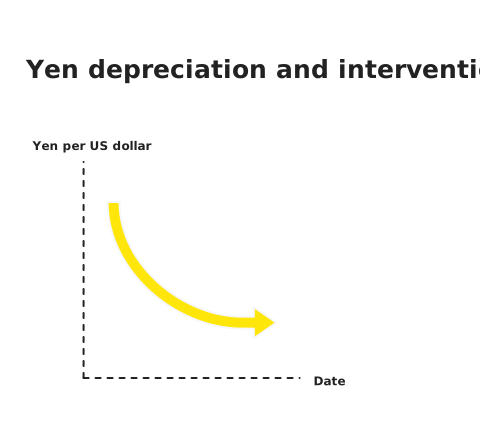
The yen touched 163.73 per dollar on July 30, a 40‑year low. The joint move, the first of its kind since 1998, yanked it to 157.57. By August 11, the currency was back at 159.29. Half the move’s gain had vanished in two weeks.
The US interest rate sits at 3.5%–3.75%. Japan’s is 1.0%. That gap powers the carry trade: borrow yen cheaply, buy higher‑yielding dollar assets. Every yen sold for dollars pushes the currency lower. The move did nothing to close that gap.
Goldman Sachs strategists Dominic Wilson and Kamakshya Trivedi wrote that the move would buy time but not reverse the trend. David Meier, an economist at Julius Baer, argued that monetary policy is still too loose and fiscal expansion is politically sensitive.
The yen’s weakness has already been pushing Japanese capital into Southeast Asia, as Indoneo reported in July. The move’s failure to hold suggests the market is now pricing Takaichi’s fiscal plans as the dominant signal.
The chart below shows the yen’s trajectory from the start of 2026 through the intervention and the reversal that followed.
The policy mix that makes intervention a temporary fix
The move’s failure is less about the size of the yen purchases than about the signal Tokyo’s fiscal policy is sending. Takaichi’s 370‑trillion‑yen investment blueprint, with 102 trillion yen earmarked for AI and semiconductors, and a proposed cut to the consumption tax on food, are being read as a commitment to spending that will keep the yen weak. The Bank of Japan is expected to hold its next policy meeting in late August. If it does not signal a rate hike, the yen will remain vulnerable to a push toward 160.
The US Treasury’s involvement was driven by concerns about its own bond market. Japan is the largest foreign holder of US Treasuries, with $1.2 trillion. Any forced selling to fund intervention could push up US yields. The joint operation was a way to support the yen without triggering a sell‑off in Treasuries.
Western expats in Japan, paid in yen, are already feeling the squeeze on imported goods. A further slide would hit rent and savings, and any tax changes from Takaichi’s agenda could alter after‑tax cash flow.
Beyond the headline
The Bigger Picture
The yen’s slide is a stress test for the post‑1998 playbook. When a government’s fiscal plans actively encourage the very move it is spending billions to stop, the intervention becomes a signal of desperation, not resolve.
The Power Behind It
The real power struggle is not between Tokyo and the currency market but between the Bank of Japan and the prime minister’s office. Takaichi’s fiscal expansion is a political demand that the central bank cannot easily offset with rate hikes, leaving the yen as the pressure valve.
The Money Trail
The largest financial incentive sits with the global banks that have warehoused trillions of dollars in yen‑funded carry trades. A disorderly unwinding, triggered by a sudden yen spike, would hit their balance sheets far harder than a slow, steady decline.
What the yen’s failing intervention means for your money
With the yen’s post‑intervention gains already halved and the August Bank of Japan meeting looming, four groups face decisions.
- US-based investor with APAC emerging market exposure: Assess your portfolio’s exposure to yen‑denominated assets and carry‑trade risks. A rapid yen rebound could force de‑risking in global bond and equity markets. Check your positions in Japanese equities and currency hedges.
- Western expat in Japan: Re‑evaluate your budget for imported goods and services. A further slide in the yen will raise the cost of rent, food, and dollar‑priced items. If you hold savings in foreign currency, consider the timing of conversions and watch for any tax changes from Takaichi’s fiscal agenda.
- US Treasury bond investor: Monitor Japan’s currency policy and fiscal health. Sustained yen weakness could force Japan to sell US Treasuries to fund intervention, pushing up yields. Watch for any signal from the US Treasury about the size of yen purchases and the potential need for further joint action.
- Western procurement manager sourcing from Japan: Re‑evaluate sourcing contracts and hedging strategies for Japanese imports. A weaker yen means higher landed costs for machinery, autos, and electronics. Adjust contracts to include currency‑adjustment clauses and consider forward contracts to lock in rates.
FAQ
Why 160 matters
The 160 level is being treated by traders as a psychological trigger for renewed intervention pressure. Moves above that level have been linked to fears of another official response, especially if volatility persists and Tokyo wants to avoid a perception that it is tolerating disorderly depreciation.
What happens to carry trades
A stronger yen can force leveraged investors who borrowed in yen to unwind positions, which can mean selling overseas assets to repay funding. That unwinding can hit equities, bonds, and currency markets at the same time, rather than staying confined to Japan.
Which policy meeting matters next
The next Bank of Japan policy meeting is the key checkpoint. If the bank signals patience, intervention is more likely to remain a temporary market‑stabilizing tool. If it signals tightening, the yen could gain additional support, reducing the need for further intervention.
Explainer
- Carry trade
- A strategy where investors borrow in a low‑interest‑rate currency, such as the yen, and invest in higher‑yielding assets elsewhere. The profit comes from the interest‑rate gap, but the trade is vulnerable to sudden currency moves that erase gains. A rapid yen appreciation can force a mass unwinding that disrupts global markets.
- Bank of Japan
- Japan’s central bank, responsible for monetary policy, currency issuance, and financial stability. It has kept interest rates near zero for decades to fight deflation, but has begun to raise them cautiously. Its next policy decision is closely watched for signals on whether it will reinforce intervention with rate hikes.
- Takaichi
- Sanae Takaichi, Japan’s prime minister since 2025, is a fiscal expansionist. She has proposed a 370‑trillion‑yen investment plan and a cut to the consumption tax on food. Her policies are seen by markets as adding to Japan’s debt and keeping the yen weak.
RELATED STORIES