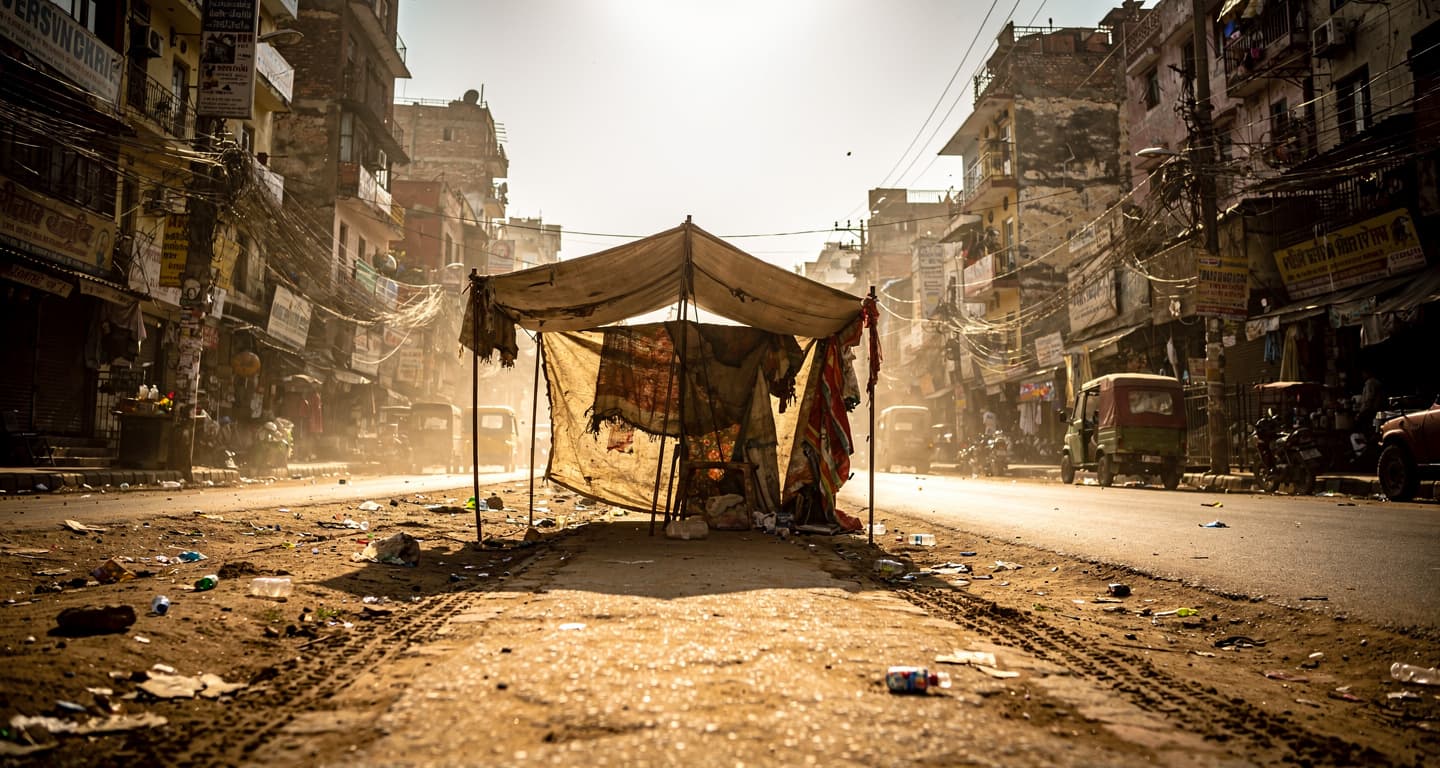
India resumed tourist visas for Bangladeshi citizens on June 28, 2026, nearly two years after New Delhi cut access to medical cases only following the political upheaval in Dhaka in August 2024. The move reopens the busiest people-to-people corridor in South Asia, a region that holds close to a quarter of the world’s population yet ranks among the least connected on Earth for cross-border movement.
The gesture stops well short of regional opening. Travel between India and Pakistan remains frozen, Afghan access stays heavily curtailed, and the easing rests entirely on executive discretion rather than any binding agreement.
Every few years, one South Asian capital eases a visa rule and the region reads it as a thaw. The pattern rarely holds. New Delhi reopened tourist visas for Bangladeshis this week after closing them in the chaos that followed Sheikh Hasina’s fall, and the corridor that carries more cross-border travel than any other in South Asia is moving again.
The instinct is to call this normalization. It is closer to a test. India alone decides who crosses its borders, and the same authority that restored the visas suspended them in the first place. What changed is the diplomatic mood, not the machinery underneath it.
That machinery is the real story. Across a region tied together by language, faith, and a shared colonial past, mobility has become a bargaining chip rather than a baseline. The walls are not accidents of geography. They were built, deliberately, and the people who pay for them are students, patients, and traders — not the governments that raised them.
The cost is measured in lost trade
The numbers expose how little the proximity is worth in practice. According to the World Bank, intraregional trade made up roughly 5% of South Asia’s total trade in 2022. In East Asia and the Pacific, the figure passes 50%.
Sanjay Kathuria, a senior visiting fellow at the Centre for Policy Research and a former World Bank lead economist, argues that poor connectivity and restrictive policies keep South Asia among the least integrated regions on the planet. The waste is concrete. World Bank modelling suggests deeper trade and transport links between India and Bangladesh alone could lift Bangladesh’s national income by up to 17% over time.
The barriers take many forms. Mobility between Bangladesh and Pakistan has been confined to official, business, or medical travel for more than 50 years, since 1971. Bhutan charges most foreign visitors a Sustainable Development Fee of USD 100 per person per night. India’s freeze on Pakistani visas after the Pahalgam attack in April 2025 simply revoked existing permits at a stroke.
India can do this because its executive has near-total control. Under the Foreigners Act 1946 and the Passports Act 1967, the Ministry of Home Affairs can suspend or restore visa categories by nationality without a parliamentary vote.
The frictions are documented. What the trade figures cannot explain is why four decades of summits and a free-trade pact have failed to dismantle them.
The walls were built by design, not neglect
South Asia did sign a trade pact. The South Asian Free Trade Area, agreed in Islamabad in January 2004 and in force from January 2006, committed members to cut tariffs across the bloc. But the agreement left visa rules and the movement of people to bilateral deals struck outside its text. That choice tells you what the founders actually valued.
There is a precedent worth recalling. India and Pakistan signed a visa agreement on September 8, 2012, easing access for businesspeople, seniors, and divided families, with multiple-entry permits and new crossing points. It looked like a genuine opening. Then the 2016 Uri attack and the 2019 Pulwama bombing arrived, and Delhi suspended categories, bus services, and train links in turn. The agreement survived on paper. In practice it barely functioned.
That is the lesson hiding inside this week’s news. Restored access in South Asia is rarely a settlement; it is a mood that the next security incident can erase. The International Crisis Group has argued that narrowly tailored measures would damage people-to-people ties far less than the sweeping suspensions Delhi reaches for by reflex.
So the question this week is not whether India was generous. It is whether the mood lasts longer than the last one did.
Beyond the headline
The bigger picture
South Asia’s stop-start visa regimes are not an aberration but the logical end of post-colonial state-building that fused hard borders with sovereignty. Where Europe pooled authority in shared institutions, South Asian governments kept mobility chained to bilateral quarrels, turning everyday human contact into a bargaining chip rather than a baseline right.
The power behind it
The real authority over who crosses sits with security and intelligence bureaucracies, not trade or tourism ministries. Their threat assessments, often shaped by a single high-profile attack, produce blanket bans that are far easier to impose than to lift — even when business lobbies and smaller neighbours press for the openness that would pay off economically.
The reach
For Western universities and hospitals that recruit heavily from the region, closed corridors quietly shape who can leave and from where. When talented students or patients cannot move within their own neighbourhood, they aim straight for Europe, North America, or Australia instead — intensifying competition for visas and places in systems already under strain.
What the reopening asks of you
With India’s restart in effect from June 28, 2026 and the wider region still walled, anyone with money or plans tied to South Asia faces immediate decisions.
- Business travellers and researchers
Check the UK Foreign, Commonwealth & Development Office advice pages for India, Pakistan, Bangladesh, Sri Lanka, Nepal, Bhutan, the Maldives, and Afghanistan before booking. Entry rules here can flip on a single security incident, so confirm your visa category is still valid within days of travel, not weeks.
- Supply chain and partnership managers
Watch India’s Ministry of Home Affairs guidelines on the restored Bangladeshi categories in the weeks after the restart. Multiple-entry or longer-stay options signal genuine normalization; tight caps signal symbolic easing. Consult US State Department and EU country pages on regional connectivity to gauge exposure for any operation routed through the India–Bangladesh corridor.
- Education and healthcare recruiters
Expect demand from South Asian students and patients shut out of regional options to keep flowing toward your institutions. Track whether visa facilitation appears in late-2026 SAARC or BIMSTEC communiqués — its absence means the talent pipeline stays pointed at the West.
Explainer
- SAARC
- The South Asian Association for Regional Cooperation, founded in 1985, groups eight nations including India, Pakistan, Bangladesh, and Afghanistan. It was meant to drive economic and political integration but has been paralysed for years by the India–Pakistan rivalry, with no full summit held since 2014. Its stalling is the main reason mobility deals in the region are struck bilaterally rather than bloc-wide.
- SAFTA
- The South Asian Free Trade Area, in force since January 1, 2006, commits SAARC members to cut tariffs on regional trade toward a 0–5% band. It deliberately excluded visa rules and the movement of people from its core text, leaving them to bilateral talks. That omission helps explain why tariffs fell on paper while intraregional trade stayed near 5% of the total.
- Foreigners Act 1946
- A colonial-era Indian law granting the central government sweeping power to regulate the entry, stay, and exit of non-citizens. Paired with the Passports Act 1967, it lets the Ministry of Home Affairs suspend or restore visa categories by nationality without any parliamentary vote. This is the legal lever that allowed Delhi to revoke Pakistani visas overnight after the April 2025 Pahalgam attack.
- Sustainable Development Fee
- A daily levy Bhutan charges most foreign tourists, set at USD 100 per person per night since September 2023, down from USD 200 under the 2022 rules. Indian citizens are exempt, reflecting a separate bilateral arrangement. The fee funds conservation and social programmes but functions as a deliberate financial filter, keeping visitor numbers low in a country that markets exclusivity over volume.
RELATED STORIES