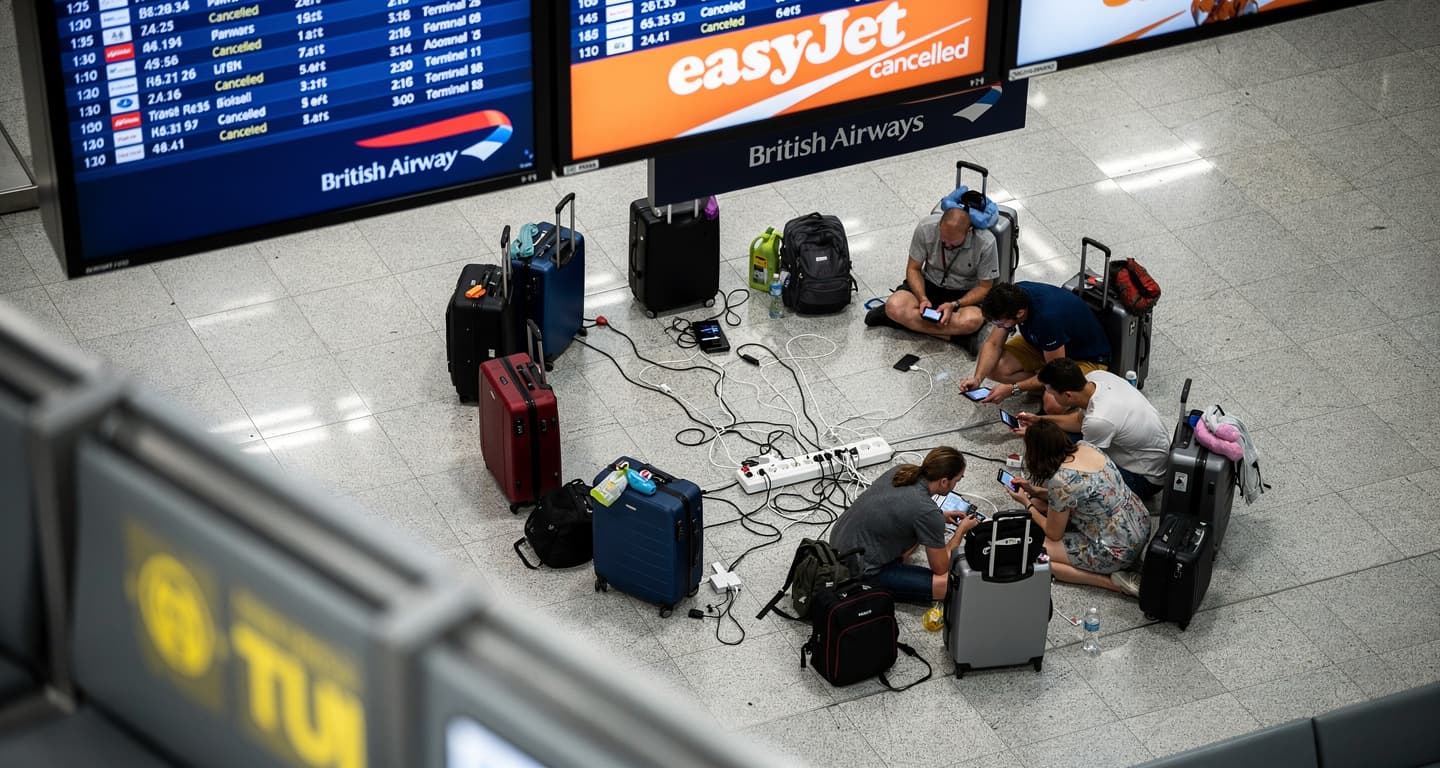
Escalating US–Iran tensions have disrupted flights through the Middle East, hitting India’s wellness tourism sector directly. The Kairali Ayurvedic Group reported that three guests arriving from the region cancelled trips scheduled within two weeks, with five more transit-route bookings now uncertain. The UAE is the group’s largest Middle Eastern source market, followed by Jordan, Syria and Saudi Arabia. Travel operators expect inquiries to fall as airfares rise and flight availability shrinks across Gulf hubs.
Medical tourism appears more resilient than wellness travel, because patients tend to pause rather than cancel. India’s medical tourism market was valued at USD 7.69 billion in 2024.
India earns billions from people who fly in to be healed. Much of that money arrives through a handful of Gulf airports that are now sitting under disrupted airspace. The link between a conflict involving the United States and Iran and a cancelled massage in Kerala is short, and it is direct.
The Kairali Ayurvedic Group has already lost bookings. Three guests due from the Middle East within two weeks cancelled outright. The plans of five more, routed through the region, are now uncertain. For one operator, that is a small number. For a sector that depends on reliable air connectivity, it is a measurement of something larger.
Tourism contributed 5.8% to India’s GDP and supported about 32.9 million jobs in 2022. That exposure does not stay contained to yoga retreats. When the routes through West Asia tighten, the cost lands on a service economy built partly on the assumption that people can always get here.
The choke points sit between West Asia and South Asia
India’s medical tourism market was valued at USD 7.69 billion in 2024, and government projections put it near USD 15.93 billion by 2030. The e-Medical visa scheme carried about 303,000 foreign medical tourists in 2024, down from roughly 410,000 in 2019 before the pandemic. Both figures sit on the same fragile base: planes that fly through the Gulf.
The reliance is concrete. The UAE, Saudi Arabia, Oman, Kuwait, Qatar and Bahrain together accounted for roughly 30 to 35% of international patients at leading chains such as Apollo Hospitals and Fortis Healthcare in recent pre-pandemic years, according to Apollo’s international patient data. These are high-value patients, often choosing cardiac and orthopaedic procedures with extended stays. When the Gulf corridor wobbles, India’s most lucrative inbound cohort wobbles with it.
Wellness travel is the more exposed segment because it is discretionary. Sandeep Arora, director at Brightsun Travel, reported a slight short-term impact on wellness bookings, with some international travellers postponing. He noted that interest holds steady from domestic and other Asian markets.
Medical demand behaves differently. Ishaan Dodhiwala, co-founder of Medijourn Solutions, explained that patients needing treatment usually proceed once logistics work, possibly after a short pause, rather than cancelling. Dr Sangita Reddy, joint managing director at Apollo Hospitals Enterprise, has made the same point: Gulf medical travel stays resilient during volatility because patients prioritise continuity of care. That resilience has a limit, and the limit is the runway.
The figures confirm the exposure. What they do not yet show is whether the medical segment can stay insulated if the disruptions hold.
A service economy priced on routes it does not control
India has spent years building a brand around being healed cheaply and well. The National Strategy and Roadmap for Medical and Wellness Tourism tasks two ministries with selling the country as a “Heal in India” destination, with streamlined visas and embassy coordination in Gulf source markets. The strategy is sound. It assumes stable air links it cannot guarantee.
Vidyut Jain, a healthcare partner at KPMG India, notes that India has become a top destination for cost-competitive treatment, with Middle Eastern patients forming a key share of inflows. Rupinder Brar, former additional director general at India’s Ministry of Tourism, has flagged the other half of the picture: wellness tourism is fast-growing but discretionary, and highly sensitive to perceptions of safety and connectivity.
Foreigners seeking treatment enter on a dedicated medical visa for recognised hospitals, with up to three attendants eligible for separate permits. Wellness-only visitors use standard tourist or e-Tourist visas, which grant no special healthcare rights. The legal door is open. The flight is the question.
The link runs cleanly from Washington and Tehran to a cancelled booking in Kerala. India built a healing economy on Gulf flight paths, and it does not control them.
Beyond the headline
The bigger picture
What looks like a niche hit to Kerala yoga retreats is a stress test for how deeply India’s service economy is tied into Gulf aviation corridors. As more of India’s growth comes from cross-border services — IT, education, high-end healthcare — instability in a few choke-point hubs can ripple through employment and regional development far beyond the tourism belt.
The reach
The real leverage sits with Gulf hub airlines and regulators who decide which routes stay profitable and safe. Their capacity and pricing choices determine whether travellers can reach Indian wellness centres or hospitals without prohibitive detours. That gives a handful of carriers outsized influence over India’s ability to monetise its healing brand.
The timing
These disruptions land as India scales up its medical-and-wellness brand ahead of peak travel seasons, and while several Gulf carriers recalibrate fleets and routes. Decisions in the coming schedule cycles — on overflight permissions, India–Gulf capacity, and marketing budgets — will shape whether this becomes a short scare or a structural setback.
What a disrupted Gulf corridor means for your trip
With Middle East airspace unsettled and fares volatile, anyone planning a wellness or treatment trip to India faces real decisions before booking.
- Wellness travellers from the West
Check the latest e-Tourist visa categories, fees and processing times on India’s official portal at indianvisaonline.gov.in before you book a package, since eligible nationalities can change with little notice. Compare live fares on India–Gulf carriers to gauge detours and added cost.
- Medical tourists routing through the Gulf
Review current advisories for your transit country on the US State Department, UK FCDO or Australian DFAT sites before confirming surgery dates. Ask your Indian hospital about rescheduling terms, as procedures can usually move without penalty if you give notice.
- Travel agents and operators
Build flexible rebooking into wellness packages now, given postponement patterns from Middle Eastern clients. Watch one-stop routing options through non-Gulf hubs to keep itineraries viable if capacity on India–Gulf sectors tightens further.
FAQ
What is the practical difference between India’s e-Tourist and e-Medical visas?
The e-Tourist visa allows leisure visitors multiple entries with a maximum stay of 30 to 90 days per visit, depending on nationality, but it is not meant for complex procedures. The e-Medical visa is for treatment at recognised hospitals, allows up to three entries with longer aggregate stays, and can be paired with separate attendant visas for family members, subject to documentation and extension rules.
What documentation do Indian hospitals usually require from foreign patients?
Major hospital groups generally request passport copies, recent medical reports, imaging, and a treating-physician referral letter before confirming appointments. Many issue a formal medical visa invitation letter that patients upload with their visa application. Some require advance deposits by bank transfer or card guarantee to secure surgery dates, particularly for high-demand specialties such as cardiology and oncology.
How do refund and rescheduling policies work for wellness retreats and medical trips?
Wellness resorts commonly apply tiered cancellation charges, with partial refunds for changes more than two weeks before arrival and forfeited deposits for last-minute cancellations. Hospitals typically allow rescheduling of procedures without penalty if informed in advance, though they may retain administrative or pre-operative testing costs. Policies are not standardised, so check each provider’s individual terms.
Explainer
- Kairali Ayurvedic Group
- An Indian wellness provider specialising in Ayurvedic treatment and retreat packages, with a notable client base from the Middle East. Its executive director, Abhilash Ramesh, confirmed direct cancellations from the region as Gulf flights were disrupted. The group ranks the UAE as its largest Middle Eastern source market, ahead of Jordan, Syria and Saudi Arabia.
- e-Medical visa
- A dedicated Indian visa category for foreign nationals seeking treatment at recognised hospitals and treatment centres. It permits up to three entries and a stay of 60 days per visit, with separate attendant visas available for family members. The scheme carried about 303,000 medical tourists in 2024, still below the 2019 pre-pandemic level.
- Medical visa
- India’s MED visa allows foreigners to enter specifically for specialised treatment at approved facilities, distinct from tourist entry. Applicants must supply medical letters and appointment confirmations, and extensions are possible for longer-term care. Up to three accompanying relatives can apply for the linked MED X attendant visa under the same framework.
RELATED STORIES