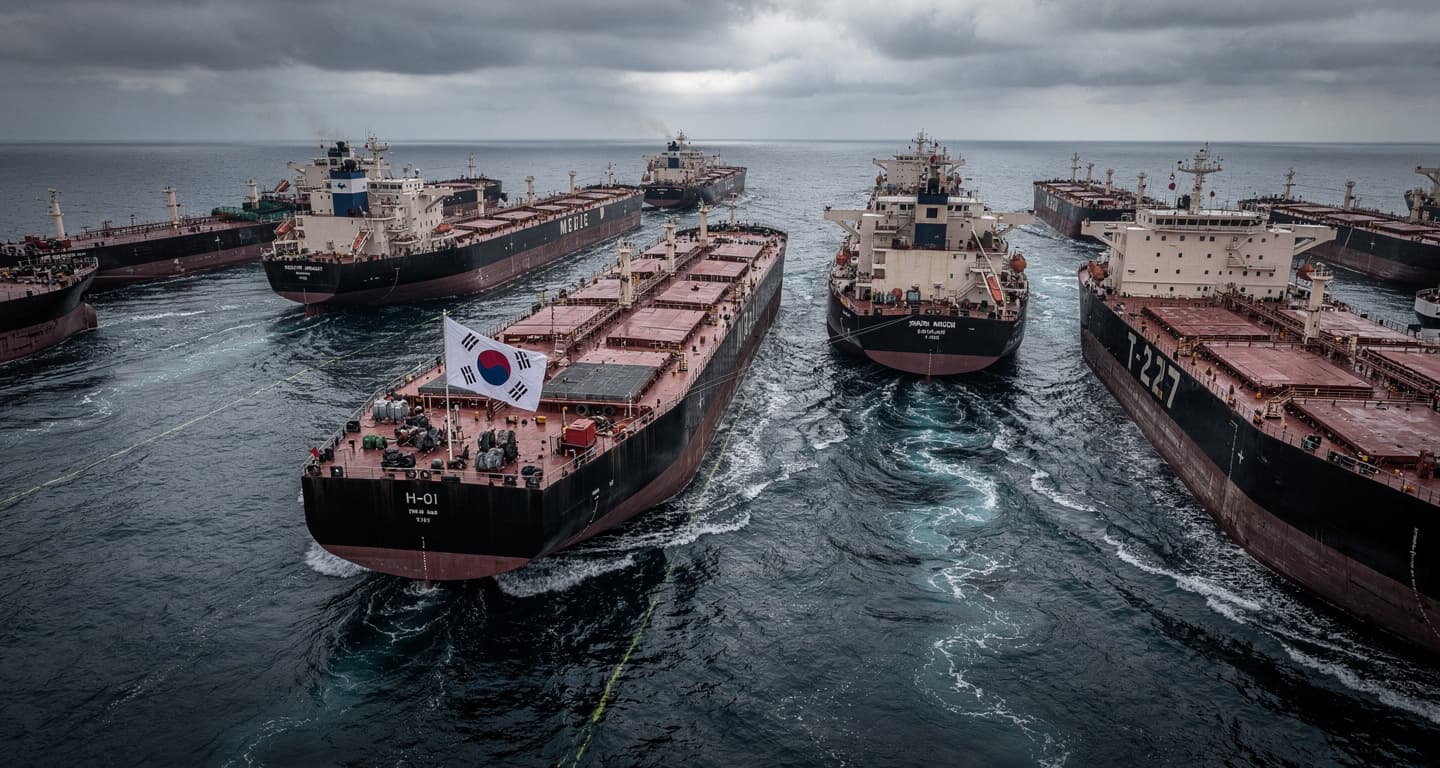
On 13 June 2026, the US National Oceanic and Atmospheric Administration confirmed El Niño conditions in the tropical Pacific, with sea-surface temperatures running up to 1.0°C above the long-term average. At the same time, instability around the Strait of Hormuz threatens the route that carries about 70% of crude oil imports to South-East Asia’s net-importing economies. UN food agencies warn the two shocks could collide across Thailand, Indonesia, the Philippines and Vietnam.
The Food and Agriculture Organization estimates millions of tonnes of Asia-Pacific rice production sit at risk. The danger is not either threat alone, but the moment they overlap.
The El Niño is confirmed. On 13 June 2026, NOAA’s Climate Prediction Center issued an advisory stating that warming had developed in the tropical Pacific, with a positive sea-surface temperature anomaly in the central Pacific compared with the long-term average.
That single fact would be manageable on its own. South-East Asia has farmed through El Niño cycles before. What makes 2026 different is what sits beside it: a Middle East energy route under strain, feeding the same farms the drought will hit.
The Strait of Hormuz carries the crude that runs the region’s irrigation pumps, fertiliser plants and power grids. El Niño raises the demand for all three at once. UN experts have begun calling the overlap a compound shock — and the question is no longer whether each threat is real, but what happens where they meet.
Two threats that share the same farms
Start with the climate record. NOAA’s June advisory put the warm anomaly in the Niño3.4 region at 0.5 to 1.0°C above average. That is the measured signal. What follows from it is a model projection, not a measurement — and the two should not be blurred.
The last strong El Niño offers the closest guide. FAO data show world paddy rice output rose just 0.3% in 2016, against 1.3% in 2014, with drought in Indonesia, Thailand and the Philippines named as key factors. The pattern is documented. The fear is that 2026 adds an energy crisis on top.
That energy crisis runs through one narrow channel. The Strait of Hormuz handles about 21% of global petroleum liquids consumption, according to US Energy Information Administration figures. In 2023, Middle East exporters supplied roughly 70% of crude imports to ASEAN’s net importers. Any toll or disruption flows straight into farm costs.
Steven Okun, chief executive of APAC Advisors, is precise about the mechanism. “Whether it is called a toll or user fee, [it] raises insurance and shipping costs, which flow straight through to fuel prices — and import-dependent economies in south-east Asia will be hit,” he said.
Here is the causal chain stated plainly. The fuel that moves through Hormuz powers the pumps that water rice the El Niño is drying out. Western refiners buy from the same chokepoint. The cost lands on both ends.
Just-in-time supply met a system with no slack
The deeper story is coupling. Food and energy systems used to fail separately. They no longer do.
South-East Asia’s reliance on Middle Eastern fuel and global fertiliser markets means a Pacific climate anomaly no longer hits in isolation. It cascades through trade routes, insurance costs and currency moves. The WMO reported in May 2026 that global average temperatures over the prior 12 months ran about 1.6°C above pre-industrial levels, with strong warm anomalies over South-East Asia raising drought risk.
Maximo Torero, chief economist at the FAO, has warned that when climate shocks like El Niño meet market disruption from geopolitical crises, the result is higher food import bills, tighter supplies and reduced buying power — falling hardest on vulnerable importing countries. Henning Gloystein of Eurasia Group adds the likely response: if transit costs rise at Hormuz, Asian and European importers will accelerate efforts to diversify away from Middle Eastern crude, LNG and fertiliser.
The ripple spreads next door. Drought and fuel-price swings in Thailand, Indonesia, the Philippines and Vietnam will push Cambodia, Laos and Malaysia to shore up food reserves and subsidise fuel, while Pacific Island states intensify pleas for subsidised climate finance.
So the loop closes where it opened. The El Niño is confirmed and the chokepoint is exposed. The risk was never one threat or the other. It is the narrow window in which both arrive together — and that window is now open.
Beyond the headline
The bigger picture
This crisis is less about a single conflict or weather event than about how tightly food and energy systems are now coupled across regions. South-East Asia’s dependence on Middle Eastern fuel and global fertiliser markets means climate anomalies cascade through trade routes, insurance costs and currency movements. It exposes how fragile just-in-time supply chains have become.
The money trail
The actors shaping outcomes are not only governments but insurers, shippers and commodity traders pricing risk for Hormuz transit and El Niño-exposed harvests. As these private decisions reprice routes and futures contracts, capital shifts towards less exposed suppliers. That can sideline vulnerable South-East Asian producers and concentrate power among exporters who can weather both shocks.
What isn’t being said
Most official statements focus on price spikes and tonnage at risk. Far less attention falls on who absorbs the adjustment: smallholder farmers and low-income urban consumers. Without targeted social protection and credit, they bear the brunt of reduced yields and volatile retail prices, turning a macroeconomic shock into a micro-level crisis of debt and nutrition.
What to track as the two shocks converge
With NOAA’s El Niño advisory live and Hormuz under strain, three groups have specific things to watch over the months ahead.
- Households tracking food and energy costs
Monitor NOAA’s Climate Prediction Center, which publishes monthly ENSO advisories on El Niño conditions and likely regional impacts. These bulletins let you anticipate how Pacific climate shifts feed into global food and fuel prices before they reach your supermarket and utility bills.
- Investors exposed to commodities and shipping
Review FAO’s Rice Market Monitor and ASEAN food-security briefs to gauge how projected yield changes could translate into price movements. Watch for any formal Iranian announcement on transit fees at Hormuz, which would immediately reshape energy and fertiliser outlooks for Asian importers and the contracts tied to them.
- Policy and aid professionals
Follow the ASEAN food-security framework and emergency rice reserve plans, alongside Paris Agreement adaptation reporting. These show where regional cushions exist and where binding enforcement falls short of the simultaneous climate and geopolitical pressure now building.
Explainer
- Strait of Hormuz
- A narrow waterway between Iran and Oman linking the Persian Gulf to the open ocean. It is the world’s most important oil chokepoint, carrying about 17.3 million barrels of crude and condensate per day in 2023. For South-East Asia, it is also the route for fertiliser shipments that few consumers ever think about until prices move.
- El Niño
- A recurring Pacific climate pattern marked by warmer-than-average sea-surface temperatures in the central and eastern tropical Pacific. It shifts rainfall worldwide, often bringing drought to South-East Asia and reduced rice yields. The 2015–2016 event slowed global paddy output growth to 0.3%, a benchmark forecasters now use to gauge 2026.
- FAO
- The Food and Agriculture Organization, the UN agency tasked with monitoring global food production and security. It tracks staple-crop output and publishes the Rice Market Monitor, a key reference for traders and governments. Its chief economist has flagged the interaction of El Niño and Middle East market pressure as its greatest current concern.
RELATED STORIES