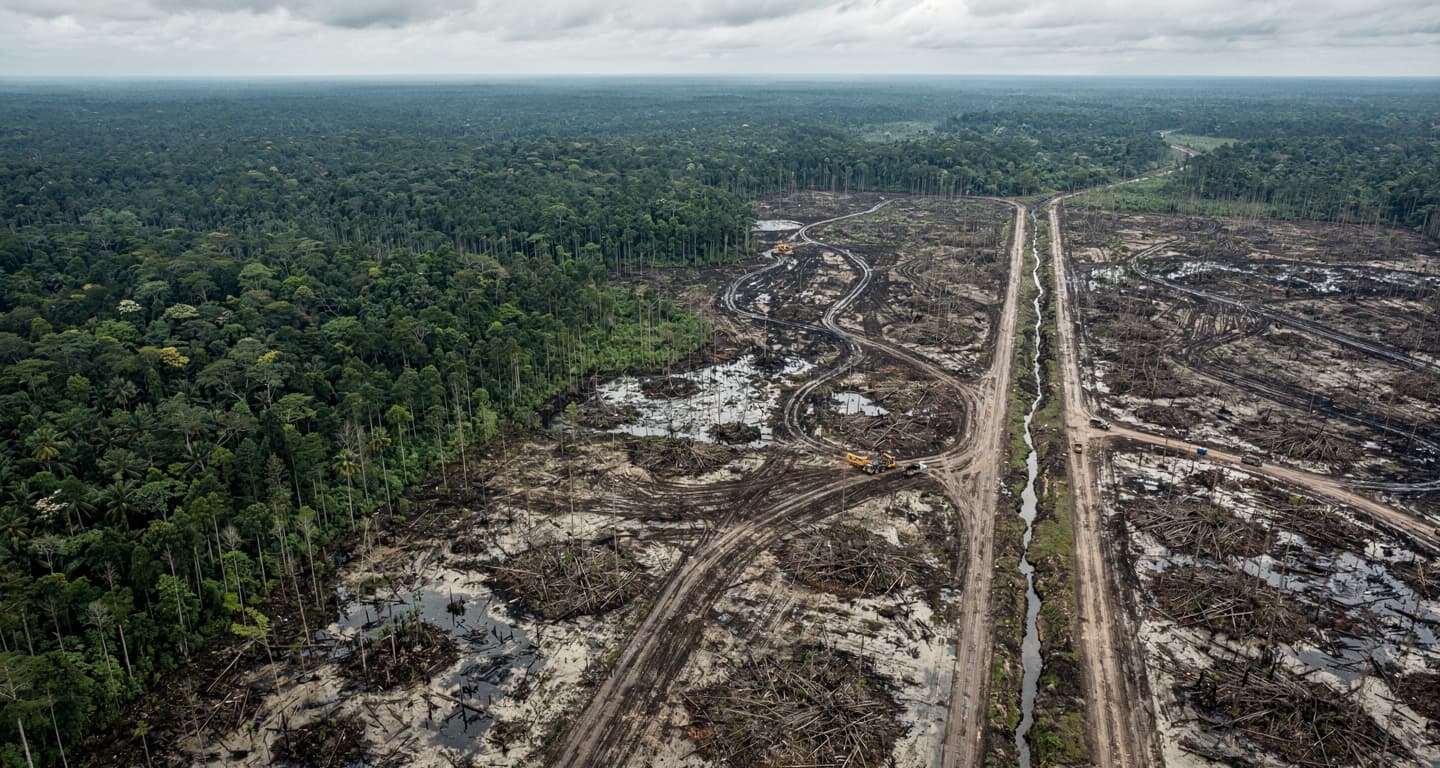
Indonesia’s Mount Bromo National Park has been closed indefinitely after a wildfire that started on August 3 burned through at least 127 hectares of savanna. The fire was still uncontained on August 7, with two water-bombing helicopters deployed against flames in steep, cliffside terrain.
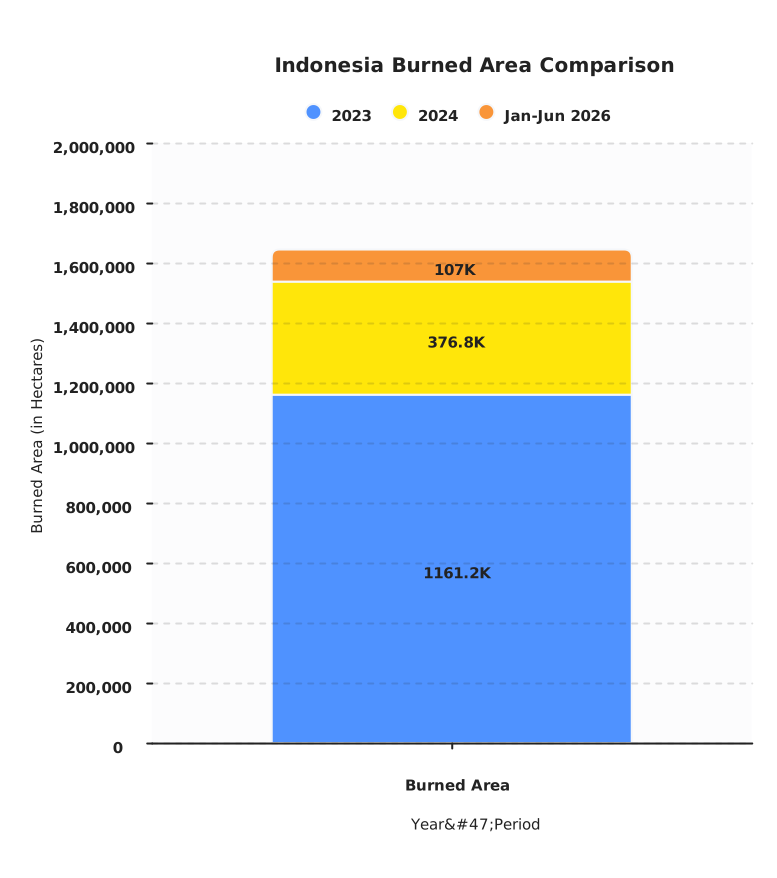
But the larger signal is national. Indonesia’s Forestry Ministry reported that more than 107,000 hectares burned across the country between January and June 2026. That is more than double the entire 2023 total, and the peak dry season is still ahead.
Indonesia has already lost more than 107,000 hectares to fire in the first six months of 2026. That is more than double the area burned in all of 2023, and the dry season is only now growing more intense. A wildfire that ignited on August 3 in Mount Bromo National Park is still burning four days later. The park, one of the country’s most visited sites, has been closed indefinitely. The national weather agency, BMKG, has warned that the 2026 dry season will be unusually intense and prolonged, partly because of El Niño. The Bromo fire is not an isolated incident. It is a symptom of a fire season that is already outpacing historical records, with months of dry weather still ahead.
The national burn tally is already ahead of every recent comparison
Between January and June, fires across Indonesia burned through more than 107,000 hectares, the Forestry Ministry reported. The figure exceeds the full-year total for 2023 by a wide margin, and the ministry’s data shows the 2026 dry season is only beginning. BMKG cautioned that the dry season would be more intense and prolonged than usual, raising the risk of wildfires and drought.
The fire at Mount Bromo, first reported on August 3, had consumed at least 127 hectares by August 7, according to park officials. Rudijanta Tjahja Nugraha, head of Bromo Tengger Semeru National Park, said the fire was burning in steep, cliffside terrain that ground crews could not easily reach. Two water-bombing helicopters were working the flames, but progress depended on wind. Fire official Bambang Setyo Antoko, coordinating the aerial response, indicated that conditions remained highly dependent on wind.
The park authority closed tourist access through the Jemplang, Coban Trisula, and Senduro entrances until further notice. The ministry said its wildfire response includes early warning systems, field patrols, and integrated emergency response, but the immediate challenge is terrain and weather.
The early-season burn tally is easier seen than described.
| Entity | Current rule | New rule | Effective date |
|---|---|---|---|
| Mount Bromo National Park | Park access managed by park authority; closures possible during emergencies | All tourist entrances closed indefinitely | August 3, 2026 |
| Ministry of Forestry | National fire response framework includes early warning, patrols, operational readiness | Deployed two water-bombing helicopters to Bromo fire | August 2026 |
| BMKG | Issues seasonal climate outlooks | Warned of prolonged intense dry season for 2026 | 2026 |
| Sources: Indonesia Ministry of Forestry, BMKG, Mount Bromo National Park | |||
The dry season is just beginning, and the burn tally is already ahead of recent years
El Niño conditions are suppressing rainfall across Southeast Asia, leaving savanna and peatlands primed to burn. The BMKG’s dry-season warning, issued earlier this year, is now materializing in the early-season burn tally. Climate monitoring used by regional forecasters shows the rainfall deficits are likely to persist, keeping fire danger elevated through the remainder of the dry season.
Indonesia’s response remains operational: park closures, water-bombing, and patrols. The gap, as in previous severe seasons, is not policy but speed and equipment. The ministry’s framework exists, but the early numbers suggest the system is already under strain. The next few weeks will show whether the Bromo fire is an isolated surge or the leading edge of a national crisis.
The fire at Mount Bromo is a local event, but the numbers behind it are national. Whether the season escalates further depends on rainfall that forecasters say is unlikely to arrive soon.
Beyond the headline
The Bigger Picture
This fire is less important as a single event than as a stress test for Indonesia’s dry-season fire management under stronger climate variability. When burned area is already running far ahead of prior years, local flare-ups become evidence that the national system is moving into a more dangerous phase, not merely responding to isolated ignition points.
The Timing
The critical timing factor is not the park closure itself but the coincidence of early-August burning with the expected peak of the dry season. That is when wind, fuel dryness, and suppression difficulty combine most sharply, making a fast-moving fire more likely to overwhelm ground access and force aerial support.
The Human Cost
The immediate burden falls on tourism workers, drivers, guides, and nearby vendors who depend on Mount Bromo visitor flow for income. Closure also shifts pressure onto local communities that must live with smoke, restricted access, and the uncertainty of whether the fire will spread beyond the park boundary.
What the Bromo fire means for travel, investment, and aid
With the dry season intensifying and the fire still uncontained, the closure of Mount Bromo creates immediate decisions for travelers, tour operators, investors, and aid groups.
- European tour operator with Southeast Asia packages
You need to contact clients with upcoming East Java itineraries immediately. The park closure is indefinite, and alternative destinations like Ijen Crater or Baluran National Park may be viable, but check official park notices and the Indonesian Ministry of Foreign Affairs travel advisory for updates. Adjust future package offerings to include flexible cancellation terms for the peak dry season.
- Western tourist planning a trip to East Java
Your planned visit to Mount Bromo is not possible for now. Monitor the park’s official notice pages and BMKG dry-season updates for any change. Revise your itinerary to include other East Java attractions, and build in flexibility—the 2023 Bromo fire kept the park closed for an extended period.
- US-based investor with APAC emerging market exposure
The escalating fire season could disrupt tourism revenue and agricultural output in Indonesia. Watch for the Forestry Ministry’s updated national burned-area tally and BMKG’s dry-season outlook through August. If the numbers accelerate, expect broader market volatility in Indonesian equities and the rupiah, particularly in tourism and plantation sectors.
- NGO worker operating in the affected region
Assess the immediate needs of communities near the park who depend on tourism income and may face smoke exposure. Prepare for potential health crises if haze spreads, and adapt long-term programs to address increased climate vulnerability. The early-season burn tally suggests this could be a prolonged emergency.
FAQ
How long is Mount Bromo closed?
The park authority closed access through Jemplang, Coban Trisula, and Senduro until further notice while firefighting continued. No fixed reopening date has been announced, and visitors should expect the closure to remain fluid until the fire is fully contained and safety checks are completed.
What caused the Bromo fire?
Officials said the cause had not yet been determined as of August 7. Investigators were still prioritizing suppression, so any early explanations should be treated as provisional until the park authority or forestry ministry releases a formal finding.
What does the 2023 comparison mean for travelers?
The 2023 Bromo fire burned more than 500 hectares, showing that the park can remain closed for a significant period after ignition if the burn spreads through dry savanna and steep terrain. That history suggests travelers should build flexibility into Java itineraries, especially in the peak dry season.
Explainer
- El Niño
- A naturally occurring climate pattern that warms the central and eastern tropical Pacific Ocean, disrupting global weather. It typically brings drier-than-normal conditions to Southeast Asia, increasing wildfire risk. The current episode contributed to 2023 and 2024 becoming the two warmest years on record globally.
- BMKG
- Indonesia’s Meteorology, Climatology, and Geophysics Agency, the national authority for weather, climate, and earthquake monitoring. It issues seasonal outlooks and early warnings for drought and fire risk. The agency operates under the Ministry of Transportation and provides data used by regional forecasters.
- Mount Bromo
- An active volcano and the centerpiece of Bromo Tengger Semeru National Park in East Java, Indonesia. Known for its sunrise views and vast sand sea, it is one of the country’s most visited tourist destinations. The park’s savanna ecosystem is highly flammable during the dry season, making it vulnerable to wildfires.
RELATED STORIES