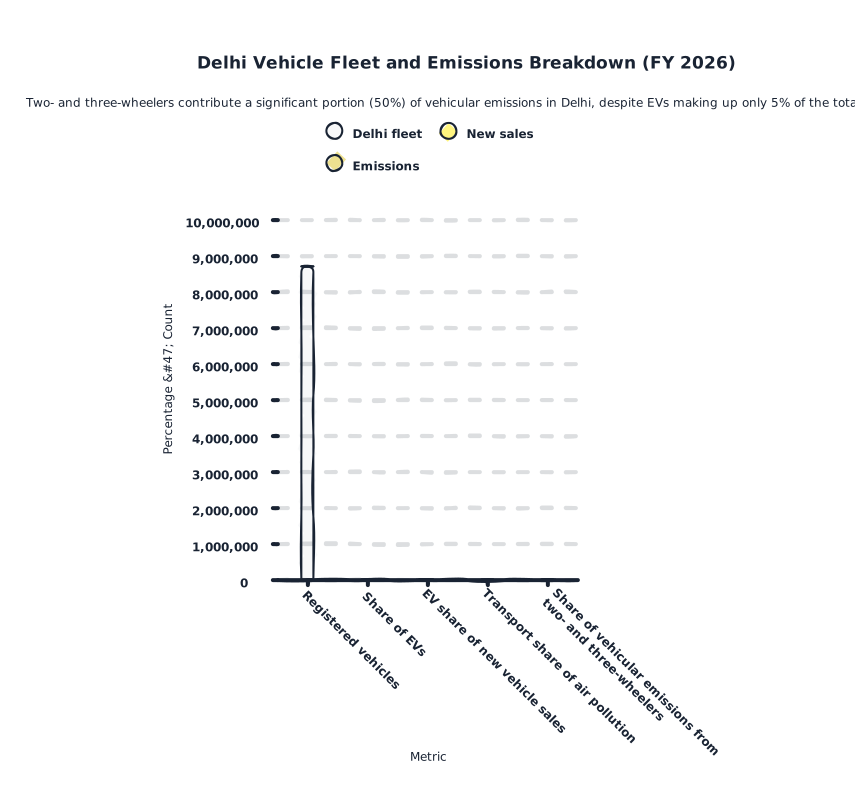
On July 1, 2026, Delhi enacted an electric vehicle policy that will ban new registrations of petrol three‑wheelers from January 2027 and two‑wheelers from April 2028, backed by ₹150 billion ($1.5 billion) in purchase incentives and scrappage rewards. The mandate targets the two vehicle classes that together make up nearly 70% of the city’s 8.7 million registered vehicles and generate roughly half of all vehicular emissions.
The policy’s success, however, hinges on a charging network and electricity grid that many drivers and analysts describe as already insufficient. The gap between regulatory deadlines and the physical infrastructure needed to meet them is the real test.
Delhi’s electricity grid hit a peak demand of about 94 gigawatts this summer, exposing transmission bottlenecks and low‑voltage problems at substations such as Jhatikara and Bhiwani. The city now plans to add millions of electric vehicles to that load. From January 2027, no new petrol three‑wheeler can be registered in the capital. Two‑wheelers follow in April 2028. The policy is among the most aggressive transport decarbonisation mandates ever attempted in a developing‑world megacity. It is also a mandate without the wires to support it.
The local government can refuse registrations. It cannot build the transmission lines, transformers, or battery storage that a large‑scale shift to electric mobility requires. That authority sits with national bodies whose project timelines are measured in years, not months. The question now is not whether Delhi’s air needs cleaner vehicles. It is whether the grid can catch up before the deadlines arrive.
The deadlines are fixed. The infrastructure is not.
The policy’s phase‑out schedule is precise. New petrol three‑wheelers cannot be registered after January 2027. New petrol two‑wheelers are barred from April 2028. Existing vehicles in both classes can keep running, but their share of the fleet will shrink as replacements go electric. The two categories account for nearly 70% of Delhi’s 8.7 million registered vehicles and, by official estimates, close to half of all vehicular emissions in the National Capital Region.
Jaideep Saraswat, head of clean power and electric mobility at the Vasudha Foundation, describes the policy as one of the most ambitious in India. The ambition is measurable. Electric vehicles still make up only about 5% of Delhi’s fleet, but in the 2026 financial year they reached 12.7% of new vehicle sales locally, against 8.3% nationally, according to energy analyst Ruchita Shah of Ember. The policy aims to accelerate that trend by tying purchase subsidies to hard registration cut‑off dates—a mechanism Shah describes as its most forward‑looking feature.
The breakdown below shows the scale of the challenge.
Sunil Dahiya, founder of Envirocatalyst, warns that cleaner vehicles will eventually reduce roadside exposure to emissions, but the health benefits will take years to materialise because existing petrol, diesel and CNG fleets persist. He stresses that success depends on major upgrades to Delhi’s electricity grid and the deployment of battery storage and time‑of‑day pricing at charging hubs. Without those, the policy risks stranding lower‑income riders and small operators who cannot charge reliably or affordably.
| Entity | Current rule | New rule | Effective date |
|---|---|---|---|
| Petrol three‑wheelers | No registration restriction | No new registrations permitted | January 2027 |
| Petrol two‑wheelers | No registration restriction | No new registrations permitted | April 2028 |
| Electric two‑wheelers | No state purchase incentive | Up to ₹30,000 subsidy (first year) | From July 2026 |
| Electric three‑wheelers | No state purchase incentive | Up to ₹50,000 subsidy (first year) | From July 2026 |
| Electric cars (ex‑showroom ≤₹3 million) | Road tax and registration fee applicable | Full waiver of road tax and registration fee | From July 2026 |
| Source: Delhi Electric Vehicle Policy 2026 notification | |||
The policy’s design is clear. What is less clear is whether the electricity system can deliver. Delhi can set registration conditions, but grid expansion and reliability fall under national bodies such as GRID‑INDIA and the Central Transmission Utility of India Limited. The Northern Region grid that supplies the capital is already strained, and the substations that would need to handle fast‑charging loads for buses and cargo vehicles are showing low‑voltage problems. The next 12 to 18 months will reveal whether transmission reinforcements can keep pace with the registration calendar.
The power to mandate, not to power
Delhi’s EV policy relies on the National Capital Territory’s authority to set vehicle registration conditions. It can refuse to register new petrol two‑ and three‑wheelers after the cut‑off dates. But it cannot build the high‑voltage lines or transformers that a large electric fleet will demand. That responsibility sits with central agencies whose project timelines are set in transmission‑planning meetings, not in the transport department’s policy document.
The Northern Region grid recently hit about 94 GW of peak demand, revealing constraints at substations such as Jhatikara and Bhiwani. Adding millions of electric vehicles—especially if they charge at night when solar generation stops and thermal plants dominate—will push those constraints further. Battery storage and time‑of‑use pricing could shift demand to periods of higher renewable output, but both require investment decisions that have not yet been made at the scale needed.
Western capital flows into Indian automotive and energy firms, shaping technology choices for vehicles and charging equipment. Investment in grid‑scale storage, efficient chargers and renewable projects can lower the cost and improve the reliability of Delhi’s transition. At the same time, Western consumption of outsourced services drives economic growth and rising mobility in the city, indirectly increasing transport demand. The link is not causal in a simple way, but it is present.
The deadlines are set. The grid upgrades are not. The next formal progress report on charging rollout and transmission reinforcements, expected within 12 to 18 months, will show whether the infrastructure is catching up. If it is not, the policy will face pressure to relax its phase‑out dates—or to enforce them anyway, leaving thousands of riders without a viable electric alternative.
Beyond the headline
The Bigger Picture
Delhi’s mandate exemplifies a broader shift in emerging economies from incentive‑only EV policies toward binding phase‑outs that use registration systems as levers for structural change. Rather than waiting for organic adoption driven by income growth, policymakers are trying to compress decades of fleet turnover into a few years, forcing simultaneous transformation of vehicles, financing and the power system in one of the world’s toughest air‑pollution environments.
The Response Gap
The policy presumes that charging and grid capacity will expand fast enough to absorb millions more electrified two‑ and three‑wheelers, but current signals from Northern Region transmission planning suggest a lag between regulatory ambition and physical upgrades. Without accelerated investment decisions and implementation by utilities and lenders, the gap between promised incentives and practical usability could leave lower‑income riders and operators stuck with ageing combustion fleets despite formal phase‑out dates.
The Timing
Delhi is acting just as Northern India’s electricity demand and renewable flows from Rajasthan are reshaping grid stress patterns, pushing transmission corridors near their limits. Moving to aggressive EV targets in this moment ties transport decarbonisation to a live debate over how quickly new lines, transformers and storage can be commissioned, making policy deadlines highly sensitive to project timelines set in recent transmission‑planning meetings rather than abstract long‑term climate goals.
With the first ban months away, three decisions that matter now
The policy’s success will depend on decisions made now by investors, suppliers, and development agencies.
- Indian EV charging infrastructure investor
Evaluate investment strategies for charging networks, grid upgrades, and battery storage solutions in Delhi, considering the policy’s specific timelines and potential bottlenecks in grid expansion and financing. Monitor GRID‑INDIA and Central Transmission Utility of India Limited publications on Northern Region transmission reinforcements, especially projects around Jhatikara and related substations, to gauge when additional capacity and reliability improvements that support large‑scale EV charging are expected to come online.
- Western automotive component supplier to India
Assess the implications of Delhi’s policy on production and supply chain strategies for EV components, focusing on the specific vehicle classes affected and the potential for technology adoption delays due to infrastructure or affordability. The rapid phase‑out of petrol two‑ and three‑wheelers will dramatically shift demand towards EV components, but market readiness and consumer adoption hurdles remain significant risks.
- International development agency focused on urban air quality
Analyze the policy’s implementation, successes, and failures to inform future urban air quality and sustainable transport initiatives in other pollution‑burdened cities, particularly regarding infrastructure coordination and consumer incentives. Delhi’s experience will offer a high‑stakes case study for aggressive EV mandates in developing‑world megacities.
- Western financial institution with Indian infrastructure exposure
Review financing strategies for Delhi’s EV transition, including grid modernization and charging infrastructure, while assessing the creditworthiness of projects and the regulatory environment for timely returns on investment. The estimated $1.5 billion cost and the need for grid upgrades present both lending opportunities and risks related to project financing and the timely execution of large‑scale infrastructure projects.
FAQ
Who is eligible for Delhi’s EV purchase incentives?
Delhi’s Electric Vehicle Policy 2026 specifies different purchase incentive caps by vehicle type and year. Electric two‑wheelers and three‑wheelers must meet defined battery and performance criteria to qualify, and incentives are available only for vehicles registered in Delhi during the policy period. Buyers need to check model‑specific eligibility lists and ensure they complete registration within the relevant year to access the maximum subsidy tiers.
Can I keep using my existing petrol two‑wheeler or three‑wheeler after the bans?
Yes. Even after registration bans begin in 2027 and 2028, existing petrol three‑wheelers and two‑wheelers can legally remain on Delhi’s roads, provided they pass standard fitness tests and meet emission norms. Owners considering whether to replace vehicles must weigh expected resale values, future tightening of emission standards and potential operating restrictions, since the current policy targets new registrations rather than immediate removal of the legacy fleet.
Explainer
- PM2.5
- Fine particulate matter with a diameter of 2.5 micrometres or less, small enough to enter the bloodstream. Delhi’s winter concentrations routinely exceed the WHO’s 24‑hour guideline of 15 micrograms per cubic metre by a factor of six or more. Transport is a major source, and electrification aims to cut these emissions at the tailpipe.
- GRID‑INDIA
- India’s national grid operator, responsible for managing the country’s electricity transmission network and ensuring system reliability. It must approve and coordinate the construction of new high‑voltage lines and transformers that Delhi’s EV rollout will require. Its project timelines are set through multi‑year planning cycles, not by state‑level transport policies.
- Time‑of‑use pricing
- An electricity tariff structure that charges different rates depending on the time of day, designed to shift consumption away from peak periods. For EV charging, it could encourage drivers to plug in when renewable generation is high and grid stress is low. Delhi’s policy discussions include it as a tool to manage the added load, but implementation requires regulatory approval and smart‑meter deployment.
- Battery storage
- Large‑scale batteries that store electricity when supply exceeds demand and release it when needed, helping to balance intermittent renewable sources like solar. At EV charging hubs, storage can reduce strain on the grid during peak hours and allow more charging to run on clean power. Sunil Dahiya of Envirocatalyst has called for their deployment as a condition for the mandate’s success.
RELATED STORIES


![Top 10 Volcanoes to Climb in Indonesia [Prices & Trekking Experience] - Uncategorized () - September 2026 - Indoneo](https://www.indoneo.com/wp-content/uploads/2024/06/polina-kuzovkova-Bjr5aSbHeSI-unsplash.jpg.webp)