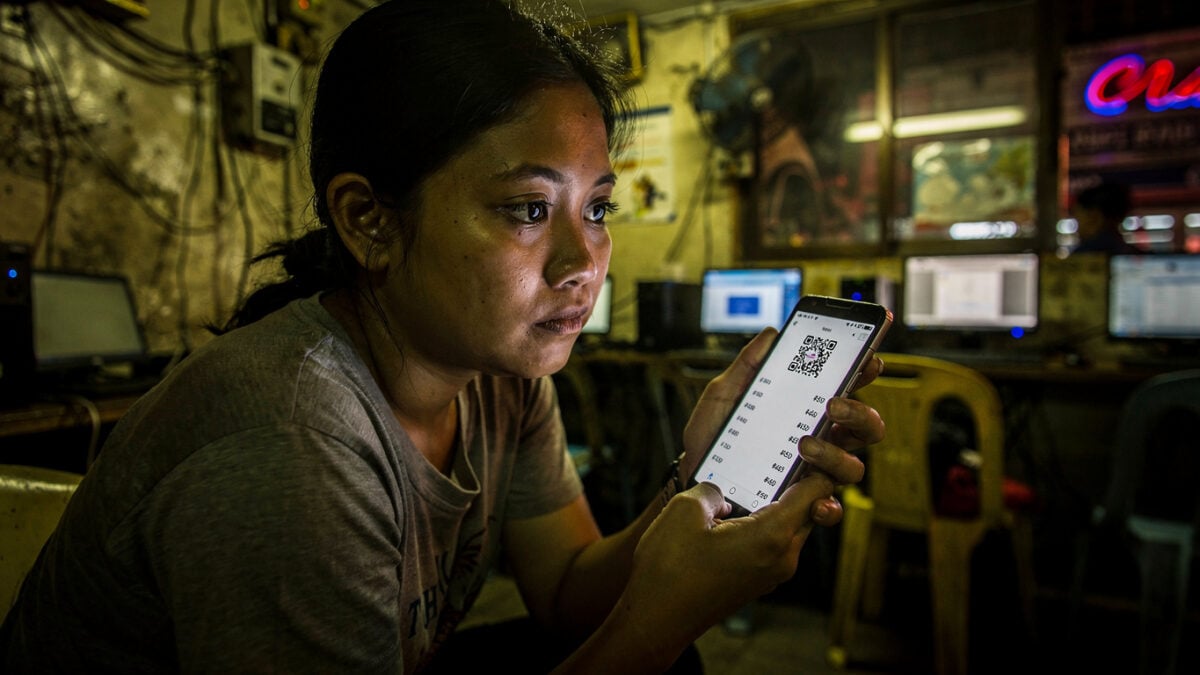
The Bangko Sentral ng Pilipinas has proposed tighter merchant‑vetting rules and warned that payment platforms could lose their licences if they fail to stop illegal activity, after uncovering more than 8,000 front merchant accounts—including online casinos posing as beauty salons. The crackdown lands weeks before Mynt, the parent of GCash, is set to launch the country’s largest‑ever initial public offering in October 2026, and as rival Maya weighs its own listing.
Digital payments now account for 64.7% of retail transactions, up from 10% by volume in 2018, but illegal gambling represents roughly half of the Philippine gaming market. The new rules aim to clean up the rails before public capital floods in.
The Philippines’ two largest fintech companies face a regulatory reckoning just as they prepare to tap public markets. Bangko Sentral ng Pilipinas has warned that payment platforms could lose their licences if they repeatedly fail to stop illegal activity, after surveillance uncovered thousands of front merchants—online casinos disguised as bakeries and beauty salons—routing bets through e‑wallets.
Mamerto Tangonan, the BSP deputy governor who oversaw the surveillance, watched the data stream in: tiny payments of 50 pesos, about 80 US cents, arriving past midnight through merchants listed as ordinary shops. “You shouldn’t sacrifice safety for growth,” he said. The discovery lands weeks before Mynt’s GCash unit launches a record initial public offering in October, sized at up to PHP92.3 billion, and as Maya, backed by KKR and PLDT, considers its own listing. The same rapid expansion that made them IPO candidates now exposes them to a compliance risk that could rewrite their valuations.
Half the gaming market, hidden in plain sight
Illegal gambling now accounts for roughly half of the Philippine gaming market. Legal online e‑games generated about PHP201 billion in gross gaming revenue in 2025, part of a total Philippine gaming market of roughly PHP396 billion, according to PAGCOR and industry data. Much of that money moves through the same e‑wallets that have driven digital payments to 64.7% of retail transactions—a share that already exceeds the central bank’s own target for 2028.
The speed of that adoption is easier seen than read.
Tangonan’s team traced the flow. Merchants that looked like bakeries on paper were taking in thousands of nighttime payments of as little as 50 pesos, often past midnight. Those payments were bets placed on unregistered online casinos. More than 8,000 merchant accounts have been closed for allegedly illegal activity, many involving mom‑and‑pop store fronts.
The BSP’s draft circular, issued in September 2026, shifts the burden. Payment platforms must now identify the actual merchant and ultimate beneficiary for each transaction, avoid indirect chains through multiple intermediaries, and treat casinos and virtual asset service providers as high‑risk—requiring direct relationships and enhanced due diligence. New applications for operator‑of‑payment‑system registrations would be suspended for 12 months from the rules’ effectivity. The draft builds on earlier BSP rules, including Circular No. 1237 issued in June 2026, which required digital financial marketplaces to hold at least PHP1 billion in capital and meet consumer‑protection standards.
Jonathan Ravelas, senior adviser at Reyes Tacandong & Co., cautioned that the indicative IPO price ceiling is not a guarantee. “The P10 is a ceiling, not a promise,” he said. Jocel De Guzman, co‑founder of Scam Watch Pilipinas, stressed that Mynt’s growing scale makes safety integral to platform design, not a reactive fix.
| Entity | Current rule | New rule | Effective date |
|---|---|---|---|
| Payment platforms | Onboard merchants via aggregators; limited due diligence | Must identify actual merchant and ultimate beneficiary; avoid indirect chains | 15 days after publication in Official Gazette |
| Merchant aggregators | Rapid onboarding of small businesses | Platforms must ensure aggregators comply with direct‑relationship and due‑diligence standards | Same as above |
| High‑risk merchants (casinos, VASPs) | No special treatment | Direct arrangements only; enhanced due diligence; transaction and settlement caps | Same as above |
| New payment system operators | Open registration | 12‑month suspension of new applications | From effectivity of circular |
| Source: BSP draft circular on merchant acquisition, September 2026; BSP Circular No. 1237 | |||
The regulators hold all the cards
The crackdown is not happening in a vacuum. BSP controls payment licences; PAGCOR defines legal gaming; the SEC oversees capital‑market access. Together, they can dictate which fintechs scale, list shares, or partner with high‑risk sectors. The draft rules align with global standards: the EU’s new anti‑money laundering regulation extends due diligence to gambling and digital wallets.
For the Western expat paying a QR code at a Manila café, the changes will be mostly invisible—fewer suspicious merchants, clearer transaction descriptors—but the onboarding of new small outlets may slow. Core functions like bill payment and supermarket purchases should stay unchanged.
For investors sizing up Mynt’s PHP92.3 billion offering, the question is not whether digital payments will keep growing. It is whether the platforms can scrub their merchant networks clean without slowing the growth that justified the price.
Beyond the headline
The money trail
The enforcement push will force fintechs to reveal how much of their transaction volume came from grey‑market flows. Merchant aggregators and e‑wallets were paid to maximise volume, not to interrogate who ultimately received funds. As BSP forces platforms to trace beneficial ownership and cut off unlicensed gambling, investors will see which business models can survive with cleaner flows—and which were quietly dependent on the grey market.
The power behind it
BSP, PAGCOR, and the SEC together control the licences, the gaming taxonomy, and the capital‑market access that fintechs need. Their combined leverage lets them decide which platforms can scale, list shares, or partner with high‑risk sectors. That regulatory alignment, rather than merchant behaviour alone, will determine whether GCash and Maya remain growth stories or become cautionary examples of over‑reliance on lightly supervised transaction streams.
The timing
Moving now lets BSP lock in tougher AML and due‑diligence standards before GCash becomes a public‑market bellwether and before digital payments exceed their current two‑thirds share of retail transactions. The sequence suggests regulators want to reshape the risk profile of Philippine fintech before new capital flows cement today’s structures.
What the crackdown means for your money
With the BSP’s draft rules set to reshape merchant acquisition and the Mynt IPO weeks away, four groups face distinct decisions.
- Western investor considering Mynt’s GCash IPO
Review Mynt’s updated IPO prospectus and Philippine SEC filings for disclosed enforcement risks, merchant‑vetting controls, and any BSP supervisory findings tied to online gambling or aggregator merchants before participating in the planned October 2026 listing. The indicative PHP10 ceiling is not a promise; focus on the bookbuilding range and the platform’s ability to demonstrate robust AML controls.
- Western expat or digital nomad in the Philippines
Monitor BSP’s consumer‑protection advisories. While overall transaction security should improve, the onboarding of new small merchants may temporarily slow, and some fringe services might lose digital payment access. Stick to clearly identified, licensed merchants for large transactions and watch for any BSP notices about payment firms facing supervisory action.
- Global anti‑money laundering compliance officer
Analyse the BSP’s final merchant acquisition circular and its enforcement mechanisms as a case study for strengthening AML/CFT frameworks in high‑growth digital payment ecosystems. Pay particular attention to the requirements for beneficial ownership identification and the treatment of high‑risk sectors like online gambling—these could become templates for other emerging markets.
- European tour operator with Southeast Asia packages
Advise clients travelling to the Philippines that digital payments are becoming safer, but some small merchants may temporarily lose wallet acceptance. Encourage tourists to use well‑known QR codes and monitor BSP advisories for any disruptions. The core payment experience for transport, hotels, and supermarkets should remain reliable.
FAQ
When will the BSP merchant‑vetting circular take effect?
The draft circular would take effect 15 days after publication in the Official Gazette or on the BSP website. The suspension of new operator‑of‑payment‑system registrations would last 12 months from that date. Existing operators continue under current licences but must adjust merchant relationships to comply once the rules are effective.
Will I still be able to use GCash and Maya normally?
Yes. The proposals focus on back‑end merchant acquisition, not front‑end user access. Wallet apps should still work for bill payments, transfers, and purchases. However, some merchants—especially gambling‑adjacent or poorly documented outlets—may disappear from QR menus or lose wallet acceptance. Favour clearly identified, licensed merchants.
How will the rules treat online gambling and crypto merchants?
Under the draft rules, casinos, other gambling operators, virtual asset service providers, and money service businesses are treated as high‑risk. BSP‑supervised institutions must deal with them only through direct arrangements, apply enhanced due diligence, set transaction and settlement caps, and terminate relationships if required licences are missing.
Explainer
- Bangko Sentral ng Pilipinas (BSP)
- The Philippine central bank, responsible for monetary policy, currency issuance, and supervision of banks and payment systems. It has pushed digital payments aggressively, helping lift the share of electronic transactions from 10% of retail payments in 2018 to 64.7% in 2025. Its draft merchant‑acquisition rules mark a shift from promoting growth to enforcing safety.
- GCash
- A mobile wallet operated by Mynt, a joint venture of Globe Telecom, Ayala Corporation, and Ant International. It dominates the Philippine e‑wallet market with over 80 million registered users. Mynt’s planned October 2026 IPO, sized at up to PHP92.3 billion, would be the country’s largest equity offering.
- Maya
- A digital payments and banking platform owned by Voyager Innovations, backed by KKR & Co., PLDT, and Tencent. It offers an e‑wallet and a digital bank licence, competing directly with GCash. Maya supports tighter merchant oversight and is considering its own public listing.
- Merchant aggregator
- An intermediary that onboards multiple small businesses onto a payment platform’s network, handling registration and settlement. In the Philippines, aggregators helped rapidly expand digital payments across the archipelago but also created gaps in due diligence, allowing front merchants to slip through.
- Philippine Amusement and Gaming Corporation (PAGCOR)
- The state‑run regulator and operator of games of chance in the Philippines. It licenses casinos and oversees the gaming industry, but its authority over unregistered online casinos that use payment rails is limited. Chairman Alejandro Tengco has acknowledged that many innocuous‑sounding businesses are really unregistered casinos.
RELATED STORIES


