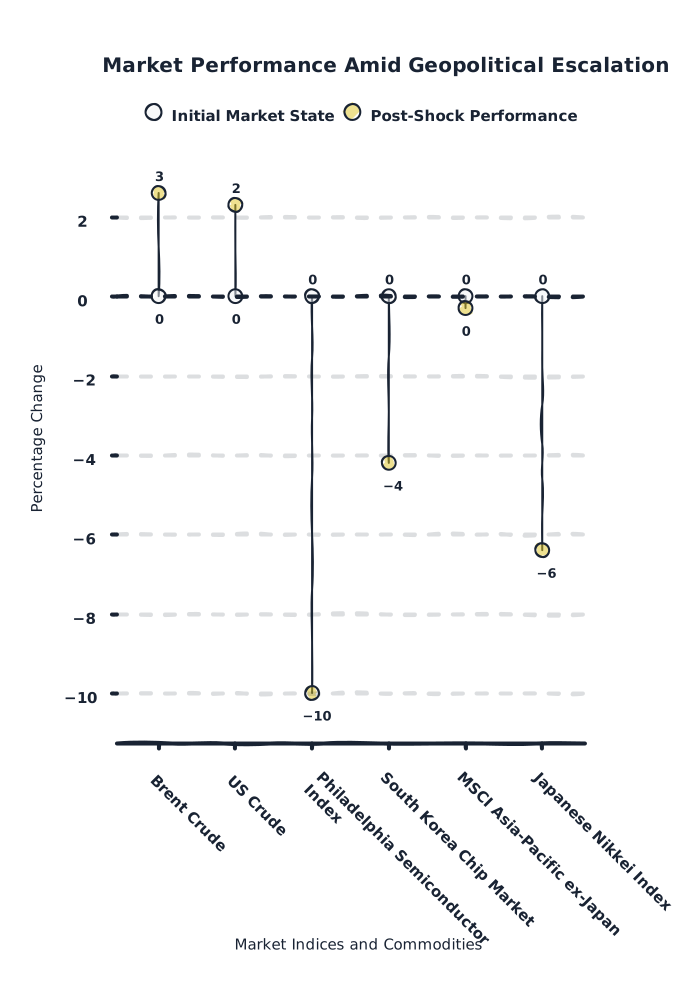
Brent crude jumped to US$90.40 a barrel on Monday, a 2.6% rise, as US forces struck Iran for a ninth consecutive day and tanker traffic through the Strait of Hormuz remained minimal. The Philadelphia Semiconductor Index lost 10% in the week just ended, and 30-year Treasury yields pushed back above 5% as futures priced a 60% chance of a Federal Reserve rate increase in September.
The simultaneous shocks land just as Alphabet, Tesla, and Intel report earnings this week, testing whether AI-driven equity valuations can withstand a repricing of energy and interest-rate risk. The real test is not the earnings themselves but the collision.
The Philadelphia Semiconductor Index has shed 20% from its June peak. That decline was already under way when two additional shocks landed: crude oil surged to its highest since the war’s outbreak, breaking above a key psychological level, and long-dated Treasury yields pushed back above 5% as traders repriced the Federal Reserve’s rate path. The three moves share a target — the earnings releases from Alphabet, Tesla, and Intel that start this week. For the first time in this cycle, the AI-driven equity rally is not fighting one headwind. It is fighting all of them at once.
The chip rout that changes the earnings question
Brent crude climbed to US$90.40 a barrel on Monday as US forces struck Iran for the ninth straight day. Tanker traffic through the Strait of Hormuz was minimal, and one vessel was reported on fire, traders said.
Shane Oliver, head of investment strategy at AMP, warned: “The longer the Strait remains closed and the war escalates the greater the risk that oil prices will have to rise to around US$150/barrel to bring demand down to match the hit to supply.”
In Seoul, the chip-heavy market fell 4.2% on Monday.
It followed a near-9% slump the previous week, when retail traders were forced to unwind leveraged positions.
Japan’s Nikkei index, which tumbled 6.4% in the week just ended, was closed for a holiday. Futures pointed to further weakness.
Long-dated Treasury yields pushed back above 5% for the first time since mid-June.
Futures now price 29 basis points of Fed tightening by year-end.
The implied probability of a September increase has risen sharply to 60%.
The simultaneous nature of these moves is what makes this week unusual.
Chinese AI developer Moonshot claimed its new Kimi K3 model matched Anthropic’s Fable, intensifying worries about overvaluation in AI names. That claim, even if disputed, landed in a market already questioning the payoff from heavy AI spending.
| Metric | Figure | Source | Date |
|---|---|---|---|
| Brent crude | US$90.40 | Market data | July 20, 2026 |
| US crude | US$84.39 | Market data | July 20, 2026 |
| South Korea Kospi (daily) | -4.2% | Market data | July 20, 2026 |
| Nikkei 225 (weekly) | -6.4% | Market data | Week ended July 18, 2026 |
| MSCI Asia-Pacific ex-Japan | -0.3% | Market data | July 20, 2026 |
| Gold | US$3,998 (-0.5%) | Market data | July 20, 2026 |
| Source: Market data as of Monday close, per reporting cited in brief. | |||
The fragility the rally hid
High valuations and concentrated exposures leave global equity markets vulnerable to energy-cost shocks, particularly for AI infrastructure and data centres. The selloff that began in June is now feeding into Asia’s chip-heavy indices, and the earnings season that was supposed to calm nerves is adding fuel.
Savita Subramanian, Bank of America’s equity analyst, projects that S&P 500 earnings will run 5 percentage points ahead of consensus, with semiconductors forecast to rise roughly 130% from a year ago.
Bruce Kasman, chief economist at JPMorgan, said in his view the balance of risks is leaning toward an earlier Federal Reserve increase. His base case remains a gradual pivot in 2027, but the oil spike and renewed yield pressure have shortened the timeline markets are willing to accept.
The consequences reach beyond portfolios. Higher gasoline costs and rising mortgage rates are hitting household budgets in the US and Europe. Governments, meanwhile, face higher debt-service costs that complicate election-year spending. For businesses with global supply chains, shipping, insurance, and financing costs are all moving in the same direction — up.
The 20% drop in the Philadelphia Semiconductor Index is now the number that reframes the whole week. The earnings that begin on Wednesday will either pull markets back from the edge or prove that the repricing has further to run.
Beyond the headline
The Timing
This week matters because markets are forcing three unresolved stories to collide at once: war risk, AI valuation risk, and interest-rate risk. That makes earnings guidance more important than the headline EPS number, because investors are trying to price whether management teams see the same macro strain that futures and bond traders are already expressing.
The Bigger Picture
The deeper pattern is that AI leadership has become a macro trade, not just a stock-picking theme. When chip valuations, oil prices, and Treasury yields start moving together, the market is no longer debating individual companies—it is testing whether the entire growth-earnings regime can survive a sustained cost-of-capital shock.
The Reach
The mechanism is valuation compression: if earnings guidance disappoints while yields stay high, passive and retirement-linked accounts absorb the decline even without owning the headline stocks directly.
A portfolio check before the week’s numbers arrive
The simultaneous macro shocks make staying on the sidelines a position in itself. Here is what four types of reader need to consider now.
- US-based investor with APAC emerging market exposure
Re-examine how sensitive your portfolio is to a sustained oil shock and higher-for-longer rates. Consider hedging via energy-sector ETFs or reducing positions in leveraged tech and semiconductor-heavy passive funds. South Korea and Japan, both deeply tied to chip cycles, carry concentrated downside if the AI capex story cracks.
- Western semiconductor procurement manager
The chip stock rout signals a potential capex pullback that could filter through to component pricing and availability. Diversify supplier relationships now, and update procurement forecasts with a scenario where chip demand softens. The next six months are the risk window you cannot ignore.
- European Central Bank policy analyst
The global repricing of rate expectations, coupled with the oil spike, will flow into the ECB’s meeting on Thursday. Even if rates stay at 2.25%, the market’s pricing of a September hike is already baked. Analyse how oil-driven inflation and a hawkish Fed could shift your own policy recommendation, especially if eurozone bond yields follow US yields higher.
- US household budget planner
Rising gasoline and heating costs, plus the effect of higher bond yields on mortgage and credit-card rates, mean your spending power will shrink if these moves persist. Revisit your budget now, and consider locking in any large purchases or refinancing before rates move further.
Explainer
- Strait of Hormuz
- The narrow waterway connecting the Persian Gulf to the Gulf of Oman and the Arabian Sea. Roughly 20% of the world’s oil supply passes through it, making any disruption immediately global. Tanker traffic through the strait fell sharply this week after a fire on one vessel raised war-risk premiums.
- Philadelphia Semiconductor Index
- A benchmark tracking 30 US-listed semiconductor companies, weighted by market capitalisation. Its 20% peak-to-trough decline since June is the deepest selloff of the current cycle. The index is closely watched as a proxy for global chip demand and AI-related capital spending.
- Yen intervention
- Direct currency-market action by Japan’s Ministry of Finance to buy yen and sell dollars when the exchange rate moves too far or too fast. With the dollar near ¥162 and officials flagging their readiness, traders are preparing for a repeat of the multi-billion-dollar intervention last seen in 2022 near the ¥150 level.
RELATED STORIES