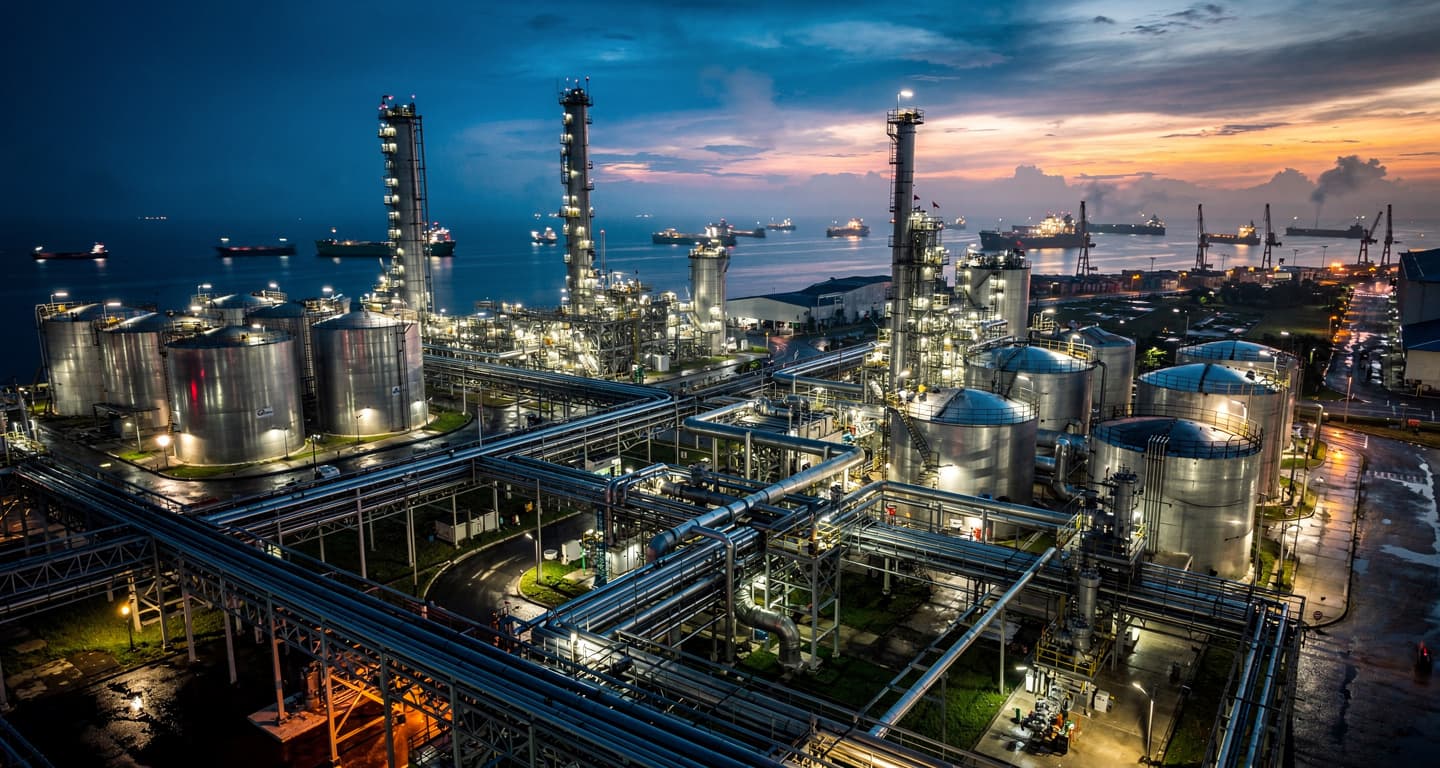
The International Energy Agency warns that Southeast Asia’s net oil import bill could climb from about US$80 billion in 2024 to roughly US$245 billion by 2035 if the region keeps its fossil-fuel-heavy energy policies. The 2026 update frames the recent Iran war as a stark wake-up call, exposing how oil and gas routed through the Strait of Hormuz leaves the region open to price and supply shocks. IEA Executive Director Fatih Birol calls diversification of sources and routes a central priority.
The war is already shifting behaviour, from electric vehicle sales to rooftop solar. Whether national targets translate into built capacity is the open question.
A single waterway carries most of the oil and gas that keeps Southeast Asia’s factories running. When the Iran war briefly closed the Strait of Hormuz in mid-2026, the cost showed up fast: higher energy bills, then inflation, across economies that never controlled the underlying risk.
The International Energy Agency has now put a number on the exposure. In its 2026 Southeast Asia energy security update, the agency warns the region’s net oil import bill could roughly triple over the next decade if current policies hold. The figure is a projection, not a measurement — but it rests on demand trends already in the data.
Fatih Birol, the IEA’s executive director, has long argued that heavy reliance on imported fuels leaves Asia exposed to shocks it cannot manage. The war made the argument concrete. What it did not do was close the gap between what governments have promised and what they have built.
The bill triples while the targets stall
The IEA’s projection is driven mainly by transport and power demand, both still tied to imported fuel. A tripling import bill is not a forecast of doom. It is the price tag for changing nothing.
The diversification plans exist on paper. Indonesia’s updated National Energy Policy targets a 31% share of new and renewable energy in the primary mix by 2050. Government monitoring in 2025 showed renewables at only around 13–14%. That is the gap between a target and a result, and it is wide.
Vietnam and Thailand have set sharper power-sector goals, detailed in their long-term strategies filed with the UNFCCC. The contrast across the three economies is the story the headline figure hides.
| Country | Current rule | New rule | Effective date |
|---|---|---|---|
| Indonesia | ~13–14% renewables in primary energy mix (2025) | 31% new and renewable energy share | 2050 |
| Vietnam | Coal-heavy power mix | 47% of electricity from renewables, including large hydro | 2030 |
| Thailand | Gas and coal-dominated capacity | ~50% renewable electricity capacity | 2037 |
Keisuke Sadamori, the IEA’s director of energy markets and security, has stressed that diversifying both fuels and routes — more LNG from Australia and the United States, more domestic renewables — is essential to cut disruption risk. The catch sits in the timing. Western demand for the region’s electronics and goods locked much of Southeast Asia into coal- and gas-fired power in the first place, and those carbon-intensive exports now face fresh costs under the EU’s Carbon Border Adjustment Mechanism, which began its definitive phase on 1 January 2026.
The numbers prove the exposure is real. Less understood is why a decade of signed strategies has not yet narrowed it.
One chokepoint, the whole region’s risk
The vulnerability is structural, not accidental. Southeast Asia’s manufacturing boom rode on cheap imported hydrocarbons, much of it transiting one narrow strait. That model turns every Middle East shock into an inflation and budget story for economies far from the conflict.
The war has already pushed neighbours to move. As the recent reopening of the strait showed, the physical risk eased while the structural dependence did not — a point examined in our reporting on how the Iran war rewired Asia’s trade routes.
The commitments are not new. Under the Paris Agreement, ASEAN parties have filed updated pledges and long-term strategies promising more renewables. UNFCCC synthesis reports show those pledges still fall short of pathways compatible with limiting warming to 1.5C. The war did not change the physics of the strait. It changed the price of ignoring it.
Beyond the headline
The bigger picture
The vulnerability the Iran war exposed is less about one conflict than about how globalisation hard-wired Asian growth into a narrow set of fossil fuel supply lines. Southeast Asia’s factories ran on cheap imported hydrocarbons, but that same model now turns every Middle East shock into a fiscal story for distant economies that never controlled the risk.
The timing
The warning lands as climate politics harden. New electrification targets emerged at the Bonn 2026 talks, while the EU’s border carbon rules moved into a definitive phase. Governments now face war-driven supply fears just as export markets begin charging a premium for carbon, compressing the window to adjust energy systems without economic dislocation.
The reach
For European industrial exporters, the region’s response could quietly redraw competitive maps. If Southeast Asia channels this shock into faster grid upgrades and renewables, factory power costs and carbon intensity may fall over the 2030s. If diversification stalls, fossil-linked costs and border carbon charges could push some investment toward markets with cleaner, steadier electricity.
Where the next signal comes from
With ASEAN’s next energy ministers’ meeting expected late in 2026 and updated national strategies due across 2026–2027, two groups face concrete decisions now.
- Manufacturers and investors with regional exposure
Review how the EU’s Carbon Border Adjustment Mechanism will affect carbon-intensive imports from Southeast Asia through the European Commission’s official CBAM guidance at climate.ec.europa.eu. This lets you gauge future cost pass-through from each market’s pace of energy diversification before committing to long-lived production sites.
- Long-horizon energy and infrastructure funds
Track ASEAN members’ updated long-term low-emissions strategies on the UNFCCC’s official registry at unfccc.int. The reporting due over 2026–2027 will show which markets are credibly accelerating renewables and grid investment, and which leave you holding rising import-bill and transition risk.
Explainer
- Strait of Hormuz
- A narrow sea passage between Iran and Oman linking the Persian Gulf to the Indian Ocean. Roughly a third of the world’s seaborne oil and a large share of Asian LNG pass through it, making it the single most exposed chokepoint in global energy trade. Its brief closure during the 2026 Iran war is what turned a distant conflict into an inflation story for Southeast Asian households.
- LNG
- Liquefied natural gas, cooled to a liquid for shipping by sea. It gives importers dispatchable power that can be switched on to meet demand, which renewables alone cannot yet guarantee. The IEA’s push for Southeast Asia to source more LNG from Australia and the United States is about cutting reliance on Middle Eastern cargoes that cross the Strait of Hormuz.
- Carbon Border Adjustment Mechanism
- An EU policy that charges importers for the emissions embedded in carbon-intensive goods such as steel, cement and aluminium. It entered its definitive phase on 1 January 2026, meaning charges now apply rather than mere reporting. For Southeast Asian exporters running on coal- and gas-fired power, it converts a slow energy transition into a direct loss of competitiveness in European markets.
RELATED STORIES