South Korea and the United States are in final-stage talks on an energy package that could exceed $100 billion, combining up to eight nuclear reactors with a Texas gas plant to power American AI data centers. A memorandum of understanding may be signed as early as September 18, 2026.
The deal is the first major test of an October 2025 trade pact that tied tariff relief to investment pledges. South Korea’s trade ministry says no decisions have been made, and the White House has declined to comment.
The October 2025 trade pact between Presidents Donald Trump and Lee Jae Myung is about to face its first real audit. Not in a hearing room, but in a spreadsheet that asks whether a $350 billion investment pledge can turn into concrete projects before the political window closes.
The answer is being drafted now. Negotiations are in final stages for a package that would combine up to eight nuclear reactors with a 6.3-gigawatt natural gas plant at Encinal, Texas. A memorandum of understanding could be signed as early as September 18. The total value, according to Wall Street Journal reporting citing unnamed sources, could exceed $100 billion.
That figure is not a government commitment. It is a bargaining position, sourced to unnamed officials and reported by the Wall Street Journal. South Korea’s trade ministry has said no decisions have been made. The White House has declined to comment. The gap between the reported ambition and the official silence is where the story sits.
The trade pact’s first invoice is coming due
The energy package is the first major deliverable under the trade framework signed last October. That deal cut most US tariffs on South Korean goods from 25% to 15%, including autos. In return, Seoul pledged $350 billion in US manufacturing investment and a separate $100 billion for US energy purchases. South Korean lawmakers ratified the pact in March.
Progress stalled after ratification. In January, Trump threatened to restore the higher tariffs. The energy negotiations now underway are the response — a signal that the investment side of the bargain is moving from pledge to project.
South Korean Trade Minister Kim Jung-kwan said the first project could be finalized in September after domestic procedures. “The process can be completed by September after going through domestic procedures,” he said. That timeline points to the September 18 MOU as the mechanism for converting political agreement into an enforceable framework.
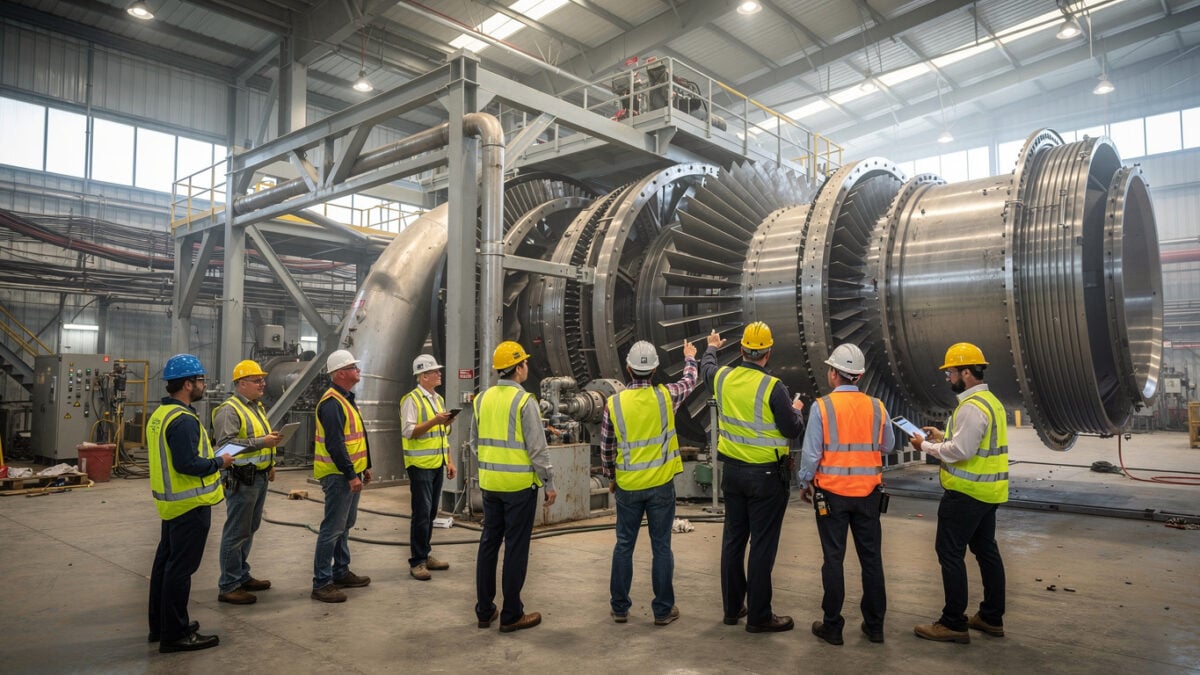
The package under discussion would start with the Encinal gas plant, a combined-cycle facility valued at roughly $20 billion to $22.3 billion and tied to powering AI data centers. According to reporting, the first units would use Westinghouse Electric‘s AP1000 design, with later reactors potentially using the APR1400 from Korea Electric Power Corporation, or Kepco.
Kepco said it could not comment due to ongoing discussions. Westinghouse did not immediately respond. The US government is reported to be offering federal land as possible reactor sites.
| Entity | Current rule | New rule | Effective date |
|---|---|---|---|
| South Korean goods (US tariff) | 25% | 15% | October 2025 |
| South Korea (manufacturing pledge) | None | $350 billion | October 2025 |
| South Korea (energy purchase commitment) | None | $100 billion | October 2025 |
| South Korea (annual investment cap) | None | $20 billion | Reported framework |
| Source: US-South Korea trade agreement; Reuters reporting on investment framework | |||
The annual $20 billion cap on Korean cash outlays, reported as part of the bilateral investment framework, shapes how quickly any project can be funded. An eight-reactor nuclear build would take years. The gas plant, smaller and faster, could serve as the anchor project that establishes the financing template for everything that follows.
The evidence points to a sequencing logic: prove the model with gas, then scale to nuclear. Whether the September MOU locks in that sequence or leaves it unresolved is the question the next week will answer.
A tariff bargain that bought more than market access
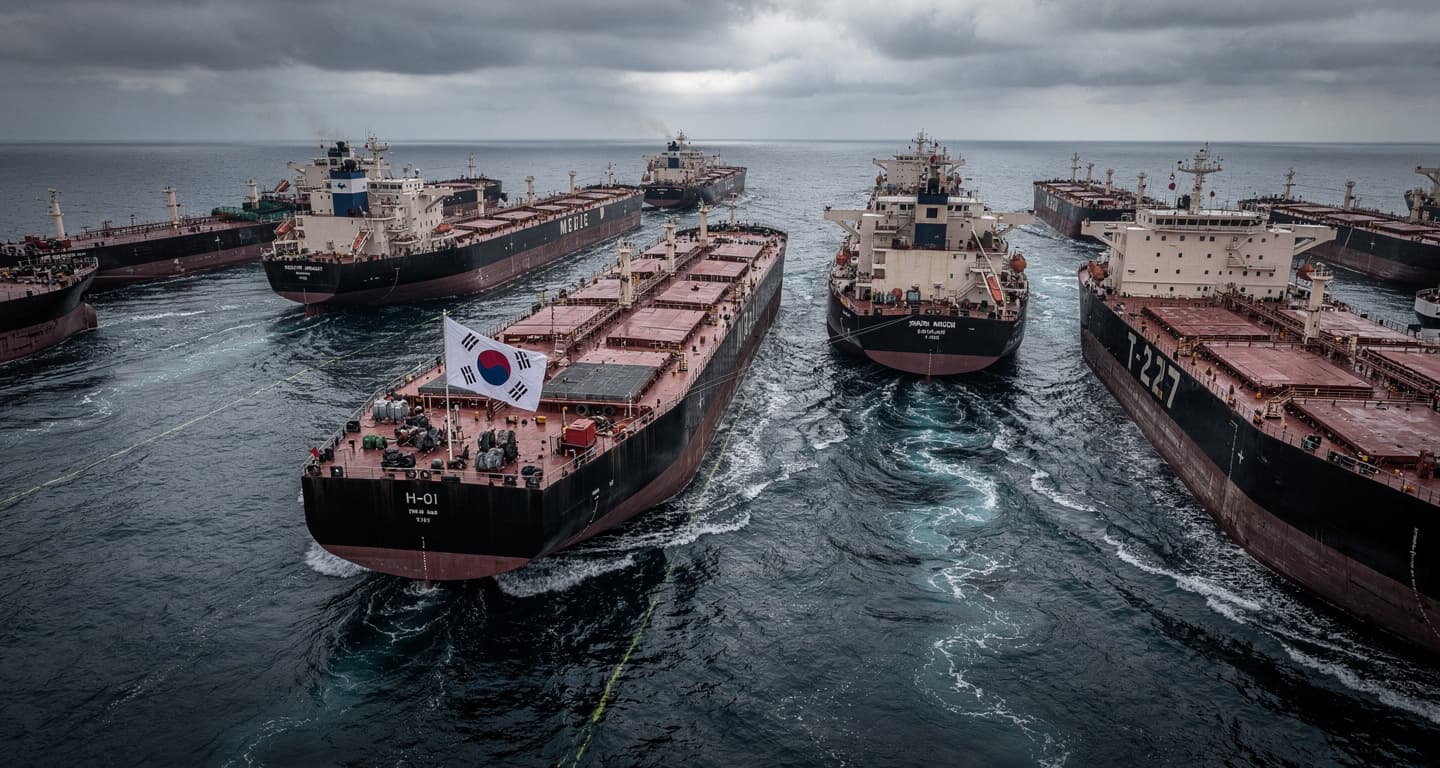
The energy package is not a standalone power project. It is the operational end of an industrial-policy bargain. The October 2025 trade pact did not just lower tariffs — it linked market access to investment commitments that would reshape US supply chains. Shipbuilding accounts for roughly $150 billion of the $350 billion total. The remaining $200 billion targets chipmaking, nuclear power, and biopharmaceuticals.
During President Lee’s visit to San Francisco for an AI summit, Samsung Electronics and SK Hynix were expected to announce major memory chip supply agreements with US technology companies. Lee met with the CEOs of Nvidia, OpenAI, Anthropic, and Broadcom. The energy deal and the chip agreements are different legs of the same strategy: convert tariff relief into infrastructure that serves American AI demand.
If South Korea can turn a trade bargain into overseas power assets, other governments may face pressure to use trade deals to secure domestic infrastructure. US regulators and utilities, meanwhile, must absorb more foreign-capital-backed generation planning. The Institute of Geoeconomics has analyzed the arrangement as part of a broader industrial-policy framework, not a standalone power project.
The October pact was a bet that tariff relief could buy more than market access — it could buy physical assets inside the US grid. The September 18 MOU is the first settlement of that bet. If it holds, the template gets tested. If it does not, the $350 billion pledge starts looking less like a commitment and more like a negotiating position that has already served its purpose.
Beyond the headline
The Timing
This is about a trade pledge hitting its first credibility test, not a generic energy announcement. The important clock is whether a framework can be signed before the political window closes and before domestic review turns a bargaining position into a binding project list.
The Money Trail
The crucial question is which part of the package sets the financing logic for everything else. If the Texas gas plant is treated as the anchor project, it establishes a template for later capital allocation and makes the larger nuclear discussion look like a follow-on reserve of the same political bargain.
The Reach
A South Korea-US project pipeline can reshape US utility procurement by steering capital toward firm generation that data-center operators need. That matters because it changes how large load growth gets financed: through private hyperscaler demand alone, or through state-backed cross-border investment.
The trade pact’s first settlement
With the September 18 MOU approaching, the deal’s structure — or its delay — will shape investment flows, supply chains, and grid planning on both sides of the Pacific.
- US-based investor with AI-linked power generation exposure
Nuclear and gas infrastructure sentiment is already moving on AI power demand, with grid investment up 9.5% in 2025. A signed MOU would reinforce the long-duration buildout thesis. Watch for confirmation of the first project’s financing structure and whether nuclear volume survives the final terms. The annual $20 billion cap means the capital will arrive in tranches, not all at once.
- Western semiconductor procurement manager
The energy deal and the expected Samsung-SK Hynix chip supply agreements are linked. Both flow from the same trade pact. If the MOU advances, it signals that the broader investment framework is operational — which strengthens the case for stable, long-term memory chip supply from US-based Korean facilities. Monitor company announcements during and after the September 18 window.
- US utility executive or grid planner
A state-backed Korean generation buildout changes the procurement landscape. The Encinal gas plant alone is 6.3 GW of firm capacity tied to data-center load. If the nuclear portion follows, the scale of foreign-capital-backed generation in your planning region could shift materially. The September MOU will indicate whether this is a single project or the start of a pipeline.
- South Korean government relations professional in the US
The MOU is the first concrete deliverable under the October 2025 trade pact. Its success or failure will shape the political narrative around the $350 billion pledge for months. Track the signing, the project scope, and any site disclosures — each will become a reference point for advocacy on future investment rounds.
Explainer
- AP1000
- Westinghouse Electric’s flagship pressurized water reactor design, with a 1,117-megawatt electric capacity. It is the only Generation III+ reactor fully certified by the US Nuclear Regulatory Commission. The design’s passive safety systems are a key selling point for projects needing faster regulatory approval.
- APR1400
- Korea Electric Power Corporation’s advanced pressurized water reactor, generating 1,400 megawatts electric. The design is already operating at the Barakah plant in the United Arab Emirates, Kepco’s first overseas build. Its use in a US project would require Nuclear Regulatory Commission design certification, a process that has not yet begun.
- Kepco
- Korea Electric Power Corporation, South Korea’s state-owned utility and the country’s largest electricity provider. It owns the APR1400 reactor design through its subsidiary Korea Hydro and Nuclear Power. Kepco’s only completed overseas nuclear project is the Barakah plant in the UAE, which finished construction in 2023.
RELATED STORIES