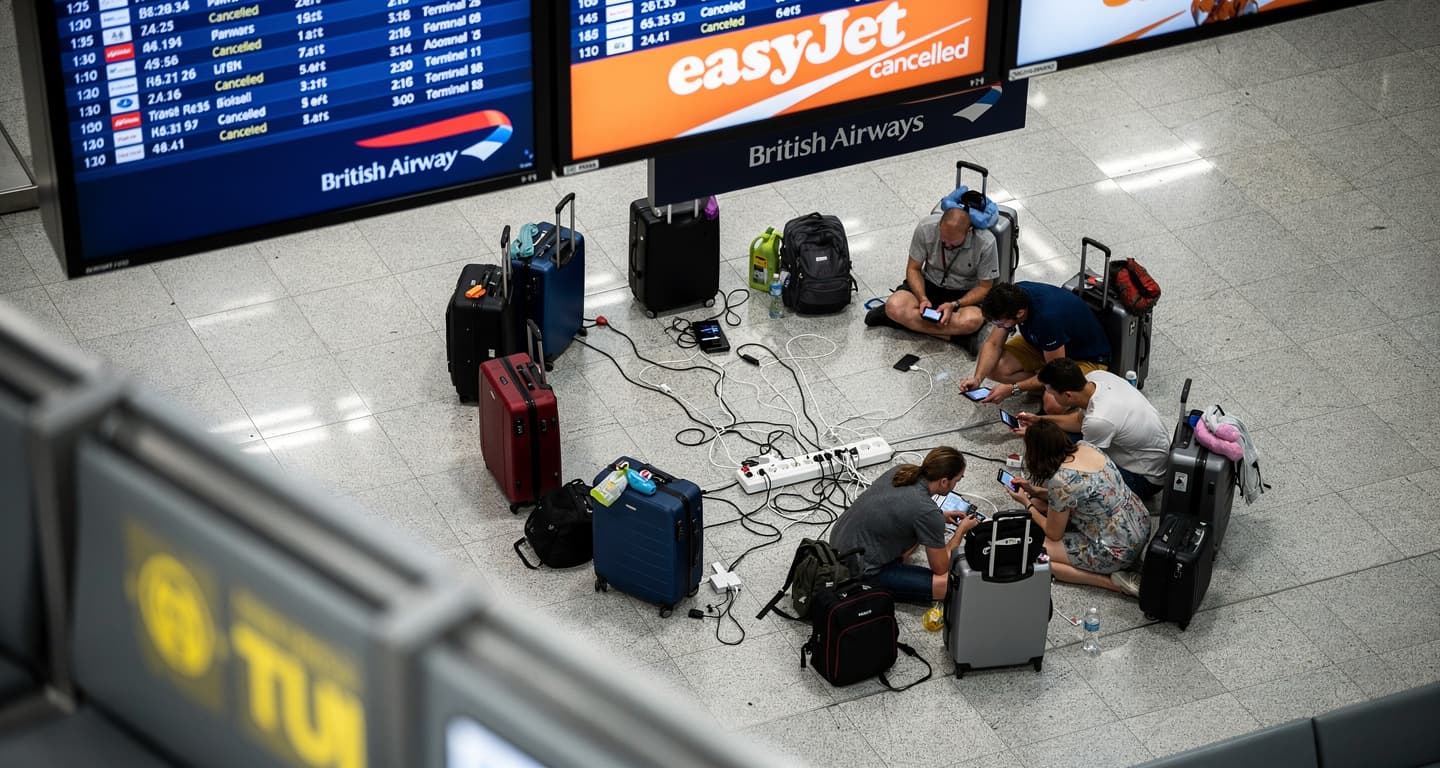
The International Air Transport Association projects global airline net profit will fall to US$23 billion in 2026, down from US$45 billion in 2025 — a 49% drop. The trade body blames Middle East conflict and a jump in jet fuel costs. Fuel alone will hit US$350 billion, about 31.4% of all operating costs. Net margin shrinks to just 2.0%, and Middle East carriers are the only region forecast to post a loss.
Revenue still climbs 9.4% to US$1.165 trillion, and passenger numbers reach a record 5.1 billion. The disconnect is the story: full planes, thin profit, and a fare you will feel on every long-haul booking.
Your next long-haul fare is going up. The reason sits in two places: a war in the Middle East and a fuel bill that airlines cannot hedge their way out of.
On June 2, 2026, IATA cut its profit forecast for the world’s airlines almost in half. The industry’s main trade body now expects net profit of US$23 billion this year, against US$45 billion in 2025. That is the headline. The part travellers feel is simpler.
Planes are fuller than ever. Fares are rising. And airlines still cannot make the numbers work. Net profit per passenger drops to just US$4.50 — the price of a coffee, not a cushion. Willie Walsh, IATA’s director general, put it plainly: that sum won’t even buy a hot dog at most FIFA World Cup venues, and leaves no buffer if other costs climb.
So why does record demand no longer mean a healthy airline? That is the question this forecast forces.
Full planes, empty margins
Start with the fuel bill, because that is what moves your fare. Airlines will spend US$350 billion on jet fuel in 2026, up 40% from US$250 billion a year earlier. That single line now eats 31.4% of every operating dollar. IATA’s mid-year update shows costs rising faster than fares can follow.
Walsh warned that profitability halves this year mainly because fuel and other costs are climbing faster than ticket prices. Carriers are raising fares. They are not raising them enough to cover the shock.
The Middle East is the sharp edge. Walsh said the region’s airlines are uniquely exposed to conflict-related airspace closures and operational uncertainty, leaving it the only region forecast to post a net loss in 2026. Europe–Asia flights that detour around the conflict burn more fuel and run longer. Premium-cabin fares on those routes have risen by several hundred dollars since early 2024, and some airlines have quietly cut marginal frequencies.
Here is what that means at the airport. For a Western expat flying between London, Dubai, and Singapore on a fixed assignment, the detour is not abstract — it is a longer flight, a higher fare, and fewer home visits in the year’s budget.
The numbers are clear. What is less clear is why an industry this full keeps failing to earn its keep.
The model that chases volume and loses value
This is not a one-off bad year. Airlines almost never earn back what it costs to run them. Return on invested capital sits near 4.3%, well under the roughly 8.5% it costs to raise that capital. Full planes, in other words, do not fix the math.
Carbon rules add to the squeeze. The CORSIA scheme enters its first mandatory phase from 2027, forcing airlines to offset emissions growth above a 2019 baseline. Inside Europe, the EU ETS and the new ReFuelEU Aviation mandate push fuel-procurement costs higher from 2026 onward. These costs land on long-haul carriers first.
Andrew Lobbenberg, head of European transport research at HSBC, argued that European network airlines face the worst mix — higher fuel, regulatory load, and limited hedging — leaving low-cost carriers better placed. Brendan Sobie of Sobie Aviation noted that Asia-Pacific airlines gain from rerouted Europe–Asia traffic but face offsetting fuel and currency pressure that caps any benefit.
So the answer to the opening question is structural. Record demand fills the seats, but the value flows past the airline — to fuel suppliers, lessors, and airports. Your fare rises to cover a cost the carrier keeps absorbing anyway. That gap is the business model, not a glitch in it.
Beyond the headline
The bigger picture
The downgrade exposes how commercial aviation stays trapped between volatile fuel costs and limited pricing power. Even when planes are full, fuel markets, carbon rules, and conflict-driven detours can wipe out the value record demand creates. The chronic failure to earn the cost of capital suggests crises like this are a feature of the model, not an accident.
The money trail
A different set of players gains from the same forces hurting airlines. Oil producers and refiners pocket sustained high crude and wide jet crack spreads, while aircraft lessors on fixed-rate contracts keep collecting steady rents as airline margins tighten. Airports and booking platforms hold their fee structures too, leaving carriers to carry most of the revenue risk.
The reach
For pension and index-fund investors, the warning reaches past airline tickers. Aircraft and engine makers rely on healthy carrier cash flows to support order books and dividends, so prolonged margin pressure can drag on aerospace valuations. Higher travel costs may also dampen tourism spending, hitting listed hotel, online-travel, and credit-card firms levered to flight volumes.
What to do before you book or invest
With fuel costs feeding straight into fares through late 2026, two groups face concrete decisions now.
- Long-haul leisure and business travellers
Check fare trends from your main carriers on the routes you fly most, then compare nearby hubs and alternative airlines on a major booking platform before you buy. For intercontinental economy, the cheapest fares usually sit two to four months out and spike inside 30 days — book the late-2026 and early-2027 trips early.
- Retail and pension investors
Check the airline, travel, and aerospace exposure in any funds you hold, including ETFs like the U.S. Global Jets fund. Read the latest IATA performance update and your fund’s fact sheet, then decide whether the higher volatility and thin profit outlook match your risk tolerance.
FAQ
Why does my ticket show a separate fuel surcharge, and can it change?
Many airlines itemise “carrier-imposed charges” or fuel surcharges, which they can adjust faster than base fares when fuel costs move. These charges often apply per flight segment and are not always fully refundable on changes. On a multi-stop trip, that means you can pay disproportionately more even in economy when fuel prices spike.
What are my rights if conflict closes airspace and my flight is rerouted or cancelled?
It depends on jurisdiction. Under EU Regulation 261/2004, travellers departing the EU on any airline are generally entitled to rerouting or a refund, and sometimes care and assistance. Cash compensation for extraordinary events like war is limited. U.S. rules focus mainly on refunds when flights are cancelled or significantly changed, rather than fixed compensation.
When should I book long-haul tickets to get the lowest fare?
Fare studies show the lowest average intercontinental economy fares between North America or Europe and Asia-Pacific tend to appear roughly two to four months before departure. Prices climb sharply inside 30 days. With capacity tight and fuel costs high through 2026, that booking window matters more than usual for keeping a trip budget under control.
Explainer
- IATA
- The International Air Transport Association is the global trade body for the world’s airlines, representing around 340 carriers that fly most international traffic. It sets industry standards, runs airline settlement systems, and publishes the closely watched economic outlook behind this forecast. Its profit projections move airline share prices because investors treat them as the sector’s consensus baseline.
- CORSIA
- The Carbon Offsetting and Reduction Scheme for International Aviation is a carbon programme run by the UN’s International Civil Aviation Organization. It requires airlines to offset growth in international flight emissions above a 2019 baseline. Its first mandatory phase runs from 2027 to 2035, adding compliance costs that fall hardest on long-haul carriers flying the routes most affected by current detours.
- Passenger load factor
- This measures how full an airline’s planes are, expressed as the share of available seats actually sold. IATA forecasts a record 84% for 2026, meaning fewer than one seat in six flies empty. The figure shows why the profit warning is striking: planes have rarely been fuller, yet carriers still struggle to turn that demand into profit.
RELATED STORIES