The tropical lowland rainforests of Borneo are home to some of the most varied animal and plant species on earth. But greed, and Man, threaten its existence.
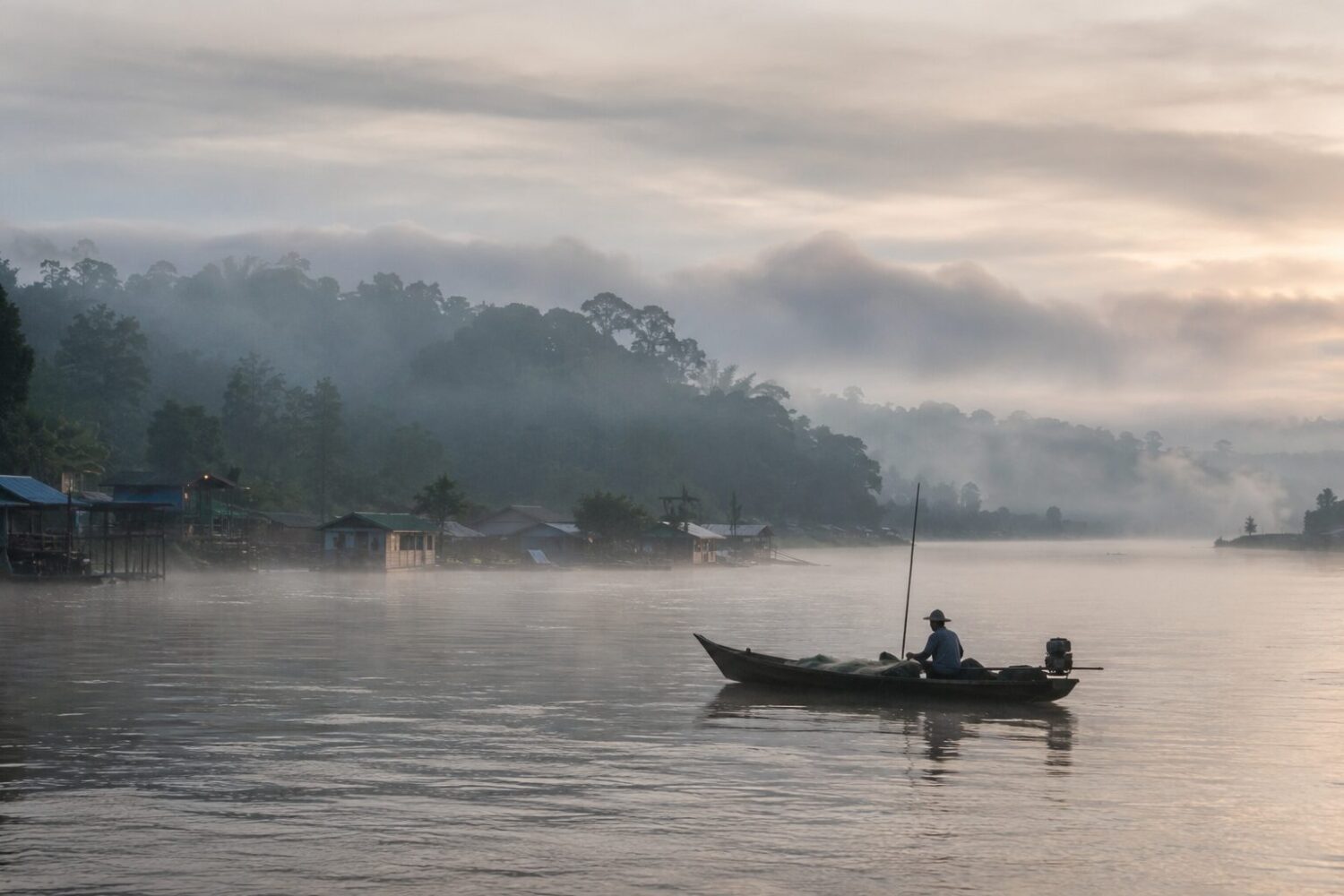
Borneo is huge. After Greenland and New Guinea, it’s the third-largest island on the planet – and two thirds of it belongs to Indonesia. Straddling the equator, and split politically by Indonesia, Brunei and Malaysia, Borneo sustains one of the richest ecosystems on the globe. Borneo – the biggest island in the Malay archipelago – is made up of dense, often impenetrable jungle and mountains surrounded by swampy coasts fringed with mangrove forests. Sandwiched between the South China and Java Seas, Borneo’s stable, moist tropical climate has ensured that its lowland rainforests are packed with some of the world’s most biodiverse collections of flowering plants, birds and animals. It’s an explorer’s dream.Alfred Russel Wallace: The Mapping of Borneo’s Rainforests
Borneo has a healthy pedigree when it comes to explorers. Alfred Russel Wallace – the 19th-century Briton credited with beating Charles Darwin to the theory of evolution – spent months trekking through the rainforests of Borneo mapping its flora and fauna for his landmark book The Malay Archipelago. While Darwin theorised at home, Wallace was cutting his way through thick jungle to make up his own mind about natural selection. During his travels in the rainforests of Borneo, Wallace catalogued over 1,000 species new to science – and tossed in 250 new orchids for good luck. Naturalists following in his footsteps have since recorded an astounding 15,000 known plant species – more than the whole of Africa – as well as the world’s largest flower (Rafflesia), the world’s largest carnivorous plants and the largest moth. He also found the world’s largest collection of gliding animals that include lizards, frogs, squirrels and snakes.Orangutans and Baby-Faced Elephants
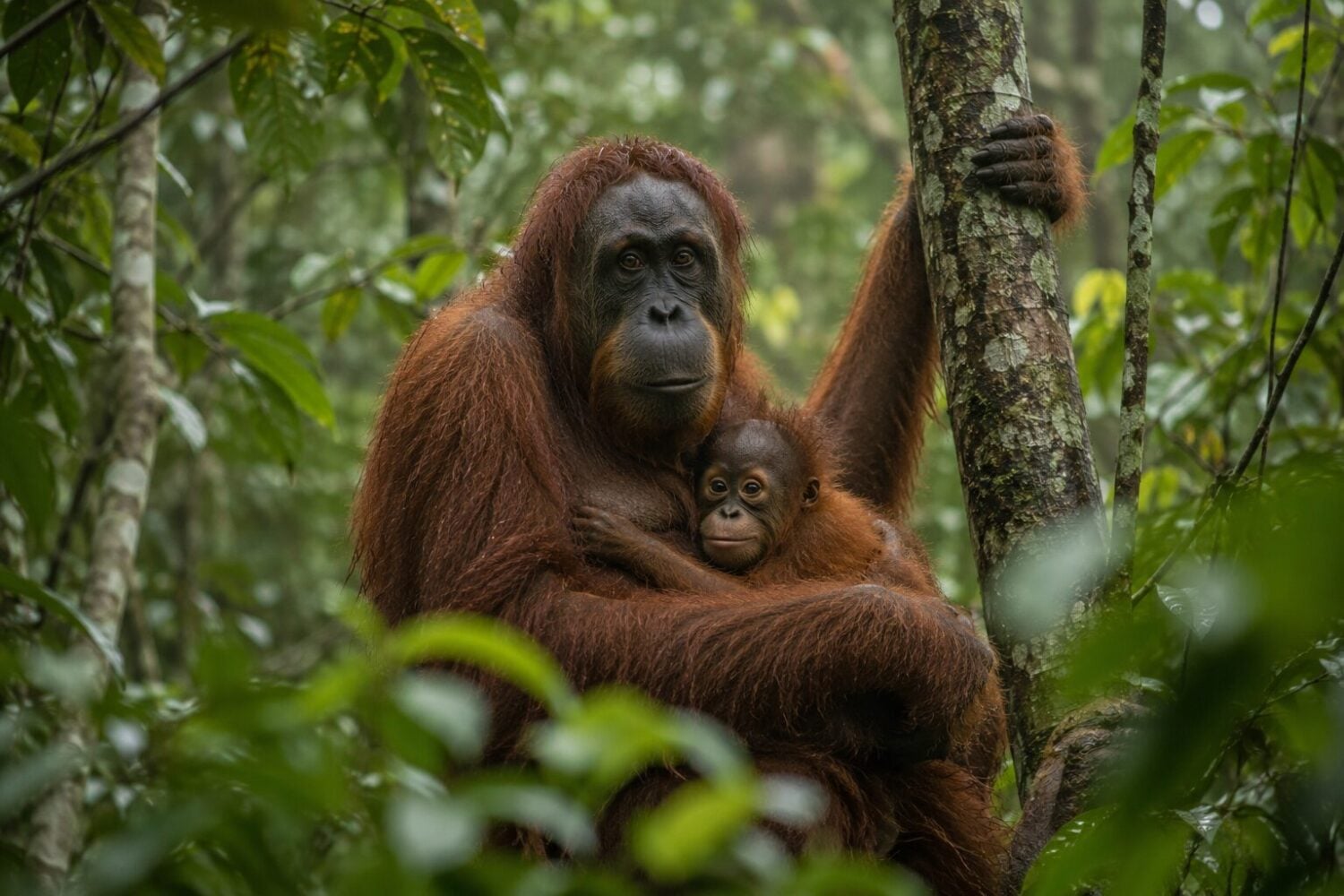
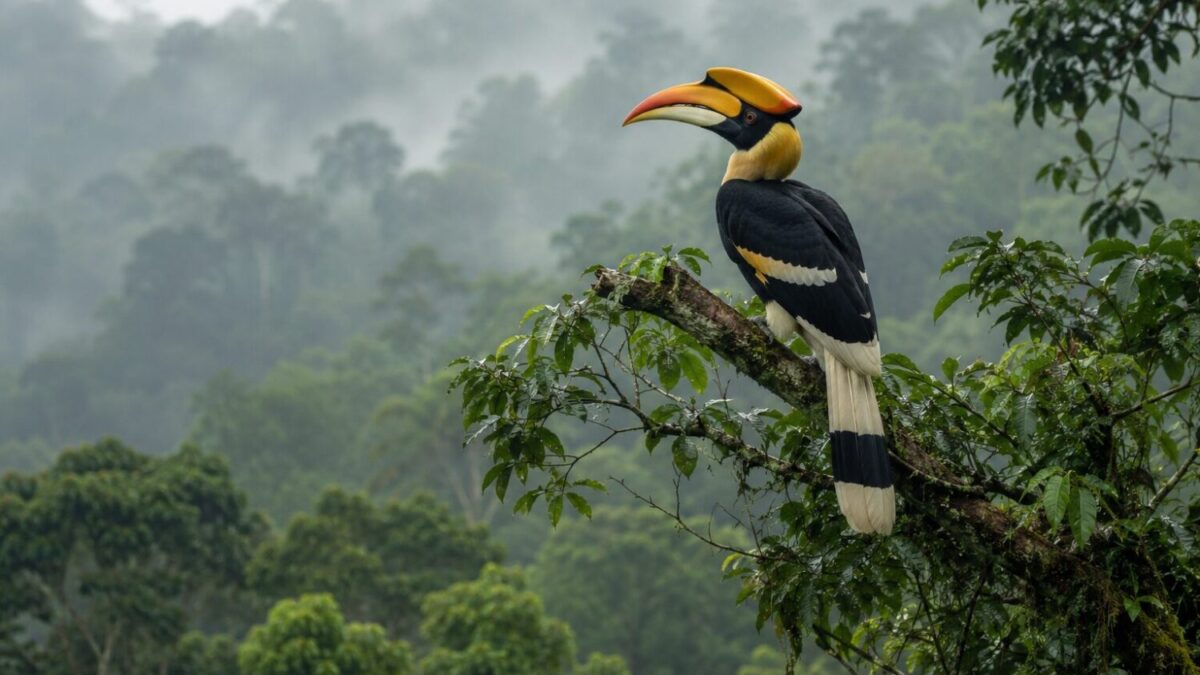
But it’s not all about reptiles and lichen. The Disney-faced pygmy Asian Elephant and the shy, endangered Clouded Leopard still roam up north in Malaysian Sarawak – along with the Sun Bear and the endangered Sumatran Rhinoceros. Further down south in the lowland rainforests of Indonesian Kalimantan, it’s the gentle Bornean Orangutan and his wilder cousins who steal the show. Thirteen primates take centre-stage in Kalimantan’s forest canopy – including gibbons, langurs, macaques, the endangered Slow Loris – and the one with the big nose, the Proboscis Monkey. Flying in the treetops are eight hornbill species, 18 species of woodpecker and 13 different types of the tiny, multi-coloured pitta. Throw in 160 species of snake, 1,000 types of ant, 3,000 variations of sawflies, wasps, beetles, bees and termites, and you soon find yourself sitting in a biodiverse heaven straight out of The Jungle Book.The Arrival of Man
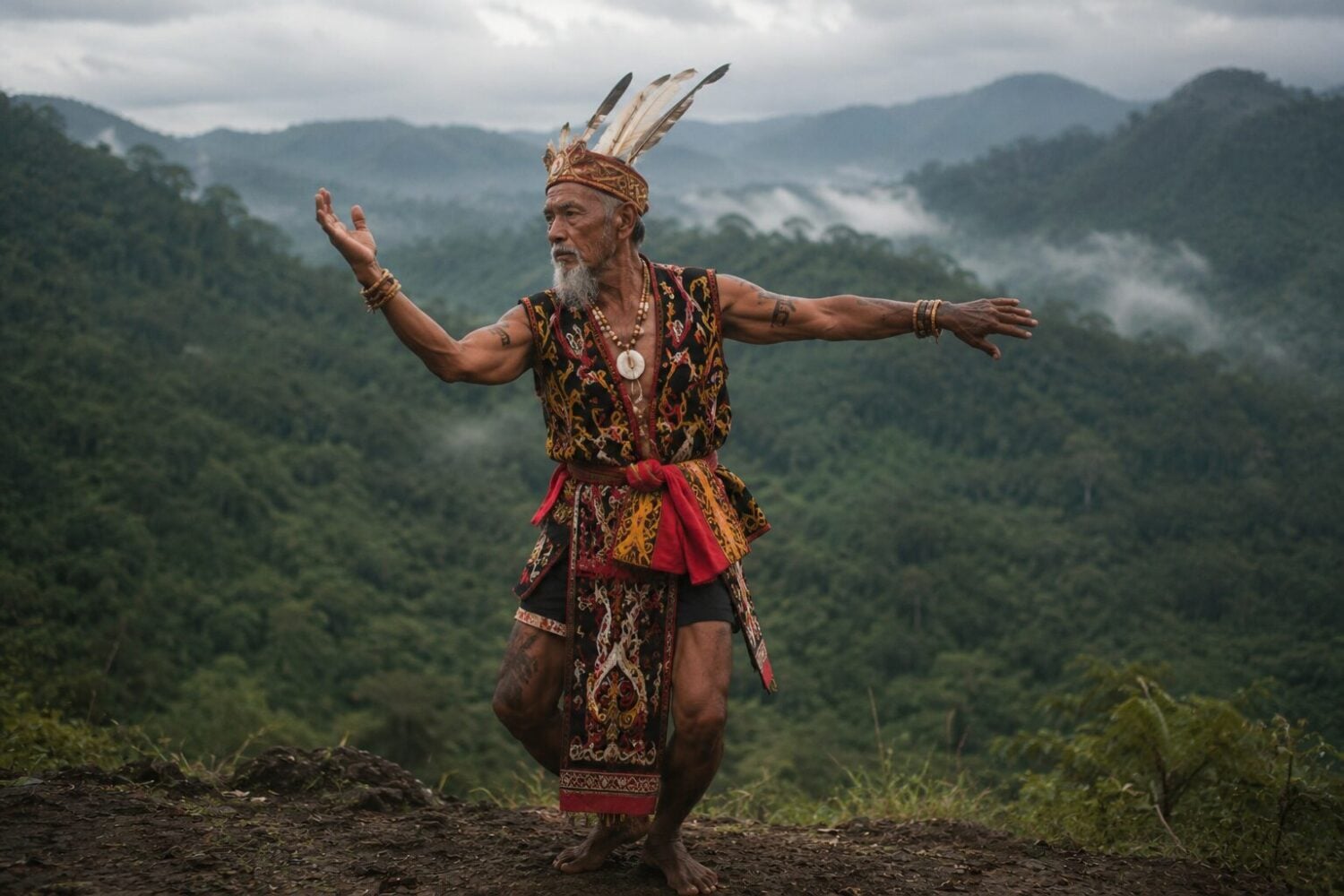
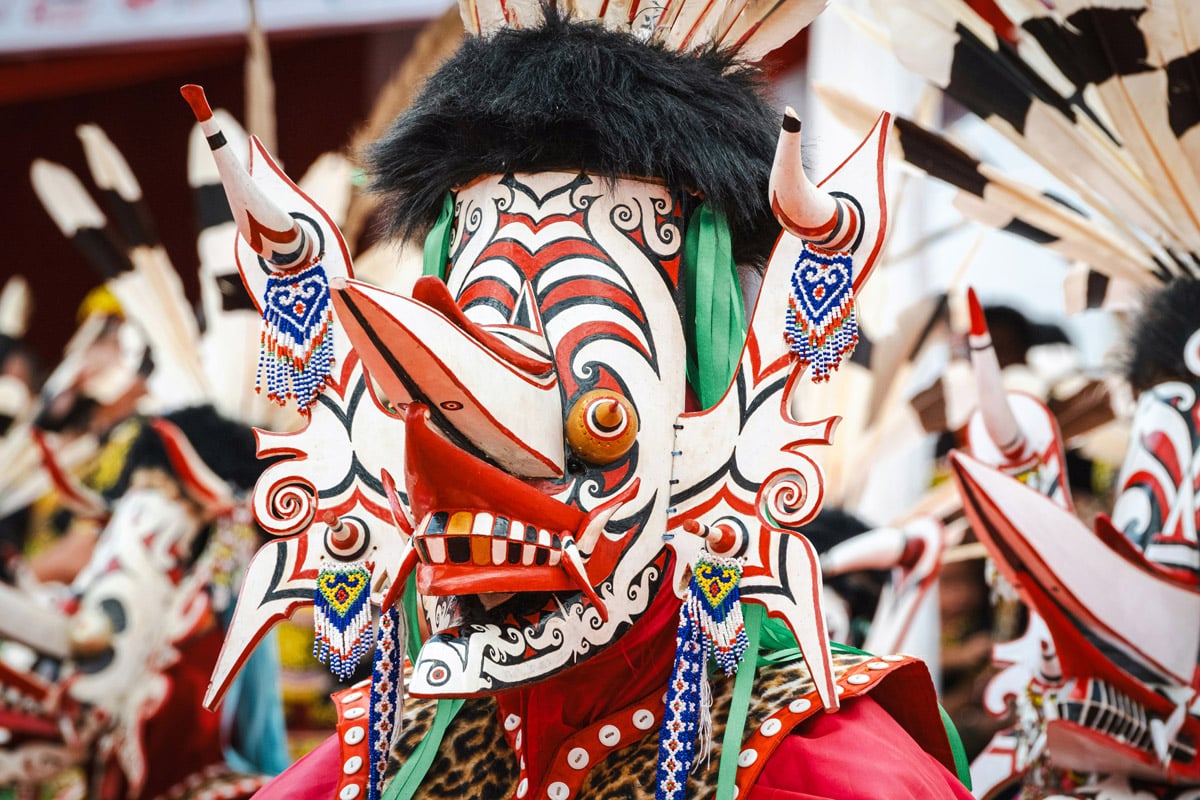
Like The Jungle Book, all it took was Man and Fire to upset Mother Nature’s beautiful balancing act. The first wave of Malayo-Polynesian humans fitted in well on the big island. The Dayak people – a disparate collection of hunter-gatherers and nomadic farmers spread thinly from Borneo’s north to south – made it their business to take only what was needed from the ever-giving rivers and rainforests, and leave the rest to the jungle spirits and the next generation. But the lure of profit was never far away from other’s minds. First came the Chinese traders who hunted for rhinoceros horn, valuable birds’ nests for soup and the aromatic wood gaharu. Muslim and Portuguese merchants followed in their wake for precious pepper and gold to sell back home. When the British and Dutch colonists cemented their grip on the island in the 19th century, the die was cast. Timber was suddenly big business. Ironwood was felled for colonial shipping or for the mansions back in Bristol and Amsterdam. Other decades-old tropical hardwoods like mahogany and teak ended their days as luxury wardrobes or a set of bedside drawers.The World Wildlife Fund won a major breakthrough when the three governments of Borneo – Indonesia, Malaysia and Brunei – signed a joint declaration to conserve an area of 220,000 km2 known as the ‘Heart of Borneo’ through a network of protected areas and sustainable forest management.
Wholesale Destruction
By the 1950s, the tractor and chainsaw ushered in a long slide towards wholescale ecological murder. By the 1970s it was open season in the irreplaceable rainforests. In Indonesia’s Kalimantan, companies from Europe, Australia and the United States were offered lucrative permits from the Indonesian government to drill for oil and gas and strip-mine for coal. Kalimantan’s new Indonesian masters in Jakarta also joined in the smash-and-grab. Questionable licenses were granted to political friends who appropriated thousands of hectares of land, turning the primary forest into unsustainable, single-crop plantations of oil-palm, rubber trees and industrial timber destined for the paper industry. Oil, coal and gold mining hit an all-time high.Mother Nature Hits Back
Something had to give. In 1982, Mother Earth had had enough. Primary rainforest is naturally fire-proof. Towering forest canopies, dense ground vegetation and high humidity combine to quickly snuff out flames before they can spread. But the canopies had been stripped; sunlight had dried out the once-damp earth below; and wood left over from logging littered the forest floor. All it took was an El Niño drought and some carelessly lit agricultural fires, and the forest ignited into a firestorm. In the space of a year, 27,000 km2 of Kalimantan’s tropical rainforest was turned to ashes. The repeat El Niño of 1997-98 saw a further 23,750 km2 vanish into smoke. Lessons had not been learned.The Future of Borneo’s Rainforests
It’s difficult to be optimistic about the future of Borneo’s rainforests. Rampant greed has won out over pragmatism and respect for nature. Despite it being the second-largest ecoregion in the Indo-Pacific basin, more than half of Borneo’s natural habitat has been degraded or cleared. The knock-on effect for wildlife has been catastrophic. As the rainforest shrinks, its wildlife is pushed ever closer to man. The illegal international pet trade flourishes, and many undiscovered species yet to make it into the scientists’ books will die off – their role in the ecosystem a distant, futile speck in the long, winding history of the planet’s evolution.Glimpses of Light: The ‘Heart of Borneo’
There are some glimmers of light. The World Wildlife Fund won a major breakthrough when the three governments of Borneo – Indonesia, Malaysia and Brunei – signed a joint declaration to conserve an area of 220,000 km2 known as the Heart of Borneo through a network of protected areas and sustainable forest management. Other regions have been set up to conserve wildlife despite the ever-present threat of logging. The 2,000 km2 Kutai National Park on the Mahakam River in East Kalimantan includes four lakes, lowland rainforest and mangrove forests, and supports 10 species of primates – including the favourite Bornean Orangutan – as well as 90 species of mammals and 300 species of birds. It may be late, but it may not be too late to see for yourself the sheer biodiversity of Borneo – and what Mother Nature can do when she’s given a fighting chance.RELATED STORIES