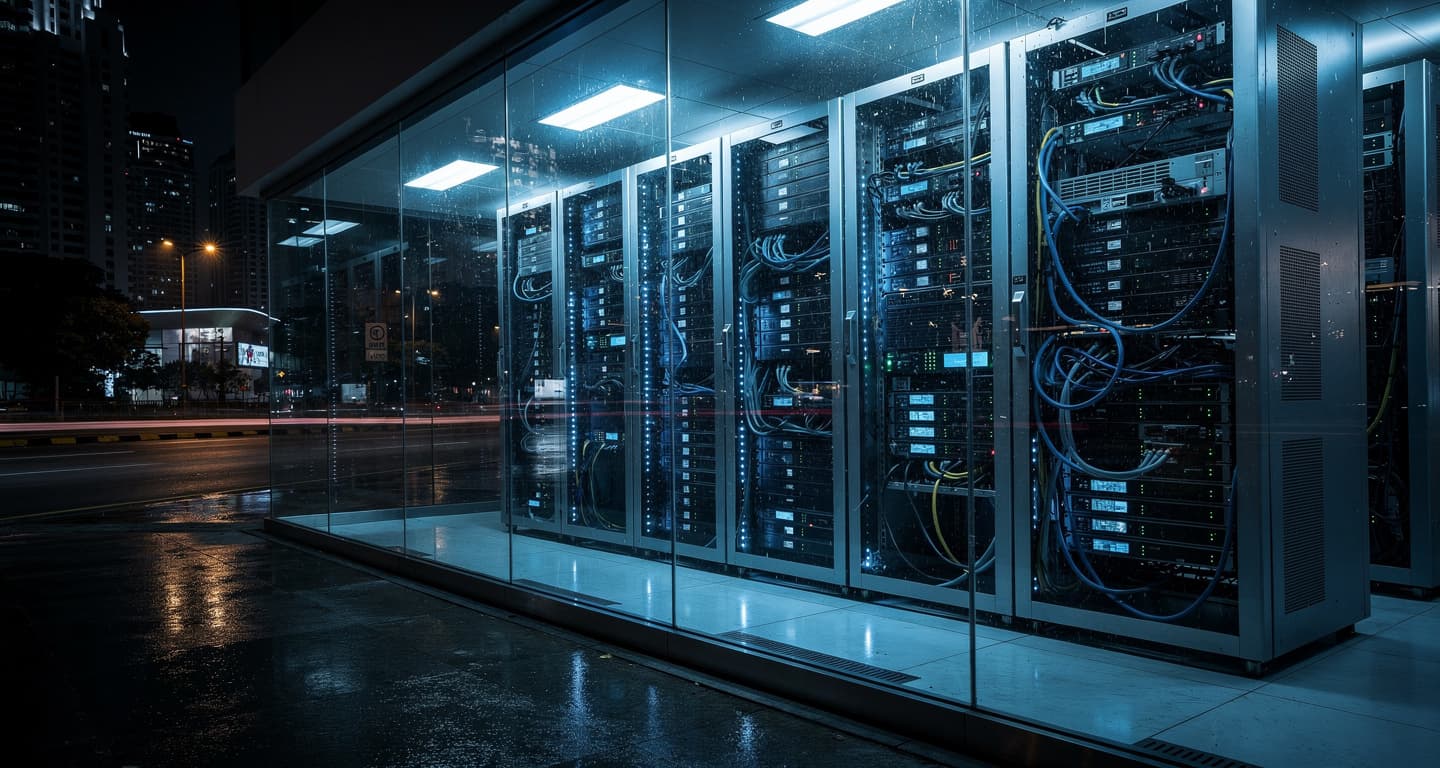
Sea Group, the parent company of Shopee and Garena, is building its own data centers across Southeast Asia, a move that signals a strategic pivot away from renting cloud capacity from Western hyperscalers. Distributors report a surge in orders for servers, storage, and networking gear, marking the company as a large-scale buyer across multiple markets.
The company has not disclosed timelines or locations, but the buildout is already altering supply dynamics. The next few earnings cycles will reveal whether the orders represent a temporary spike or a sustained infrastructure campaign.
Distributors of server hardware across Southeast Asia are naming a new large-scale buyer: Sea Group. The orders span multiple markets and technology categories, suggesting a buildout that could rival the region’s hyperscalers. The company is not just expanding capacity — it is quietly decoupling its digital infrastructure from the Western cloud giants that have dominated the region’s compute.
The shift is the Southeast Asian equivalent of Amazon or Microsoft choosing to internalize more of its compute stack instead of relying on outside landlords. But in Singapore and nearby markets, land, power, and permitting constraints make infrastructure control a strategic competitive advantage, not just a cost decision. For Western cloud providers, that means more competition for enterprise workloads. For hardware manufacturers, it means orders for servers, semiconductors, and networking gear are arriving from a buyer that did not exist on their radar five years ago. The scale of the buildout is not yet public, but the early signals are already resetting expectations.
The hardware orders that are already moving
Global hyperscalers such as Amazon, Microsoft, Google, and Meta still define the market for cloud and AI infrastructure. But in Southeast Asia the fastest momentum is with developers that can secure land, power, and permits quickly. Sea Group’s orders are landing with server assemblers, power equipment suppliers, and cooling specialists — the same upstream chain that feeds the world’s largest data center operators. The company is not yet naming a single campus location, but the distributor signals are already compressing the hardware pipeline.
A US-based procurement manager planning a server refresh for 2027 is already seeing lead-time estimates from their usual suppliers lengthen. The orders arriving from Southeast Asia are not an abstraction; they are already adding pressure to the same component pool that Western enterprises depend on. The next one to two reporting dates from Sea Group will be critical. If the company discloses a location, power size, or commissioning timeline, the market moves from interpreting intent to pricing real capacity.
Because Sea Group has not named a single campus or a megawatt figure, the market is reading the distributor signals as a proxy for intent. The actual scale remains unknown. The honest caveat is that the buildout could be more modest than the early orders suggest — a large but incremental expansion rather than a hyperscale rival. The next few quarters will settle the difference.
The power problem that makes self-build a strategic move
Singapore’s data center market operates under a tightly managed framework shaped by the 2019 moratorium, the 2022 partial reopening, and subsequent application rounds tied to energy efficiency and green-power conditions. The Energy Market Authority treats power allocation as the binding constraint, capping data centers at roughly 12% of national grid load. Compared with the more permissive approach in many US states, compliance here is driven as much by capacity allocation as by ordinary environmental rules.
The next few quarters will determine whether Sea Group’s buildout is a regional inflection point or a large, isolated capex project. The server orders are already changing lead times for Western buyers. The strategic question is whether that shift becomes permanent.
Beyond the headline
The Bigger Picture
The real story here is less about corporate spending than about a strategic reorientation. By moving from rented cloud capacity to owned compute infrastructure, Sea Group is treating data centers not as a utility cost but as a balance-sheet asset. In Southeast Asia, where power and land are scarce, controlling physical infrastructure directly translates into competitive advantage — the ability to scale without waiting for a hyperscaler’s permission.
The Money Trail
The spending is not just landing with data center contractors. It is flowing upstream to server assemblers, power equipment suppliers, and cooling specialists. Many of these components are already in tight supply because of AI-driven buying from hyperscalers. Sea Group’s orders add a new layer of demand that cascades through the same global supply chains, increasing competition for the same pool of hardware.
The Reach
The pipeline for enterprise servers and networking gear is already strained. More self-build demand from Southeast Asia — whether from Sea Group or others — tightens that pipeline further. For procurement teams in the US and Europe, the non-obvious implication is that a capex decision in Singapore can push out their own lead times by weeks, without any change in their own order book. The hardware market is now global, and Southeast Asia is bidding for the same components they are.
The server orders that are already changing lead times
With Sea Group’s orders still in the early stages, the implications for Western companies are only beginning to surface.
- Western Semiconductor and Server Manufacturer
The orders from Sea Group are adding a new demand vector to an already tight market. Check your distributor and OEM channels in Southeast Asia over the next quarter to gauge volume. If lead times for key components are already at 20 weeks, expect them to lengthen. Pricing power may shift toward suppliers who can allocate capacity early.
- US/European Enterprise IT Procurement Manager
Lead times for standard server configurations are starting to stretch. Review your procurement timelines for the next 12 months now. If you have not already secured allocations for 2027, start conversations with your primary suppliers. The cost of waiting may be measured in weeks, not days.
- Western Cloud Service Provider with APAC Operations
Sea Group’s move is a signal that large regional customers are no longer defaulting to your cloud. Map your largest Southeast Asian accounts and ask whether they are considering self-build. Offering specialized AI infrastructure or local compliance services may become a differentiator.
- Investor with APAC Technology Infrastructure Exposure
The self-build trend could shift capital away from colocation providers and toward hardware suppliers. Review your portfolio’s exposure to companies that own physical infrastructure versus those that lease it. Companies like Sea Group that control their own compute may be better positioned in a region where power is the new land.
Explainer
- Hyperscaler
- A company that operates massive, globally distributed data centers to provide cloud services at unprecedented scale. The term generally refers to Amazon Web Services, Microsoft Azure, and Google Cloud, which together account for the majority of cloud infrastructure spending. In Southeast Asia, hyperscalers are now competing with regional operators for the same pool of hardware, driving up demand for servers and networking gear.
- Colocation
- A data center model where multiple customers rent space for their own servers and networking equipment within a single facility. The operator provides power, cooling, and physical security, but the customer owns the hardware. In contrast, self-build data centers give the operator full control over the entire stack, a key advantage in markets where power and land are heavily regulated.
- Vertical integration
- Vertical integration is the strategy of bringing previously outsourced activities in-house. Instead of renting cloud capacity from AWS or Google, a company like Sea Group builds its own data centers, reducing reliance on third parties. In constrained markets, this can lock in access to critical resources like power and land that are otherwise allocated through slow government processes.
- The Energy Market Authority is Singapore’s statutory board responsible for regulating the electricity and gas industries. For data centers, the EMA effectively caps the sector’s share of total grid power, which shapes where and how companies can build. The agency’s approval process is a key bottleneck for new data center capacity, making early engagement with the EMA a prerequisite for any large-scale project.
RELATED STORIES