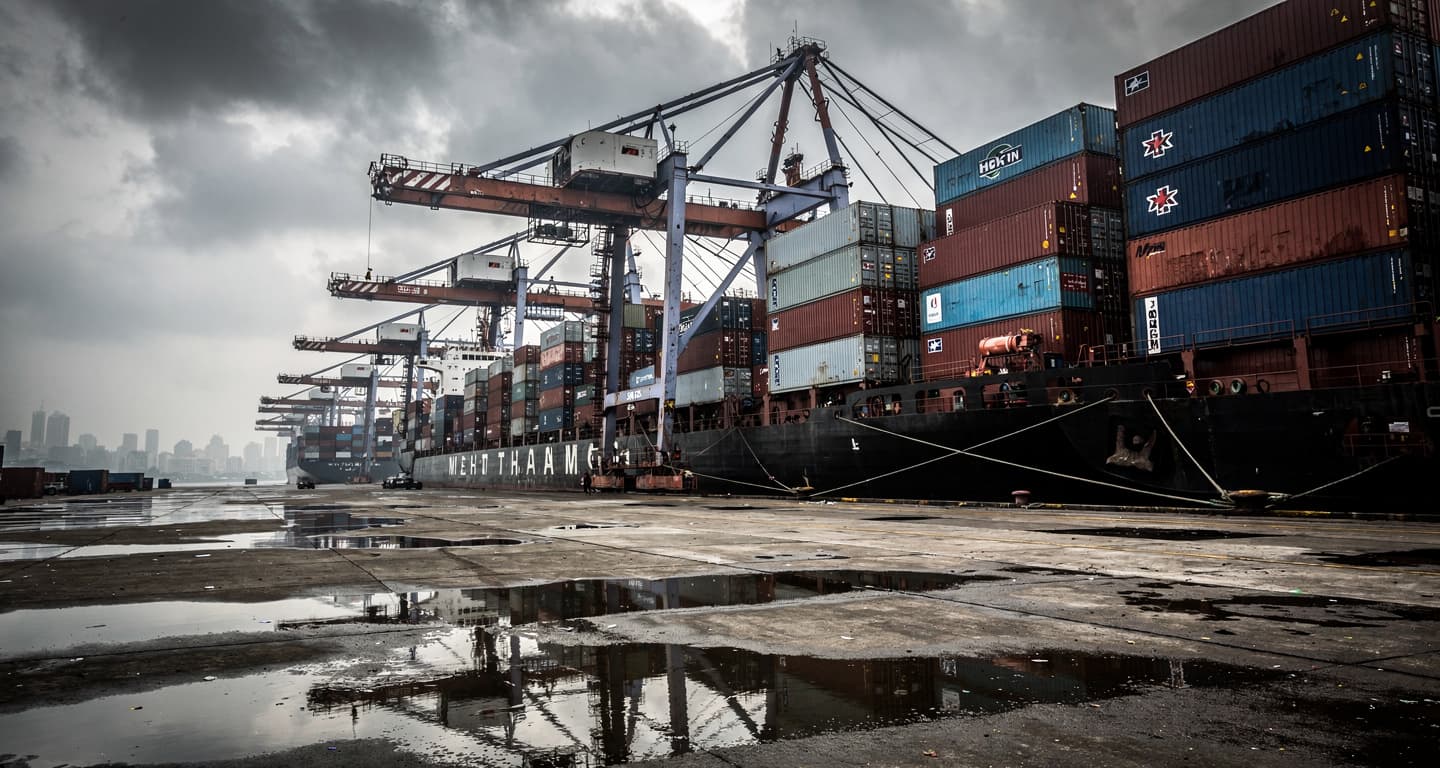
Tanker traffic through the Strait of Hormuz is running at 5% of pre-war rates, and the consequences across South Asia and the Pacific have moved well beyond fuel prices. Bangladesh has shut or suspended four of its five state-run fertiliser factories, garment factories are operating at 40–50% of capacity, and nitrogen fertiliser prices have risen 35% since late February 2026. The Food and Agriculture Organization projects a second wave of economic pressure when harvests fail in the second half of 2026. The real story is not the shock itself — it is which governments had the capacity to absorb it.
Countries already under IMF programmes — Sri Lanka and Pakistan — are crowding out social spending to pay for emergency fuel imports. Bangladesh’s ready-made garment sector, which accounts for 84% of the country’s export earnings, is the single most exposed industrial concentration in the region.
On the morning of March 4, 2026, officials at Bangladesh’s state energy utility confirmed that gas supply to the national power grid had fallen to levels that would trigger rolling blackouts — not for hours, but for days. Four of the country’s five state-run fertiliser factories had already gone dark. The boro rice crop, which provides the bulk of Bangladesh’s domestic food supply and requires consistent fertilisation from March onward, was entering its critical growth window with no viable inputs available.
What the Hormuz closure has produced across South Asia and the Pacific is not a single crisis but a cascade: an energy disruption that has become a food disruption, a manufacturing disruption, and — in countries that entered 2026 with thin fiscal buffers — a governance crisis. The buried story in Nicola Nixon and Kazi Faisal Bin Seraj’s analysis for The Asia Foundation, published May 21, 2026, is that governments with weaker fiscal capacity are being forced into more carbon-intensive stopgaps to keep lights and food systems running, locking in higher emissions precisely as global climate targets tighten.
The IEA estimated that 20.5 million barrels per day of oil flowed through Hormuz in 2023 — roughly 30% of global seaborne traded oil — alongside approximately 21% of global LNG trade. Losing 95% of that flow is, in practical terms, like simultaneously cutting off every oil shipment to China, India, Japan and South Korea combined, and still having millions of barrels per day left unshipped. The aviation system has already buckled: as reported in Indoneo’s coverage of the Asia-Pacific aviation collapse, roughly 13,000 flights were scrapped across the region in May alone. The productive economy — the layer above fuel prices — is now following.
The details: how a fuel shock became a food and manufacturing crisis
Around one-third of the most widely used nitrogen fertiliser is exported from Gulf countries through the Strait. Since early March, millions of tonnes have been stranded with no viable alternatives, driving a 35% price rise since late February. The FAO‘s fertiliser price index had already been running around 143 points as of February 2024 — approximately 40% above its 2014–2016 baseline — meaning this disruption compounds an already elevated baseline. The downstream consequence is not only cost but yield: the FAO projects that crop damage will not fully materialise until harvests in the second half of 2026, producing a second wave of economic pressure lagging several months behind the initial supply shock.
India imports approximately 40% of its urea and 25–30% of its overall fertiliser requirements. Its government fertiliser subsidy bill reached roughly ₹2.56 trillion (approximately USD 31 billion) in the 2022–23 fiscal year — more than double 2020–21 levels — signalling how exposed the state balance sheet becomes when global fertiliser markets move. At least one domestic fertiliser plant shut down in March 2026, with others cutting production. India has since accelerated rupee-denominated crude deals with Russia and is exploring higher fertiliser imports from Russia and North Africa, but substitution at this scale takes months, not weeks.
The garment sector tells the starkest story. Bangladesh’s ready-made garment industry accounts for 84% of the country’s export earnings and employs millions of workers, the majority of them women. Power cuts doubled to as much as five hours per day. Running diesel generators during extended outages dramatically increased operating costs, and multiple factories operated at only 40–50% of capacity — threatening export orders that cannot simply be rescheduled.
Electricity has been the least visible dimension in global coverage but is structurally significant. In Papua New Guinea and other Pacific Island nations, where diesel generators underpin most electricity generation, prices for diesel, petrol and kerosene rose by as much as 70%. Daily power blackouts lengthened across communities with no alternative generation capacity. Sri Lanka, still working through its IMF-supported recovery from its 2022 sovereign debt crisis, introduced a four-day working week partly as a demand-reduction measure — a policy that signals just how narrow the fiscal room for manoeuvre has become. The IEA’s 2023 oil trade analysis provides the baseline against which these losses should be measured.
| Country | Primary sector hit | Specific impact | Structural risk |
|---|---|---|---|
| Bangladesh | Fertiliser / garments | 4 of 5 state fertiliser factories shut; garment factories at 40–50% capacity | Acute — 84% export concentration in energy-intensive sector |
| India | Fertiliser / ceramics / food | Domestic fertiliser plants cut production; Gujarat ceramics shut; Mumbai restaurants closed | High — USD 31 bn annual subsidy bill exposed to price shocks |
| Sri Lanka | Energy / agriculture | Four-day working week introduced; LPG shortage disrupted March planting season | High — narrow FX buffers, active IMF programme |
| Papua New Guinea | Electricity / fuel | Diesel, petrol and kerosene prices up 70%; extended daily blackouts | High — near-total diesel dependency for power generation |
| Japan | LNG / energy mix | Sourced ~94% of primary energy from imports; Middle East supplies ~90% of oil | Moderate — large reserves, but spot LNG costs rising sharply |
Governance capacity as the real variable
Japan sourced approximately 94% of its primary energy from imports in 2022, with crude oil and LNG from the Middle East accounting for roughly 90% of its oil supply. By conventional metrics, Japan is among the most exposed economies in the world to a Hormuz disruption. Yet Japan’s response has been managed: it holds substantial strategic petroleum reserves, has activated emergency stock releases, and is accelerating nuclear restarts. Takashi Horiuchi, Senior Research Fellow at the Institute of Energy Economics, Japan, noted in a 2025 commentary that a multi-month Hormuz disruption would likely force Japan and other Asian importers to rely more heavily on spot LNG from more distant suppliers and delay some coal-to-gas switching plans — a cost, but a manageable one for a government with fiscal depth.
Bangladesh has no equivalent buffer. Its near-total dependence on imported energy coincides with a garment-dominated export sector that is both energy-intensive and time-sensitive. The same logic applies to Pakistan and Sri Lanka: both under active IMF programmes, both re-prioritising scarce foreign exchange towards fuel and fertiliser, crowding out social spending in the process. The crisis is revealing governance capacity as the variable that determines whether a supply shock becomes a structural economic wound.
IEA Executive Director Fatih Birol warned in March 2024 that rising geopolitical tensions at key chokepoints such as Hormuz underscore the need for consuming and producing countries to enhance energy security while staying on track for clean energy transitions. The crisis has instead produced the opposite dynamic: the IEA reported that global energy-related CO₂ emissions reached a record 37.4 gigatonnes in 2023, with non-China Asia accounting for 8% year-on-year growth driven by higher coal use. Governments that spent a decade promising resilience are defaulting to coal and diesel — and the UN Environment Programme’s 2023 Emissions Gap Report warned that current policies already put the world on track for 2.5–2.9°C of warming. Every tonne of coal burned to keep a Bangladeshi garment factory running tightens that budget further.
At COP30 in Baku, negotiators from India, Indonesia and Vietnam argued that energy-security shocks like Hormuz should count toward “special circumstances” when assessing mitigation timelines — a position that reflects genuine pressure but that critics note amounts to codifying backsliding. Japan and South Korea are expanding bilateral schemes to fund renewables and ammonia co-firing in Southeast Asia, but announced finance still falls far short of offsetting the region’s renewed fossil dependence, and the schemes carry no binding emissions caps.
Beyond the headline
The bigger picture
This crisis is less about a single chokepoint than about how fragile the world’s decarbonisation pathway becomes when energy security is threatened. It exposes how much South Asian and Pacific economies still hinge on a few hydrocarbon arteries — and how quickly climate ambition is bargained away when those arteries constrict. The distribution of harm is not random: it maps almost precisely onto pre-existing governance deficits and fiscal fragility.
The reach
For consumers and firms in Europe and North America, the fallout appears as higher prices for imported food, textiles, electronics and shipping — alongside dirtier embedded emissions in what is bought from Asia. The EU’s Carbon Border Adjustment Mechanism will begin charging for exactly those embedded emissions from 2026, meaning Western importers face a compounding cost structure: higher prices now, carbon tariffs later. It also affects the competitiveness of Western low-carbon exporters as Asian manufacturers weigh crisis-driven fossil energy against the cost of staying inside future carbon border frameworks.
Our take
Hormuz has become an unintended stress-test of the energy transition — and the results are damning. Governments that spent a decade promising resilience are defaulting to coal and diesel rather than accelerating diversification, and the countries least responsible for global emissions are paying the steepest price in food security, factory closures and blackouts. Unless this shock is used to fund real redundancy — storage, grids, regional pipelines, renewables — the next disruption will be more economically and climatically costly than this one.
What this means for investors, importers and policymakers
With the Hormuz closure now entering its third month and a second wave of food-price pressure expected when harvests fail in the second half of 2026, the window for anticipatory action is narrowing.
- Monitor FAO fertiliser price data monthly: The FAO Fertiliser Price Index is the earliest quantitative signal of downstream food price pressure. It was already running 40% above its 2014–2016 baseline before this crisis began. Investors in agricultural commodity markets and food-sector equities should treat any further rise above 160 points as a leading indicator of harvest shortfalls across South Asia.
- Track the EU Carbon Border Adjustment Mechanism transition: The CBAM moves from transitional reporting to financial charges in 2026. European importers sourcing textiles, ceramics, steel and fertiliser-intensive food products from Bangladesh, India and Vietnam should begin assessing the embedded carbon intensity of their supply chains now, as crisis-driven fuel switching is increasing those emissions in real time.
- Assess Bangladesh garment supply chain exposure: Factories operating at 40–50% of capacity for an extended period will miss export delivery windows. Buyers sourcing from Bangladesh should request updated production schedules and begin contingency sourcing assessments. The Bangladesh Garment Manufacturers and Exporters Association (BGMEA) publishes sector capacity data at bgmea.com.bd.
- Watch COP31 for infrastructure financing signals: COP31 is expected in 2026 with an Asia-Pacific host. Announcements on joint investment in alternate export routes — rail corridors, pipelines, Red Sea terminals — would signal a structural shift away from Hormuz dependency. Vague communiqués with no financing timelines mean importers remain hostage to the chokepoint for another decade.
- Review travel and operational planning for Pacific Island operations: Diesel prices in Papua New Guinea rose by as much as 70%, with extended daily blackouts. Businesses and NGOs operating in Pacific Island nations should review generator fuel reserves, logistics costs and contingency power arrangements. The Pacific Community (SPC) at spc.int publishes energy security assessments for member states.
RELATED STORIES