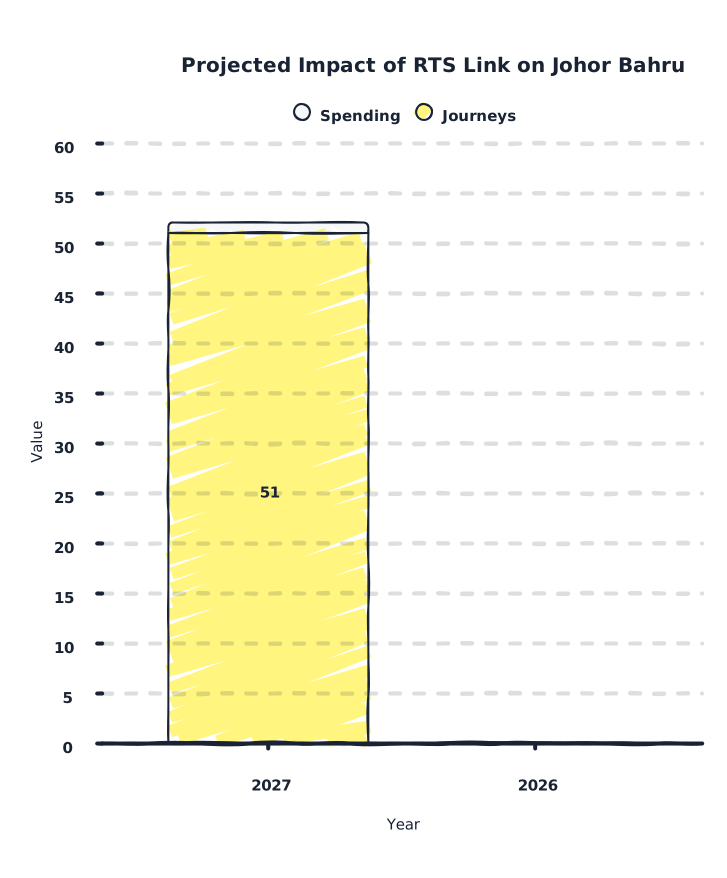
Singaporeans are projected to spend an additional S$1.05 billion in Johor Bahru in 2027, a year that will also see a 51% jump in cross-border journeys, according to a July 16 joint study by three Singapore business groups. Even before the Rapid Transit System Link starts running in January, entrepreneurs are converting bungalows and terrace houses in older JB neighbourhoods into cafes, restaurants, and salons to capture that spending.
The commercial rush is pushing up rents, drawing complaints over noise and parking, and testing zoning rules. Residents who have lived on those streets for decades are paying the hidden cost of a rail line that was supposed to ease life on the ground.
When Jia Jun Lew renewed the lease on his cafe bungalow in Taman Melodies this year, the monthly rent jumped to RM18,000. The same property had cost him RM7,000 when he signed the first lease in 2023. His weekend reservations, he says, are now 70 to 80 percent from Singapore phone numbers.
The maths works for now. But the rent hike is not an isolated story. Across Johor Bahru’s older residential zones, speculators are buying and converting houses before the cross-border rail line even begins operation. Lease renewals are turning into ultimatums: pay the new market rate, or watch a wellness operator or a hotpot chain move in. The rush is remaking entire streets — and leaving longtime residents to deal with the pile-up of cars, noise, and DIY dormitories that come with it. The RTS Link has not yet carried a single passenger.
The numbers that are redrawing the map
A joint forecast by the Singapore Business Federation, the Restaurant Association of Singapore, and the Singapore Retailers Association puts the additional Singaporean spending at S$1.05 billion in 2027. Cross-border journeys are expected to rise 51%. The bulk of the money, the study says, will flow into groceries, dining, beauty services, and pharmacies.
On the ground, the translation is already visible. The four neighbourhoods of Taman Melodies, Taman Abad, Taman Sentosa, and Taman Pelangi collectively host about 300 food-and-beverage businesses, according to the Johor Bahru City Council’s geomap database. Entrepreneurs like Annie Low, a 26-year-old Malaysian who moved her French pastry shop from a Bandar Dato Onn commercial unit to a repurposed bungalow in Taman Abad earlier this year, are betting on a specific customer. Low and two partners poured nearly RM500,000 into renovating the decades-old house, paying about RM10,000 a month in rent to position themselves for Singaporean footfall once the RTS Link opens.
“Every weekend, around 70 per cent to 80 per cent of reservations for Flame & Fern are all from +65 numbers,” Lew said. The average customer spend, he said, runs between RM80 and RM100. The numbers are strong enough that even a trebling of rent has not yet pushed him out — though other operators, including those who have been on the same streets for decades, are less resilient.
The scale of the expected windfall is easier to see than describe.
Rental listings now track the shift. Commercial bungalows in Taman Melodies and Taman Sentosa start at RM15,000 monthly, according to PropertyGuru data. Downtown shophouses fetch RM8,000 to RM25,000. But it is the residential side streets that are absorbing the most pressure. One Malaysian investor, who declined to be identified citing sensitivity over rental prices, claimed he had acquired two shoplots in Johor Bahru’s heritage district, a bungalow in Taman Melodies, a car wash site near KSL City Mall and several other properties over the past two years. He claimed to have more than doubled the rent of some units because of the upcoming RTS Link, though these increases could not be independently verified. Safi Udin, who has run a car wash and mamak diner near KSL City Mall for over a decade, fears he might lose out to mainland Chinese investors opening wellness centres and restaurants nearby, who could offer his landlord higher rent. Niccole Liau, 43, a resident in one of the affected areas, describes a daily grind of congestion, late-night noise, and outsourced parking on what used to be quiet lanes.
Stanley Tan, a former parliamentary officer for Johor Bahru, says his office fielded hundreds of complaints over the past year — about vehicles, food-waste odours, and bungalows turned into hostel dorms with key-card entry for migrant workers and cross-border commuters. All of it, Tan notes, in residential zones never designed for commercial traffic.
The rules that let the speculation run ahead of the trains
Malaysian state law requires any conversion of a residential property to commercial use to secure state approval, planning permission, and a business licence from the Johor Bahru City Council. In practice, enforcement lags far behind the pace of conversion. Samuel Tan, a property analyst at Olive Tree Property Consultants, says parking is the sharpest test: owners frequently pave over gardens or lease extra lots to meet traffic impact standards, but the overall load on the neighbourhood is rarely calculated until the complaints pile up.
The result is a market that has already priced in the RTS Link before operational details are settled. Malaysia’s Transport Minister, Anthony Loke, says the fare proposal will be presented to both governments before any public announcement, and that a season pass must be commercially viable. The regulatory groundwork is still being laid: Malaysia and Singapore are aligning legal procedures for co-located border facilities, and the Johor Bahru-Singapore RTS Link Bill 2026 has passed and is in the gazettement process. On the Johor side, RTS Operations says the ecosystem will include pedestrian links, expanded Park & Ride lots at major malls, and smart traffic lights — measures that will be tested, not deployed, in the coming months.
What happens to the street-level economy between now and the first train depends less on infrastructure than on whether the city council draws a line. The complaints already lodged — about noise, parking, and unauthorised hostels — are a preview of what happens when a rail promise meets a residential street. The next few months will show whether Johor’s older neighbourhoods become a managed corridor or a case study in drift.
Beyond the headline
The Bigger Picture
Johor Bahru’s older bungalow districts are being pulled into a new corridor economy before the rail line opens. The mechanism is not just tourism: it is expectation-driven land use change, where future connectivity is already pricing in cross-border spending power and changing what kinds of businesses can survive on residential streets.
The Human Cost
For residents in low-rise neighborhoods, the pressure shows up as day-to-day friction rather than a single dramatic event. More vehicles, late-night trade, and converted houses mean the cost of living next to commercial activity rises even when the property title has not changed, leaving longtime households to absorb the burden of growth.
The Timing
This week, asking rents in Taman Melodies and Taman Abad are already pricing in the fare proposal expected later this quarter. Landlords are treating the train link as a near-term certainty, and early commercial tenants who signed leases at lower rates are watching their margins shrink. For anyone looking to lease now, the discount window is closing before the first ticket goes on sale.
What a half-built rail line means for your next move
With the RTS Link now months from launch and rents accelerating, three sets of decisions are emerging as the market adjusts.
- Singaporean business owner eyeing Johor Bahru expansion
You are facing a market where a bungalow in Taman Sentosa can cost RM18,000 a month and climbing. Before signing, check whether the property holds valid planning permission and business licences from MBJB — enforcement is patchy now, but a crackdown later could strand you. Also monitor the Q3 fare proposal from RTS Operations; the final ticket price will shape how many +65 customers actually cross.
- Western investor in Southeast Asian property markets
The rental yields that landlords are quoting today rely on footfall assumptions tied to a transport link not yet operating. Question whether yields can hold once the council starts acting on noise complaints and hostel violations. Zoning risk is not priced into current asking rents, and any shift toward enforcement could shrink the pool of permissible commercial uses in a single quarter.
- Johor Bahru resident in affected neighbourhoods
Your strongest lever is the Johor Bahru City Council’s own geomap and the backlog of complaints logged by local representatives. Document specific incidents — noise, odours, parking blockages — and direct them to MBJB’s planning department, because enforcement decisions now will shape whether your street remains residential or becomes a permanent commercial zone.
- European tour operator with Southeast Asia packages
Johor Bahru’s evolving F&B and wellness district is a fresh stop for itineraries, but the infrastructure is trailing the hype. Check whether your ground handler can reliably navigate parking constraints and street congestion before adding Flame & Fern, Shuu Patisserie, or similar venues. The Malaysia Immigration Department’s entry rules for EU passport holders remain visa-free, but a border check can stall a group if passports have less than six months’ validity.
FAQ
When does the RTS Link story become financially real?
The main trigger is the fare proposal, expected in the third quarter of 2026. Once ticket pricing is set and operating rules are public, businesses can better forecast footfall and landlords can justify higher rents. Watch for that announcement before committing to a commercial lease.
Why do neighbourhood complaints matter now?
Enforcement decisions will determine whether the residential-to-commercial shift becomes permanent. If the city council tolerates unlicensed conversions, the market will keep pricing in the train. If inspections increase and zoning is enforced, many current business models could become untenable. Complaint handling frequency is the most practical signal to follow.
Explainer
- RTS Link
- The Rapid Transit System Link is a cross-border rail project connecting Bukit Chagar in Johor Bahru with Woodlands North in Singapore. The four-kilometre line is designed to ease congestion at the land checkpoints, carrying up to 10,000 passengers per hour in each direction. Its target opening is January 2027, but final readiness testing and fare-setting are still underway.
- MBJB
- Majlis Bandaraya Johor Bahru, or Johor Bahru City Council, is the local authority responsible for issuing planning permission, business licences, and enforcing zoning regulations in the city. Its geomap database tracks the location of all licensed food-and-beverage outlets. It is also the body that would prosecute unauthorised residential-to-commercial conversions.
- Bungalow conversion
- In Johor Bahru, older detached houses with large gardens are being repurposed into cafes, restaurants, and hostels. State law treats this as a change of land use, requiring planning approval and a business licence. Many conversions operate on residential titles, meaning the legal status can be contested if complaints escalate.
- Co-located border facilities
- The RTS Link will use co-located customs, immigration, and quarantine facilities, allowing passengers to clear both Singapore and Malaysia border checks at the point of departure. The arrangement is governed by a bilateral agreement, and Malaysia and Singapore are still aligning enforcement procedures. It means a traveller from Woodlands North will go through both countries’ controls before boarding.
RELATED STORIES