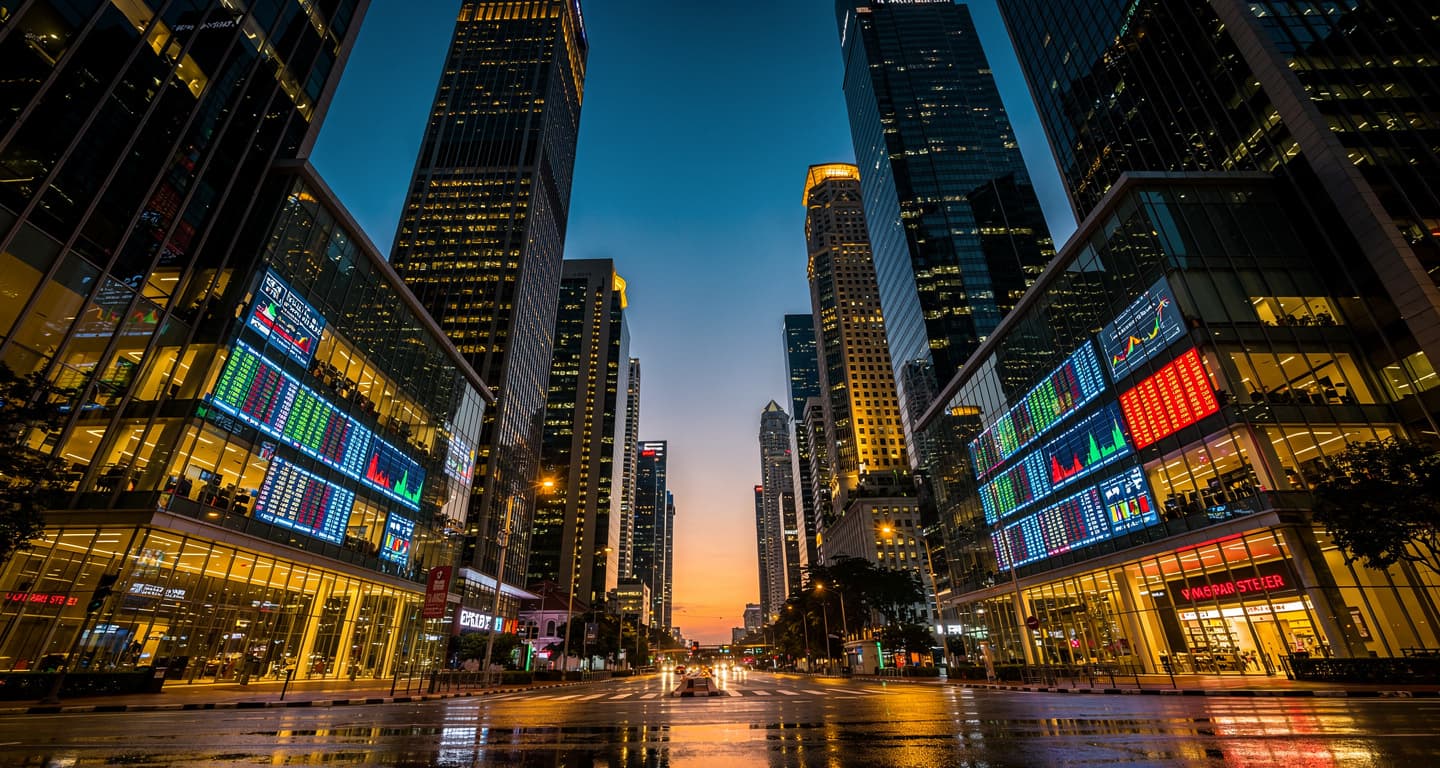
Singapore’s tourism sector recorded 16.9 million international visitor arrivals in 2025 — a post-pandemic high — and S$32.8 billion in tourism receipts. But the Singapore Tourism Board (STB) has guided 2026 receipts at S$31–32.5 billion, a projected decline from that record despite expecting even more arrivals. Retail and food-and-beverage business cessations rose 29% year-on-year in Q1 2026, concentrated along Orchard Road and the Marina Bay shopping belt, according to Singapore’s Department of Statistics.
The divergence is structural, not cyclical. High-end events and luxury hotels are performing well; mid-market hotels, malls, and neighbourhood restaurants are not. The gap between those two realities is widening.
More tourists are arriving in Singapore than at any point since the pandemic, and the city is on track to make less money from them than it did last year. That inversion — rising footfall, falling revenue — is the clearest signal yet that Singapore’s tourism economy is splitting along a fault line that official visitor statistics do not capture.
STB Chief Executive Keith Tan acknowledged in March 2026 that “average spend per visitor is likely to moderate” as price-sensitive travellers shift toward shorter stays and cheaper experiences. The board’s own 2026 receipts forecast — S$31–32.5 billion against last year’s record S$32.8 billion — confirms the direction of travel. Meanwhile, Indonesian tourist arrivals dropped 13.3% and Malaysian arrivals fell 14.7% in early 2026, two of Singapore’s largest and most price-sensitive source markets.
At the top end, the city looks precisely as advertised: Marina Bay Sands operating at capacity, Changi Airport consistently ranked among the world’s best, and a corporate-events calendar that in 2026 included the first AAAI artificial intelligence conference ever held outside the United States. Below that tier, a different arithmetic is playing out in empty mall units and shuttered restaurants.
The numbers behind the vacancy signs
Singapore’s Department of Statistics data released in early 2026 shows retail and food-and-beverage business cessations rose 29% year-on-year in Q1 2026, with the sharpest concentration in central shopping districts. Orchard Road’s retail vacancy rate reached 7.1% in the first quarter, up from 6.6% just three months earlier — a move that commercial property analysts describe as unusually fast for a market where vacancy shifts typically take years to register. The downtown core posted vacancies of 6.3% over the same period.
Chua Hak Bin, Senior Economist at Maybank Investment Banking Group, told Bloomberg in April 2026 that Singapore risks becoming “a hub mainly for the affluent,” warning that weaker mass-market tourism could weigh on retail rents and employment in central areas. The observation is not rhetorical: Japanese department store chain Isetan, which once operated six Singapore locations, has closed multiple outlets and now operates from just two sites.
Policy is already responding, if slowly. Under the Tourism Development Fund, refreshed in 2025, STB has earmarked S$300 million over five years to support tourism businesses pivoting toward what the board calls “quality tourism” — grants for productivity upgrades and experience innovation rather than volume-driven discounts. Separately, the Urban Redevelopment Authority updated its Land Use Plan for Orchard Road in 2024, allowing higher plot ratios and encouraging conversion of legacy retail space into mixed-use and experiential concepts.
| City | 3–4★ mid-range (per night) | 5★ luxury (per night) |
|---|---|---|
| Singapore (Orchard/Bugis) | S$180–S$260 | S$450–S$650 |
| Bangkok (Sukhumvit/Old Town) | S$90–S$130 | 30–50% below Singapore |
| Bali (Seminyak/Kuta) | S$75–S$120 | 30–50% below Singapore |
| Ho Chi Minh City (District 1) | S$90–S$120 | 30–50% below Singapore |
| Kuala Lumpur (Bukit Bintang) | S$65–S$95 | 30–50% below Singapore |
How Singapore’s neighbours are reading the gap
Singapore’s pivot toward premium tourism is not happening in a vacuum. Thailand welcomed over 11.68 million international visitors in the first four months of 2026 alone, and Thai tourism officials have doubled down on long-stay and medical tourism campaigns that explicitly use lower hotel and food costs as selling points. Indonesia’s Bali authorities are promoting digital-nomad and family packages built around value for longer stays. Vietnam’s tourism ministry has expanded its e-visa and visa-free regime and is aggressively marketing affordable city-break and beach combinations to exactly the travellers Singapore is pricing out.
What used to be a clear quality gap between Singapore and its neighbours is narrowing. Airports in Bangkok, Kuala Lumpur, and Ho Chi Minh City have upgraded significantly. Hotel infrastructure across the region has moved upmarket. The price gap, by contrast, is not closing — it is widening, because the Singapore dollar remains one of the strongest currencies in Southeast Asia, compressing the purchasing power of visitors arriving with Indonesian rupiah, Malaysian ringgit, or Vietnamese dong.
The forward signal worth watching is the STB’s mid-year 2026 statistics release, expected around August 2026. If per-visitor spending falls faster than the guided range of S$31–32.5 billion implies, it will confirm that the squeeze on mid-market tourism is deepening beyond what the board has publicly acknowledged. A second signal comes in February 2027, when Singapore’s Budget typically includes tourism-related measures: support targeted at small hotels and retailers would indicate that concerns about hollowing-out in the mid-tier are being taken seriously at the ministerial level.
Beyond the headline
The bigger picture
Singapore’s tourism squeeze is one front in a broader re-sorting of global cities into those that compete on exclusivity and those that compete on affordability. As more destinations chase “high-yield” visitors, the traditional middle layer of urban tourism — malls, mid-tier hotels, and mass-market experiences — is being structurally hollowed out rather than temporarily disrupted. Singapore is among the first cities in Southeast Asia to reach this inflection point, which makes it a useful early indicator of where other high-cost urban destinations are heading.
The reach
For airlines, hotel groups, and retailers across Southeast Asia, Singapore’s shift changes where Western travel budgets land. Long-haul passengers may still route through Changi — and Singapore Airlines’ record FY2025/26 revenue of S$20.52 billion confirms the hub remains commercially dominant — but the sleeping and shopping is increasingly happening in Bangkok, Bali, or Kuala Lumpur. Investors in regional REITs and hospitality stocks will be watching how quickly spending redistributes across the Singapore–ASEAN circuit rather than simply rebounding in one city.
Our take
Singapore is not collapsing so much as making a deliberate trade: protecting its premium brand at the cost of its mid-market ecosystem. That may be sustainable for headline attractions and casino floors, but it leaves smaller hotels and retailers exposed in ways that S$300 million in productivity grants will not fully address. This looks less like a temporary mismatch and more like a conscious choice to become a stopover-plus-spectacle rather than a broad-based city-break destination — and the businesses that built themselves around the latter are running out of runway.
What this means for Western travellers and investors planning Singapore in 2026
With the STB’s own forecast pointing to declining per-visitor spending even as arrivals rise, Western travellers and investors face a market that is bifurcating faster than official messaging suggests.
- Visa and entry: US, Canadian, EU/Schengen, Australian, and New Zealand passport holders receive visa-free entry for stays up to 90 days. No COVID-19 restrictions apply in 2026. Check current entry conditions directly via the Singapore Tourism Board before travel.
- Flight costs: Economy return fares from the US or Europe typically range from US$900–US$1,300 in mid-2026; from Australia and New Zealand, US$500–US$800. Singapore Airlines, Qantas, British Airways, Lufthansa, and Emirates all operate direct or one-stop services from major Western hubs.
- Budget planning: Mid-range travellers should budget S$180–S$260 per night for a central 3–4★ hotel. Those willing to stay in city-fringe neighbourhoods — Geylang, Balestier, Little India — can reduce accommodation costs meaningfully while using Singapore’s MRT network for central access. Hawker centres remain the most cost-effective dining option.
- Retail expectations: Orchard Road vacancy rates and the 29% rise in Q1 2026 retail closures mean some malls will feel thinner than past visits. Flagship luxury retail and Marina Bay remain fully operational; mid-market shopping is the segment under pressure.
- Investor signals: Watch the STB’s mid-year 2026 data release, expected around August 2026, for per-visitor spending trends. Singapore-listed retail and hospitality REITs exposed to Orchard Road and mid-tier hotel assets warrant close monitoring against the Urban Redevelopment Authority’s Orchard Road rejuvenation timeline.
FAQ
Is Singapore still worth visiting in 2026 for a mid-range budget traveller?
Yes, but with adjusted expectations. Hawker centres keep food costs manageable, and the MRT makes transport cheap. The main pressure point is accommodation: central 3–4★ hotels run S$180–S$260 per night, roughly double equivalent options in Bangkok or Kuala Lumpur. Travellers willing to stay in city-fringe areas and prioritise experiences over retail shopping will find Singapore’s infrastructure and safety record still justify the premium over regional alternatives.
Why are Indonesian and Malaysian tourist arrivals to Singapore falling?
Exchange rate dynamics are the primary driver. The Singapore dollar is one of Southeast Asia’s strongest currencies, meaning visitors arriving with Indonesian rupiah or Malaysian ringgit face significantly compressed purchasing power from the moment they land. When a comparable urban experience — shopping, dining, hotels — costs two to three times more in Singapore than in Kuala Lumpur or Bali, many travellers from these markets are redirecting their trips rather than absorbing the cost difference.
What is Singapore’s government doing to address the mid-market tourism decline?
Two policy responses are active. The Tourism Development Fund, refreshed in 2025, allocates S$300 million over five years in grants for productivity upgrades and experience innovation — aimed at helping tourism businesses pivot toward higher-yield visitors rather than competing on price. Separately, the Urban Redevelopment Authority’s updated Land Use Plan for Orchard Road allows legacy retail space to be converted into mixed-use and experiential concepts, acknowledging that traditional mall retail is structurally under pressure.
Does Singapore’s tourism decline affect Changi Airport’s status as a regional hub?
Not directly. Changi’s strength is built on transit and connectivity, not just inbound tourism spending. Singapore Airlines posted record full-year revenue of S$20.52 billion for FY2025/26, and passenger load factors remain high. The risk is subtler: if Western travellers increasingly route through Changi but sleep and spend in Bangkok, Bali, or Kuala Lumpur, the airport retains its hub function while Singapore loses the downstream retail and hospitality revenue that transit volumes once helped generate.
RELATED STORIES