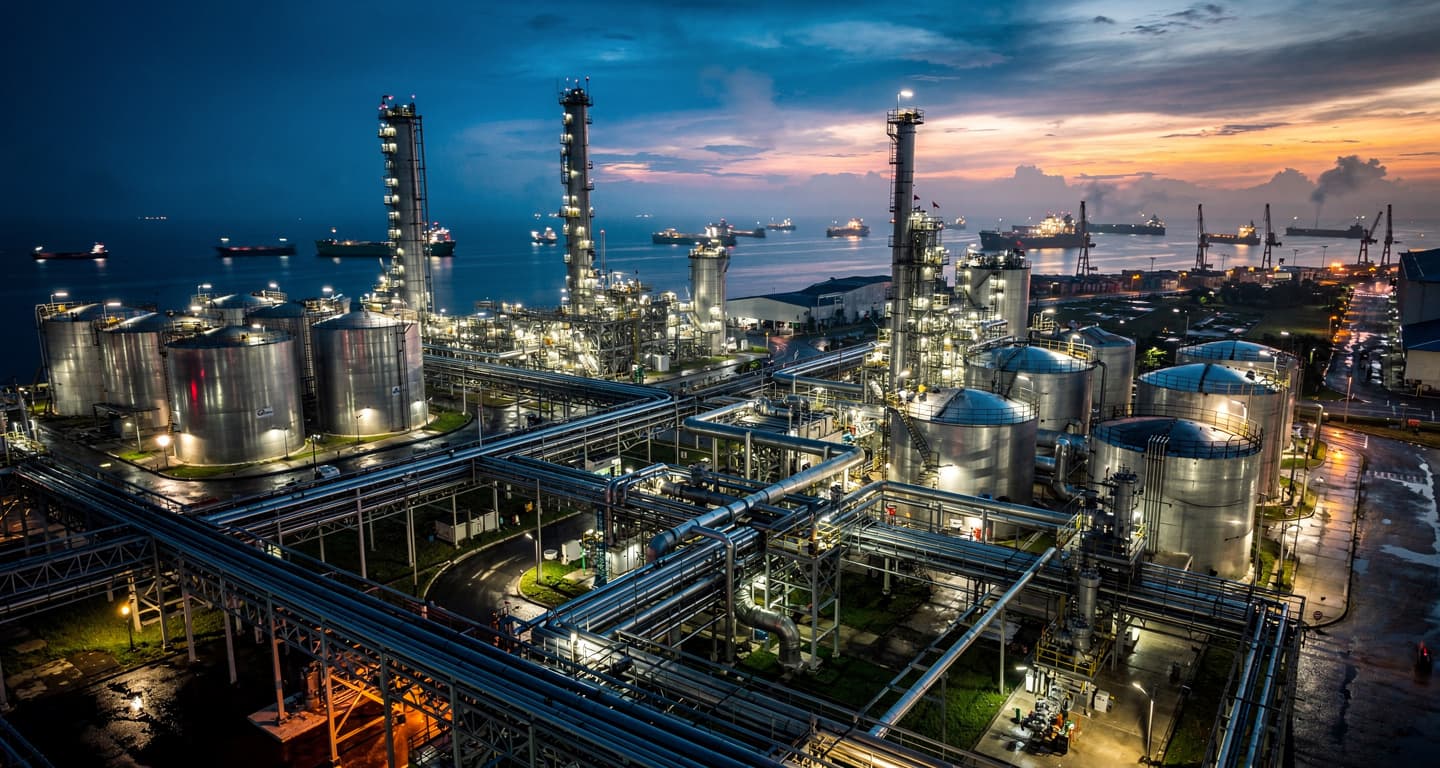
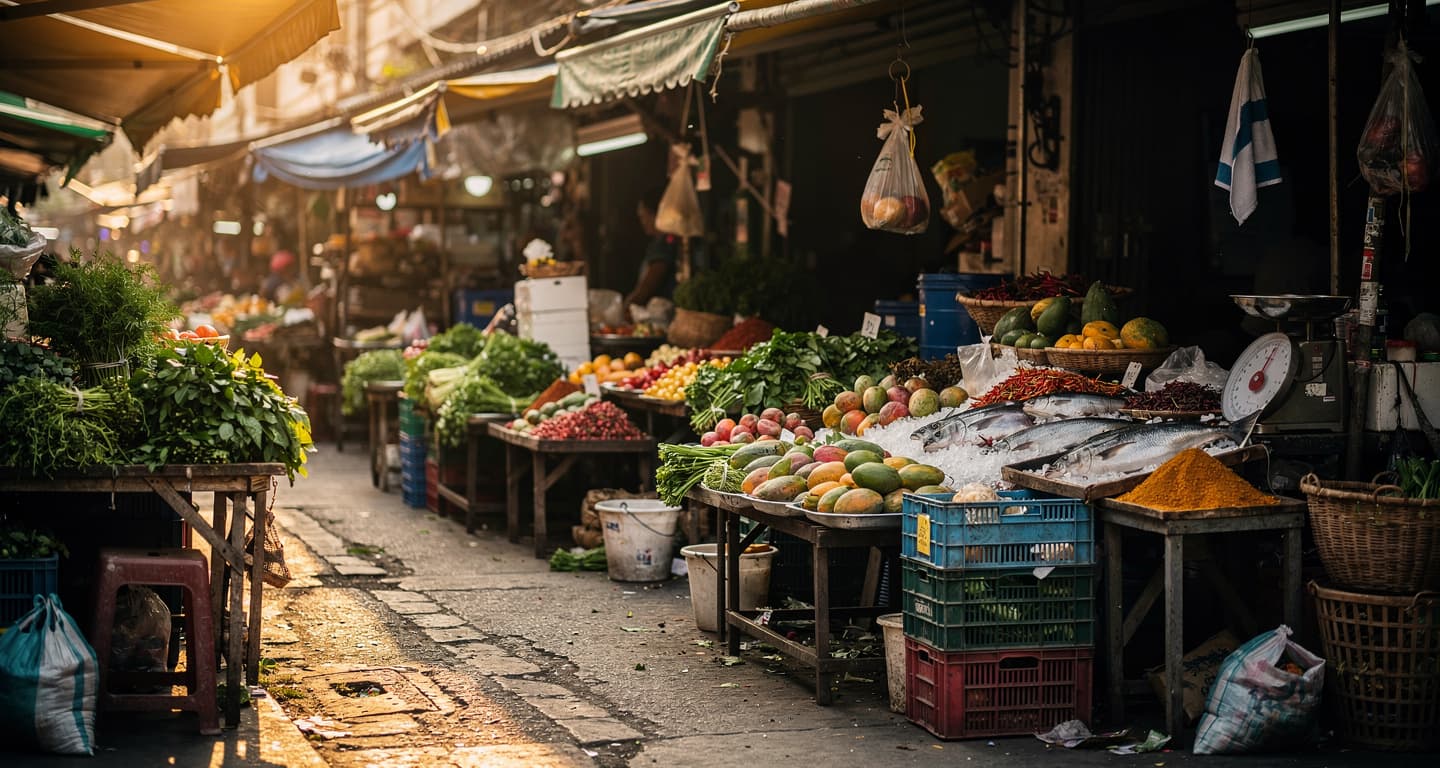
Thailand’s strategic oil reserves cover 61 days of demand. Its urea fertilizer stocks will last only one month, leaving food-processing and agriculture dangerously exposed as the Strait of Hormuz crisis deepens.
The Thai Chamber of Commerce has warned businesses to prepare for supply-chain disruptions as shipping traffic collapses and costs rise. The message: stay calm but recalculate costs now.
Shipping traffic through the Strait of Hormuz fell to 14 vessels on a Sunday in mid-July, according to Kpler data. The number is the first thing that matters for a factory in Rayong.
The Thai Chamber of Commerce has told its members to prepare for supply-chain turbulence. The US–Iran conflict is deepening, and the narrow waterway that carries most of Thailand’s crude oil and a third of its LNG has become a contested zone.
It is arithmetic.
Freight costs, insurance premiums, and energy prices are already moving. The vessel count says the next move is not gradually. It is already happening.
The 14 vessels and the one-month supply
Thailand imports roughly 50% of its crude oil and 30% of its LNG from the Middle East, with most of it passing through Hormuz, according to an InterRisk Asia report published in late April. The Asia Group’s July 7 assessment noted that 60% of Southeast Asia’s crude oil and 30% of its LNG transit the strait. The Thai Chamber of Commerce chairman, Poj Aramwattananont, told businesses to stay calm but vigilant. “Businesses should not panic, but instead monitor the volatile and unpredictable situation,” he said.
Cargo is already being rerouted to Khor Fakkan in the UAE and to Salalah and Sohar in Oman, bypassing the strait. “Closing the Strait of Hormuz may not be a short-term disruption, but rather a crisis lasting several quarters,” said Tawan Punsang, risk management specialist at InterRisk Asia.
The immediate shift in shipping patterns is visible in the data: 37 vessels transited Hormuz a week earlier. The collapse to 14 is not a blip.
It is a repricing of risk.
For a factory manager in Rayong, a 14-vessel count means a shipment of petrochemical pellets that was due next week may now take the long way around Oman, adding two weeks and a 15% freight surcharge.
Research published by InterRisk Asia shows that while oil reserves are ample, Thailand’s urea fertilizer stocks are sufficient for only one month. That is the number that will shut down a food-processing plant, not the oil tanker count. The sectors most exposed are petrochemicals, plastics, autos, electronics, and fertilizers, where margins are already under pressure. A 10% increase in freight costs can wipe out the profit on a container of auto parts.
Thailand has responded with emergency fuel controls and the deployment of strategic oil reserves, which cover 61 days of demand. The government has also engaged diplomatically with Iran over transit arrangements. But these measures are ad hoc, not a standing protocol. The fertilizer reserve—one month—is not covered by any emergency programme.
The shift to alternative ports adds days and costs that push up the landed price of everything from plastic pellets to urea. The freight rate for a 40-foot container from the Gulf to Laem Chabang has already risen by 15% in the past month, according to logistics operators. That is a cost that lands on the invoice before the goods arrive.
“This is not just an energy shock. This is an industrial supply chain shock,” said Kelly Magsamen, senior advisor at The Asia Group. The InterRisk assessment was published in late April, and the shipping data from Kpler is a snapshot, not a trend. But the direction is clear.
The insurance market that decides who sails
The real gatekeeper is the global insurance industry. War-risk premiums are already making Hormuz transits economically unviable for many operators. If underwriters withdraw coverage entirely, even the most generous freight rates will not bring vessels back. That is when the cost lands on the Western buyer’s shelf.
War-risk premiums are set by a small group of Lloyd’s syndicates and other marine underwriters. Their decisions are binary: insure or withdraw. Once they pull coverage, the route is effectively closed, regardless of the freight rate. That is the scenario Thai manufacturers must now price in.
Sotiris Raptis, Secretary-General of the European Community Shipowners’ Association, insists that freedom of navigation is a core principle of the law of the sea and that tolls on passage through international straits are incompatible with that principle. The proposed 20% levy would test that principle, and if enacted, it would make Gulf routes even more expensive than they already are. Brent crude traded above US$86 a barrel on a recent trading day, up 4% on the day, reflecting the risk premium. The immediate variable is whether a new round of attacks on tankers occurs. A sustained pause could restore some confidence, but any new strikes would deepen the rerouting.
BIMCO’s analysis suggests that even without an official levy, the combination of war-risk premiums and rerouting costs is making Gulf routes prohibitively expensive for Asian importers. Compared with the toll-free Atlantic corridors, the Hormuz premium is a structural disadvantage for Thai manufacturing. Thailand’s GDP growth forecast for 2026 has already been revised down to 1.5% from 1.6% before the crisis, according to The Asia Group. The cost of inaction is measured in basis points.
As Indoneo reported in June, the ceasefire reopened the Strait but did not erase the structural risk. For Thai factories, the choice is not between panic and calm. It is between locking in logistics costs now or waiting for the insurance market to make the decision for them. The 14 vessels on that Sunday were not a one-off. They were a price signal.
Beyond the headline
The Bigger Picture
Thailand’s growth model runs on cheap Gulf fuel. With Hormuz now a battleground and a leverage point, that model is exposed. The numbers: 50% of crude, 30% of LNG, one month of fertilizer. Diversification is no longer a policy choice; it is a survival requirement.
The Reach
The real gatekeeper is the insurance market. War-risk premiums are already pricing Hormuz transits out of the money. If underwriters pull coverage entirely, no freight rate will bring ships back. That is when the cost hits the Western buyer’s shelf.
The Timing
The window is narrow. The ceasefire collapsed, traffic is sliding, and the proposed 20% levy is still pending. Thai companies that renegotiate routes and build inventory now will lock in costs before the market fully reprices. Those that wait for a government directive will find the price already moved.
The cost of waiting for the next headline
With the Strait of Hormuz crisis deepening and the 20% transit levy still a live proposal, the cost of inaction is rising for Western businesses linked to Thailand.
- Western supply chain manager with Thai manufacturing links
You need to map your exposure to Thai-made goods that rely on Middle Eastern petrochemicals, especially auto parts, electronics, and packaged foods. Check with your logistics providers about current freight rates and transit times through alternative ports like Salalah. If you have not stress-tested your inventory buffers against a 30-day delay, do it now. The Thai Chamber of Commerce is the best source of real-time guidance.
- US-based investor with exposure to Thai energy or industrial sectors
Re-evaluate your holdings in Thai energy, petrochemicals, and auto stocks. The 61-day oil reserve is a buffer, but the one-month fertilizer supply signals a vulnerability that could impact food-processing and agriculture. Monitor the proposed 20% levy—if enacted, it will compress margins for Gulf‑dependent importers. Look for opportunities in Thai logistics firms that can reroute cargo and in renewable energy plays that reduce reliance on Hormuz.
- European tour operator with Southeast Asia packages
Rising fuel costs will likely push up aviation fuel surcharges on flights to Thailand, and local services may face higher energy bills. Contact your airline partners about potential surcharge adjustments and consider locking in fuel hedges for your package pricing. Also, monitor the availability of imported goods like fertilizers that could affect food prices at your destinations, as that can shift the cost of inclusions.
- Western policy analyst focused on Indo-Pacific economic security
Thailand’s response—deploying strategic oil reserves, emergency fuel controls, and diplomatic engagement with Iran—is an ad hoc energy-security posture. The real test is whether the government can diversify energy imports beyond the Gulf and build a strategic reserve for fertilizers. This case study will inform how other Southeast Asian economies prepare for chokepoint disruptions. Watch for new bilateral energy deals with Russia or Africa.
FAQ
Which Thai industries are most exposed to Strait of Hormuz disruptions?
Thai petrochemicals, plastics, automotive, electronics, food processing, fertilizers, logistics, and construction materials are especially vulnerable. They rely on Middle Eastern inputs like naphtha, LPG, methanol, and PP/PE pellets, all of which transit Hormuz. Prolonged disruption could raise production costs and trigger price increases along global supply chains.
What business continuity steps should Thai firms take?
InterRisk Asia recommends conducting a Business Impact Analysis and supply‑chain mapping to identify dependencies on Hormuz-tied suppliers. Firms should determine maximum tolerable downtime, set recovery time objectives, and update Business Continuity Plans. Establishing alternative sourcing and crisis communication protocols now can prevent sudden shortages from becoming full‑blown production stoppages.
Explainer
- Strait of Hormuz
- A narrow waterway between Iran and Oman, connecting the Persian Gulf to the Gulf of Oman and the Arabian Sea. Around 25% of global oil and 20% of LNG pass through it, making it the world’s most critical energy chokepoint. Its vulnerability to geopolitical tensions means any disruption can send global energy prices and shipping costs soaring.
- VLCC
- A Very Large Crude Carrier, capable of transporting up to 2 million barrels of oil. These ships are the workhorses of Gulf-to-Asia oil trade, and their operating costs are highly sensitive to transit fees and insurance premiums. A proposed 20% levy on Hormuz transits would add millions of dollars per voyage, directly impacting the landed cost of crude in Thailand.
- An additional insurance charge imposed on vessels and cargo transiting high-risk zones, such as the Strait of Hormuz. Premiums are set by underwriters and can spike suddenly, making routes economically unviable. If insurers deem the Gulf too dangerous, war risk premiums can effectively shut down trade even without a physical blockade.
RELATED STORIES