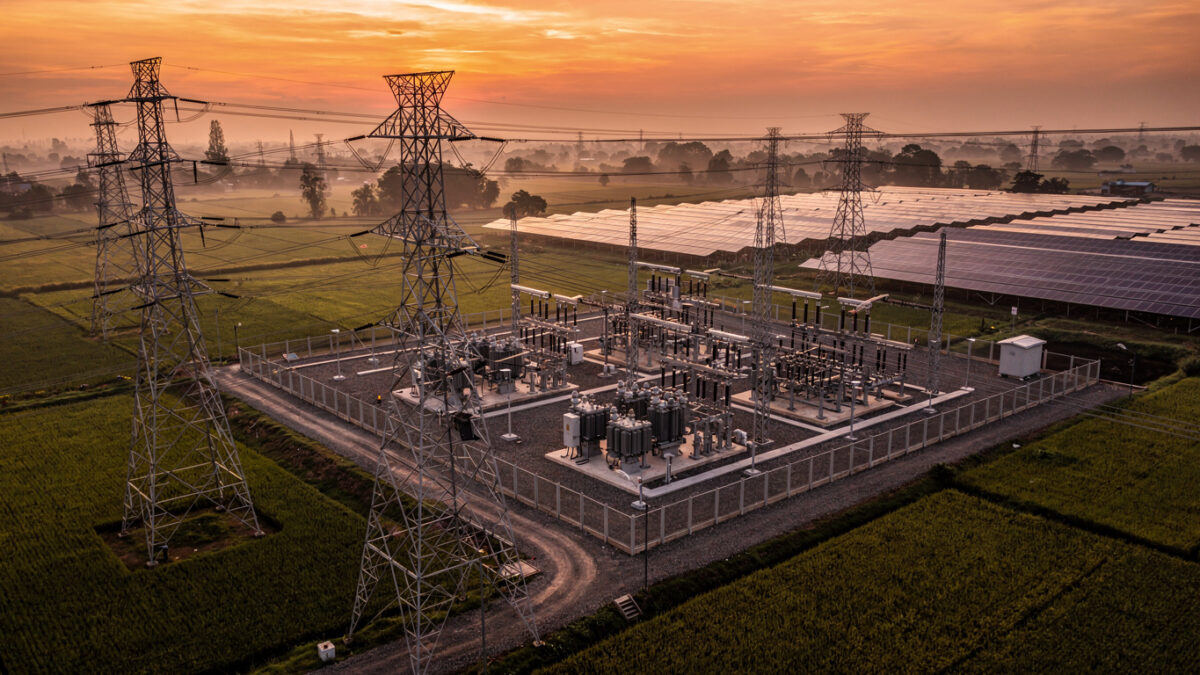
Southeast Asia’s energy transition has reached its harder phase. ASEAN member states, including Malaysia, have formally agreed to accelerate the ASEAN Power Grid (APG) and other cross-border connectivity projects, shifting the priority from building solar, wind and hydro capacity to modernising the aging transmission systems meant to carry it. The push is driven by a tripling of regional data-centre demand by 2030 and by energy-security fears sharpened by Middle East tensions.
The grids in question still lose 6–10% of electricity in transmission. Whether high-level agreements translate into financed interconnections with firm commissioning dates remains, for now, unsettled.
Building renewable generation was the easy part. The harder problem — and the one ASEAN energy ministers have now moved to the centre of their agenda — is delivering that power reliably across borders on grids that were never designed for it. Malaysian Deputy Prime Minister Fadillah Yusof confirmed that member states have agreed to speed up development of the ASEAN Power Grid and related connectivity projects, reframing energy security around transmission rather than capacity.
Southeast Asia’s power-sector emissions reached roughly 1.3 gigatonnes of CO₂ in 2023, about 5% of the global total. The grids carrying that power lose between 6 and 10% of it before it arrives, depending on the country. Into this aging system is now flowing a surge of demand from hyperscale data centres — built largely by Western technology firms — that the existing infrastructure cannot cleanly serve.
The capital spent on generation is at risk of being stranded behind grids that cannot move it.
ALSO WORTH READING
The shift from megawatts to wires
For years, the green-transition story in Indonesia, Vietnam, Malaysia and Thailand was told in installed gigawatts. That metric is no longer the binding constraint. Renewable output is intermittent, demand centres sit far from the best solar and wind resources, and cross-border sharing remains thin — which means generation capacity can rise while delivered clean power stalls.
The financing gap is the clearest evidence. In 2023, ASEAN energy ministers adopted the Joint Declaration on Energy Security and Transition, reaffirming the APG and the Trans-ASEAN Gas Pipeline as core resilience tools. The Asian Development Bank followed with a multi-billion-dollar pipeline of sovereign and private loans for smart-grid and cross-border interconnector projects. Yet current investment still falls short of IEA estimates for a Paris-aligned pathway.
The relevant figures are set out in the IEA’s Southeast Asia Energy Outlook 2024, which puts average grid carbon intensity in major ASEAN economies above 500 grams of CO₂ per kilowatt-hour — far higher than most OECD systems.
| Country | Current rule | New rule | Effective date |
|---|---|---|---|
| Malaysia | National grid, limited cross-border trade | Expanded multilateral wheeling under APG | Endorsement targeted late 2026 |
| Indonesia | Largely islanded provincial systems | Interconnection commitments under APG review | Under negotiation, 2026 |
| Thailand | Bilateral import deals (e.g. Lao hydro) | Standardised cross-border interconnection | AMEM review, Q4 2026 |
| Region-wide | Joint Declaration on Energy Security (2023) | Updated APG project list and financing framework | AMEM 2026 |
The demand the West is exporting into the grid
The new load is not abstract. Hyperscale data-centre build-out led by US and European technology firms in Singapore, Indonesia, Malaysia and Thailand is among the largest sources of fresh electricity demand, with the region’s data-centre capacity expected to triple between 2023 and 2030. These facilities increasingly demand round-the-clock renewable power.
When the grid cannot deliver it, utilities fall back on fossil-heavy generation to keep the servers running. That is the causal chain worth stating plainly: a Western client books progress toward its corporate net-zero target while the regional system it draws on locks in higher emissions to serve it.
For a Western infrastructure fund underwriting a data-centre campus in Java, the 70-billion-dollar Indonesian grid shortfall is not a line in an outlook — it is curtailed renewable supply, a diesel fallback, and an ESG covenant that quietly weakens.
Beyond the headline
The bigger picture
The grid bottleneck exposes how climate policy has shifted from counting megawatts of new renewables to redesigning the hardware of regional integration itself. The real transformation is political and institutional: harmonising rules, tariffs, and system operations across borders so electricity can move as freely as manufactured goods already do under ASEAN trade agreements.
The reach
For Western financial institutions underwriting green bonds and sustainability-linked loans tied to data-centre and industrial projects, grid performance is now a hidden credit variable. A single prolonged blackout or a failure to secure certified low-carbon power can jeopardise loan covenants and ESG-linked pricing, feeding back into the cost of capital for the region’s digital and manufacturing hubs.
The timing
This inflection point arrives just as global investors tighten scrutiny of real-world decarbonisation rather than paper offsets. With major ASEAN economies setting mid-century net-zero targets, the next few years of grid decisions will determine whether today’s surge of green-labelled capital delivers actual emissions cuts or merely rebrands a still fossil-heavy power system.
What grid risk now demands of capital in the region
With ministers due to review the APG in late 2026 and demand already outpacing the wires, three groups face concrete decisions now.
- Western data-centre and infrastructure investors
Treat grid reliability as a due-diligence line item, not a backdrop. Map whether your site can secure certified 24/7 low-carbon power, or whether the utility’s fallback is fossil generation that undermines your ESG reporting — before the covenant is signed, not after the first outage.
- Green-bond and sustainability-linked lenders
Stress-test loan covenants against a multi-day blackout scenario and against the gap between stated APG ambition and financed projects. Track the Asian Development Bank’s grid-modernisation loan pipeline as a proxy for which markets are actually closing the investment shortfall.
- Companies with regional supply chains
Watch the late-2026 ASEAN Ministers on Energy Meeting for firm interconnection commitments. A vague communiqué signals continued reliability risk; track AMEM outcomes directly via the ASEAN Centre for Energy before committing power-intensive operations.
Explainer
- ASEAN Power Grid
- A long-standing regional plan to interconnect the national electricity systems of ASEAN’s member states into a shared, tradable grid. First conceived in 1997, it has advanced mostly through bilateral links rather than a single integrated network. Its acceleration now matters because cross-border transmission is the missing piece that would let surplus renewable power in one country serve demand spikes in another.
- IEA
- The International Energy Agency, an intergovernmental body based in Paris that publishes authoritative energy data and outlooks. Its Southeast Asia Energy Outlook tracks the region’s generation, emissions and investment needs against climate pathways. Its 2024 edition is the source for the finding that grid investment in ASEAN still falls short of a Paris-aligned trajectory.
- APAEC
- The ASEAN Plan of Action for Energy Cooperation, the bloc’s multi-year framework setting regional energy targets and project timelines. It governs the schedule and review cadence for the ASEAN Power Grid and the Trans-ASEAN Gas Pipeline. The late-2026 ministers’ meeting falls under its timetable, making that gathering the next formal checkpoint for grid integration commitments.