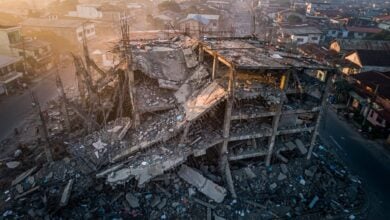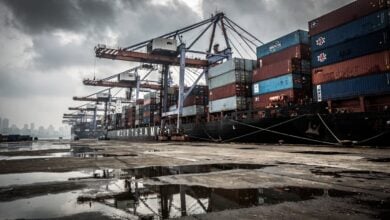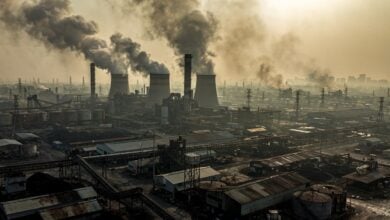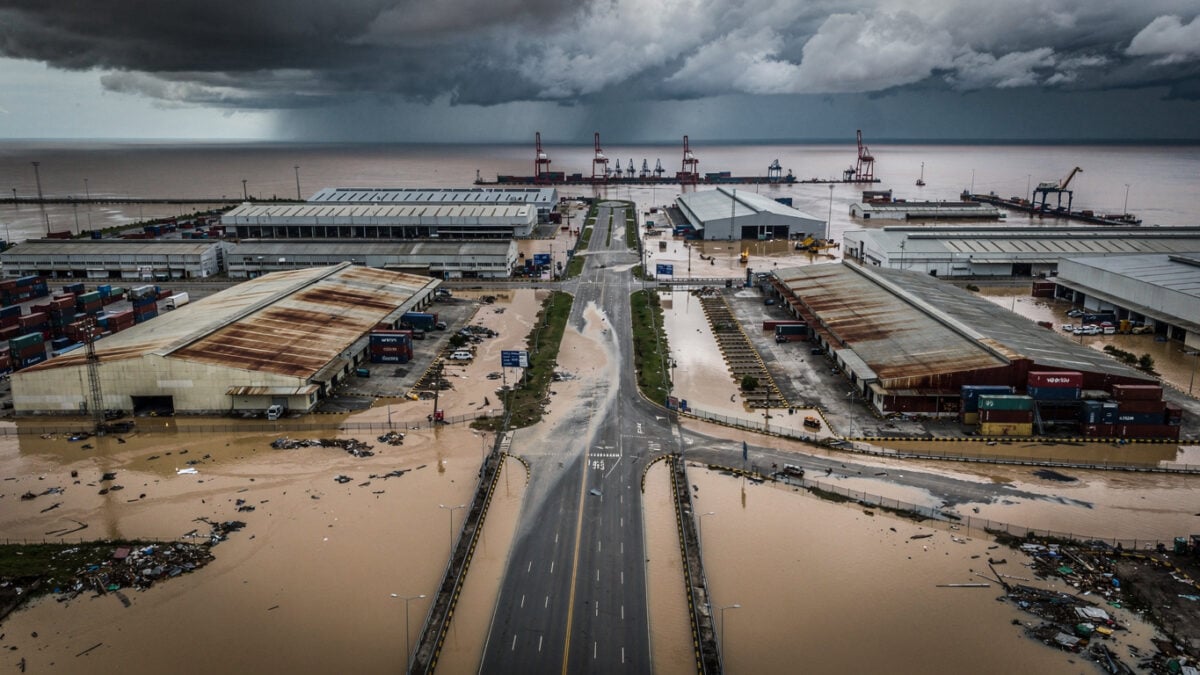
A new analysis by environmental disclosure nonprofit CDP estimates that extreme weather could generate US$450.5 billion in financial losses for Asia Pacific companies over the short and longer term, with flooding alone accounting for US$285.7 billion of that figure. The findings, drawn from disclosures by 24,731 companies worldwide during the 2023–2024 reporting cycle, show that 44% of 4,584 Asia Pacific firms now classify extreme weather as a financially material risk — compared with 35% of companies globally.
The losses are not contained by geography. A substantial share will be transmitted to Western insurers, reinsurers, and pension funds through supply chains and global capital markets. The median expected time horizon for the most severe physical impacts is 2030.
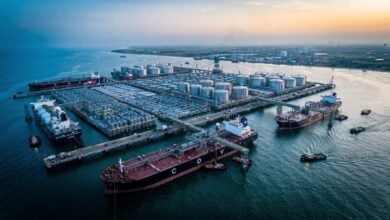
The US$450.5 billion in projected climate losses that CDP has mapped across Asia Pacific is, at its core, a Western financial problem dressed in regional clothes. When a typhoon shuts a semiconductor plant in coastal China, or flooding cuts a Vietnamese textile hub off from its logistics network for three weeks, the damage does not stop at the factory gate — it travels through supply chains, reinsurance ledgers, and equity indices until it lands on the balance sheets of pension funds in Amsterdam and insurers in Zurich.
CDP’s 2026 Asia Pacific analysis, drawn from corporate disclosures covering the 2023–2024 reporting cycle, puts the systemic scale of this transmission in precise terms for the first time. Flooding is the dominant hazard, responsible for US$285.7 billion of the region’s projected losses — nearly two-thirds of the total. The single largest financial impact is not physical asset destruction but lost revenue from reduced production capacity, which accounts for US$188 billion, or 42% of anticipated losses.
The numbers behind the projected losses reveal a distribution that scales well beyond Asia Pacific’s borders.
RELATED

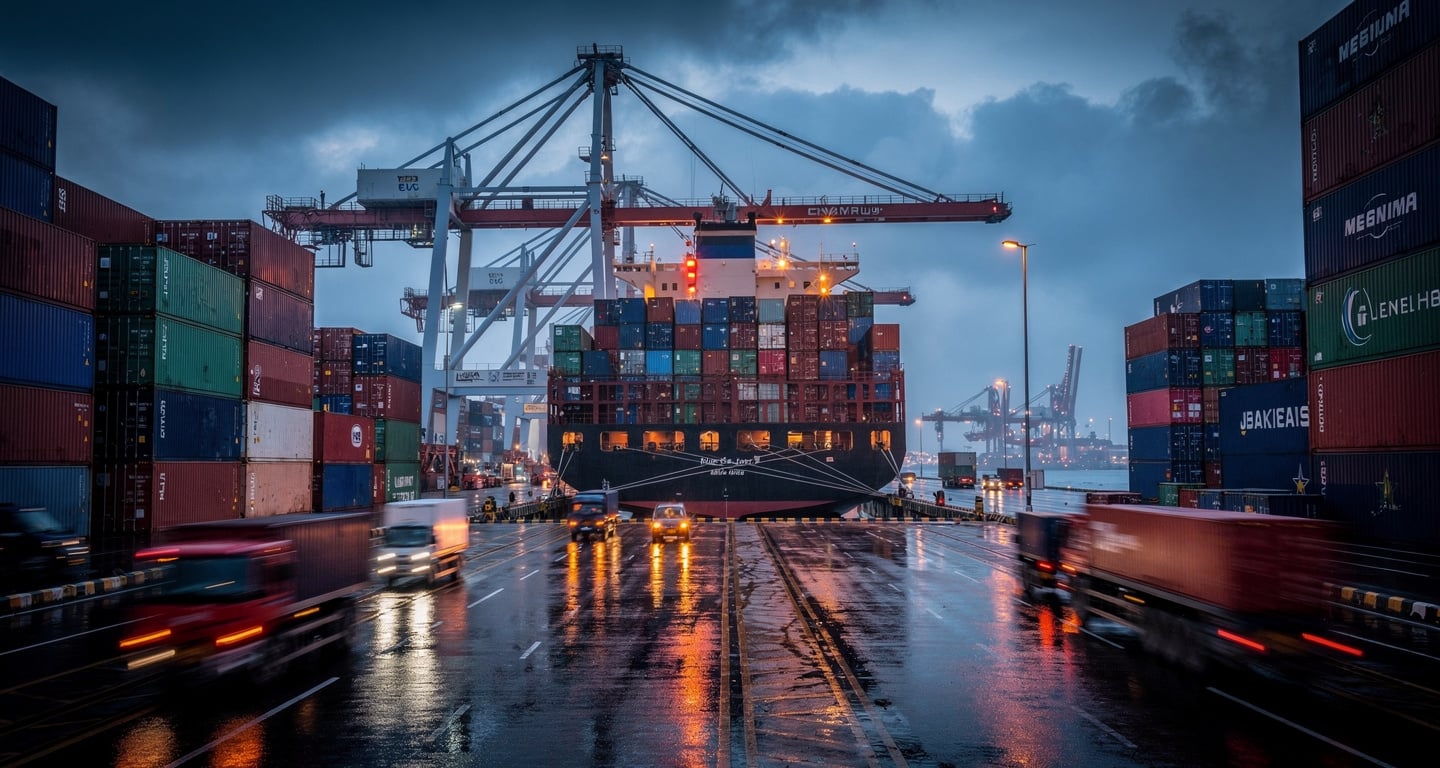
How US$450 billion in Asia Pacific losses reaches Western balance sheets
CDP’s analysis covers disclosures from 24,731 companies worldwide, making it the most comprehensive mapping of corporate physical climate risk published to date. Across Asia Pacific, 59% of firms disclosing location-specific physical risk data expect climate hazards to materialise within the next decade, with a median expected impact date of 2030. That is not a distant scenario — it falls within the standard investment horizon of most institutional portfolios.
Sherry Madera, Chief Executive Officer of CDP, argues that the projected losses reframe what climate resilience investment actually is. “Boards and investors must treat climate resilience investment as fundamental to corporate value preservation,” she said, “rather than a discretionary ESG spend.” The distinction matters: discretionary spending can be deferred; value preservation cannot.
The sectors most exposed — agriculture, human health, water supply, sewerage and waste management, and transport — are not peripheral. They are the infrastructure on which every other sector’s supply chain depends. Disruptions in these systems amplify losses far beyond the initial impact zone, a dynamic CDP describes as the “systemic nature” of the threat.
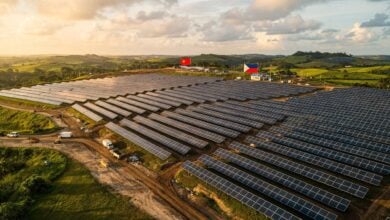
The ASEAN Taxonomy for Sustainable Finance Version 3, endorsed by ASEAN finance ministers in March 2026, now classifies investments in climate adaptation and resilience infrastructure as “green” or “amber” activities — a classification that directly shapes how regional banks and Western asset managers can channel capital into reducing physical climate exposure across Southeast Asia.
CDP’s full Asia Pacific 2026 climate risk analysis is publicly available and contains the complete company-level disclosure dataset.A protection gap measured in hundreds of billions
Aon’s Weather, Climate and Catastrophe Insight 2026 report puts Asia Pacific’s total economic losses from natural catastrophes in 2025 at US$145 billion, with 42% insured. That single-year figure, which does not yet reflect the CDP forward projections, already places the region at the centre of global catastrophe exposure: three of the ten costliest natural catastrophes worldwide in 2025 occurred in Asia Pacific, together causing US$58 billion in economic losses, according to Swiss Re’s sigma analysis published in April 2026.
The World Meteorological Organization’s State of the Climate in Asia 2025 report provides the physical baseline: the region’s mean surface temperature in 2025 was approximately 1.8°C above the 1961–1990 average, while western Pacific sea-surface temperatures reached their highest recorded level — conditions that intensify tropical cyclones and increase the frequency of extreme precipitation events. Relative sea level across many western Pacific islands has been rising at 4–5 millimetres per year since the early 1990s, well above the global mean.
Laura McCoy, Head of Catastrophe Analytics for Asia Pacific at Swiss Re, has warned that rising uninsured losses will increasingly spill over to governments, taxpayers, and global capital markets as the protection gap widens. The Insurance Core Principles of the International Association of Insurance Supervisors, reinforced by a 2021 application paper on climate-related risks, require Asia Pacific supervisors to integrate physical climate risk into solvency and risk-management frameworks — but implementation has been uneven, and the gap between regulatory intent and market pricing remains wide.
The Asian Development Bank estimated in July 2025 that climate change could shave up to 11% off Southeast Asian GDP by 2100 without adaptation investment. That figure gives the CDP projections their true context: the US$450.5 billion is not a worst-case tail risk but an early instalment on a much larger bill.
Beyond the headline
The Bigger Picture
This projected loss figure is not only about isolated disasters; it signals how physical climate risk is re-pricing entire business models in manufacturing-heavy economies from coastal China to Southeast Asia. As insurers, banks and rating agencies integrate more granular hazard data, sectors that once benefited from Asia’s cost advantages may find those savings eroded by higher premiums, stricter lending terms and mandatory adaptation spending.
The Money Trail
Follow the projected losses and a clear beneficiary emerges: firms that can finance and build resilient infrastructure, from flood defences to upgraded power grids. Engineering conglomerates, specialist reinsurers and private-equity-backed infrastructure funds stand to gain fee and premium income as governments and corporates race to harden assets — provided they can move faster than the worsening hazard curve and the growing affordability gap in vulnerable communities.
The Reach
For large European pension funds heavily invested in Asia-focused equity and bond indices, these projected physical losses translate into a concrete risk of lower dividends and higher default probabilities for portfolio companies. The mechanism is straightforward: unpriced climate damage to Asian factories and logistics hubs can compress margins and delay projects, forcing issuers to revise earnings guidance and, in extreme cases, restructure debt — outcomes that can ripple through seemingly distant Western retirement portfolios.
What Western investors, insurers, and travellers should track now
With the CDP data showing a median physical impact horizon of 2030 and Asia Pacific’s protection gap holding above 60%, Western institutions with regional exposure face decisions that cannot wait for the next catastrophe season.
- Institutional investors with Asia Pacific equity or bond exposure should request physical climate risk disclosures aligned with CDP’s framework from portfolio companies in electronics, automotive, and textile sectors — the three industries CDP identifies as most vulnerable to supply chain transmission losses. The CDP disclosure portal at CDP’s Asia Pacific 2026 report provides the sectoral breakdown needed to assess exposure.
- European and Bermuda-based reinsurers should note that more than half of insured catastrophe losses in several major Asia Pacific markets are currently ceded internationally, according to Aon’s 2026 analysis. As uninsured losses grow, the cession volume — and the associated reserve requirements — will increase.
- Corporate treasury and supply chain teams sourcing from coastal China, Vietnam, Thailand, or the Philippines should stress-test logistics continuity against a 2030 horizon. The CDP data shows that operational shutdowns and heavy precipitation are already the dominant loss drivers — not asset destruction. Extreme weather disruptions to regional aviation networks, which saw 445 flight cancellations and 3,839 delays across Asia Pacific hubs on a single day in April 2026, illustrate how quickly physical hazards translate into supply chain friction.
- Policy watchers should monitor the next ASEAN finance ministers’ meeting on climate-resilient infrastructure, expected in late 2026. Strong commitments would signal public capital flowing into adaptation; delay would confirm continued reliance on reactive disaster spending — and a larger uninsured loss pool for global markets to absorb.
- CDP’s Q4 2026 global disclosure cycle will be the next quantitative checkpoint. Rising Asia Pacific participation means physical risk is becoming more systematically priced; stagnant participation means blind spots in investor risk models are widening, not closing.