India is enduring a severe and worsening heatwave season, with New Delhi’s Mungeshpur station recording 49.9°C on 29 May 2024 — tying the capital region’s all-time high. The Council on Energy, Environment and Water (CEEW) found that India experienced a 65% increase in heatwave events between 1981 and 2020, with 75% of its districts now classified as climate hotspots. The Lancet Countdown‘s 2023 South Asia report estimated heat-related labour losses cost India approximately US$159 billion in 2021 alone — roughly 5.4% of GDP that year.
New Delhi has just one government-run cooling centre for its 22.5 million residents, exposing the vast gap between early-warning systems and on-the-ground protection. The economic toll is accelerating faster than adaptation policy can keep pace.
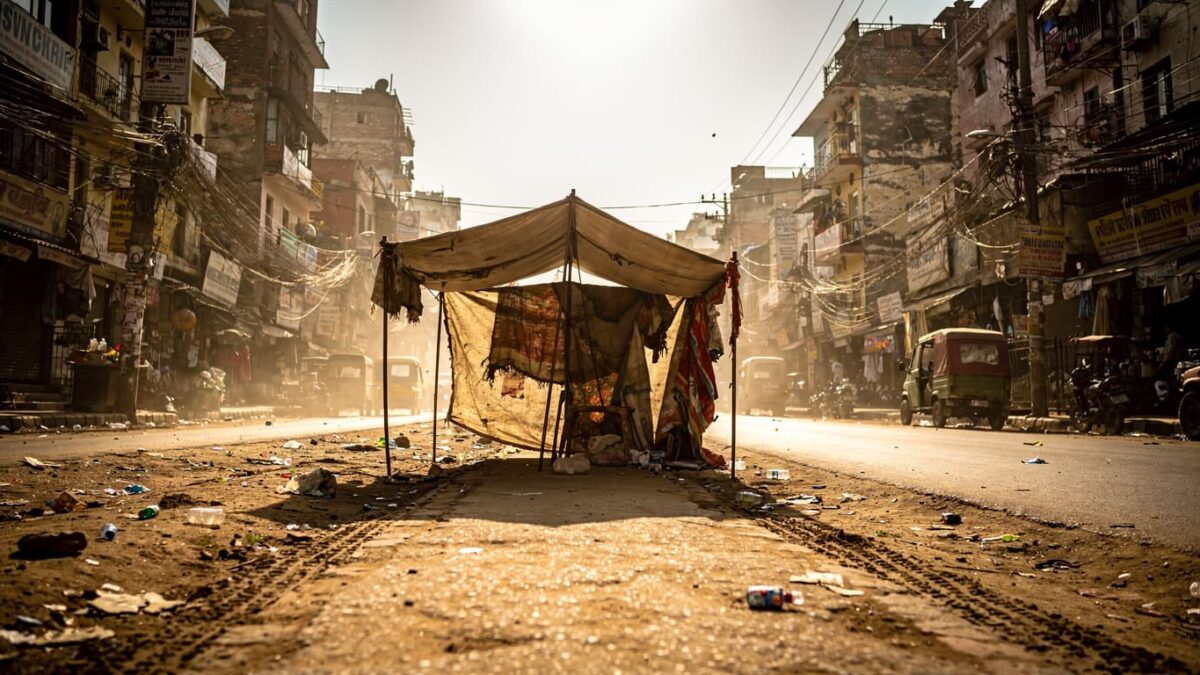
India’s heatwave season is no longer a seasonal inconvenience — it is a compounding public health and economic emergency. Temperatures across northwest and central India have exceeded 48°C in recent days, and the India Meteorological Department has signalled the extreme heat is likely to persist. In New Delhi, a city of 22.5 million people, the infrastructure response amounts to a single government-run cooling tent.
The buried story beneath the record temperatures is the economic damage already accumulating. The Lancet Countdown‘s 2023 South Asia assessment found that heat exposure drove a 55% increase in labour capacity loss in India between 2000–2004 and 2018–2022. That erosion is not abstract: it translated into an estimated US$159 billion in lost income in 2021. For daily wage workers — the porters, rickshaw drivers, construction crews and market traders who cannot stop working when temperatures climb — there is no air-conditioned office to retreat to and no sick pay to fall back on.
New Delhi’s average temperature has risen by nearly 3°C over the past decade, driven by rapid urban expansion and the disappearance of tree cover. The city is getting hotter faster than its governance structures are adapting.
RELATED


The scale of the crisis
The 49.9°C reading at Mungeshpur on 29 May 2024 was not an outlier — it was the culmination of a structural trend. India Meteorological Department data confirmed that reading tied the capital region’s all-time record and came during a period of “severe heatwave” conditions across parts of northwest and central India. The country’s absolute national record — 51.0°C recorded in Phalodi, Rajasthan, on 19 May 2016 — has been linked by researchers in Natural Hazards and Earth System Sciences to anthropogenic climate change.
Ramanathan Ramanan, India Director of the Lancet Countdown South Asia Centre, said in 2023 that rising temperatures and humidity are already causing substantial productivity losses and that without accelerated adaptation — including heat action plans and formal worker protections — both public health and economic growth face serious risk. The warning has not translated into commensurate policy action.
Research published in Nature Sustainability and cited by India’s Ministry of Earth Sciences projects that by 2050 approximately 3.79 billion people globally could be exposed to extreme heat, with South Asia among the most severely affected regions — up from roughly 23% of the world’s population around 2010.
| Indicator | Figure | Source | Reference period |
|---|---|---|---|
| Peak temperature recorded (Mungeshpur, Delhi) | 49.9°C | India Meteorological Department | 29 May 2024 |
| National all-time heat record (Phalodi, Rajasthan) | 51.0°C | IMD / Natural Hazards & Earth System Sciences | 19 May 2016 |
| Increase in heatwave events | +65% | CEEW | 1981–2020 |
| Labour capacity loss increase | +55% | Lancet Countdown | 2000–04 vs 2018–22 |
| Estimated income lost to heat stress | US$159 billion | Lancet Countdown | 2021 |
| Districts classified as climate hotspots | 75% | CEEW | 1981–2020 |
Policy promises versus ground-level reality
India’s formal policy response to extreme heat operates on two tracks that have yet to converge. At the mitigation level, India’s updated 2022 Nationally Determined Contribution commits to reducing the emissions intensity of GDP by 45% by 2030 from 2005 levels and sourcing approximately 50% of cumulative installed electric power capacity from non-fossil fuel sources by the same date. Climate Action Tracker rates India’s current policies as “Almost sufficient” — higher than many industrialised economies — but notes that without stronger global action, warming could still exceed 1.5°C.
At the adaptation level, the gap is starker. The National Disaster Management Authority has promoted Heat Action Plans since Ahmedabad pioneered the model in 2013, and the approach has since been replicated across dozens of cities. But implementation quality varies enormously: funding is fragmented, worker-protection rules are weakly enforced, and there is no nationwide subsidy framework for cooling access for the poorest households. One government tent in central Delhi is not a heat policy — it is a symbol of what one looks like when it fails to scale.
India’s average annual temperature in 2013–2022 was approximately 0.7°C higher than in 1951–1960, according to the Lancet Countdown’s environmental data. That increment, modest-sounding in isolation, is the difference between manageable heat and conditions that kill outdoor workers and collapse agricultural yields. The science has moved faster than the politics — a pattern that should be familiar to anyone tracking climate governance from Jakarta to Karachi.
Beyond the headline
The bigger picture
India’s brutal heatwave season is less an isolated catastrophe than an early stress test of how a rapidly urbanising, lower-middle-income giant copes when climate limits collide with informal labour, weak social protection, and overcrowded megacities. It shows how climate risk shifts from abstract emission curves to daily micro-decisions about who works, who rests, and who can afford to stay alive.
The reach
Persistent extreme heat in India will reverberate through global supply chains that depend on its low-cost labour in textiles, pharmaceuticals, IT services, and back-office work, as productivity falls and health costs rise. Agricultural heat stress threatens exports of rice, sugar, and spices, feeding into food-price volatility in import-dependent countries. For investors holding Indian equities or bonds, chronic heat risk is quietly becoming a macroeconomic variable, not just a humanitarian concern.
Our take
India’s extreme heat crisis is fundamentally a governance and equity challenge, not a meteorological one. The science has moved faster than the politics: mitigation targets look ambitious on paper, yet adaptation for workers and the urban poor remains piecemeal. Without a nationwide push on cooling access, labour protections, and urban greening, record-breaking temperatures will keep translating into preventable deaths and hidden economic losses that quietly undercut the India growth story many abroad are betting on.
What this means for travellers, investors, and policymakers
With India’s peak heat season running through May and June 2026 and the India Meteorological Department maintaining elevated heatwave alerts for northwest and central India, the risks are immediate and specific.
- Travellers to northern India: The Australian Government’s Smartraveller advisory already rates India at Level 2 — exercise a high degree of caution; heat adds a compounding physical risk. Outdoor activity in Delhi, Rajasthan, and Uttar Pradesh between 11am and 5pm carries genuine heatstroke risk. Carry oral rehydration salts, confirm your accommodation has functioning air-conditioning before booking, and monitor the India Meteorological Department’s colour-coded heatwave warnings at pib.gov.in.
- Investors in Indian equities and bonds: The Lancet Countdown’s estimate of US$159 billion in annual income loss from heat stress — equivalent to 5.4% of 2021 GDP — should be treated as a recurring drag on productivity-sensitive sectors including agriculture, construction, and logistics. Monitor Q2 2026 earnings from Indian textile exporters and agricultural commodity firms for heat-related guidance downgrades.
- Supply chain managers sourcing from India: Build heat-season contingency windows into procurement contracts for textiles, pharmaceuticals, and processed foods. The CEEW’s finding that 75% of India’s districts are now climate hotspots means geographic diversification within India offers diminishing protection.
- Watch for: Updated India Meteorological Department seasonal outlooks for June–September 2026, expected in late May and mid-June. If they maintain “above normal” heatwave alerts for northwest and central India, elevated health and productivity risks persist through monsoon onset. Watch also for new or revised state Heat Action Plans announced before peak summer — robust funding commitments would signal a shift from ad-hoc responses toward systemic adaptation.
FAQ
What is India’s all-time temperature record, and where was it set?
India’s national all-time heat record is 51.0°C, recorded in Phalodi, Rajasthan, on 19 May 2016. Researchers publishing in Natural Hazards and Earth System Sciences linked that reading to anthropogenic climate change. New Delhi’s station record of 49.9°C was tied at Mungeshpur on 29 May 2024, during a severe heatwave affecting northwest and central India.
How much economic damage does extreme heat cause India each year?
The Lancet Countdown’s 2023 South Asia report estimated that heat-related labour capacity losses cost India approximately US$159 billion in 2021 — roughly 5.4% of GDP that year. The same report found a 55% increase in work-hour losses from heat exposure between 2000–2004 and 2018–2022, indicating the economic toll is accelerating, not stabilising.
What heat action infrastructure does India currently have in place?
India’s National Disaster Management Authority has promoted Heat Action Plans since Ahmedabad pioneered the model in 2013, now replicated across dozens of cities. The India Meteorological Department issues colour-coded heatwave warnings up to five days in advance. However, implementation is uneven: funding is fragmented, worker protections are weakly enforced, and there is no national subsidy framework for cooling access for low-income households.
What are India’s formal climate commitments, and are they sufficient to reduce heat risk?
India’s 2022 Nationally Determined Contribution commits to a 45% reduction in GDP emissions intensity by 2030 from 2005 levels and approximately 50% non-fossil power capacity by the same date. Climate Action Tracker rates these policies as “Almost sufficient.” However, the commitments address long-term warming rather than near-term adaptation, meaning heat risk for workers and urban populations will continue to intensify for decades regardless of mitigation progress.
How does India’s heat crisis affect global supply chains?
India is a major exporter of textiles, pharmaceuticals, IT services, and agricultural commodities including rice, sugar, and spices. Sustained heat reduces outdoor labour productivity, damages crops, and raises health costs for manufacturers. The CEEW found 75% of India’s districts are now climate hotspots, meaning supply disruptions are geographically broad. Western companies sourcing from India face higher prices, delivery delays, and quality variability during peak heat months.