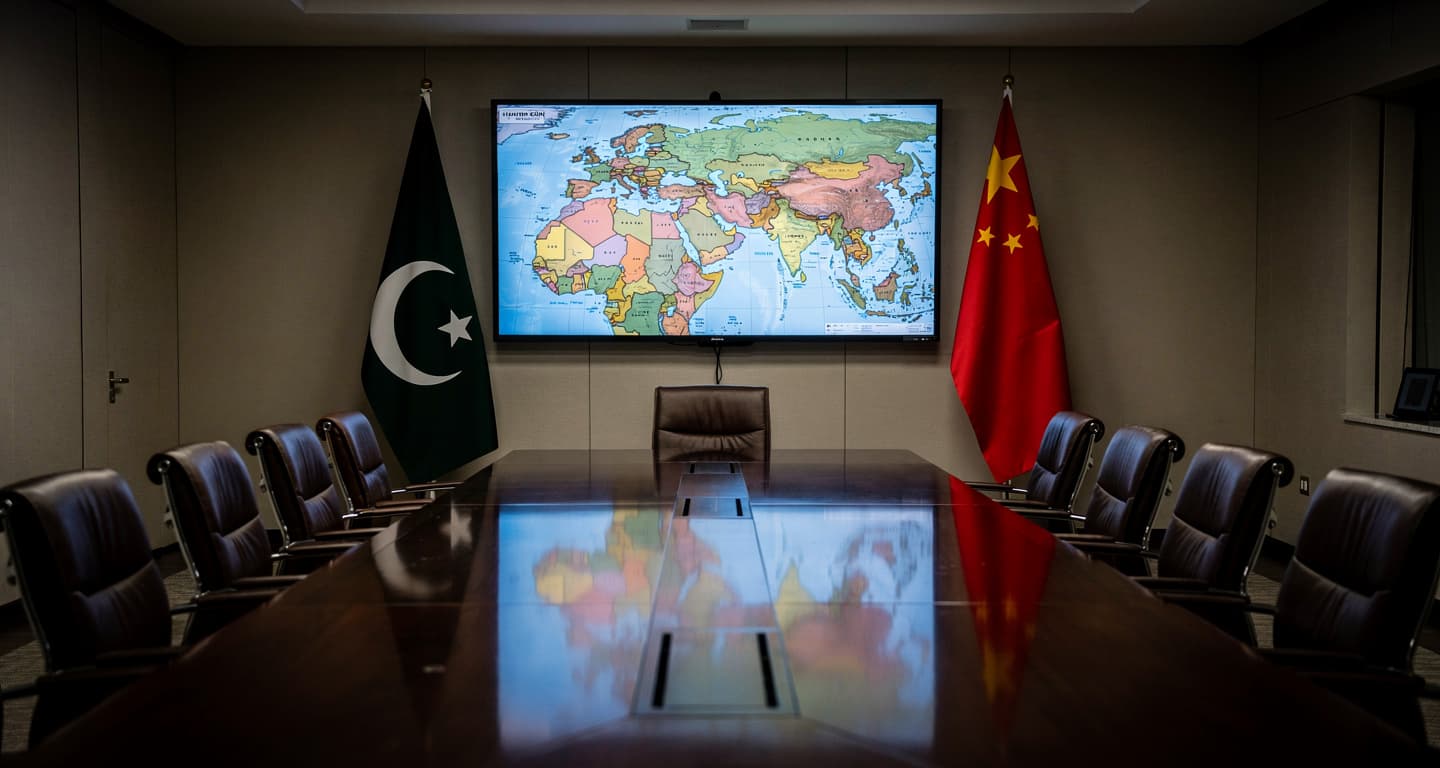
On 31 May 2026, the U.S. Commerce Department’s Bureau of Industry and Security published guidance confirming that advanced Nvidia AI chips sold to any company whose ultimate parent sits in China or Macau now require an export license — no matter where the buyer’s subsidiary is registered. The rule closes a channel that Chinese firms used for a year to acquire banned GPUs through data centers in Singapore and Malaysia. Washington is calling it a clarification, not a new policy.
The guidance is not retroactive, so chips already installed can keep running. What it blocks is the next purchase, the next upgrade, the next cluster.
For roughly a year, a Chinese AI firm could buy the most powerful Nvidia chips on the planet without breaking a single U.S. rule. It just needed a subsidiary in Singapore or Malaysia to sign the purchase order.
That door closed on 31 May 2026. The Bureau of Industry and Security issued FAQs saying export licenses apply to advanced chips bound for any entity whose ultimate parent is headquartered in China or Macau, wherever the buying subsidiary happens to sit. The language is dry. The effect is not.
Here is the part Washington is not advertising. The agency is framing this as a “clarification” of controls technically in force since November 2023 — which is another way of saying the rule existed the whole time and nobody enforced it. Industry estimates cited in trade reporting suggest hundreds of thousands of banned Nvidia chips moved through this gap before anyone moved to shut it. The real story is not a crackdown. It is an admission.
A year-long gap, now papered over
The mechanism was simple. The AI Diffusion Rule, a Biden-era global framework for chip exports, was shelved by the Trump administration in May 2025. That left a vacuum. Chinese cloud and AI firms filled it by standing up data centers in Southeast Asia and buying Nvidia hardware that was banned for direct shipment to China.
The new BIS guidance on advanced-computing exports changes the test. It is no longer about where the box ships. It is about who ultimately owns the buyer. That standard reaches deep into ordinary cloud contracts, not just military deals.
The arrangement was not theoretical. A prior investigation reported in October 2025 targeted Megaspeed, a Singapore-based firm whose Malaysian subsidiary allegedly bought nearly $2 billion in Nvidia chips for data centers in Malaysia and Indonesia serving Chinese clients. In April 2026, Bain Capital’s Bridge Data Centers removed Megaspeed from its Malaysian facility after inquiries from both U.S. and Singaporean authorities.
For Western readers, the logic will look familiar. The “ultimate parent” test resembles the ownership rules already used in U.S. sanctions on Russian energy and Iranian finance, where control, not the shell company’s address, decides compliance. The difference is reach: this standard now lands inside routine GPU procurement for any multinational running workloads in Singapore, not just obviously sensitive trade.
Dylan Patel, chief analyst at SemiAnalysis, has assessed that Huawei’s Ascend 910B and 920-class chips approach Nvidia’s previous-generation data center GPUs in raw compute but lag badly in software maturity and developer tooling. That gap is the whole game. A Chinese firm cut off from Nvidia does not just lose hardware; it loses the CUDA software stack its engineers already know. Here is the twelve-month implication most coverage will miss: the controls do not stop Chinese AI scaling, they raise its cost and slow its software learning curve at precisely the moment models are getting bigger.
| Country | Current rule | New standard in play | Effective date |
|---|---|---|---|
| United States | October 2023 controls on advanced GPUs by performance threshold | License required by ultimate parent in China or Macau, any location | Clarified 31 May 2026 |
| Singapore | IMDA telecoms licensing and MTCS/ISO cybersecurity standards | No origin-based restriction tied to parent ownership | No change |
| Malaysia | MIDA screening under MyDIGITAL and Cloud First policies | Focus on attracting capital, not parent-ownership screening | No change |
The chips already installed are safe. What happens to orders signed but not yet shipped is where the next fight sits.
The chokepoints sit in Washington, not Johor
Neither Singapore nor Malaysia built this enforcement regime, and neither can switch it off. Both run their data centers through investment screening, telecoms licensing, and cybersecurity rules. Neither imposes origin-based restrictions tied to a customer’s ultimate parent. That leaves Washington’s licensing authority doing nearly all the work, extraterritorially.
This is the pattern worth naming. Power in the AI stack does not follow geography. It follows control over the hardware and the software that runs on it. A data center can sit in Malaysia’s Johor corridor and still depend entirely on a license decision made in a U.S. agency office.
Paul Triolo, senior vice president at the Albright Stonebridge Group, has argued that these curbs create real uncertainty for cloud operators in hubs like Singapore, which must balance U.S. compliance against growing Chinese demand. That tension is the new normal.
So the gap that let hundreds of thousands of banned chips flow for a year was never a Southeast Asian failure. It was a U.S. enforcement choice. Washington has now reversed that choice on paper. Whether it reverses it in practice is the open question.
Beyond the headline
The power behind it
The real leverage does not sit with Southeast Asian regulators. It sits with a handful of U.S.-aligned chokepoints: BIS licensing authority, Nvidia’s product roadmap, and TSMC’s fabrication queues. These actors decide how far Chinese firms can scale frontier AI abroad, even when the physical servers sit in Singapore or Johor.
The money trail
A whole arbitrage business grew up around grey-zone chip access — Chinese platforms paying premium markups to route workloads through friendly Southeast Asian clouds, Western investors funding the campuses built on those flows. Closing the loophole reroutes the money rather than erasing it, pushing it toward domestic Chinese chip vendors and foundries less exposed to U.S. jurisdiction.
What isn’t being said
U.S. messaging avoids one question: what allied governments do if ownership-based standards become a template for other technologies, from storage arrays to undersea cables. Singapore and Malaysia have not said publicly whether they are comfortable becoming enforcement zones in someone else’s tech rivalry, even as their hub status depends on looking neutral to both sides.
What to check before your next GPU contract
With the ownership test now reaching into ordinary cloud deals, anyone with infrastructure exposure in the region faces concrete decisions this quarter.
- Multinational cloud buyers
Review the BIS advanced-computing FAQs at bis.doc.gov to understand how the ultimate-parent rule may touch your GPU or cloud-service contracts involving Chinese-linked entities. Then cross-check your existing vendor and customer structures for licensing exposure before signing anything new.
- Firms running workloads in Singapore or Malaysia
Request updated export-control and data-handling assurances from your local cloud or data-center provider. Ask specifically about Chinese parent ownership, onward data transfers, and encryption key management before committing to new AI deployments.
- Semiconductor and infrastructure investors
Watch for a formal BIS enforcement action naming a regional operator in the next six to twelve months. If it comes, Washington means to make an example. If it does not, expect firms to treat this as paperwork and keep testing the boundaries.
Explainer
- BIS
- The Bureau of Industry and Security is the U.S. Commerce Department agency that administers export controls on dual-use and advanced technology. It sets the performance thresholds that determine which chips need a license and which can ship freely. Its enforcement choices, not just its rules, decide whether controls have any real effect — a point the year-long Southeast Asia gap made plain.
- AI Diffusion Rule
- A Biden-era framework designed to govern advanced AI chip exports globally by tiering countries and capping volumes. The Trump administration shelved it in May 2025, removing the structured global limits. That decision created the regulatory vacuum Chinese firms exploited through Southeast Asian subsidiaries.
- CUDA
- Nvidia’s proprietary software platform for programming its GPUs, and the main reason rivals struggle to displace it. Most AI training tools and developer workflows are built for CUDA, so switching to Huawei hardware means rebuilding software, not just swapping chips. This lock-in is why losing Nvidia access hurts Chinese firms more than the raw compute numbers suggest.
RELATED STORIES