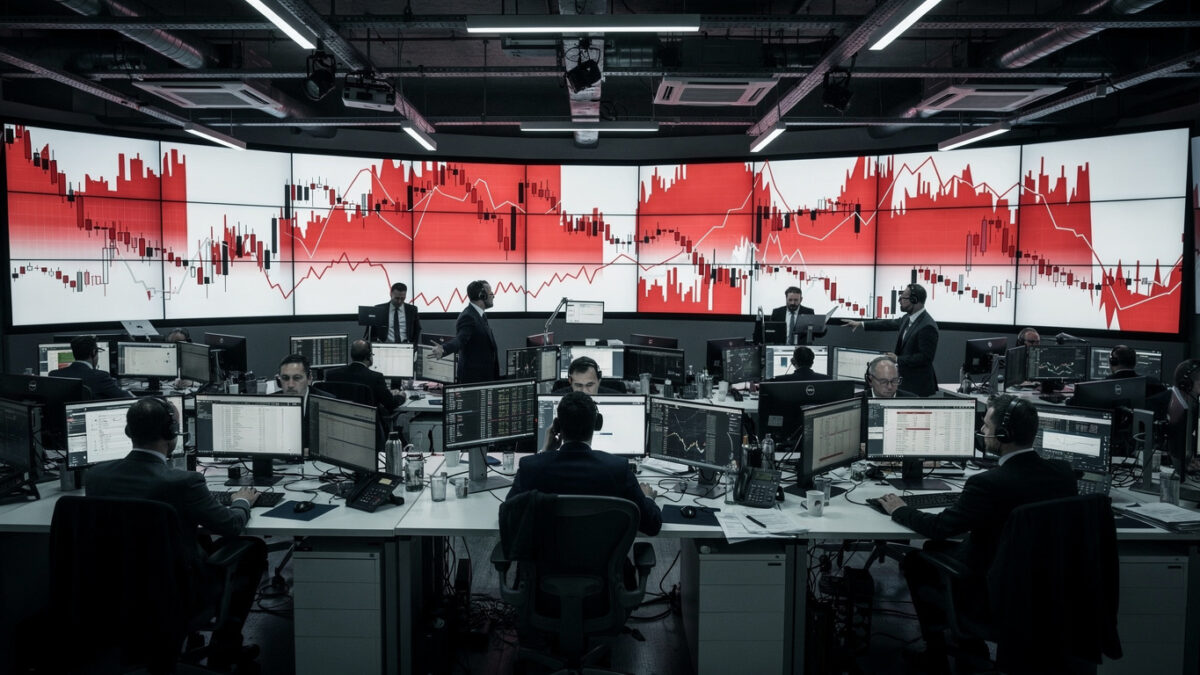
On June 3, 2026, the Dow Jones Industrial Average fell 581.84 points, or 1.13%, to close at 50,725.95, as escalating US–Iran military strikes pushed Brent crude into the low-to-mid USD 90s a barrel and revived fears of a fresh inflation surge. The S&P 500 and Nasdaq Composite also retreated from record territory, with financial and technology stocks leading the losses.
The sharper signal sits beneath the index numbers: markets now price a December Fed rate hike at over 40%. One month earlier, that figure was 9.1%.
The number that matters this week is not a point total. It is 31.
That is the jump, in percentage points, in the market-implied odds of a US Federal Reserve rate hike by December 2026. On May 3, futures markets put those odds at 9.1%. By June 3, they sat above 40%. The Dow’s 581-point drop made the headlines. This is the figure that changes what the headline means.
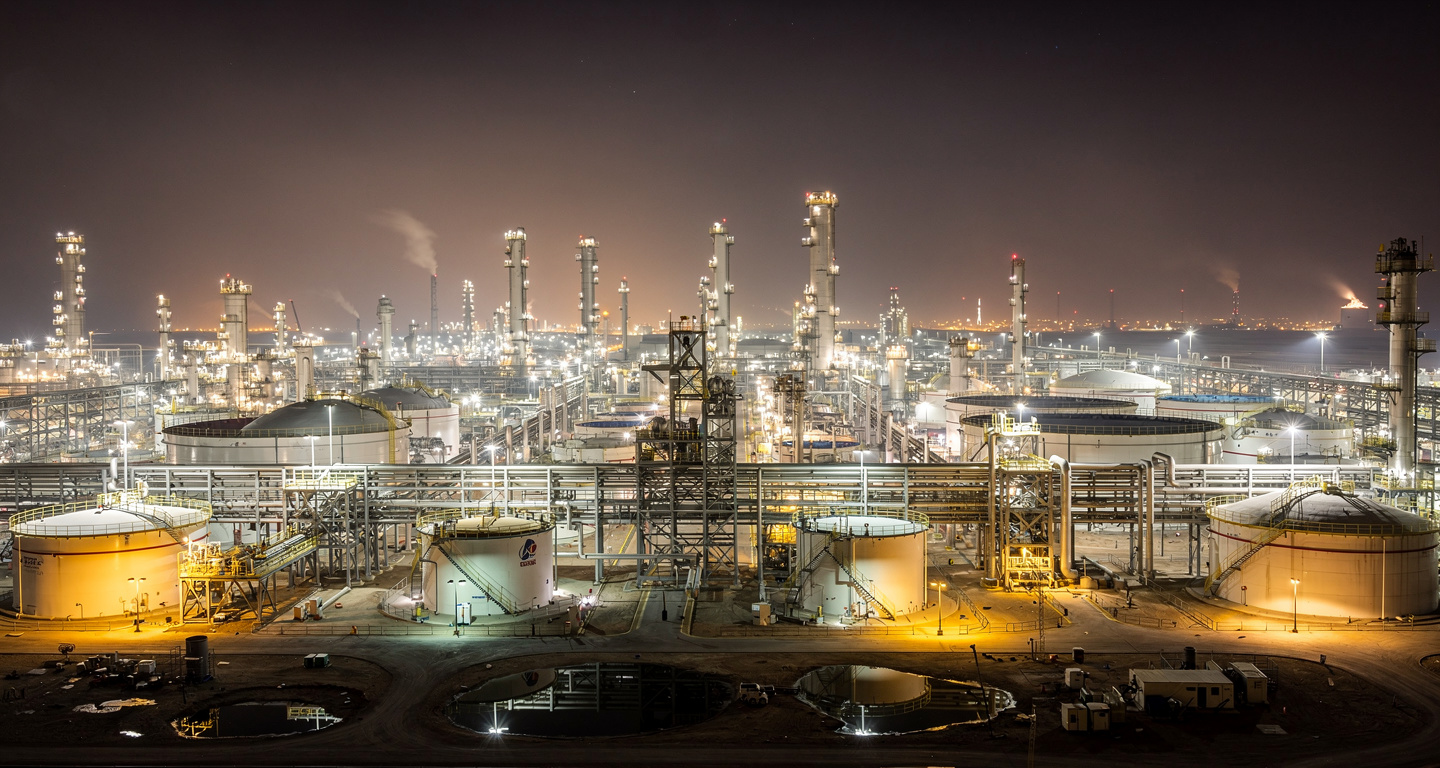
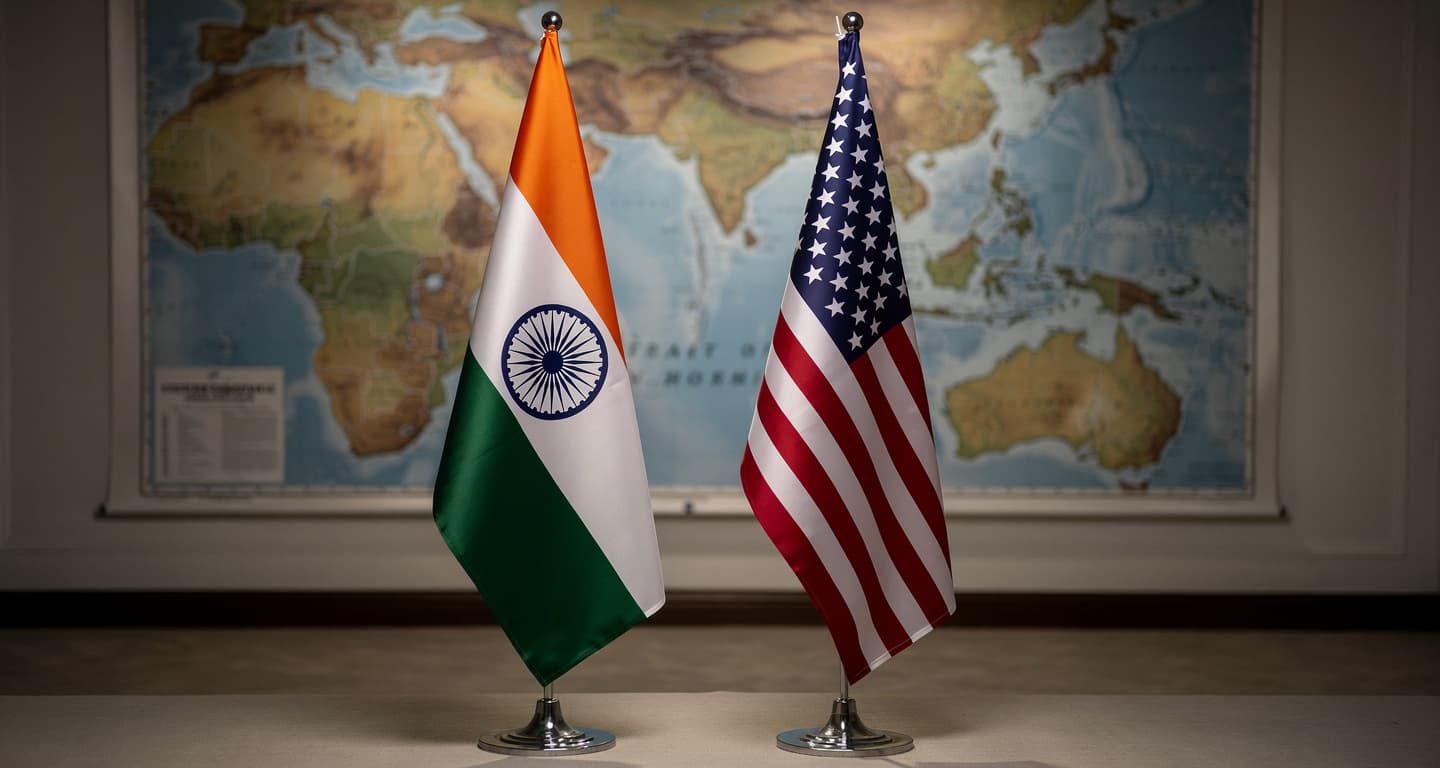
For most of 2026, Wall Street traded a single story: a soft landing, sticky-but-falling inflation, and gradual rate cuts to come. Investors had priced relief. They are now pricing the opposite. The trigger was a new round of air strikes between the United States and Iran, which drove crude oil higher on fears that traffic through the Strait of Hormuz could be disrupted. Higher oil feeds inflation. Higher inflation keeps the Fed restrictive. The whole chain reprices in a day.
The question is no longer whether the economy is strong. It is whether strong fundamentals can survive an oil shock the Fed cannot ignore.
The market split into two prices
Start with the repricing, because it drove everything else. CME’s FedWatch data now show December Fed funds futures implying roughly a 40–45% chance of at least one 2026 hike, against about 9% a month earlier. You can track the figure yourself through the CME FedWatch Tool, which updates after each inflation print and Fed speech.
Oil supplied the fuel. ICE Brent crude traded several dollars above its late-May level on June 3, as traders built in a war-risk premium tied to Gulf shipping. Helima Croft, head of global commodity strategy at RBC Capital Markets, has warned that any sustained threat to Hormuz tends to produce a geopolitical risk premium in crude that transmits quickly into global inflation. That is the mechanism playing out in real time.
The sell-off was not uniform. Financial and technology stocks led the declines, and most of the megacap “Magnificent Seven” fell with them. But a narrow slice climbed. Chipmakers including Marvell, Intel and Qualcomm advanced, even as broader benchmarks dropped.
Ross Mayfield, investment strategy analyst at Baird, argues that AI-linked chipmakers are trading somewhat independently of traditional macro risk, often drawing inflows on risk-off days when other sectors sell off. Capital is rotating out of broad growth exposure and into a theme investors believe is insulated. Energy equities and oil-linked funds face near-term upside but sharper swings, while US financials carry the heaviest downside beta to revived hike bets.
The index numbers document the shock. What they do not explain is why a central bank still calling its policy “well positioned” suddenly faces a market betting against it.
The Fed’s mandate leaves no room to look away
The Fed cannot wave off an oil shock. Its dual mandate under the Federal Reserve Act requires it to pursue maximum employment and 2% inflation over the long run. When energy prices climb and feed through to the wider price basket, the inflation half of that mandate pulls policy toward holding rates high — or raising them.
That is the structural reason a Gulf flare-up moves Wall Street so fast. Bill Northey, senior investment director at U.S. Bank Wealth Management, describes the market as a tug of war between strong domestic fundamentals and the downside risk from the Middle East. He names the duration of any Hormuz disruption as the deciding factor for inflation expectations, and therefore for any 2026 rate cut.
Inflation expectations are already running hot. The New York Fed’s May 2026 Survey of Consumer Expectations put one-year-ahead inflation above the 2% target, a reading you can check directly through the Survey of Consumer Expectations. New York Fed President John Williams has called current policy well positioned, while flagging energy prices as a clear upside risk. The market read the second half of that sentence.
So the soft-landing story did not collapse on bad domestic data. It bent around one chokepoint half a world away. The economy is strong. The 31-point swing in rate-hike odds says strength is no longer the variable that decides where stocks go next.
Beyond the headline
The timing
This sell-off lands just as markets had settled into a soft-landing narrative and gradual 2026 cuts. The sudden repricing of Fed expectations, colliding with an oil shock, shows how fast a benign macro story can flip when one critical chokepoint among several — Hormuz prominent among them — intersects with a central bank already uneasy about sticky inflation.
The money trail
Beneath the index moves, capital is rotating from broad growth exposure into narrower themes seen as shielded from macro shocks, most visibly AI-linked chips. At the same time, private-market funds promising semi-liquid exposure are hitting withdrawal limits, raising the question of who bears liquidity risk when volatility exposes the gap between daily-traded public markets and locked-up alternative assets.
What isn’t being said
Most commentary fixes on day-to-day swings, but less attention goes to how repeated Gulf risk episodes could hard-wire a higher floor under energy prices. That structural premium complicates long-term inflation targeting and decarbonisation plans. Over time it may lead to higher costs for energy-intensive Western households and businesses, even in stretches when headline tensions appear to ease.
How to read your own exposure now
With rate-hike odds above 40% and a war-risk premium sitting in crude, the next three to six months will test portfolios built for a rate-cut year. Here is where the pressure lands.
- Retail investors with retirement accounts
Your rate-sensitive holdings — financials and broad tech benchmarks — carry the heaviest downside if hike bets harden. Track the December odds yourself through the CME FedWatch Tool after each CPI release, and check whether your sector mix still matches a year where cuts may not arrive.
- Investors weighing energy exposure
Energy equities and oil-linked funds face near-term upside but sharper swings while Brent trades in the USD 90s. Review your real exposure to a prolonged oil premium using the official ICE Brent futures page at ice.com before adding to transport-heavy positions like airlines or logistics.
- Holders of private-markets funds
The Partners Group withdrawal cap on its USD 8.6 billion fund is a warning, not an outlier. If you hold semi-liquid private-equity vehicles, reassess redemption terms and liquidity windows over the next three to six months — before volatility, not during it.
FAQ
How quickly does higher oil show up at the pump?
US Energy Information Administration data show gasoline and diesel prices track Brent crude, but with a lag of one to several weeks. When crude rises several dollars a barrel and stays elevated, pump prices can climb by tens of cents per gallon. That raises monthly fuel bills and, indirectly, the cost of delivered goods. Current retail figures are published at eia.gov/petroleum/gasdiesel.
How do rate-hike expectations affect mortgages and loans?
When markets price higher future Fed funds rates, yields on US Treasuries and interest-rate swaps tend to rise. That feeds through to fixed-rate mortgage offers, auto loans and some credit-card rates. The pass-through is not one-for-one, but sustained higher expectations can add materially to borrowing costs. The benchmark 10-year Treasury yield, tracked on the St. Louis Fed’s FRED database, is the cleanest gauge to watch.
What can investors do to hedge an oil-driven shock?
In past Middle East flare-ups, some diversified investors used broad commodity funds, energy-sector ETFs, or defensive equity sectors such as utilities and consumer staples to soften oil-linked moves. Single-commodity plays and volatility products carry higher risk and complexity. Past fund performance during prior Gulf tensions is the better guide than any forecast, and no hedge removes the risk entirely.
Explainer
- Federal Reserve rate hike
- A move by the US central bank to raise its benchmark interest rate, raising borrowing costs across the economy to cool inflation. The Fed sets a target range for the federal funds rate, which ripples into mortgages, loans and bond yields. Markets price the odds of future moves through federal funds futures, which is why a jump from 9.1% to over 40% in a month is itself market-moving news.
- Strait of Hormuz
- A narrow waterway between Iran and Oman that carries roughly a fifth of the world’s seaborne oil. Its width at the shipping lanes is just a few miles, making it one of the most strategically sensitive chokepoints on earth. Even the threat of disruption, without a single ship being stopped, can add a risk premium to crude prices within hours.
- Federal Reserve Act
- The US law that defines the central bank’s powers and its dual mandate of maximum employment and stable prices. The Fed interprets stable prices as 2% inflation over the longer run. That target is why an energy shock with no link to US labour markets can still force the Fed to hold rates high, since imported oil inflation still counts against the 2% goal.
RELATED STORIES