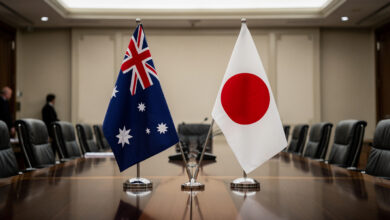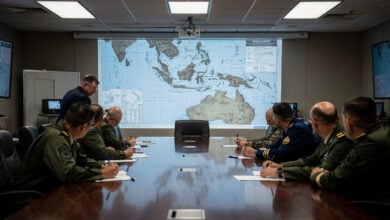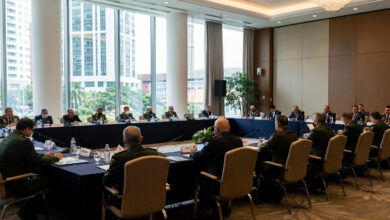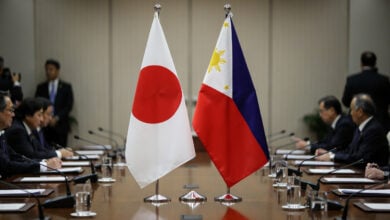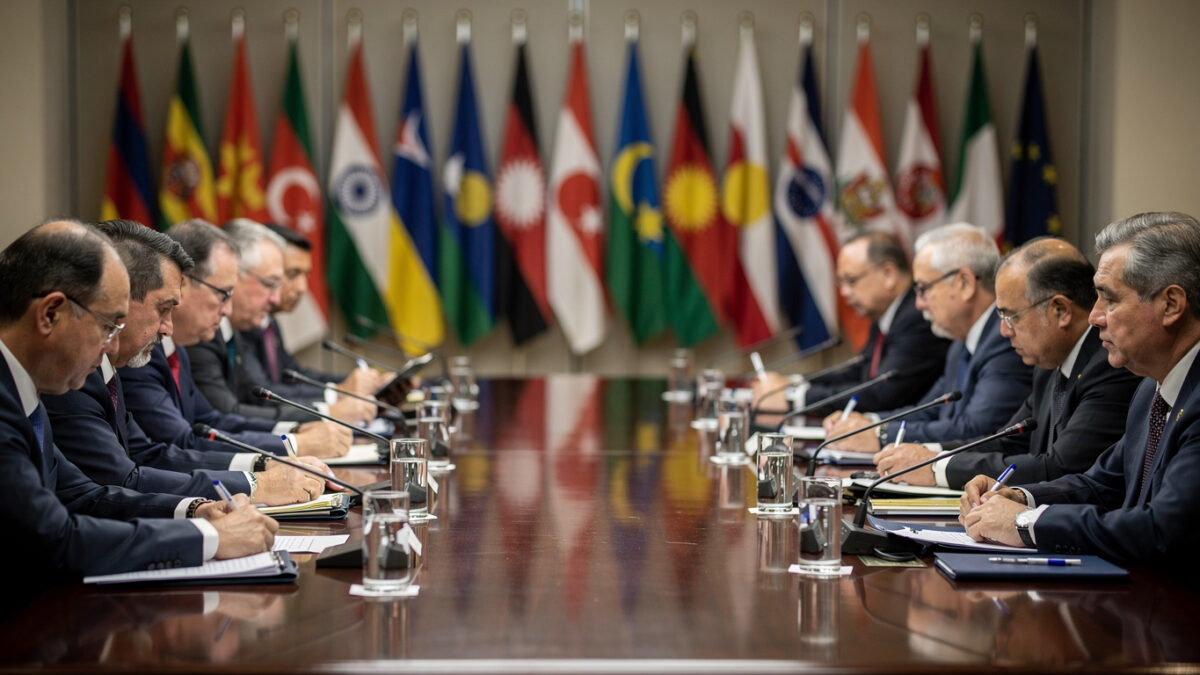
At the 2026 Shangri-La Dialogue in Singapore on May 30, US Defense Secretary Pete Hegseth told Asian allies to spend 3.5% of GDP on defence and quipped “more ships, less Shangri-La.” Vietnam’s President To Lam, Australia’s Richard Marles and Japan’s Shinjiro Koizumi pushed back, arguing that the region’s danger is a shortage of trust, not a shortage of arms. The split exposed two rival theories of how to keep the peace.
China sent no minister for the second year running but clashed openly with Japan over wartime history and defence spending. The disagreement matters because both sides claim to want the same thing.
The last time two naval powers convinced themselves that buying more ships would buy more safety, the result was 1914. That is the uncomfortable shadow over the argument that broke into the open in Singapore on May 30, when US Defense Secretary Pete Hegseth told a hall full of defence ministers that Asia needed combat power, not conferences.
His phrase—”more ships, less Shangri-La”—was meant as a provocation, and it landed as one. But the quip was the easy headline. The real fault line ran underneath it: Washington and much of Asia no longer agree on what actually prevents a war. Hegseth offered the Roman maxim that those who want peace should prepare for it. Vietnam’s To Lam, opening the same forum, offered close to the opposite—that defensive moves get read as threats, and that the missing ingredient is trust.
Two theories of peace, stated within hours of each other, at the region’s most important security gathering. Neither side blinked.
ALSO WORTH READING

Two theories of peace, stated out loud
Hegseth’s pitch came with a price tag and a sorting mechanism. Allies spending below 3.5% of GDP on defence were, in his framing, freeloading on US taxpayers; those who paid up would be treated as model partners with priority access to American weapons. The message to Tokyo, Canberra and Manila was plain. Pay more, or move down the queue.
The pushback was not soft. Marles, Australia’s defence minister, called on China to be open about its maritime operations, arguing that openness itself would steady the region and protect infrastructure such as undersea cables. To Lam warned that without strategic trust, each side’s defences look like provocations to the other. This is the security dilemma in its textbook form, and the people invoking it were not academics but heads of government.
The numbers behind the quarrel are lopsided. The IISS estimates China’s defence budget reached roughly USD 247 billion in 2025, against about USD 50 billion for Japan—a figure cited from the institute’s Military Balance database rather than independently verified here. Tokyo’s approved budget for fiscal 2026 runs to about JPY 8.5 trillion, part of a plan, set out in Japan’s 2022 National Security Strategy, to reach around 2% of GDP by fiscal 2027. Koizumi used that asymmetry as his shield. Beijing has nuclear weapons and strategic bombers; Japan has neither. “And yet Japan is labeled ‘new militarism’,” he said. “Isn’t it strange?”
The arms-race optics are harder to wave away. The figures confirm what the platforms already show. Both sides agree they want stability. What they cannot agree on is which of them is making it worse.
The guardrails are lagging the weapons
The structural problem is not the spending. It is that the hardware is arriving faster than the rules for managing it. Japan is converting two Izumo-class helicopter destroyers to fly F-35B fighters, with JS Kaga’s conversion due around 2027; China already operates three carriers. Each step is defensive by design and threatening by reception.
Bonny Lin, who directs the China Power Project at the Center for Strategic and International Studies, describes Beijing and Tokyo as locked in exactly this loop over the East China Sea, where each move to deter the other is read as destabilising and feeds the next round. Rory Medcalf of the Australian National University’s National Security College makes the matching point about the forum itself: military build-ups without parallel diplomacy invite miscalculation in contested waters.
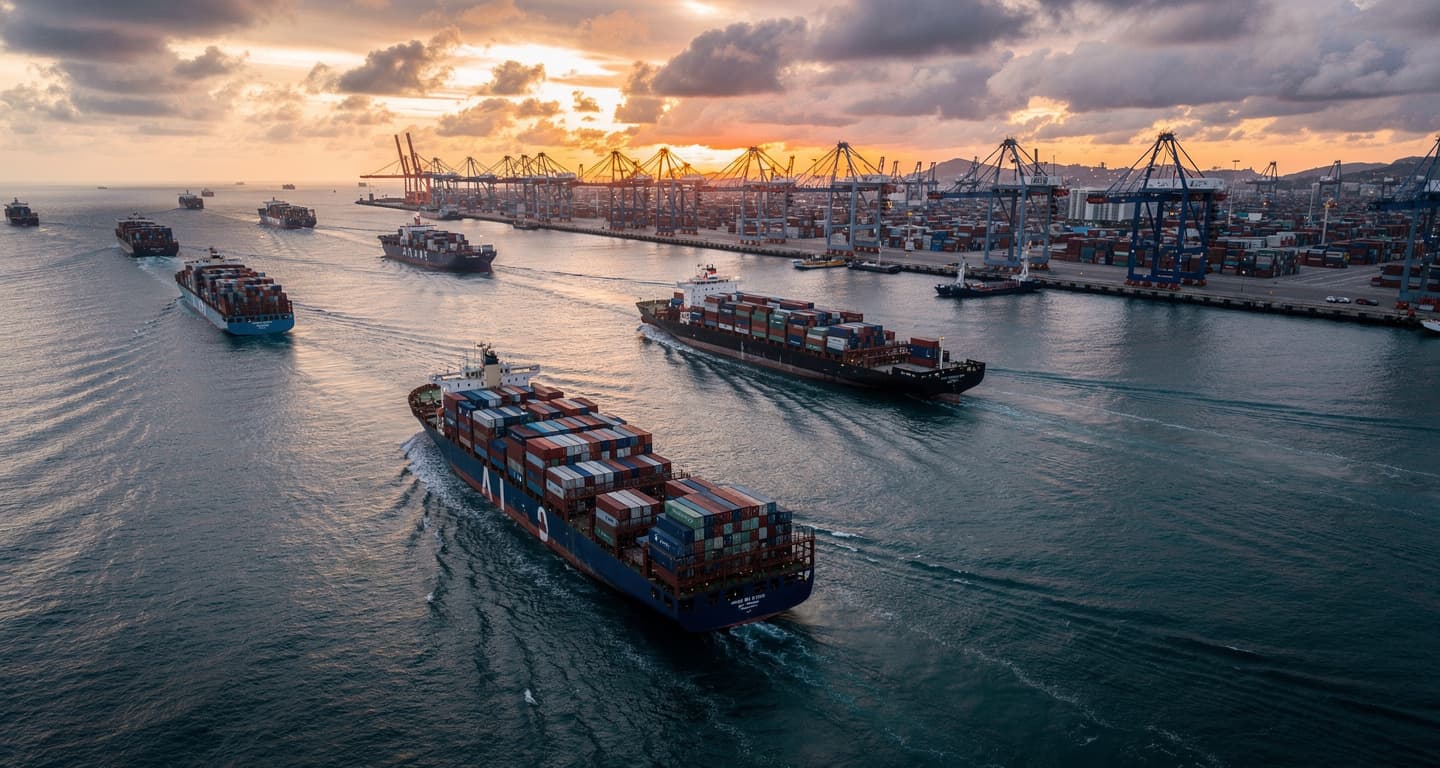
For the firms that move Europe’s and America’s goods through these sea lanes, the bill is already arriving as higher insurance and financing costs, and as exposure on the undersea cables Marles named.
So return to the two theories aired in Singapore. Hegseth’s is the older one, and the easier to fund. The trouble is that the last great naval arms race ran on precisely that logic, and the diplomacy meant to contain it never caught up. The ministers calling for dialogue are not naive about ships. They are pointing at the part of the system nobody is building fast enough.
Beyond the headline
The bigger picture
The clash is less about how many ships each side floats than about which theory of peace will govern Asia—overwhelming force, or stability through trade and communication. As budgets climb, the machinery for managing a crisis lags behind, leaving a region that trades heavily with itself to handle nuclear-era risks with essentially pre-digital guardrails.
The science gap
The talk of “security dilemmas” and deterrence in Singapore borrows directly from political science, yet leaders apply the findings selectively. Decades of research on arms races show that transparency measures, hotlines and incident-at-sea agreements measurably cut the risk of escalation. Those tools drew far less airtime than spending targets and new platforms—a clear gap between what the evidence supports and what policy actually does.
What isn’t being said
Barely mentioned is how home politics narrows each capital’s room to move. US leaders must justify overseas commitments to sceptical voters; Japanese and Australian governments must sell defence hikes against social spending; Chinese leaders treat concessions as weakness. Ignore those constraints and calls for more ships or more summits read as technocratic fixes for what are, underneath, problems of political legitimacy.
What the split means for your money and your government
With the deterrence-versus-dialogue divide hardening at the region’s top forum, three groups face concrete decisions.
- Citizens of US-aligned democracies
Read your own government’s defence planning before the spending debate reaches you. Japan’s strategy sits at cas.go.jp and Australia’s National Defence Strategy at defence.gov.au; both show how a 3.5%-of-GDP benchmark, if adopted, would pull money from social budgets while lifting demand for US and European weapons.
- Investors exposed to East Asian supply chains
A China-Japan arms race raises shipping, insurance and financing costs on the sea lanes carrying a large share of Western traded goods. Track maritime-security updates from the International Maritime Organization at imo.org, and watch undersea-cable risk if you hold digital firms reliant on Asia-Pacific infrastructure.
- Defence and policy watchers
Mark Japan’s Medium Term Defense Program update in late 2026 and the next IISS Asia-Pacific Regional Security Assessment in mid-2027. Sustained above-trend rises by both Beijing and Tokyo would confirm the arms-race dynamic is setting; any new Beijing-Tokyo crisis-communication line would point the other way.
Explainer
- Security dilemma
- A situation in which steps one state takes to feel safer make rivals feel less safe, triggering a spiral of arming on all sides. The pre-1914 naval race between Britain and Germany is the classic case, where defensive shipbuilding read as aggression to the other. In the East China Sea version, scholars note that hotlines and incident-at-sea pacts can blunt the spiral, but neither China nor Japan has built robust crisis channels.
- Shangri-La Dialogue
- Asia’s premier annual security summit, run by the IISS in Singapore, where defence ministers from the region and beyond meet each year. It functions as much as a crisis-messaging stage as a negotiating table, since few binding deals are signed there. China declined to send its defence minister for the second straight year in 2026, sending a delegation led by a major general instead.
- IISS
- The International Institute for Strategic Studies, a London-based research body that organises the Shangri-La Dialogue and publishes the widely cited Military Balance. Its annual defence-spending data is treated as a reference point by governments and analysts worldwide. Its Asia-Pacific Regional Security Assessment has tracked nominal Asian military spending rising several percent year-on-year, reinforcing concern about an emerging regional arms race.
- AUKUS
- A 2021 security pact between Australia, the United Kingdom and the United States, centred on equipping Australia with nuclear-powered submarines. It anchors Canberra’s shift toward deterrence by denial in the Indo-Pacific. Australian officials cite AUKUS as proof of hard-power commitment even as they back ASEAN and Shangri-La as essential venues for dialogue.