Blackstone has closed its third Asia-focused private equity fund, Blackstone Capital Partners Asia III, at $13.1 billion. That beat both its $10 billion target and its $12.9 billion hard cap, making it the firm’s largest-ever buyout vehicle for the Asia-Pacific region. The close lands as regional fundraising hit a 12-year low, with Asia-focused private equity funds raising just $58 billion in 2025, down 37 per cent on the year before.
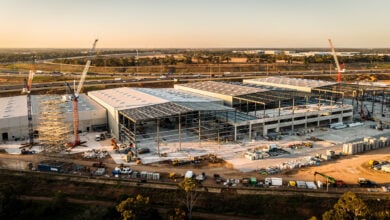
The new fund is more than double its predecessor on a stand-alone basis. Blackstone is steering the capital toward digital infrastructure, with recent bets on data centres in India and Australia.
One firm just raised nearly a quarter of an entire market. Blackstone’s $13.1 billion Asia fund is not far off a quarter of the $58 billion that every Asia-focused private equity manager raised between them in 2025. That gap is the story. The headline says investors are confident in Asia. The fundraising data says the opposite — money is fleeing the region, not flooding in.
So the question is not whether Asia is back. It is why one US manager can pull in record sums while the market around it shrinks to its weakest level in over a decade. Blackstone beat its own hard cap. Most of its rivals could not hit their targets. The same continent, the same year, two different realities. What separates them tells you more about where capital is going than any growth forecast does.
One fund, against a market in retreat
Start with the climb. Blackstone Capital Partners Asia III closed at $13.1 billion. Its first Asia buyout fund raised $2.3 billion in 2018. The second pulled in $6.4 billion from investors in early 2022. Each fund has roughly doubled the last. That is not gradual growth. That is a franchise the firm has built deliberately, fund by fund, over eight years.
ALSO WORTH READING

Now set it against the backdrop. According to a Bain & Co report, Asia-focused private equity fundraising fell 37 per cent in 2025. The figure has not been independently verified against the firm’s published data here, but the direction is clear: the region’s total haul was the thinnest in 12 years. Investors turned cautious. Blackstone raised a record anyway.
The strategy explains the pull. Blackstone’s Q1 results show the firm took in $68.5 billion across all its funds in a single quarter. Amit Dixit, Head of Asia for Blackstone Private Equity, has pointed to the firm’s two decades on the ground, its local teams, and a control-oriented model that lets it reshape the businesses it buys. Joe Baratta, Global Head of Blackstone Private Equity Strategies, framed Asia-Pacific as the fastest-growing region the firm tracks.
Over the past two years Blackstone has deployed more than $7 billion across 12 Asia deals. The tilt is unmistakable. It put up to $600 million into the Indian AI data-centre startup Neysa, bought Australian platform AirTrunk in a deal valuing it at $16.1 billion, and led a $10 billion debt facility for the Australian developer Firmus. The record fund is documented. What is less obvious is why two years of regional caution have not touched it.
Capital is picking sides, not regions
The scale of the gap shows up clearly when the funds are stacked against the market they were raised into. The pattern underneath is not regional confidence. It is concentration. When fundraising tightens, money does not spread evenly across managers — it crowds into a handful of brand names with long track records and the ability to deploy at scale. Everyone else fights over a shrinking pool.
This is the flight to quality, and it cuts both ways for Blackstone. Not every fund the firm runs is oversubscribed. Blackstone’s Q1 results also indicated that its Asia real estate fund stood at $8.2 billion, short of its $9 billion target. Same firm, same region, different appetite. The buyout strategy drew record money while the property fund stalled.
That split is the real signal. Investors are not betting on Asia as a whole. They are betting on specific managers chasing specific themes — and right now the theme is the data centre.
For a US pension fund weighing its private-markets pacing, the message is uncomfortable. The safe move is to follow the mega-manager. The cost is paying up for scarce control deals alongside the largest cheque-writer in the room. The confidence everyone read into this fundraise was never about the region. It was about who gets to keep raising when the money stops flowing.
Beyond the headline
The bigger picture
The close is less a signal of broad Asia confidence than evidence that capital is pooling into a smaller set of brand-name managers. That dynamic matters because it can keep deal prices high for the few platforms still able to raise and deploy at scale, while everyone else faces a thinner fundraising market.
The money trail
The clearest economic winner is the set of assets that can absorb multi-billion-dollar control capital, above all digital infrastructure. When one manager can write very large cheques, the practical effect is to push bargaining power toward owners of scarce assets and away from the buyers competing for the same prize.
The reach
For US pension funds and endowments, the mechanism is indirect but real: a record Asia fund can shape portfolio pacing and private-markets allocation. If Blackstone keeps drawing oversized commitments while peers struggle, Western allocators may tilt further toward mega-managers and away from smaller Asia specialists.
What the record fund changes for your money
With a $13.1 billion pool now waiting to deploy, the competition for Asia’s best control deals is about to get more crowded. Three groups should read the move closely.
- Institutional allocators
If you set private-markets pacing, expect the flight to quality to harden. Following Blackstone into Asia digital infrastructure is the low-risk pick, but you will pay up alongside the largest buyer in the market. Watch the firm’s next quarterly deployment update — fast deployment means it is finding control deals at workable prices; a slowdown means pricing discipline is biting.
- Investors with data-centre exposure
Blackstone’s bets on Neysa, AirTrunk and Firmus point to where the capital lands. If you hold AI- or cloud-linked infrastructure names across India and Australia, this fund supports valuations on the buy side over the next six months — but raises the risk of compression for anyone entering late.
- Smaller Asia-focused fund backers
The 37 per cent drop in regional fundraising is not evenly shared. If your capital sits with mid-size or specialist Asia managers, expect a harder raise and pressure to pitch larger, later-stage platforms or lean on co-investment to stay competitive against the mega-funds.
Explainer
- Blackstone Capital Partners Asia III
- Blackstone’s third dedicated Asia-Pacific private equity buyout fund, closed at $13.1 billion. It is the firm’s largest such vehicle for the region and follows funds raised in 2018 and 2022. The fund targets control stakes — majority positions that let Blackstone actively reshape the companies it buys rather than hold passive minority interests.
- AirTrunk
- An Australian data-centre platform Blackstone acquired in a deal valuing it at $16.1 billion. It operates hyperscale facilities that house the servers behind cloud computing and AI workloads across the Asia-Pacific region. The purchase ranks among Blackstone’s largest single Asia bets and anchors its push into digital infrastructure as the dominant theme for the new fund.
- Bain & Co
- A global management consulting firm whose annual private equity report is a widely cited benchmark for industry fundraising and deal data. Its 2025 figures put Asia-focused fundraising at a 12-year low. The firm’s data is influential enough that limited partners and fund managers often use its yearly market read to calibrate their own allocation decisions.