Admiral Samuel Paparo, commander of U.S. Indo-Pacific Command, told the Senate Armed Services Committee on March 21, 2026, that China’s People’s Liberation Army is on track to achieve military readiness for a forced unification with Taiwan by 2027 — and that Washington needs new long-range anti-ship munitions and advanced sea mines to restore credible deterrence. The assessment, contained in a 121-page posture statement submitted to Congress, describes the PLA as undergoing a “historic expansion” across every military domain.
Paparo’s language is markedly more direct than the Trump administration’s current diplomatic posture toward Beijing. The gap between the general’s warning and the White House’s tone is the real story.
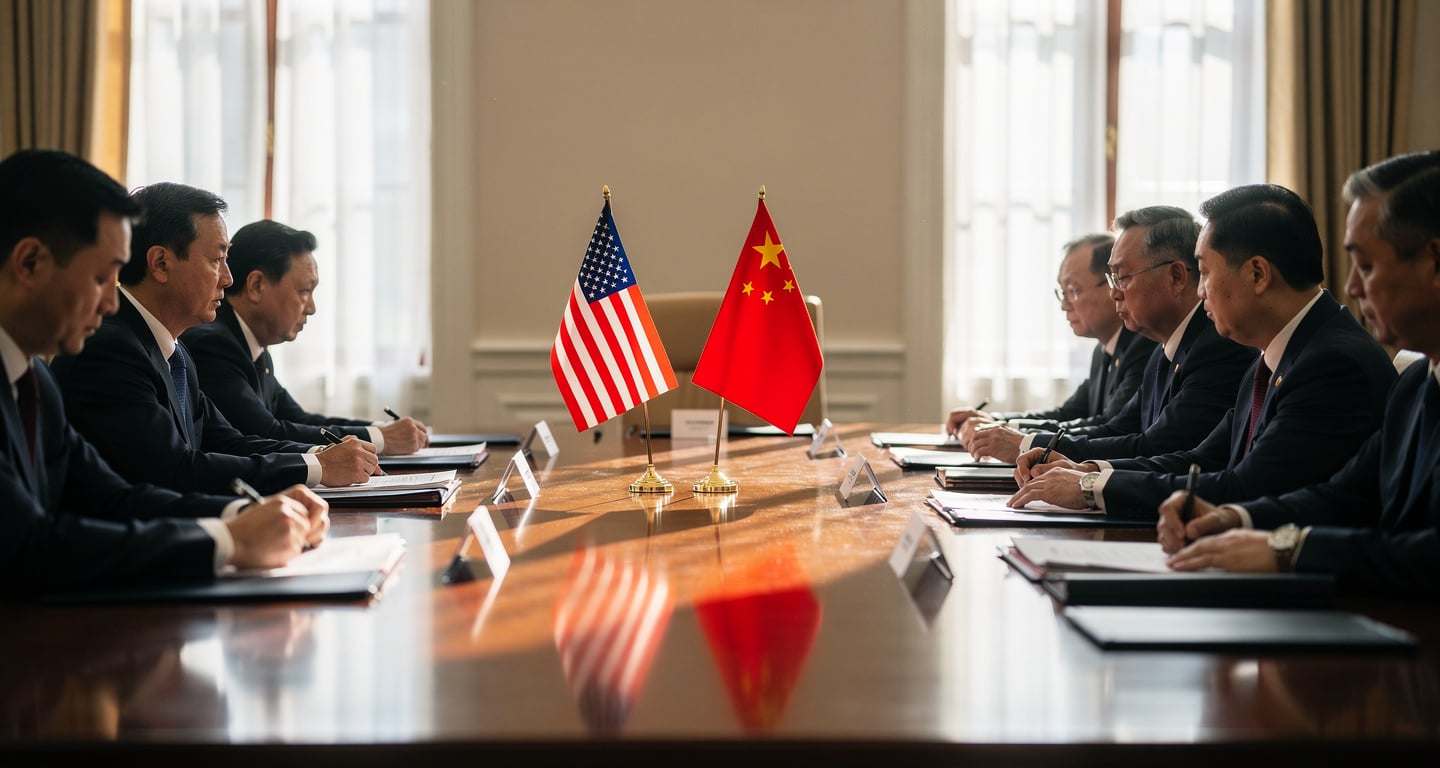
A sitting U.S. combatant commander has told Congress, in writing, that China intends to be militarily capable of seizing Taiwan by 2027 — and that the United States currently lacks sufficient weapons to stop it. That is the thrust of the posture statement Admiral Samuel Paparo, head of INDOPACOM, submitted to lawmakers in March 2026, and it sits in uncomfortable tension with the Trump administration’s simultaneous effort to warm relations with Beijing ahead of a presidential summit. The divergence between the military’s formal threat assessment and the White House’s diplomatic posture is not a footnote. It is the central question the report raises: whether Washington is deterring a war or managing the optics of avoiding one.
Paparo identified two primary training missions the PLA is drilling for — forcing unification with Taiwan and neutralising U.S. and allied defence capabilities in the Indo-Pacific. He called the expansion “historic.” The weapons he is asking Congress to fund — warship-killing bombs and advanced sea mines — are not defensive in the conventional sense. They are area-denial tools designed to make the waters around Taiwan prohibitively costly for any invasion fleet to cross.
The Taiwan Relations Act of 1979 obliges the United States to provide Taiwan with arms of a defensive character. What Paparo is requesting goes further: capabilities that would allow U.S. forces to destroy a Chinese naval formation before it reaches Taiwanese shores. The distinction matters, and Beijing will not miss it.
ALSO WORTH READING


The weapons request and the budget behind it
Paparo’s posture statement feeds directly into the U.S. defence budgeting cycle through the unfunded priorities list mechanism, under which combatant commanders formally notify Congress of capabilities they need beyond what the President’s Budget already covers. These lists carry real weight: congressional defence committees have historically used them to add line items to the National Defense Authorization Act over Pentagon objections. The full March 2026 INDOPACOM posture hearing record is publicly available through the Senate Armed Services Committee.
The FY2026 Pentagon budget request, submitted in March 2026, totals approximately USD 895 billion. Of that, USD 10.4 billion is directed at the Pacific Deterrence Initiative, the specific funding stream Congress created to counter Chinese military expansion in the Indo-Pacific. Whether Paparo’s anti-ship and mine requests land inside or outside that envelope will determine how quickly they move from testimony to procurement.
The U.S. Navy has been expanding purchases of the Long-Range Anti-Ship Missile (LRASM) since the late 2010s, and procurement accelerated through the mid-2020s. The new warship-killing bombs Paparo is requesting represent a complementary capability — designed for aircraft rather than surface ships or submarines, and optimised for the shallow, contested waters of the Taiwan Strait.
How the machinery of deterrence actually works
The Biden administration’s 2022 National Defense Strategy had already labelled China the United States’ “pacing challenge” — the benchmark adversary around which U.S. force planning is calibrated. What Paparo’s 2026 testimony added was a specific date: 2027, the year by which the PLA is assessed to have the military capacity to attempt an invasion. That shift from strategic framing to operational timeline changes the urgency of every procurement decision between now and then.
The EU, the UK, and Australia have each issued statements since 2024 expressing concern over PLA activity around Taiwan and calling for stability in the strait. None have extended explicit security guarantees, and all have been careful to avoid language that Beijing could characterise as endorsing Taiwan independence. That caution reflects a calculation — economic exposure to China is enormous — but it also means the deterrent burden falls disproportionately on Washington and on the specific capabilities Paparo is now requesting.
The key inflection point arrives later in 2026, when Congress works through committee mark-ups on the FY2027 National Defense Authorization Act. If lawmakers fund INDOPACOM’s anti-ship and mine requests in full, it signals alignment with Paparo’s 2027 warning. Significant cuts or deferrals would imply either scepticism about the timeline or competing fiscal pressures overriding the command’s deterrence logic — and that gap between assessment and appropriation is precisely where strategic ambiguity becomes dangerous.
Beyond the headline
The power behind it
Although Paparo’s report is front-page news, the real power sits with congressional defence committees that decide whether his 2027 warning translates into funded capabilities. Their calculus blends regional threat assessments with domestic pressures over deficits and industrial jobs, giving U.S. shipbuilders, missile manufacturers, and home-state bases substantial behind-the-scenes influence over how aggressively Washington arms for a Taiwan scenario.
The timing
The 2027 PLA readiness window collides with U.S. political cycles: contentious budget fights shape how quickly new weapons can be fielded. Every year of delay between now and 2027 matters, because complex munitions and mine systems take years to procure and integrate, turning today’s legislative slippage into a concrete capability gap precisely as Beijing’s options widen.
The reach
For European manufacturers reliant on Taiwanese chips, the outcome of a U.S. budget debate in Washington could determine whether contingency stockpiles and alternative production come online before any crisis. If INDOPACOM’s requested systems deter conflict, supply chains may keep functioning; if under-resourced deterrence fails, firms in Germany or Italy could face sudden factory shutdowns driven by a Taiwan shock they neither caused nor can directly influence.
What the 2027 window means for your decisions now
With the FY2027 defence appropriations cycle opening through mid-2026 committee mark-ups, the gap between INDOPACOM’s assessment and current funded capability is narrowing — and the decisions made in the next eighteen months will set the deterrent posture for the period Paparo considers most dangerous.
- Western semiconductor procurement manager
Your exposure to a Taiwan disruption is not theoretical — TSMC’s concentration of leading-edge capacity above 90% means there is no short-term substitute. Review your current inventory buffers against a six-to-twelve month supply interruption scenario, identify which components have no non-Taiwanese alternative, and begin qualifying secondary suppliers in South Korea, Japan, or the United States now, before any crisis compresses your negotiating position.
- European manufacturer with APAC supply chains
Nearly 40% of global trade by value transits waters near Taiwan. Map which of your inbound shipping routes pass through the Taiwan Strait and model what a 30-day, 90-day, and 180-day closure would cost in production terms. Regionalising even a portion of your critical component sourcing — or building buffer stocks for the highest-risk inputs — is cheaper now than during a crisis. The December 2025 PLA exercise that grounded 850 flights with 24 hours’ notice is the minimum disruption scenario, not the maximum.
- US-based investor with APAC emerging market exposure
Monitor the FY2027 National Defense Authorization Act mark-ups at the Senate Armed Services Committee — the scale of funding approved for INDOPACOM’s anti-ship and mine requests is the clearest public signal of how seriously Congress takes the 2027 timeline. Full funding implies elevated near-term risk pricing for cross-strait equities; significant cuts suggest the market’s current risk discount may be adequate. The DoD Comptroller’s budget materials track the Pacific Deterrence Initiative line by line.
- US defense industry executive
Paparo has named the capability gaps publicly and on the record: long-range anti-ship munitions and advanced sea mines designed for the Taiwan Strait environment. Align your R&D pipeline with those specific requirements and engage directly with the Senate Armed Services Committee and House Armed Services Committee staffs during the FY2027 mark-up season. The unfunded priorities list is the mechanism — if your program is not on it, it will not benefit from congressional add-ons regardless of its technical merit.
Explainer
- INDOPACOM
- INDOPACOM. The United States Indo-Pacific Command is the American military’s unified combatant command responsible for the Indo-Pacific region, covering roughly half the Earth’s surface and more than half its population. Headquartered at Camp H.M. Smith in Hawaii, it commands approximately 375,000 military and civilian personnel across all service branches. In the context of Taiwan contingency planning, INDOPACOM is the command that would lead any U.S. military response, making its formal threat assessments and capability requests to Congress among the most operationally consequential documents in American defence policy.
- Taiwan Relations Act
- Taiwan Relations Act. Passed by the U.S. Congress in 1979 following President Carter’s decision to normalise diplomatic relations with the People’s Republic of China, the Act (22 U.S.C. §3301 et seq.) commits Washington to provide Taiwan with arms of a defensive character and maintain the U.S. capacity to resist any coercion that jeopardises Taiwan’s security or social system. It deliberately stops short of a mutual defence treaty, preserving the deliberate ambiguity over whether the U.S. would intervene militarily in a cross-strait conflict. Paparo’s request for offensive anti-ship and area-denial systems tests the boundary of what “defensive character” means when the threat is an amphibious invasion fleet.
- Unfunded priorities list
- Unfunded priorities list. Each year, U.S. combatant commanders and service chiefs submit to Congress a ranked list of capabilities they would purchase if given resources beyond what the President’s Budget already provides — a formal mechanism that bypasses the executive branch’s budget discipline and gives military leaders a direct channel to lawmakers. Congressional defence committees have historically used these lists to add billions in line items to the National Defense Authorization Act over Pentagon or White House objections. INDOPACOM’s anti-ship and mine requests, if placed on the unfunded priorities list, would give individual senators and representatives a specific procurement hook to fund regardless of the administration’s diplomatic posture toward Beijing.
- Pacific Deterrence Initiative
- Pacific Deterrence Initiative. A dedicated funding stream created by Congress within the annual defence budget, specifically to strengthen U.S. and allied military posture in the Indo-Pacific against Chinese military expansion — modelled partly on the European Deterrence Initiative established after Russia’s 2014 annexation of Crimea. The FY2026 request allocates USD 10.4 billion to the initiative, covering infrastructure, pre-positioned equipment, exercises, and capability development across the first and second island chains. Because it is a distinct congressional appropriation rather than a general Pentagon account, it is more transparent and harder for administrations to quietly reprogram away from its stated purpose.