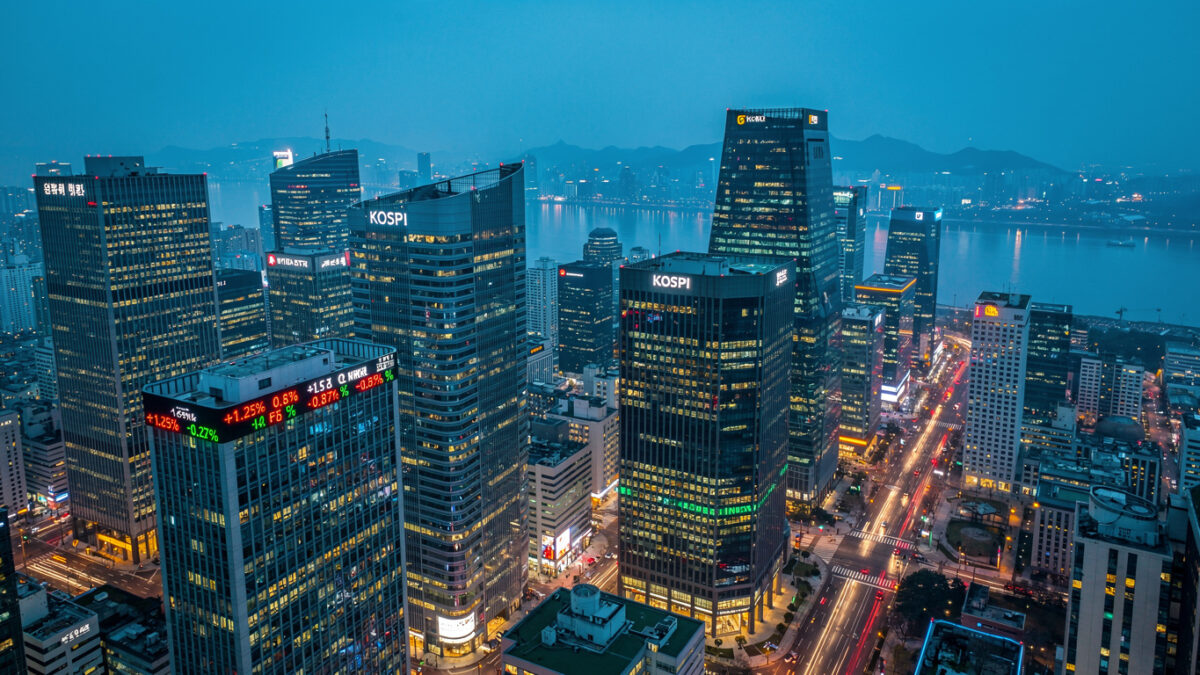
South Korea’s KOSPI has surged roughly 45% year-to-date as of May 29, 2026, making it one of the world’s top-performing major indices — yet the real economy is pulling in the opposite direction. The Bank of Korea held its base rate at 2.5% on May 30 while signalling readiness to tighten, after revising its 2026 GDP growth forecast upward to 2.6% even as consumer inflation re-accelerated to 3.3% year-on-year in April. The won has shed roughly 7% against the US dollar since January, industrial output fell 0.6% month-on-month in April, and Middle East supply disruptions are squeezing the energy and materials imports South Korea depends on.
The divergence between South Korea’s financial markets and its real economy is the core risk — not the rally itself. President Lee Jae Myung’s administration is simultaneously managing a semiconductor export boom, a labour law overhaul, and a housing market running hot in central Seoul.
A stock market that has nearly tripled in twelve months is not usually the sign of an economy under pressure. But South Korea’s KOSPI reaching 8,000 points in May 2026 — up from around 2,680 a year earlier — is doing something unusual: it is obscuring rather than reflecting the state of the country’s real economy. President Lee Jae Myung, completing his first year in office, faces a contradiction that no amount of equity optimism can paper over. Semiconductor exports surged 32% year-on-year in April, yet industrial output fell, retail sales contracted, and the won is trading around KRW 1,420–1,450 per US dollar, roughly 7% weaker than at the start of 2026. The gap between what the stock market is pricing and what households and manufacturers are experiencing is widening — and it is that gap, not the headline index level, that defines the economic challenge now confronting Seoul.
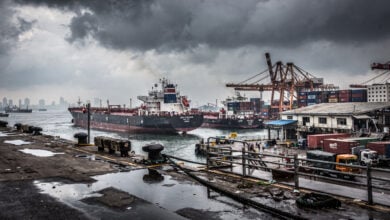
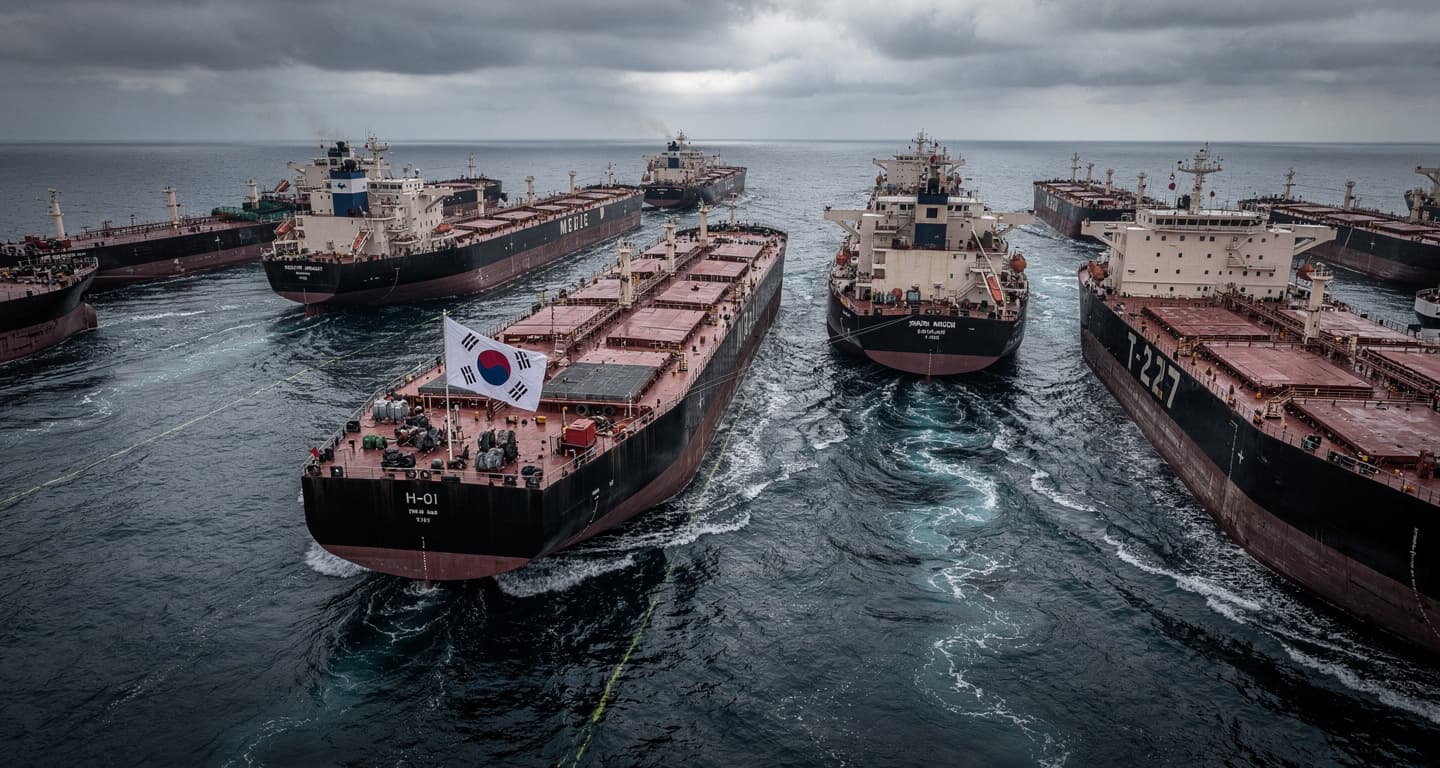
The external shock driving much of the pressure originates in the Middle East. The US-Israeli conflict with Iran has pushed global oil prices higher, disrupted supplies of naphtha and urea critical to South Korean industry and agriculture, and reduced transit through the Strait of Hormuz to an estimated 10% of pre-conflict levels. South Korea imports virtually all of its energy. That structural vulnerability, long managed through reserves and diversification, is now being tested in real time — and the costs are feeding directly into consumer prices.
Rates, inflation, and the won under pressure
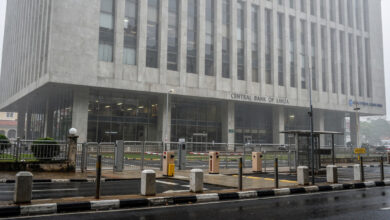
On May 30, 2026, the Bank of Korea’s Monetary Policy Board held its base rate at 2.5% for a third consecutive meeting — but the accompanying guidance was notably hawkish. Governor Rhee Chang-yong stated the board is “prepared to act pre-emptively” if inflation expectations rise or won depreciation threatens price stability, adding that monetary policy may need to stay restrictive longer than markets anticipate. The BOK simultaneously upgraded its 2026 growth forecast from 2.0% to 2.6%, crediting strong semiconductor exports and government stimulus spending. It also raised its inflation projection to 2.7% for 2026.
ALSO WORTH READING
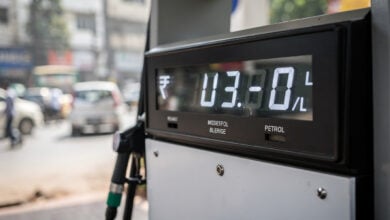
Statistics Korea’s April 2026 data confirm the inflation concern is not theoretical. Consumer prices rose 3.3% year-on-year in April, accelerating from 2.9% in March, as higher global oil prices passed through to domestic fuel and utility bills. The won’s depreciation amplifies this: a weaker currency makes every barrel of imported oil more expensive in local terms, compounding the supply-side shock from the Middle East.
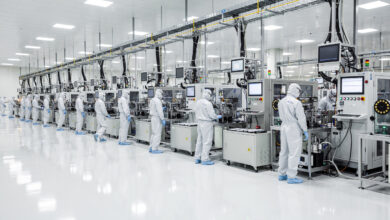
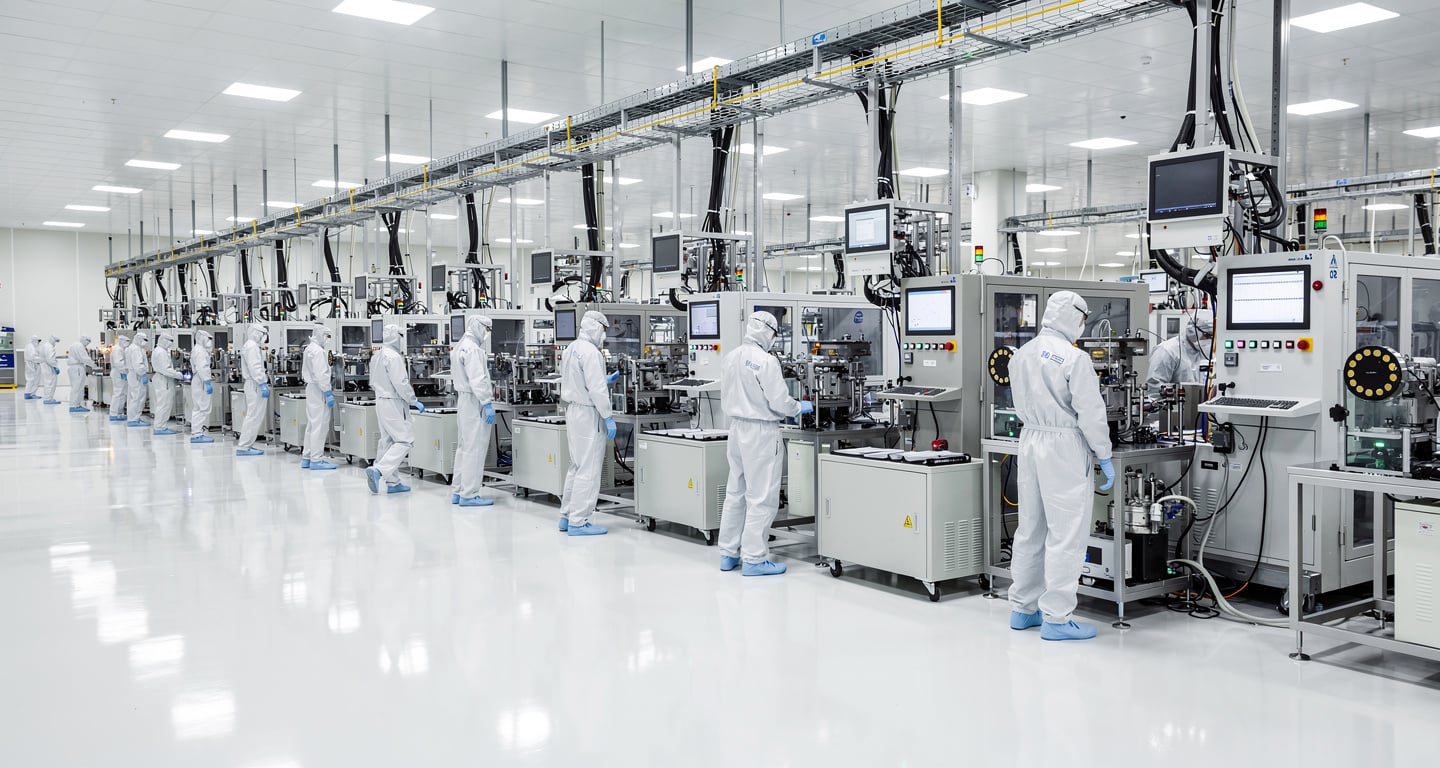
The export picture offers the most credible counterweight. South Korea’s merchandise exports grew 13.8% year-on-year in April 2026, with semiconductor shipments accounting for roughly one-fifth of total export value. The Corporate Value-up Program, announced in February 2025, has also contributed to equity market momentum — encouraging listed firms trading below 0.8 times price-to-book to publish improvement plans, with tax incentives tied to higher dividends and buybacks and a new Korea Value-up Index to guide institutional investment.
Yet Joo Won, chief economist at the Hyundai Research Institute, warned that the KOSPI rally looks “detached from domestic demand conditions,” citing weak consumption and investment. He argued that further external shocks could trigger a rapid correction in highly valued technology stocks — a warning that carries weight given forward price-to-earnings ratios on leading Korean names now sit well above their ten-year averages.
| Metric | Figure | Source | Date |
|---|---|---|---|
| BOK base rate | 2.5% (held, hawkish signal) | Bank of Korea | May 30, 2026 |
| 2026 GDP growth forecast | 2.6% (revised up from 2.0%) | Bank of Korea | May 30, 2026 |
| Consumer inflation (CPI, y/y) | 3.3% (April); 2.9% (March) | Statistics Korea | April 2026 |
| Merchandise export growth (y/y) | +13.8%; semiconductors +32% | Ministry of Trade, Industry and Energy | April 2026 |
| Won depreciation vs USD (YTD) | ~7% (KRW 1,420–1,450/USD) | Korea Eximbank | Late May 2026 |
| KOSPI gain (YTD) | ~45% | Korea Exchange | May 29, 2026 |
| Industrial output (m/m change) | −0.6% | Statistics Korea | April 2026 |
| Seoul apartment prices (weekly) | +0.28% (week 2 of May) | Korea Real Estate Board | May 2026 |
A familiar divergence, an unfamiliar combination of shocks
South Korea has navigated energy crises before — the 1997 Asian financial crisis and the 2008 oil spike both tested its import-dependent model — but the current combination of factors is less tractable than either precedent. The Middle East disruption is not a price spike alone: it is a supply-chain rupture affecting naphtha, a petrochemical feedstock critical to plastics and synthetic fibres, and urea, which South Korean agriculture uses extensively. President Lee’s April budget speech acknowledged that normalising Strait of Hormuz transit will require “considerable time” due to safety and insurance barriers — a framing the BOK echoed in its May policy statement. The energy cost surge is directly connected to wider fare increases across the region’s aviation networks; Singapore Airlines and Scoot have already raised airfares network-wide as jet fuel costs more than doubled since the Iran conflict began.
Domestically, the labour landscape shifted in March 2026 when the revised Trade Union and Labor Relations Adjustment Act — the yellow envelope act — took effect, expanding union immunity from corporate damage suits and giving subcontracted workers the right to bargain collectively with principal employers. Business groups have raised concerns about productivity friction; the full effect on industrial relations in key manufacturing sectors has yet to materialise. Meanwhile, Seoul’s property market has resumed its upward trajectory, with the government pledging 90,000 rental housing units for young people in greater Seoul by 2027 — an ambitious target that analysts note will take years to affect prices meaningfully.
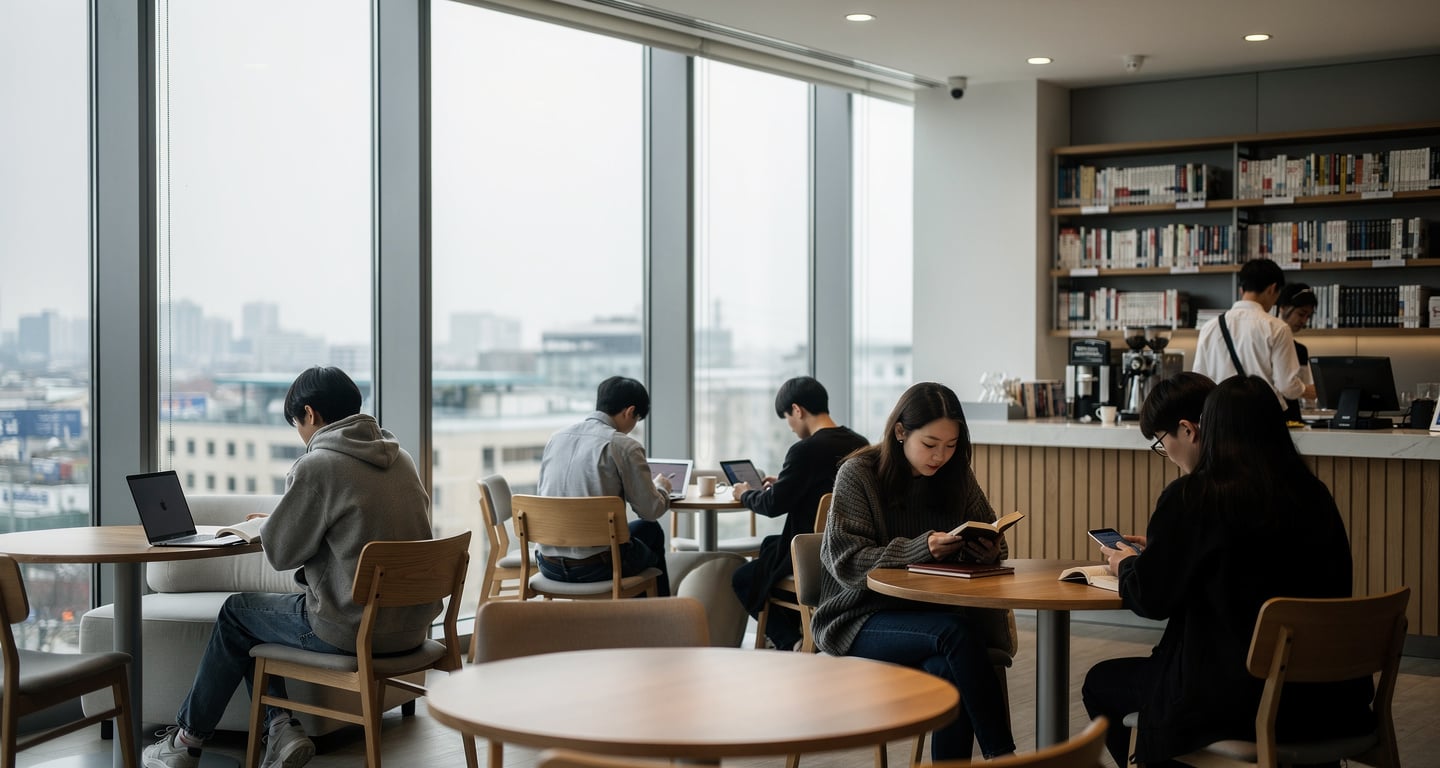
For Western expats in Seoul, the cross-currents are already tangible. Rents in popular central districts have climbed several percent since early 2026, while higher utility and fuel bills are feeding through to everyday costs. The won’s depreciation cuts both ways: those paid in US dollars or euros find local expenses cheaper in home-currency terms, but expats earning in KRW and remitting abroad face a direct hit.
Beyond the headline
The bigger picture
The stark gap between South Korea’s roaring equity market and its cooling domestic economy is part of a wider post-pandemic pattern where ultra-liquid global capital chases a narrow set of tech winners while households face higher living costs and uncertain income. For a trade-dependent country with ageing demographics, that imbalance magnifies vulnerability to any abrupt reversal in sentiment or geopolitics rather than insulating it.
The response gap
Policy tools are being pulled in different directions: monetary authorities must defend price stability and the currency, while fiscal and housing policies try to cushion households and younger renters. The institutional coordination and political capital required to recalibrate labour law, housing supply, and industrial strategy simultaneously are far greater than what has been mobilised so far, leaving a gap between stated ambitions and on-the-ground resilience.
The timing
This stress test arrives precisely as global investors rotate toward AI-linked assets and as geopolitical risks in the Middle East and around supply chains are intensifying. Decisions taken in the coming quarters — on rates, tariffs, and energy security — will lock in trajectories for both South Korea’s growth model and foreign portfolio positioning that would have been far less consequential in a calmer macro environment.
What South Korea’s economic divergence means for your money and plans
With the BOK signalling a potential rate hike as early as late July 2026 and the won under sustained pressure, the gap between South Korea’s financial markets and its real economy is creating distinct decisions for investors, expats, supply chain managers, and policy watchers.
- Western investor with South Korean semiconductor exposure
The KOSPI’s 45% year-to-date gain and the KRX Semiconductor Index’s 50%-plus surge have pushed valuations well above historical norms. You should assess whether current positions in Korea-focused equity funds or ETFs warrant partial profit-taking or a shift to currency-hedged instruments — the won’s 7% depreciation against the dollar is directly eroding USD-based returns. Review the BOK’s publication calendar at bok.or.kr for the late July rate decision, which is the next major volatility trigger for Korean equities.
- Western expat living in Seoul
Rising rents and higher utility bills are the immediate pressure points — central Seoul one-bedroom apartments now run KRW 1.5–1.8 million per month and climbing. If you earn in US dollars or euros, the weaker won is partially offsetting local cost increases, but those earning in KRW and remitting abroad face a real squeeze. Review your remittance timing and consider whether salary currency arrangements with your employer reflect current exchange rate conditions; the Korea Eximbank FX tool at koreaexim.go.kr provides live rate benchmarks.
- Global supply chain manager sourcing from South Korea
April’s 13.8% export growth confirms South Korean manufacturers are still shipping, but the Strait of Hormuz disruption — currently at roughly 10% of pre-conflict transit levels — is compressing naphtha and urea supply with no clear normalisation timeline. Monitor US International Trade Administration and USTR announcements for any tariff reviews covering South Korean autos, batteries, or steel; new duties would undercut the export-led recovery that is currently your suppliers’ main buffer against domestic demand weakness.
- Policy analyst focused on East Asian economic stability
The BOK’s hawkish pivot — rate held but tightening explicitly on the table — is the most consequential near-term signal. A surprise July hike would confirm that Seoul is prioritising price stability over growth support, with direct implications for won stabilisation and equity valuations. The yellow envelope act’s full effect on industrial relations in manufacturing has not yet materialised; any significant labour action in semiconductors or automotive would compound the external supply shock and test the administration’s capacity to manage simultaneous economic and political pressures.
FAQ
How does the won’s depreciation affect Western expats in Seoul practically?
Expats paid in US dollars or euros find their local purchasing power has risen by roughly 7% since January 2026 as the won weakened, making rent, food, and transport cheaper in home-currency terms. However, those earning in Korean won and sending money abroad or servicing foreign-currency debts face higher effective costs. Timing remittances around lower-volatility periods and comparing mid-market rates against bank spreads can materially reduce monthly outlays. The Korea Eximbank’s exchange rate tool at koreaexim.go.kr provides current benchmark rates.
What housing options and protections exist for foreign renters in Seoul?
Foreign residents typically rent under South Korea’s jeonse system — a large lump-sum deposit in lieu of monthly rent — or the wolse model of regular monthly payments. Lease contracts generally run two years, and landlords in many districts must register deposits with local authorities. The Korea Housing and Urban Guarantee Corporation offers deposit insurance products that protect part of a tenant’s jeonse against landlord default, a critical consideration for expats committing large upfront sums in a rising-price market.
How does the Bank of Korea communicate its policy direction, and what should investors watch?
Beyond the base-rate decision itself, the BOK publishes a quarterly Monetary Policy Report with inflation projections and growth assessments, and markets closely parse the tone of Governor Rhee Chang-yong’s post-decision press conference. Phrases signalling concern about currency weakness or asset prices are interpreted as hints of future tightening. The BOK’s publication calendar at bok.or.kr lists all upcoming decision dates and report releases — the next key window is the late July 2026 meeting, when updated CPI and wage data will be available.
Explainer
- KOSPI
- KOSPI. The Korea Composite Stock Price Index is the benchmark equity index of the Korea Exchange, tracking all common stocks listed on the main market in Seoul. It was launched in 1980 with a base value of 100 and covers roughly 800 companies across sectors from semiconductors and shipbuilding to consumer goods. The index’s 2026 surge past 8,000 points — driven largely by AI-linked chip demand and the government’s Corporate Value-up Program — has raised questions among analysts about whether valuations have outrun the underlying economy, given simultaneous weakness in domestic consumption and industrial output.
- Bank of Korea
- Bank of Korea. South Korea’s central bank, established in 1950, sets the base interest rate through its Monetary Policy Board and manages the country’s foreign exchange reserves, which stood at approximately USD 410 billion in early 2026. Unlike the US Federal Reserve or European Central Bank, the BOK operates under a single inflation target — currently 2% — set by the government, rather than a dual mandate covering employment. In the current cycle, the BOK faces a textbook dilemma: inflation above target and a weakening currency argue for tightening, while fragile domestic demand and an external supply shock argue against it.
- Strait of Hormuz
- Strait of Hormuz. A narrow waterway between Iran and the Oman peninsula connecting the Persian Gulf to the Gulf of Oman, it is the world’s most strategically critical oil transit chokepoint — roughly 20% of global petroleum liquefied natural gas flows pass through it under normal conditions. For South Korea, one of the world’s largest per-capita energy importers, disruption to Hormuz transit directly affects the cost and availability of crude oil, naphtha, and liquefied natural gas. The Bank of Korea’s May 2026 policy statement explicitly noted that normalising transit will require “considerable time” due to unresolved safety and insurance barriers.
- Yellow envelope act
- Yellow envelope act. A colloquial name for South Korea’s revised Trade Union and Labor Relations Adjustment Act, which took effect in March 2026, expanding union immunity from corporate damage suits and clarifying the right of subcontracted workers to bargain collectively with principal — not just immediate — employers. The name derives from a 2014 public campaign in which citizens sent yellow envelopes containing small donations to help striking workers pay court-ordered damages to Ssangyong Motor. Its passage under President Lee Jae Myung reflects a significant shift in the balance of labour law, and its practical effect on industrial relations in South Korea’s semiconductor and automotive sectors — both critical to export performance — remains to be tested.
- Jeonse
- Jeonse. A Korean rental system in which a tenant pays a large lump-sum deposit — typically 50–80% of the property’s market value — to a landlord in lieu of monthly rent, with the full sum returned at the end of the lease, usually two years. The landlord uses the deposit as an interest-free loan, investing or spending it during the tenancy. In a rising-rate and rising-price environment like Seoul in 2026, jeonse deposits have grown alongside property values, making the system increasingly inaccessible for younger renters and amplifying the government’s political urgency around its 90,000-unit housing pledge.