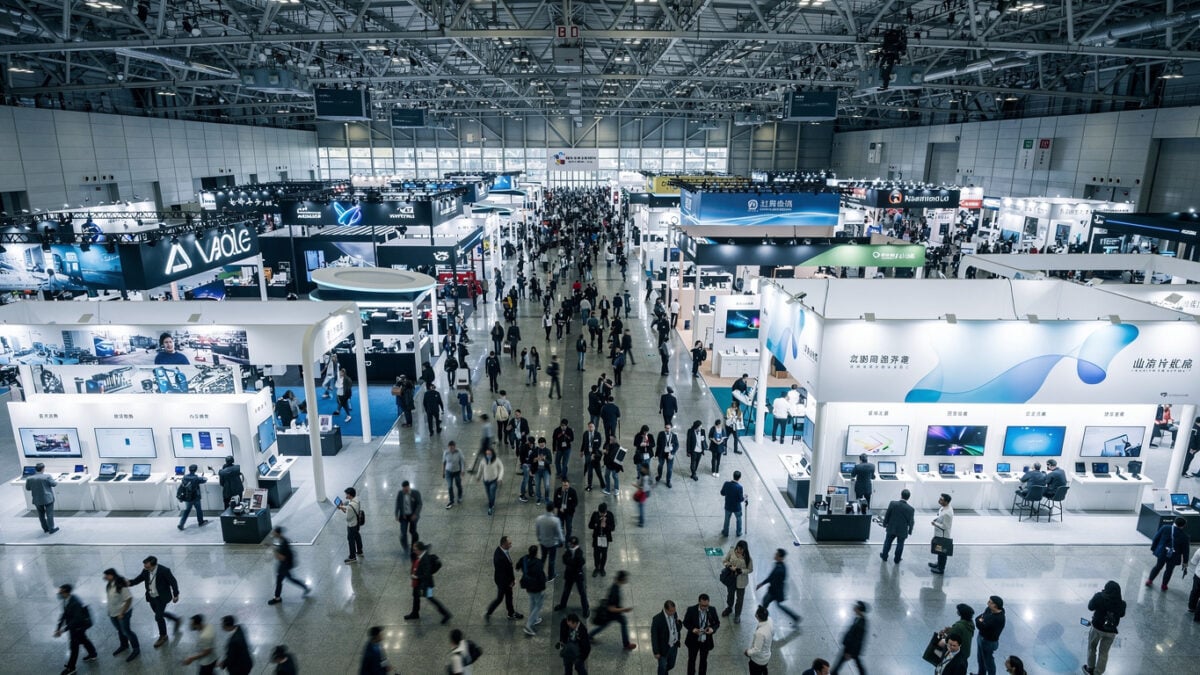
Computex 2026 opens in Taipei on June 2, running through June 5 at the Taipei Nangang Exhibition Center, with preshow keynotes beginning June 1. Around 1,500 exhibitors from 33 countries are expected on the show floor, competing across AI computing, future mobility, smart manufacturing, and green sustainability. Nvidia, Qualcomm, Intel, and Marvell are each delivering keynotes, with Nvidia’s set for 11 a.m. Taiwan Standard Time on June 1 and Intel CEO Lip Bu-Tan speaking at 1:30 p.m. TST on June 2.
The show’s real stakes go beyond product launches: the hardware platforms announced in Taipei this week will shape enterprise AI upgrade cycles and investor expectations heading into the second half of 2026. Cooling technology — specifically liquid and immersion systems for AI data centres — is among the most closely watched categories.
The world’s largest IT-specific trade show is underway in Taiwan, and the question animating every keynote and booth conversation is the same: which company gets to define what AI computing actually runs on. Computex 2026, organised by the Taiwan External Trade Development Council (TAITRA) and the Taipei Computer Association (TCA), brings together the full hardware supply chain — from chip architects to system builders to thermal engineers — at a moment when enterprise AI is moving from pilot projects to production infrastructure.
Nvidia opened proceedings at 11 a.m. TST on June 1, off the official Computex premises, with a keynote focused on accelerated computing and AI platforms. Qualcomm President and CEO Cristiano Amon followed at 2 p.m. TST at TaiNEX 2, positioning Snapdragon-based AI PC platforms as the power-efficient alternative to x86 processors from Intel and AMD.
The show floor opened June 2 and runs through June 5, with hours of 9:30 a.m. to 5:30 p.m. TST daily (closing at 3:30 p.m. on Friday). Marvell Chairman and CEO Matt Murphy and Intel CEO Lip Bu-Tan deliver keynotes on June 2, at 10:30 a.m. and 1:30 p.m. TST respectively, with NXP’s Rafael Sotomayor closing out the keynote schedule on June 3 at 10:30 a.m. TST.
ALSO WORTH READING
The infrastructure story beneath the product announcements is what seasoned Computex watchers are tracking most closely this cycle.
What’s on the floor and who’s competing
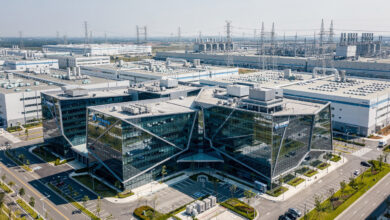
The show spans multiple venues across Taipei. The primary halls — TaiNEX 1 and 2 at the Taipei Nangang Exhibition Center — anchor the event in the city’s Nangang district, while the Taiwan World Trade Center (TWTC) and the Taipei International Convention Center (TICC) near Taipei 101 in the Xinyi District handle overflow. Satellite venues including the Grand Hilai in Nangang and the Grand Hyatt in Xinyi serve as gathering points for key vendors holding private briefings.
Household exhibitor names include Acer, AMD, Asus, Gigabyte, Intel, MSI, Nvidia, and Qualcomm, alongside a broad mix of cloud computing entities, semiconductor firms, original equipment manufacturers (OEMs), and component makers. Official exhibition data confirmed by TAITRA puts the expected count at approximately 1,500 exhibitors representing 33 countries and regions.
Jitesh Ubrani, Research Manager at IDC, has noted that AI PCs are projected to account for nearly 60% of all PC shipments by 2027, with launch events like Computex serving as a key catalyst for that transition. The chip announcements made this week will feed directly into purchasing decisions by Western enterprise IT departments planning refresh cycles through 2027.
| Date | Speaker | Company | Time (TST) |
|---|---|---|---|
| June 1 | Jensen Huang | Nvidia | 11:00 a.m. |
| June 1 | Cristiano Amon | Qualcomm | 2:00 p.m. |
| June 2 | Matt Murphy | Marvell | 10:30 a.m. |
| June 2 | Lip Bu-Tan | Intel | 1:30 p.m. |
| June 3 | Rafael Sotomayor | NXP | 10:30 a.m. |
Why cooling technology is the sleeper story of Computex 2026
The most quietly consequential announcements at this year’s show may not involve chips at all. Pre-show signals pointed to “revolutionary new ways of cooling computers” — industry shorthand for the shift from traditional air cooling to immersion cooling and direct-to-chip liquid cooling. These systems circulate non-conductive fluids or coolants directly around processors, removing heat far more efficiently than fans blowing over heatsinks. The result: denser server racks, higher sustained GPU clock speeds, and data centres that can run the latest AI accelerators without thermal throttling.
For Western cloud buyers — AWS, Microsoft Azure, Google Cloud — this matters because their APAC infrastructure partners are building out AI data centres at pace. Tencent and Alibaba are simultaneously expanding regional AI infrastructure, intensifying competition for the highest-performance cooling-compatible server configurations.
Jon Peddie, President of Jon Peddie Research, has observed that Computex has become a critical venue for GPU and AI accelerator vendors to signal next-generation roadmaps, directly influencing investor expectations around data centre and gaming graphics segments. The performance-per-watt figures disclosed this week will set the benchmark against which every AI infrastructure procurement decision is measured for the next 18 months.
Taiwan’s own regulatory environment remains deliberately light-touch on AI governance — relying on its Personal Data Protection Act (PDPA) and the Cyber Security Management Act rather than anything resembling the EU’s risk-tiered AI Act — which gives vendors announcing here significant operational flexibility compared to what they face in European markets.
Beyond the headline
The bigger picture
Computex 2026 is less about individual gadgets and more about who sets the default platform for everyday AI. The companies announcing chips and systems in Taipei are vying to control the hardware layer that every chatbot, copilot suite, and AI-powered app will ultimately run on, determining whose standards and ecosystems shape global computing for the next decade.
The reach
A single design win announced on stage in Taipei — for example, a major Western laptop brand standardising on one vendor’s AI PC platform — can ripple into school IT budgets in Canada or small-business purchasing in Germany. Once those fleets refresh around a given chip and AI stack, software vendors and peripheral makers quietly align to that choice, locking in market power far beyond Taiwan.
The timing
The 2026 show lands just as enterprises move from AI experimentation to deployment at scale and as consumer PC demand recovers from a post-pandemic slump. That makes this Computex a pivot point: the hardware roadmaps set here will guide corporate upgrade cycles and investor expectations just ahead of key central-bank decisions on rates and a fresh wave of AI-related stock valuations.
How Computex 2026 affects your decisions this week
With the show floor open through June 5 and keynote announcements still filtering through, several groups face immediate decisions shaped by what is being disclosed in Taipei.
-
Enterprise IT buyers
Hold off on finalising AI PC fleet procurement until the OEM design-win announcements are confirmed — specifically which major laptop brands have committed to Qualcomm Snapdragon versus Intel or AMD AI PC platforms. Purchasing decisions locked in before those commitments are public risk backing a platform that loses vendor support within 18 months. Monitor vendor press releases directly through the official Computex newsroom at computextaipei.com.tw through June 5.
-
Technology investors
Watch the TOPS and performance-per-watt figures disclosed in the Intel and Nvidia keynotes as the clearest near-term signal on whether the current AI infrastructure upgrade cycle has legs into 2027. Incremental benchmark gains — rather than generational leaps — have historically preceded softer data-centre capex guidance from hyperscalers. AMD’s Instinct accelerator positioning relative to Nvidia’s Blackwell platform is the specific comparison to track.
-
Travellers transiting through Taipei
Computex week compresses hotel availability across Nangang and Xinyi districts significantly. If you are routing through Taipei Taoyuan International Airport this week — a corridor where connecting via EVA Air or China Airlines can save USD 200–400 versus direct flights to Southeast Asia — factor in that ground transport between the airport and city centre is under higher-than-usual demand through June 5.