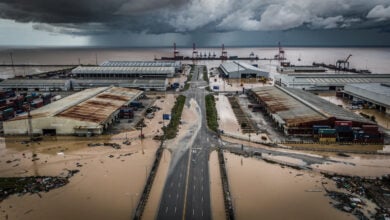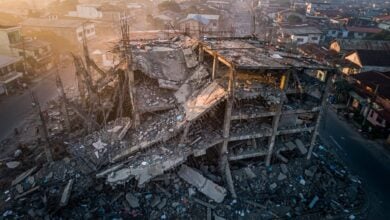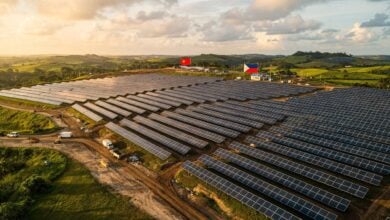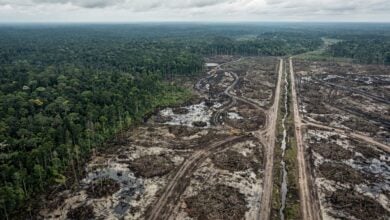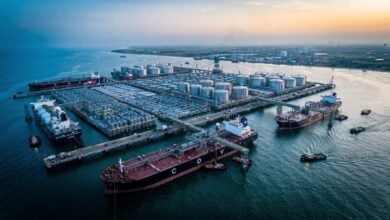
A Super El Niño forecast to strike Asia this summer is converging with an Iran-triggered fuel crisis to threaten cascading failures across the region’s power grids, agriculture, and manufacturing. Ocean temperatures could rise by more than 3 degrees Celsius this year — surpassing the 2.7-degree peak recorded in the catastrophic 1877 event — while 80% of oil transiting the Strait of Hormuz is bound for Asian markets already struggling with constrained supply. Dartmouth researchers estimate the 1997 Super El Niño caused USD 5.7 trillion in economic damage; total El Niño losses this century could reach USD 84 trillion.
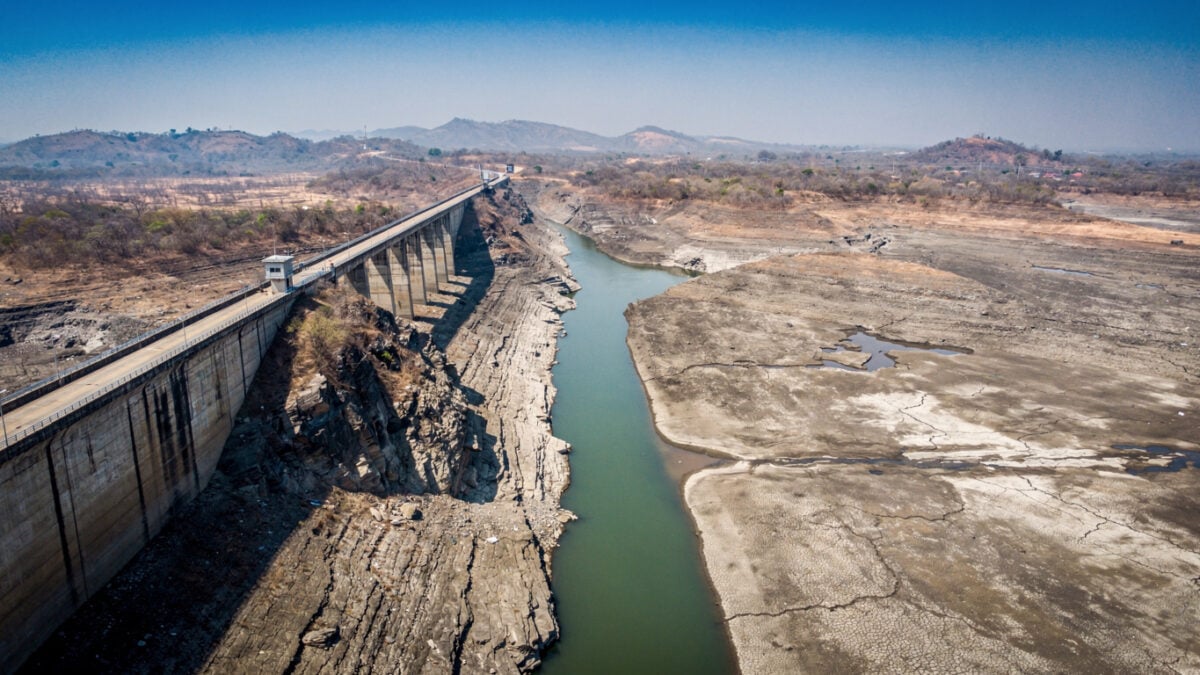
The compounding effect is the real danger: hydropower — which supplies 14.5% of electricity generation across South and Southeast Asia — fails precisely when heat-driven air conditioning demand is highest. The United Nations University identifies 2026 as a pivotal moment for climate action as rising temperatures intensify heatwaves, droughts, and ocean heating simultaneously.
Two crises are arriving at the same time, and Asia’s power systems are not built to absorb both. A Super El Niño — the supercharged variant of a regular climate cycle — is forecast to hit the region this summer, bringing extreme drought and heat to economies still scrambling for oil and gas after Iran closed the Strait of Hormuz to most shipping earlier this year. The compound threat is not simply that energy will be scarcer or that temperatures will be higher. It is that the mechanisms making each crisis manageable on its own — hydropower as a fuel substitute, air conditioning as a heat response — directly undermine each other when both crises arrive together.
“The Super El Niño will further worsen the economic pain inflicted by the ongoing energy crisis,” says Ming Yi, a physical climate scientist and visiting professor at the National University of Singapore. “Asia’s electricity supply will be further strained as droughts curtail hydropower generation; farmers will be hard hit, and water-intensive manufacturing sectors like semiconductor and textile may also be disrupted.”
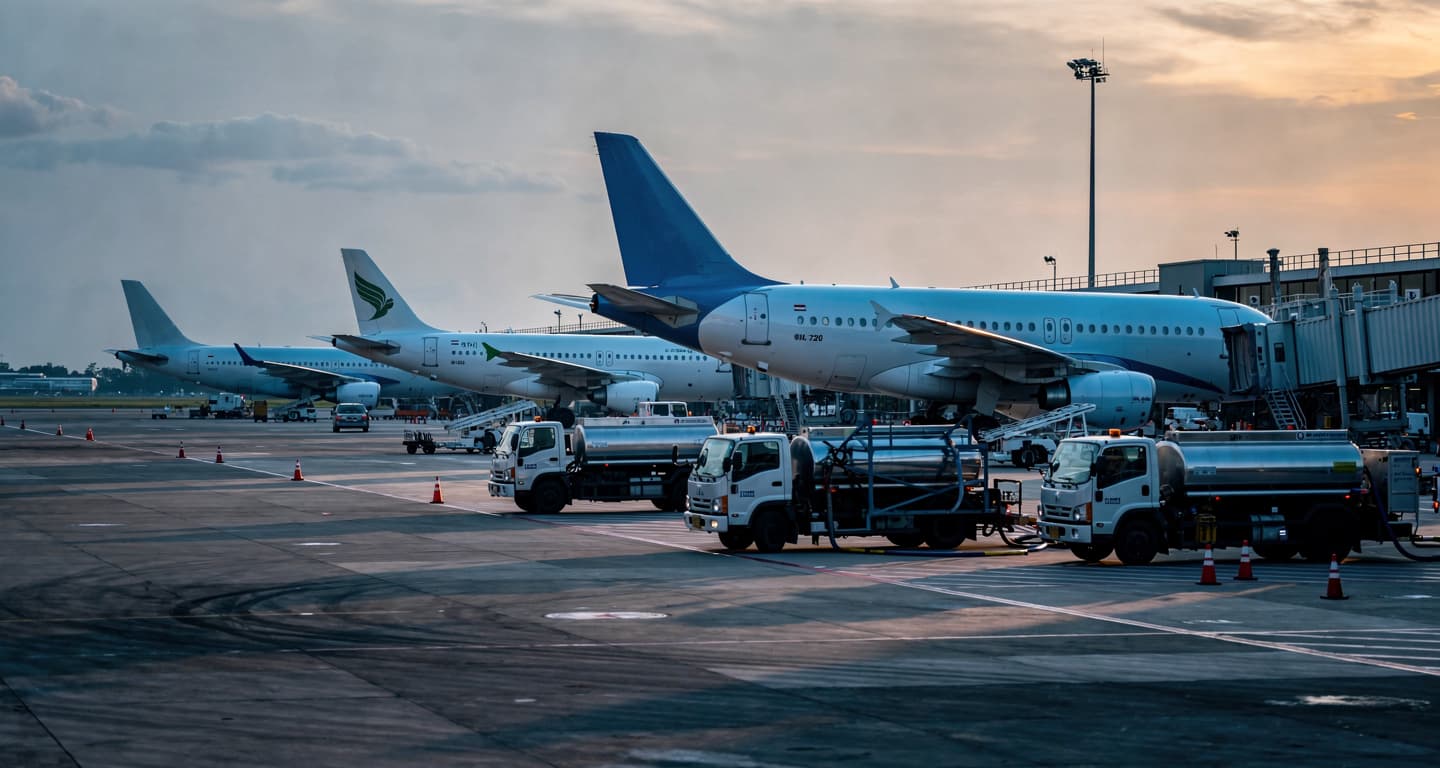
The aviation sector is already feeling the pressure: the Hormuz shutdown has sent Asia-Pacific airports into their worst disruption of 2026, with roughly 13,000 flights scrapped across May as jet fuel costs and supply chains buckle. A prolonged drought compounding that fuel scarcity would push the stress well beyond aviation.
RELATED

The numbers behind the two converging shocks tell a more precise story.
Two shocks, one breaking point
A Super El Niño is defined by ocean temperature surges exceeding 2 degrees Celsius above baseline. El Niño recurs every two to seven years; the super variant averages once every 10 to 15 years. There have been three since the 1980s — in 1992, 1997, and 2015 — each causing economic losses that Ming Yi describes as surpassing “tens of billions of dollars.” The Dartmouth research, which recalculated the full downstream economic cost, puts 1997’s damage at USD 5.7 trillion.
The 1877 event remains the benchmark for severity. Fiona Clare Williamson, an environmental historian at the Singapore Management University who studied El Niño drought events in 1877, 1902, and 1911, is unsparing: “Millions of people were thought to have died or been brought to the poverty line across Asia.” This year’s forecast models suggest ocean temperatures could exceed that 2.7-degree 1877 peak.
Southeast Asia and India face particular exposure because of their dependence on climate-sensitive sectors. Fisheries alone account for 2.6% of Indonesia’s GDP and support more than 7 million jobs. Justin Sentian, a professor of climate change and atmospheric science at Universiti Malaysia Sabah, explains the mechanism: “This intense thermal surge acts like a turbocharger for the planet’s weather, amplifying normal seasonal shifts into severe global disasters.”
The fuel crisis sharpens every calculation. Pakistan and the Philippines have introduced four-day work weeks; Myanmar has imposed driving restrictions. In May, the Asian Development Bank cut its growth forecast for developing Asia and the Pacific to 4.7% for 2026 and 4.8% for 2027, down from 5.1% projected for both years — a revision driven explicitly by the Hormuz disruption.
The World Meteorological Organization projects a 70% probability that the 2025–2029 five-year average temperature will exceed 1.5°C above the 1850–1900 baseline, with each year in that window running between 1.2°C and 1.9°C warmer than pre-industrial levels. That trajectory, detailed in a 2026 outlook published by the United Nations University, frames the Super El Niño not as an outlier but as the sharp end of a sustained warming trend.
How the grid fails when both crises land at once
The structural vulnerability is hydropower. Across South and Southeast Asia, it supplies 14.5% of total electricity generation — a share that functions as a buffer when fossil fuel prices spike or supplies tighten. Drought eliminates that buffer at the precise moment demand is highest. Steve Yim, director of the Centre for Climate Change and Environmental Health at Singapore’s Nanyang Technological University, is direct about the consequence: “Extreme ambient heat could cause immense strain on municipal power grids forced to bear the weight of surging air conditioning demand.”
The public health dimension compounds the grid problem. Sentian warns that heat and intermittent water supplies increase the risk of mosquito-borne diseases including malaria and dengue. “Desperate residents could inadvertently create breeding grounds by stockpiling water in buckets,” he says. Outdoor workers in construction, logistics, and delivery face severe heat exhaustion risk. Forest fires in Sumatra and Kalimantan — a predictable Super El Niño consequence — would blanket Malaysia and Singapore in haze, forcing school and business closures while straining respiratory health systems already under pressure.
Sentian adds a longer-term warning: Super El Niño frequency could double over the coming century as climate change accelerates. “The greenhouse-warmed ocean surface heats up faster than its deeper layers, making it significantly easier to trigger a massive thermal discharge into the atmosphere.” The Paris Agreement remains the binding international framework for limiting that trajectory, but UNU notes that the larger USD 1.3 trillion climate-finance goal for developing countries — due by 2035 — remains under negotiation, leaving a sizable implementation gap even after COP30 delivered a tripling of adaptation finance and new Belém Adaptation Indicators.
Asian governments are now caught in a three-way trade-off that the escalation pattern of the past eight months makes visible.
Beyond the headline
The bigger picture
This is not only a climate shock layered on top of an energy shock; it is a test of whether Asian power systems built around imported fuel and weather-sensitive generation can absorb two disruptions at once. The deeper issue is that resilience is now being priced as both an energy-policy problem and a climate-adaptation problem, which is why short-term fuel choices can lock in longer-term vulnerability.
The pattern
What matters is the repetition of compound stress: heat, drought, and supply disruption are no longer exceptional events separated by years of recovery. The pattern is an increasingly familiar one in which climate anomalies arrive when economies have less slack, so each new shock hits grids, farms, and logistics faster than the last.
The human cost
For urban households and outdoor workers, the immediate burden is not abstract macroeconomic pain but longer hours without reliable cooling, more expensive transport, and more time spent in dangerous heat. In regions where water storage rises during dry spells, the same shortage conditions can also make disease control and daily hygiene harder to manage.
How the dual crisis lands for travellers, investors, and businesses with Asian exposure
With a Super El Niño expected this summer and fuel supplies still constrained by the Hormuz closure, the window for preparation is measured in weeks, not months.
-
Travellers planning trips to Southeast Asia or India
Expect heat advisories, haze alerts, and flight disruptions to compound through July and August. Check your government’s travel advisory pages before booking — Australia’s Smartraveller, the UK’s FCDO, and the US State Department all publish real-time alerts. Build flexibility into itineraries: the combination of extreme heat, potential power outages, and ongoing aviation fuel shortages means disruption risk is materially higher than in a normal summer season.
-
Investors with exposure to Asian equities or commodities
The sectors most directly in the crossfire are hydropower utilities, agricultural commodity producers, and water-intensive manufacturers — particularly semiconductor and textile firms in Indonesia, Malaysia, and India. The Asian Development Bank’s revised growth forecasts of 4.7% for 2026 and 4.8% for 2027 already price in Hormuz disruption; a severe El Niño would push those numbers lower. Monitor the next WMO seasonal climate update for signals on whether warm ocean anomalies are persisting.
-
Western businesses with Asian supply chains
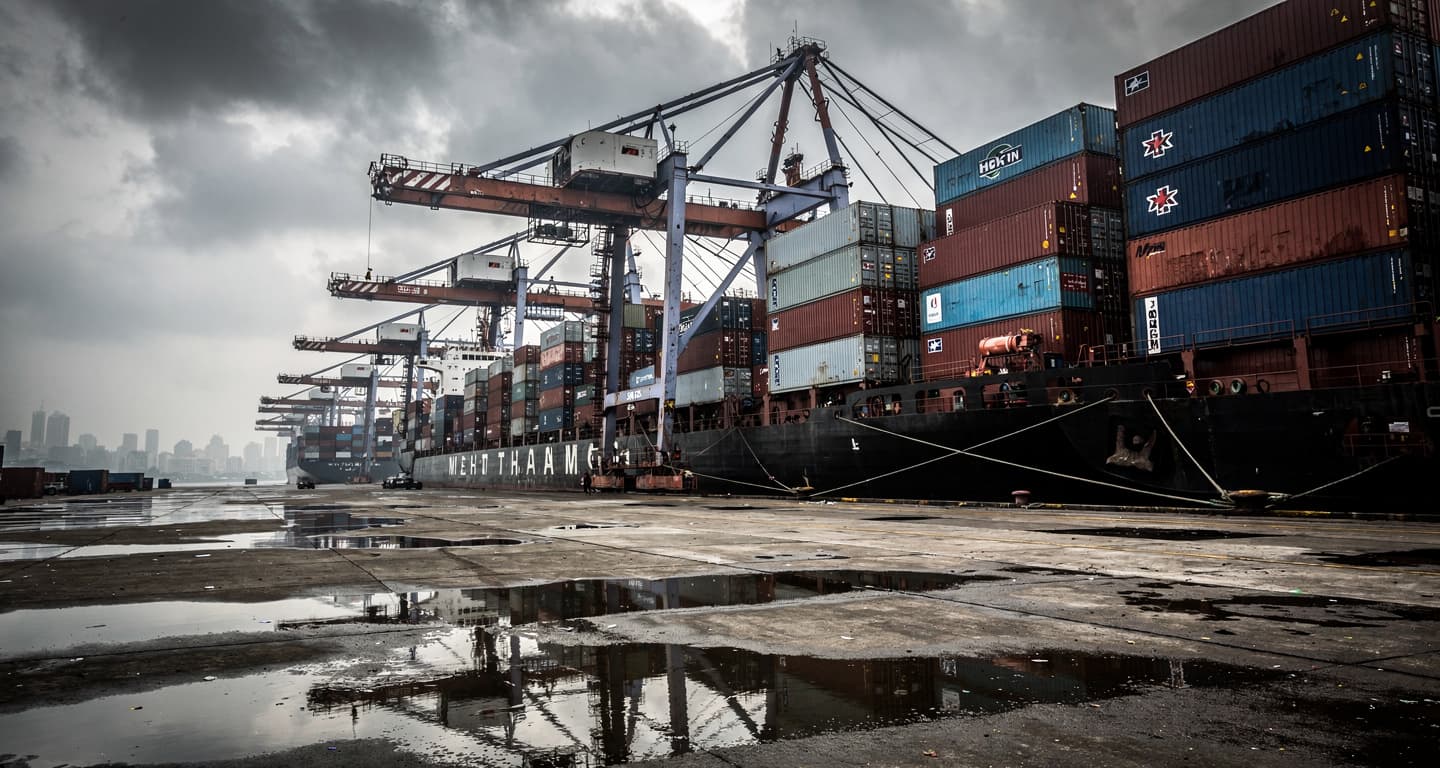
The inflation mechanism runs through shipping costs and delayed production, not just fuel prices directly. Electronics, industrial machinery, and consumer goods manufacturers sourcing components from Southeast Asia should stress-test their logistics timelines against a scenario in which both power reliability and fuel availability deteriorate simultaneously through Q3 2026. Dual-sourcing from outside the Hormuz-dependent supply corridor is the clearest hedge available now.