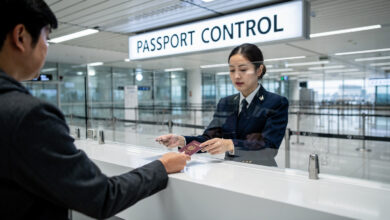
Thailand’s cabinet has voted to roll back its visa-free entry scheme, cutting the permitted stay from 60 days to 30 days and reducing the number of eligible nationalities from 93 to 54, reverting to the framework in place before 2024. American, British, EU, Australian, and New Zealand passport holders retain visa-free access under the new rules, but India — which sent nearly 2.5 million visitors to Thailand in 2025 — reverts to visa-on-arrival status. The change takes legal effect 15 days after publication in the Royal Gazette, a date the government has not yet set.
Until that publication happens, the 60-day exemption remains in force. Travellers who enter before the cut-off keep their full permitted stay.
Thailand’s cabinet has ended one of the most permissive visa regimes in Southeast Asia. The vote, confirmed in late May 2026, reverses the expanded scheme introduced in 2024 and returns the country to a 30-day, 54-country visa-free framework — a decision that lands with particular force for the travel industry, which had built two years of itineraries and marketing around the 60-day window.
The buried story here is not the headline reduction in stay length. It is the interaction between this rollback and still-available tourist visa options that will determine whether Western travellers actually change their behaviour — or simply adjust their paperwork. For most Americans, Britons, and Australians planning trips under 30 days, nothing changes at all.
What does change is the planning calculus for anyone on a longer stay: slow travellers, remote workers, retirees scouting property, and the growing cohort of Western visitors treating Bangkok or Chiang Mai as a seasonal base. For them, the clock just got shorter — and the alternatives more important to understand before the Royal Gazette publishes.
RELATED


What the cabinet actually decided
The Thai Ministry of Foreign Affairs confirms that as of May 2026, nationals from 57 countries — including the United States, United Kingdom, all major EU states, Canada, Australia, and New Zealand — are eligible for 30-day visa-exempt entry by air. A separate group of 21 nationalities, including India and China, qualify for visa on arrival for 15 days. The cabinet vote formalises these numbers as the new ceiling, ending the temporary expansion that had pushed the air-entry limit to 60 days for 93 nationalities.
India’s reclassification is the sharpest individual impact. With 2.5 million Indian arrivals recorded in 2025 — the third-largest source market — the shift to a visa-on-arrival process adds friction at exactly the moment Bangkok had been courting South Asian tourism most aggressively. Prime Minister Srettha Thavisin had publicly tied visa liberalisation to a target of 80 million foreign tourists annually by 2027; the cabinet’s reversal suggests that target is now secondary to overstay control and domestic political pressure.
Implementation remains genuinely uncertain. The changes take effect 15 days after publication in the Royal Gazette under the Immigration Act B.E. 2522 (1979), updated through ministerial notifications. No publication date has been announced. Following the vote, Srettha emphasised that the vast majority of tourists are law-abiding, and the foreign minister signalled a broader review of visa categories with a stated intention to simplify the overall framework — leaving open the possibility that the rollback is the opening move in a longer reform process rather than a final decision.
| Category | 2024 expanded scheme | Reverted framework | Impact |
|---|---|---|---|
| Visa-free stay (air entry) | 60 days | 30 days | Halved for most Western travellers |
| Eligible nationalities (visa-free) | 93 | 54–57 | ~36–39 nationalities lose full exemption |
| India | Visa-free 60 days | Visa on arrival, 15 days | Significant friction for largest growth market |
| Extension at immigration | 30 days (THB 1,900) | 30 days (THB 1,900) | Unchanged — effective ceiling 60 days total |
| 60-day tourist visa (embassy) | Available | Available | Unchanged; extendable to 90 days |
| Implementation date | — | 15 days after Royal Gazette publication | Not yet set as of May 26, 2026 |
The parallel stories running underneath the visa headline
Visa policy is not the only thing tightening in Thailand simultaneously. New ministerial regulations that came into force at the end of April 2026 restrict cannabis sales to medical purposes only, requiring licence applications to be linked to healthcare businesses. At peak, Thailand supported nearly 18,000 cannabis dispensaries — more outlets than the country’s approximately 15,000 7-Eleven stores. Around 6,000 businesses have already closed rather than renew under stricter rules, and the remaining 12,000 licences face renewal under the new medical framework. Larger established shops have adapted by offering on-site consultations with prescriptions included; the consolidation is ongoing rather than a sudden prohibition.
A separate crackdown on illegal land ownership is running concurrently, focused on so-called nominee arrangements — structures in which a foreigner effectively controls land or a business through Thai partners holding majority shares. These arrangements are technically illegal under Thai law and have been openly marketed by lawyers and agents for years. The current enforcement push has concentrated on the southern islands, particularly Koh Phangan, but the legal exposure is nationwide. For anyone considering property investment, the risk of asset seizure is real and not hypothetical.
Watch for the Royal Gazette publication of the cabinet-approved visa rollback — expected in the coming weeks — and specifically whether any transitional carve-outs are announced for already-booked trips or key markets. The full scope of which nationalities lose visa-waiver status entirely has not yet been officially released. If the publication arrives without carve-outs, Bangkok is signalling that overstay control has definitively won the internal argument over arrival volumes.
Beyond the headline
The bigger picture
Thailand’s rollback is a data point in a wider recalibration across Southeast Asia, where governments are abandoning the post-pandemic open-door approach in favour of using visa regimes as a precision instrument. The competition is no longer simply for arrivals — it is for the right arrivals, at manageable volumes, without the overstay and grey-economy friction that open-access schemes generate at scale. Bangkok is not alone in making this calculation; it is just making it more visibly and more erratically than its neighbours.
The reach
For airlines, tour operators, and hotel chains marketing Thailand to travellers in North America, Europe, and Australasia, the practical consequence is immediate: multi-week itineraries built around the 60-day window need redesigning, insurance terms may shift, and consolidators will need to route longer stays through embassy visa applications rather than airport arrivals. Travellers on slow-travel or remote-work schedules may redirect spending to Malaysia, Vietnam, or Indonesia if Thai extensions become more administratively demanding — a genuine commercial risk for Bangkok’s premium hospitality sector.
Our take
Thailand has treated its visa framework as a revolving door for long enough that the door itself has become the story. The 60-day scheme ran for barely two years before the cabinet reversed it — not because it failed, but because the political calculus shifted. A government that can undo a flagship tourism policy this quickly is one that Western travellers and the industry selling them Thailand cannot plan around with any confidence. Until Bangkok demonstrates that its visa architecture has a longer shelf life than an election cycle, the predictability premium will quietly migrate to competitors who are less interesting but more reliable.
What Western travellers and travel businesses need to do now
With the Royal Gazette publication date unannounced and the 15-day implementation clock not yet running, travellers and operators are in a live planning window where the current 60-day rules still apply — but could change with limited notice.
- Check entry before you book: The Thai Ministry of Foreign Affairs maintains the current list of visa-exempt and visa-on-arrival nationalities at mfa.go.th. Verify your passport’s status and permitted stay length before finalising any booking, particularly if your trip straddles a potential implementation date.
- Stays over 30 days require a visa application: The 60-day single-entry tourist visa, available from Thai embassies and consulates, costs approximately THB 1,000 equivalent and typically takes 3–10 business days to process. Apply before departure rather than relying on arrival-day options. The visa is extendable for a further 30 days at immigration, giving a potential 90-day stay.
- US citizens should consult the US Embassy Bangkok guidance: The US Embassy in Bangkok confirms current entry conditions, including the land-versus-air distinction (30 days by air, 15 days by land) and extension procedures. Check for updates as the Royal Gazette publication approaches.
- Australian and New Zealand travellers note the DFAT advisory: The Australian DFAT Smartraveller advisory rates Thailand at “Exercise a high degree of caution” nationwide, with “Do not travel” warnings for parts of the southern provinces of Yala, Pattani, Narathiwat, and Songkhla. This does not affect Bangkok, Chiang Mai, Phuket, or the main island destinations but should be reviewed for any itinerary touching the Deep South.
- Property investors and long-stay residents: take legal advice independently: The current crackdown on nominee land arrangements — particularly active on Koh Phangan — carries risk of asset seizure and criminal liability. Never rely on advice from an agent or lawyer connected to a specific property project. Engage an independent Thai-qualified lawyer before any transaction.
FAQ
Does the cabinet vote mean the 30-day limit is already in effect for US, UK, and EU travellers?
No. As of May 26, 2026, the 60-day visa-free scheme remains in force. The cabinet approved the policy rollback, but it does not take legal effect until 15 days after the interior ministry notification is published in the Royal Gazette. No publication date has been announced. Travellers who enter Thailand before that date are entitled to the full stay permitted at entry.
What are the practical options for Western travellers who want to stay longer than 30 days?
Three routes are available regardless of the rollback. First, enter visa-free and extend once at a Thai immigration office for THB 1,900, giving a total of 60 days. Second, apply for a 60-day single-entry tourist visa from a Thai embassy before departure — fee approximately THB 1,000 equivalent, processing 3–10 business days — extendable to 90 days. Third, a six-month multiple-entry tourist visa is available at THB 5,000 for those needing extended flexibility.
Which nationalities lose visa-free access entirely under the reverted framework?
The cabinet has confirmed the eligible list reverts from 93 to approximately 54 nationalities, but the Thai government has not yet officially published the full list of countries losing visa-waiver status. India is the highest-profile case, reverting to visa on arrival for 15 days. The complete list will be confirmed when the Royal Gazette notification is published. Check the Thai Ministry of Foreign Affairs website for the definitive current list.
How does the cannabis regulation change affect tourists visiting Thailand?
Ministerial regulations in force from late April 2026 restrict cannabis sales to medical purposes, requiring licences linked to healthcare businesses. Recreational cannabis dispensaries are consolidating or closing; larger shops have adapted by offering on-site medical consultations. Tourists should note that smoking cannabis in public remains technically illegal and carries significant fines. Critically, British media reports have documented organised crime networks recruiting young travellers as drug couriers — never agree to carry packages for anyone on international flights.
Is the Thai government likely to delay or water down the visa rollback before it takes effect?
This is genuinely uncertain. Prime Minister Srettha publicly cautioned against hasty changes after the cabinet vote, and the foreign minister has signalled a broader visa simplification review. Tourism and hotel industry lobbies have strong incentives to push for carve-outs protecting key markets and already-booked trips. Watch for whether the Royal Gazette publication includes transitional provisions — their presence or absence will indicate which internal argument won.