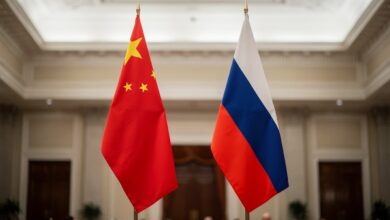
Pakistani Prime Minister Shehbaz Sharif arrived in Beijing on May 23, 2026, for a four-day state visit running through May 27 that spans both the Chinese capital and Zhejiang Province. The visit, confirmed by China’s foreign ministry on May 22, coincides with the 75th anniversary of formal Sino-Pakistani diplomatic ties and comes as Islamabad actively seeks Chinese backing for its efforts to mediate between the United States and Iran.
Beijing’s appetite for a formal mediating role remains uncertain, but the visit’s joint statement — expected by May 27 — will signal whether China is ready to move beyond back-channel support. The precedent of China’s March 2023 Saudi–Iran normalization deal makes that question anything but rhetorical.
The real story of Shehbaz Sharif’s Beijing visit is not the anniversary bunting or the expected upgrade of bilateral trade language. It is whether China will allow Pakistan to pull it into a security-broker role spanning the Gulf and Afghanistan simultaneously — and what that means for every Western government that has long assumed it held the primary levers in both theatres.
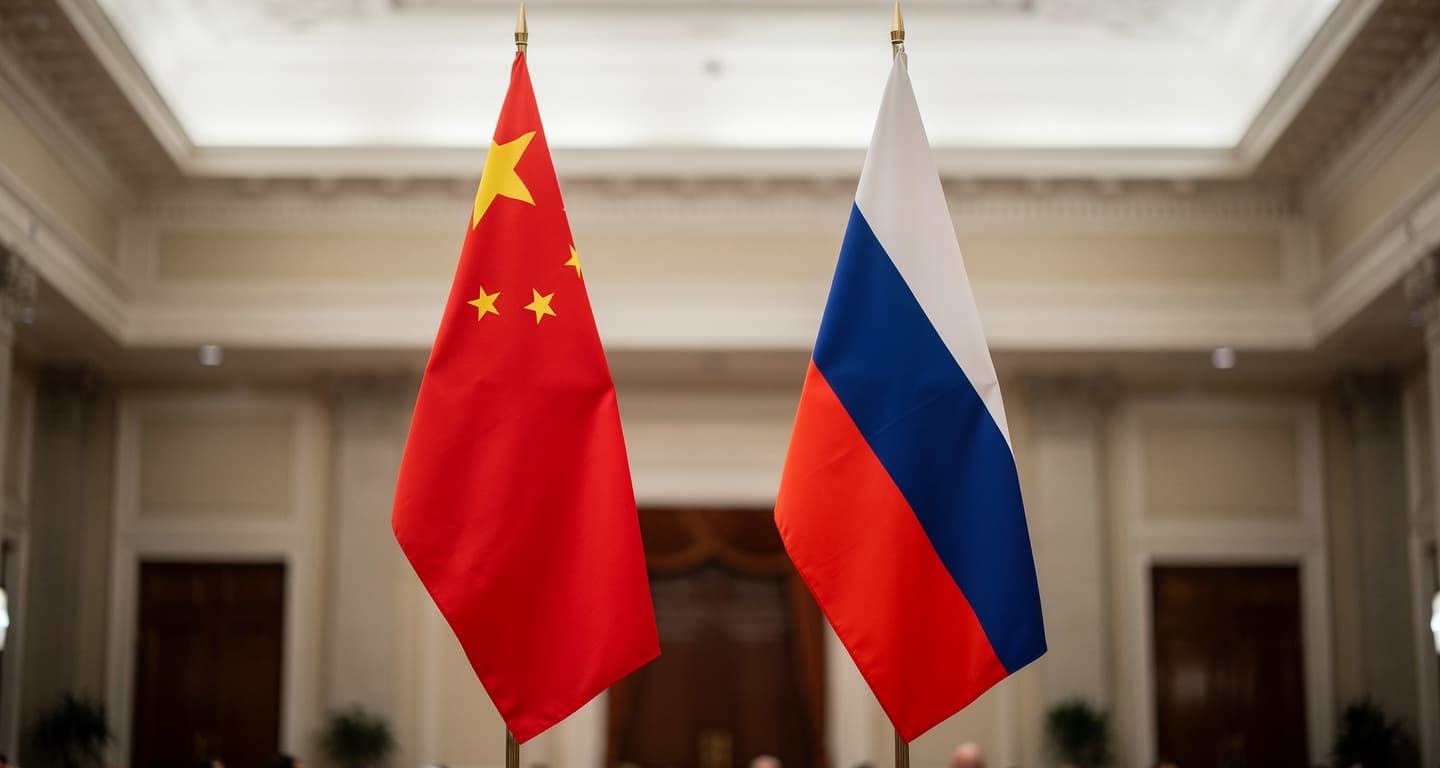
Sharif’s delegation arrived in Beijing on May 23 carrying a specific ask: Chinese diplomatic weight behind Islamabad’s attempts to ease the confrontation between Washington and Tehran, and separate support for managing Pakistan’s deteriorating relationship with the Taliban authorities in Kabul. The Chinese foreign ministry’s announcement on May 22 confirmed the itinerary but was carefully silent on either agenda item, listing bilateral cooperation, CPEC development, and the anniversary milestone as the visit’s public themes.
That silence is itself a signal. Beijing has demonstrated, most visibly in the March 2023 Saudi–Iran normalization deal it brokered in Beijing, that it prefers to announce results rather than intentions. What Pakistan is now asking is whether China will extend that model — quiet facilitation, timed disclosure — into a more complex and more dangerous set of disputes.
RELATED

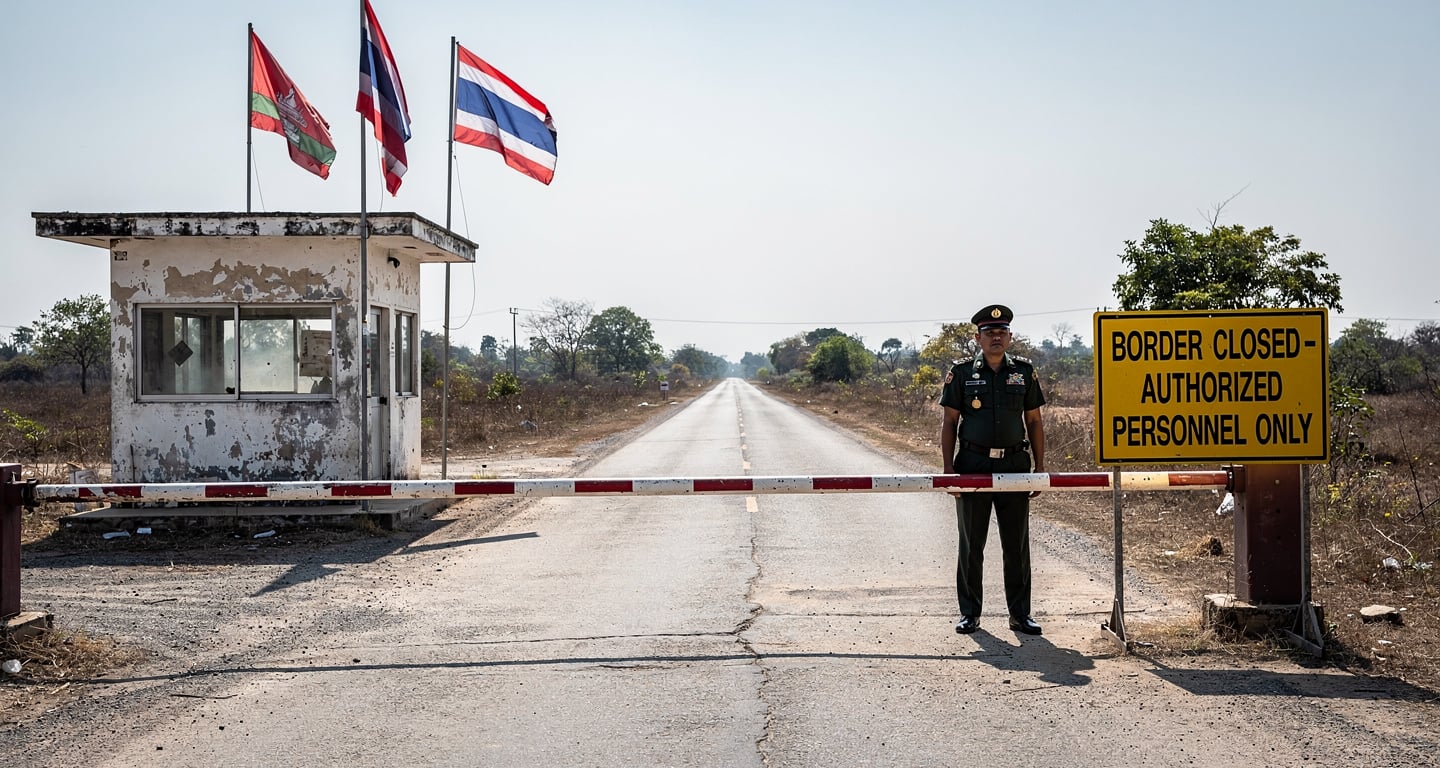
The answer will shape the diplomatic architecture of a region that handles roughly 20 percent of global oil shipments and sits at the junction of three of the world’s most active conflict zones.
The details
China and Pakistan have described their relationship since 2015 as an all-weather strategic cooperative partnership — a designation that carries specific commitments on security coordination and economic integration. During Sharif’s previous visit to Beijing in June 2023, the two governments agreed to upgrade the China-Pakistan Economic Corridor into what they termed a “corridor of growth, innovation, and green development,” a framing that shifted CPEC’s public identity from infrastructure-heavy to technology and energy-inclusive.
The security dimension of CPEC is less photogenic. Under the framework, dedicated protection forces established under Pakistan’s Interior Ministry and provincial home departments guard Chinese nationals and project sites, following repeated attacks on Chinese workers. Islamabad has pledged “foolproof security” in successive joint statements. The gap between that pledge and operational reality is one of the persistent irritants in the relationship — and one reason Beijing wants a more stable Pakistani western border, which is precisely what Sharif is offering to help deliver through the Iran and Afghanistan channels.
The critical precedent underpinning Pakistan’s pitch is China’s role in the Saudi–Iran normalization agreement announced in Beijing on March 10, 2023, under which Riyadh and Tehran agreed to resume diplomatic relations after a seven-year rupture. That deal demonstrated that China could deliver outcomes in the Gulf that Washington either could not or would not attempt. Pakistan is now asking Beijing to apply a version of that model to a harder problem.
Andrew Small, Senior Transatlantic Fellow at the German Marshall Fund of the United States, argued in a January 2026 commentary that China’s expanding Gulf mediation role is designed to secure energy routes and weaken U.S. leverage rather than to uphold a rules-based international order. That framing matters for how Western governments should read Sharif’s Beijing visit: not as a Pakistan story, but as a China story with Pakistan as the instrument.
Huma Yusuf, foreign policy analyst at Pakistan’s Dawn, wrote in March 2025 that Islamabad’s bridge-building between Iran, the United States, and Gulf states depends heavily on Chinese backing — but warned that overreliance on Beijing risks narrowing Pakistan’s diplomatic room to manoeuvre with Washington. That tension runs directly through this week’s meetings.
How China’s mediation model actually works
China’s approach to security diplomacy is not the model that produced the Oslo Accords or the Dayton Agreement. Beijing does not position itself as a neutral arbiter. It positions itself as a party with relationships on multiple sides of a dispute, whose economic presence gives it unique leverage — and whose diplomatic moves serve its own strategic interests in ways it does not disguise.
The Iran–China 25-year comprehensive cooperation agreement, signed on March 27, 2021, envisaged up to USD 400 billion of Chinese investment in Iranian energy and infrastructure over the period. That economic exposure gives Beijing a structural interest in Iranian stability that no Western government shares in comparable form. Ali Vaez, writing for the International Crisis Group in 2025, argued that China’s ability to influence Iran rests more on economic lifelines and diplomatic prestige than on hard security guarantees — meaning Beijing’s mediation prioritises stability over deep behavioural change in Tehran.
That distinction matters enormously for Western capitals. Washington’s core demand is behavioural change: Iranian compliance on nuclear enrichment, ballistic missiles, and proxy networks. A Chinese-facilitated arrangement that delivers stability without behavioural change would, from a U.S. perspective, amount to Iran getting the stability it wants while retaining the capabilities Washington most fears.
Andrea Gilli of the NATO Defense College noted in a 2026 brief that Western militaries must factor Chinese diplomatic corridors in the Middle East into operational planning — because they can alter escalation dynamics independently of Western preferences, even without formal Chinese defence commitments in the region.
Beyond the headline
The bigger picture
This visit is part of a broader shift in which China increasingly experiments with political-security roles in regions where its interests — energy, trade corridors, the safety of its nationals abroad — are deeply exposed. Pakistan’s attempt to enlist Beijing in both the U.S.–Iran standoff and the Afghan border dispute shows how states on China’s periphery are learning to exploit that shift, inviting Chinese diplomacy into spaces that were once almost exclusively Western or regional-power turf.
The reach
For governments that long assumed Washington would dominate Gulf crisis management and South Asian security, a China–Pakistan diplomatic tandem operating between Tehran and Kabul complicates every practical calculation — from sanctions enforcement and naval deployments to intelligence sharing and arms sales. Western businesses trading through the Arabian Sea or holding positions in Pakistan’s energy and infrastructure sectors may increasingly find that the operational rules of the game are shaped by Beijing-brokered understandings rather than Western-designed frameworks, with real consequences for compliance costs and insurance exposure.
Our take
China will not rush into a formal mediator role between Washington and Tehran, but it is steadily accumulating the bargaining chips that allow it to act as a convener when the timing suits its interests — and Pakistan is eager to amplify that positioning. Western policymakers risk treating this as episodic or symbolic; the pattern points instead to a cautious but deliberate Chinese move into security diplomacy across the Muslim world, with Pakistan serving simultaneously as beneficiary, instrument, and proof of concept.
What Western governments and businesses should watch before May 27
With Sharif’s delegation in Beijing through Tuesday, May 27, and a joint statement expected before he departs, the next 96 hours will determine whether this visit is a diplomatic milestone or a well-photographed bilateral routine.
- Read the joint statement closely for Iran and Afghanistan language. If the communiqué explicitly references U.S.–Iran tensions or Afghan border security, Beijing has signalled readiness to formalise a mediating role. If it is confined to CPEC, trade volumes, and anniversary platitudes, China is keeping its Iran diplomacy behind closed doors for now. The Chinese Ministry of Foreign Affairs publishes full joint statement texts at fmprc.gov.cn.
- Monitor U.S. Treasury secondary-sanctions enforcement actions. The Iran Sanctions Act and Executive Order 13846 target foreign entities dealing with Iran’s energy, shipping, and financial sectors. If China-backed economic incentives for Iran materialise, Western firms with exposure to Chinese state-owned enterprises operating in the Gulf face heightened secondary-sanctions collision risk. Track enforcement updates at the U.S. Treasury’s Office of Foreign Assets Control.
- Watch for any trilateral or quadrilateral meeting announcement involving China, Pakistan, and Iran in the second half of 2026. A ministerial-level meeting would signal institutionalisation of a Beijing-backed dialogue format — a structural shift, not a one-off. Expert-level or ad hoc contacts only would suggest mediation remains exploratory.
- Gulf energy and shipping exposure warrants review. If Beijing expands from brokering Gulf détente to shaping U.S.–Iran crisis management, decisions on shipping security and de-escalation timelines may increasingly originate in Beijing rather than Washington or Brussels, with direct consequences for insurance costs and supply stability for European and North American energy importers.
- India’s Chabahar calculations will shift. Western governments and businesses with connectivity or investment interests running through Iran’s Chabahar port and into Central Asia should assess how a tighter China–Pakistan–Iran diplomatic alignment affects their access assumptions and timeline projections — New Delhi will be doing the same calculation simultaneously.