Russian businesses are systematically repositioning Thailand as a logistics and financial gateway into Southeast Asian markets, with Russia–ASEAN bilateral trade rising from C$19.8 billion in 2020 to C$25.4 billion in 2024. ASEAN imports of Russian mineral fuels nearly doubled to C$11.63 billion over the same period, while Russian investments in Thailand have reached an estimated US$6–7 billion, concentrated heavily in real estate and logistics infrastructure.
The shift is less a story of new export markets than of sanctions-resilient routing. Russian investors now account for approximately 40% of Thailand’s foreign property market — a concentration that Western compliance teams can no longer treat as incidental.
Thailand has quietly become one of the most consequential chokepoints in Russia’s post-sanctions economic architecture. Nikita Derkach, head of the Russian Export Center’s representative office in Bangkok, confirmed on May 20, 2026 that Russian companies are no longer treating Thailand as a standalone export destination — they are using it as a staging ground for the broader Southeast Asian market, a reframing that carries significant implications for Western capital operating anywhere in the ASEAN corridor.
The product mix tells the real story. Exports have shifted from bulk commodities toward higher-value goods: specialised chemicals, industrial equipment, and digital solutions. That trajectory — from raw materials to technology transfer — is precisely what Western sanctions on Russia were designed to prevent.
The buried angle here is not trade volume. It is that Bangkok is emerging alongside Dubai and Istanbul as a hub where Russian money, goods, and logistics find new pathways into the global economy, operating in a regulatory grey zone that neither Western governments nor Thai authorities have yet moved decisively to close.
RELATED
The numbers behind the pivot
Research published by the Asia Pacific Foundation of Canada documents the scale of Russia’s Southeast Asian commercial expansion. Total Russia–ASEAN trade reached C$25.4 billion in 2024, driven primarily by mineral fuels, fertilisers, iron, steel, and metals. ASEAN’s cumulative energy imports from Russia exceeded C$42 billion across the five-year period from 2020 to 2024.
Singapore’s trajectory is the sharpest illustration of how this routing works in practice. The city-state’s imports of Russian goods — predominantly energy products — more than tripled between 2020 and 2024, climbing from C$1.73 billion to over C$6 billion. Singapore and Bangkok are functioning as complementary nodes: Singapore handles high-value financial and energy trading; Thailand provides cost-effective consolidation and redistribution into mainland Southeast Asia.
Vietlow A. Trinh, a researcher at the Asia Pacific Foundation of Canada, argues that Russia’s post-2022 pivot has fundamentally shifted the character of its Southeast Asian relationships — away from defence sales and toward trade, energy partnerships, and, critically, the rerouting of imports of sanctioned high-technology goods. That last element is the one Western regulators are watching most closely.
At the EU level, the 12th and 13th sanctions packages — Council Regulations (EU) 2023/2878 and 2024/1485 — explicitly target circumvention through third countries. The packages introduced “no Russia” clauses for sensitive goods and enhanced monitoring of re-exports through intermediary hubs. The US Treasury has issued repeated warnings to foreign financial institutions about facilitating Russian sanctions evasion, with language that directly implicates banks in emerging transit hubs. Thailand has not been named — but the architecture of those warnings fits Bangkok precisely.
| Metric | 2020 | 2024 | Change |
|---|---|---|---|
| Russia–ASEAN bilateral trade | C$19.8 billion | C$25.4 billion | +28% |
| ASEAN imports of Russian mineral fuels | C$5.91 billion | C$11.63 billion | +97% |
| Singapore imports of Russian goods | C$1.73 billion | Over C$6 billion | +247% |
| Russian investments in Thailand (cumulative estimate) | — | US$6–7 billion | — |
How Bangkok became Russia’s Southeast Asian hub
The framing was made explicit at the Russia–Thailand session of the St. Petersburg International Economic Forum in 2024, where Russian and Thai government representatives positioned Bangkok as an important logistical and financial gateway into Southeast Asia, with energy, infrastructure, and technology cooperation identified as priorities. That language — gateway, not market — signals a structural intent, not an opportunistic trade uptick.
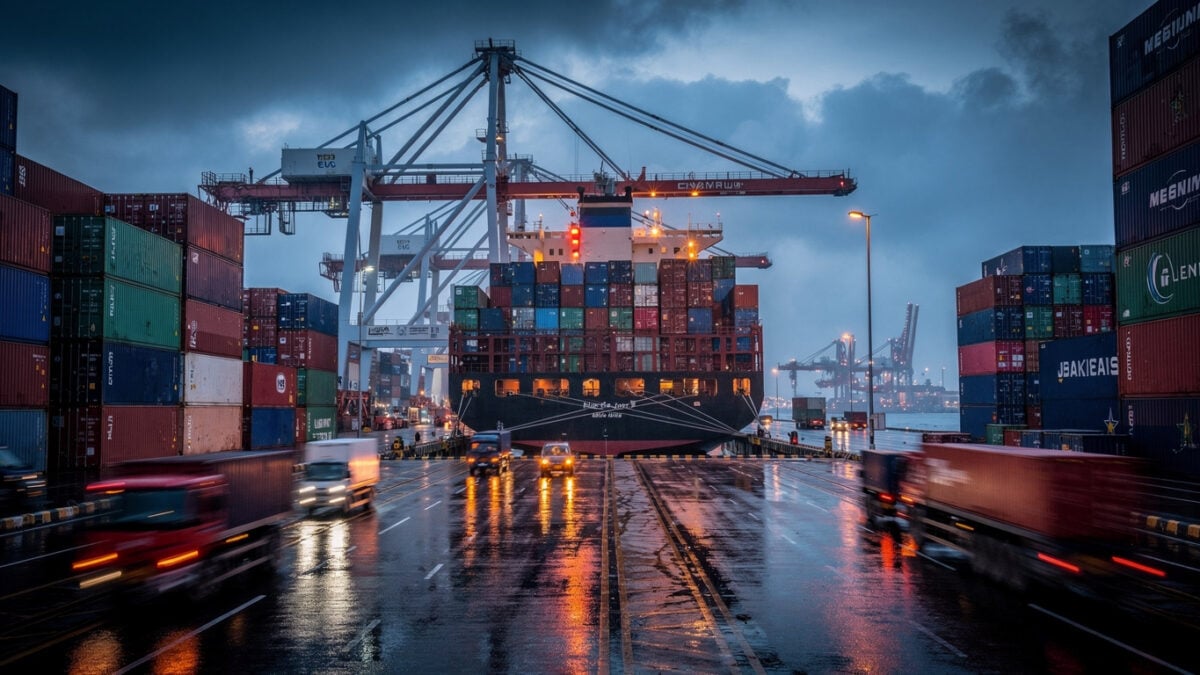
Thailand’s appeal is partly infrastructural. The Laem Chabang port complex, the Eastern Economic Corridor, and Bangkok’s expanding digital economy give Russian exporters a credible platform for regional distribution that neither Hanoi nor Jakarta can yet match at scale. Airfreight from Bangkok to major regional gateways averaged around US$2.50–3.00 per kilogram for general cargo in early 2026, while container shipping from Laem Chabang to Singapore hovered near US$150–200 per TEU above pre-pandemic baselines. Singapore’s higher warehousing and labour costs make Bangkok the more cost-effective consolidation base for onward distribution into mainland Southeast Asia.
The Russia–Thailand Investment Forum 2025 projected over US$1 billion in additional Russian investment in coming years. Whether the 2026 edition — the next significant signal — produces concrete financing commitments or rhetorical communiqués will indicate whether private-sector caution over sanctions risk is beginning to constrain what Moscow’s official enthusiasm is driving.
Beyond the headline
The bigger picture
Thailand’s emergence as a Russian gateway into Southeast Asia illustrates a pattern that has held across every major sanctions regime of the past three decades: major economies are not isolated by sanctions, they are rerouted. Bangkok, Singapore, and Batam are becoming system-critical chokepoints in global energy, technology-component, and capital flows — not because they are actively hostile to Western interests, but because they are willing to arbitrage geopolitical risk for commercial gain.
The reach
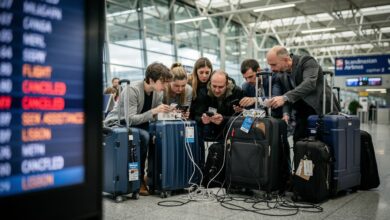
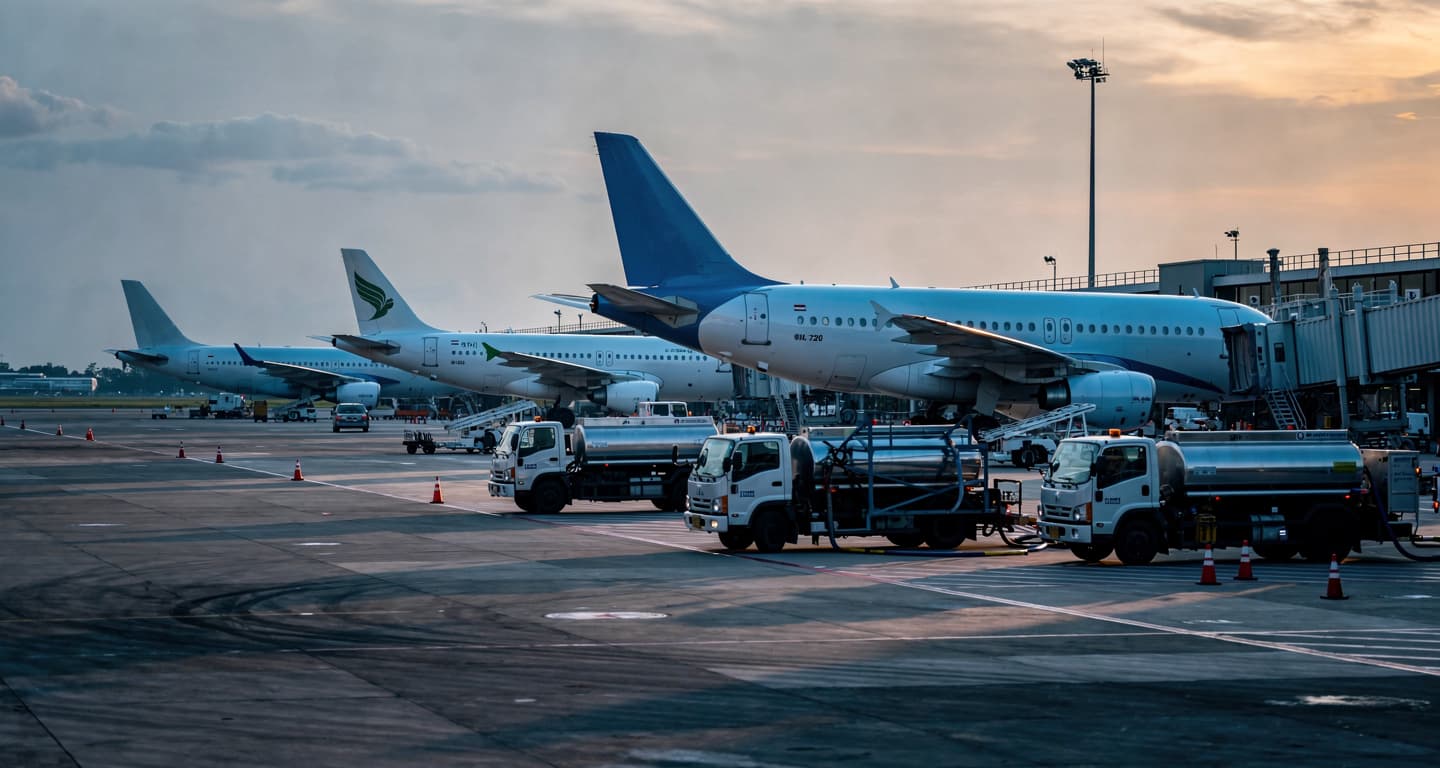
For Western capital, exposure to Thai and broader ASEAN logistics, energy trading, and financials now carries an embedded Russia-risk premium, even when balance sheets appear locally focused. Compliance teams will need to treat Bangkok in the same analytical framework as Dubai or Istanbul: not off-limits, but requiring granular mapping of counterparties, cargo origin, and end-use technologies to avoid inadvertent sanctions breaches. The fuel crisis already pressuring Thai aviation adds another layer of operational uncertainty for firms building logistics exposure in the kingdom.
Our take
Russia’s use of Thailand as a Southeast Asian gateway is less about new markets and more about constructing a resilient back-channel into the global economy — one deal, one logistics contract, and one real-estate purchase at a time. Unless Western regulators move directly against intermediary hubs rather than continuing to issue warnings that named parties can simply route around, Russian trade and investment in Southeast Asia will deepen. Thailand, not Singapore, is becoming the quiet frontline of sanctions enforcement politics in the region.
What this means for Western businesses and investors with ASEAN exposure
With Russian commercial infrastructure in Thailand deepening across logistics, real estate, and technology sectors, Western companies and investors operating anywhere in the ASEAN corridor face three immediate compliance and strategic considerations.
- Map counterparty exposure in Thai logistics and energy trading now. The sectors most actively used by Russian firms — warehousing in Bangkok and Eastern Economic Corridor provinces, container shipping through Laem Chabang, energy trading desks — are the same sectors attracting Western investment. Firms should conduct enhanced due diligence on Thai partners’ Russia-linked business before the regulatory environment tightens further.
- Monitor EU sanctions enforcement for third-country action. The EU’s 12th and 13th sanctions packages introduced tools specifically targeting re-export hubs. The Council of the European Union’s sanctions page at consilium.europa.eu publishes updates as new measures are adopted. Any extension of “no Russia” clause requirements to ASEAN-based intermediaries would create immediate compliance obligations for European firms with Thai supply chains.
- Watch the Russia–Thailand Investment Forum 2026 for concrete deal flow. If the 2026 forum produces signed memoranda on energy, logistics, or digital infrastructure — rather than rhetorical communiqués — it signals that private-sector actors have concluded that sanctions risk is manageable at current enforcement levels. That would be a meaningful escalation signal for Western compliance teams.
- Treat Thai bank and fintech relationships as requiring enhanced scrutiny. US Treasury warnings about foreign financial institutions facilitating Russian sanctions evasion are not geographically limited. Thai financial institutions that visibly deepen Russia-linked trade finance channels are potential secondary-sanctions targets. Western firms with correspondent banking or payment-processing relationships in Bangkok should assess exposure proactively.
- Do not assume Singapore-focused compliance covers Bangkok exposure. The two hubs are functioning as complementary nodes, not substitutes. A compliance framework calibrated to Singapore’s stricter regulatory environment will not automatically capture risk generated through Bangkok’s less scrutinised logistics and financial channels.