
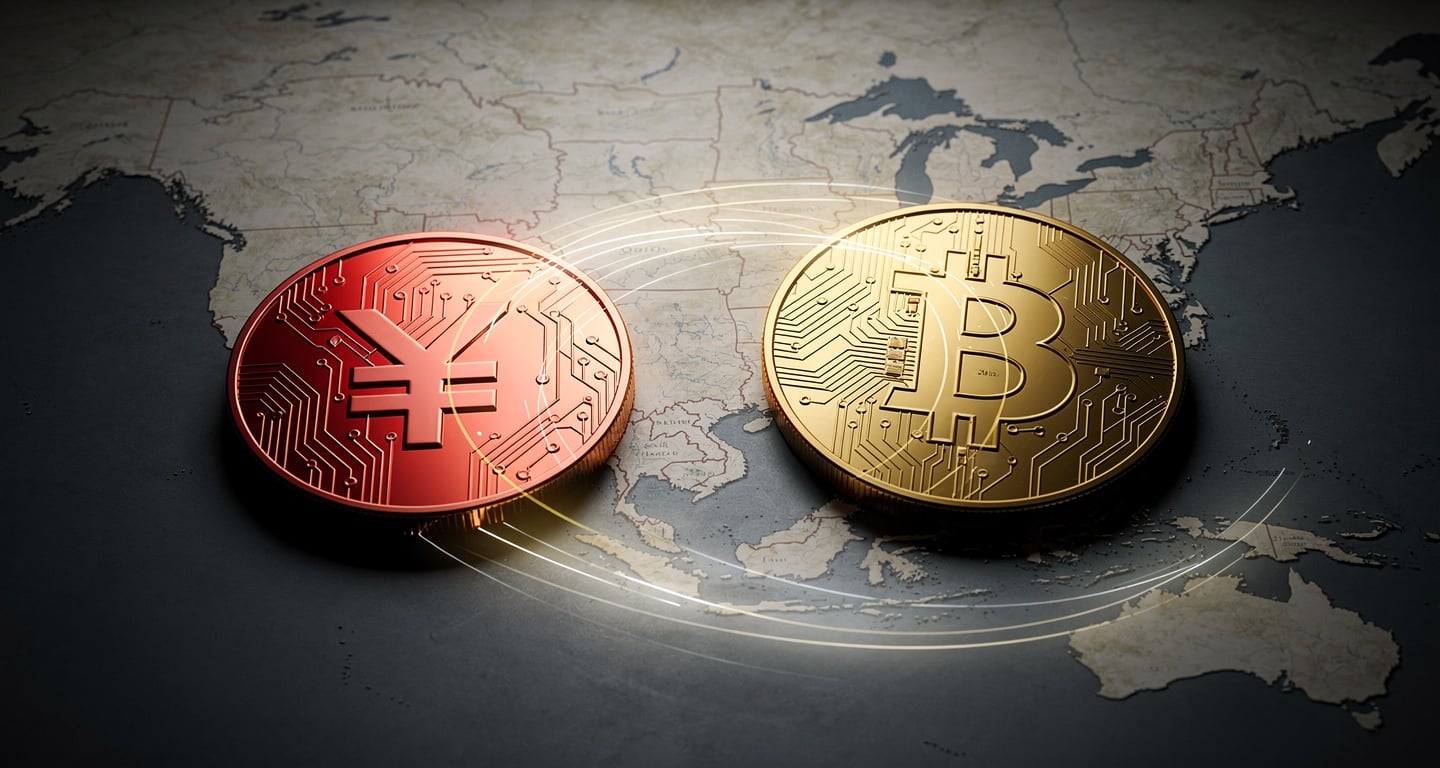
Major financial institutions across South Korea, Indonesia, Singapore, and Hong Kong are no longer piloting blockchain technology — they are building production-grade infrastructure. Mirae Asset Securities, with approximately USD 835 billion in client assets at end-2025, has committed to tokenizing investment products across Korea, Indonesia, and Singapore. Hong Kong introduced its Stablecoin Issuance Regulatory Regime (SIRR) bill to the Legislative Council on April 24, 2026, designating the Hong Kong Monetary Authority (HKMA) as sole regulator for fiat-referenced stablecoins. More than 50% of global crypto users are already based in Asia.
The shift is structural, not cyclical. Institutions are asking how to build compliant, end-to-end workflows — not when token prices will recover.
The conversation at Consensus Miami this week that deserves Western attention was not about price targets. Joseph Chi, Executive Chairman of Solana Company, described something more consequential: a cohort of Asian financial institutions that have quietly moved from crypto speculation into full-scale institutional infrastructure buildout, while their US counterparts remain tangled in unresolved federal rules.
Chi’s central claim, delivered at the conference on May 29, 2026, is that the next adoption supercycle for blockchain technology will originate in Asia — not because the region is chasing yield, but because its regulators have made a deliberate choice to move first. Hong Kong’s SIRR bill, Singapore’s Project Guardian tokenization pilots, and South Korea’s Virtual Asset User Protection Act have together created a regulatory surface that US institutions currently lack.
The institutions responding to that surface are not small. Mirae Asset Securities, which manages roughly KRW 1,131 trillion in client assets, invested in Solana Company in the week before the Miami conference and is actively planning tokenized product rollouts across three countries. Vietnam, India, and China collectively produce more than 10 million STEM graduates annually — a talent base that is building on top of the technology, not merely adopting it.
ALSO WORTH READING

What Chi is describing is less a crypto story than a capital markets infrastructure story, and the gap between APAC’s current position and the West’s is widening faster than most Western firms have registered.
The details
The regulatory architecture underpinning APAC’s institutional buildout is now specific enough to build products against. Hong Kong’s proposed SIRR requires stablecoin issuers to hold full backing in high-quality liquid assets, conduct daily reserve valuations, segregate client assets, and meet prudential capital requirements — all under HKMA supervision. The HKMA confirmed the bill’s introduction on April 24, 2026. HSBC and Standard Chartered have already received stablecoin-related regulatory approvals in the city.
Singapore’s framework is further along operationally. The Monetary Authority of Singapore (MAS) regulates both Digital Payment Token (DPT) services and stablecoin issuance under the Payment Services Act and its 2024 amendment, requiring MAS-designated stablecoins to be fully backed, redeemable at par within five business days, and subject to reserve custody and disclosure rules. Project Guardian — MAS’s institutional tokenization initiative — had onboarded more than 20 global financial institutions by late 2025 to pilot tokenized bond, fund, and foreign exchange products on public and permissioned blockchains.
South Korea’s Virtual Asset User Protection Act, which took effect on July 19, 2024, introduced exchange liability rules and stricter custody standards as a foundation layer for broader institutional adoption — a step the US has not yet taken at the federal level.
| Country | Current rule | New rule / development | Effective date |
|---|---|---|---|
| Hong Kong SAR | No stablecoin licensing regime in force | SIRR bill introduced; HKMA as sole regulator, full reserve backing required | Bill introduced April 24, 2026; passage expected 2026 |
| Singapore | Payment Services Act (original) | 2024 amendment adds MAS-regulated stablecoin category; par redemption within 5 business days | 2024 (in force) |
| South Korea | Pre-2024: limited exchange oversight | Virtual Asset User Protection Act: exchange liability, custody rules, market abuse provisions | July 19, 2024 |
| United States | State money-transmitter licenses; bank-issued guidance | No federal stablecoin law enacted; FIT21 market-structure bill pending | No federal effective date set |
The wider picture
The strategic logic Chi is executing is best understood as a leapfrog, not a catch-up. The US path to institutional crypto adoption required years of enforcement actions, Congressional hearings, and industry-regulator standoffs before any coherent framework emerged. APAC’s major financial hubs have watched that process and chosen to skip it — moving directly from retail speculation to institutional-grade infrastructure, with regulatory frameworks designed in advance rather than retrofitted after the fact.
HKMA Chief Executive Eddie Yue has framed stablecoins as “part of the future monetary system,” not a threat to be contained. Former MAS Managing Director Ravi Menon argued publicly that asset tokenization “could transform capital markets and cross-border payments,” and that Singapore’s approach is to provide clear rules so regulated institutions can experiment at scale. That posture — regulators as infrastructure designers rather than enforcement bodies — is what makes Project Guardian’s 20-plus institutional participants a credible signal rather than a press release.
For Western readers, the parallel is instructive. Hong Kong and Singapore are now playing the role that New York and London played for traditional finance in the 1980s — but with clearer early rules and a deliberate intent to attract institutional capital before the standards are set elsewhere. While US banks largely remain in pilot or no-go mode on tokenization, Asian institutions are shipping production products. That gap has a compounding quality to it.
Beyond the headline
The bigger picture
Asia’s institutional crypto buildout is less about chasing speculative upside and more about rewiring cross-border capital flows around regional supply chains. As manufacturers, exporters, and banks in Korea, Indonesia, and India adopt tokenized cash and assets, they are effectively designing a settlement layer that can bypass legacy Western correspondent networks — shifting where financial data, fees, and standards originate.
The power behind it
The true leverage in this shift sits with central banks and financial regulators in Singapore and Hong Kong, which decide which chains, stablecoins, and intermediaries are permitted inside the regulated perimeter. Their licensing choices will determine whether US-aligned dollar rails, China-adjacent experiments, or neutral public networks become the default infrastructure for trillions in Asian trade and investment flows.
The reach
For Western asset managers, APAC tokenization is not a regional sideshow — it determines who controls distribution of global investment products into emerging Asian wealth. If Singaporean and Korean platforms become the primary on-chain shelves for funds and structured products, Western firms may find themselves negotiating access and fees from a weaker position, even when their brands and strategies remain globally competitive.
What APAC’s institutional crypto shift means for your decisions now
With Hong Kong’s SIRR bill moving through the Legislative Council and Singapore’s Project Guardian already in live production, the window for Western firms to engage on their own terms — rather than adapt to rules already written — is narrowing in 2026.
- Western institutional investor with APAC exposure
The Mirae investment in Solana Company and its multi-country tokenization roadmap signal that South Korean and Indonesian asset managers are building digital infrastructure that will reshape how regional products are structured and distributed. Review your APAC portfolio allocations against the tokenization timelines of your largest holdings — firms with early on-chain distribution capabilities are likely to gain a structural advantage in the next capital-raising cycle. MAS’s public Project Guardian materials at mas.gov.sg provide a practical map of how tokenized bonds, funds, and FX are being structured for regulated use.
- US-based financial institution exploring tokenization
Your APAC counterparts are not waiting for FIT21. Institutions in Singapore and Hong Kong are already deploying production tokenized products under frameworks that are more operationally specific than anything currently in force in the US. Engaging directly with MAS or HKMA consultation processes — both publish detailed regulatory guidance — gives your compliance and product teams a concrete framework to design against, rather than building for a US rule that may not arrive until 2027 or later. The HKMA’s SIRR updates are published at hkma.gov.hk.
- Western supply chain manager with Asian operations
If your Korean, Indonesian, or Vietnamese counterparties are moving toward tokenized payment rails — and the trajectory from Mirae and the stablecoin licensing activity in Hong Kong suggests they will — your treasury and accounts-payable infrastructure needs to be evaluated now. Tokenized settlement can reduce correspondent banking fees and cut cross-border payment times from days to minutes, but it requires your own legal and compliance teams to understand which stablecoin standards your counterparties will be using. The growth of ultra-high-net-worth capital mobility across the region, visible in sectors from private aviation to asset management, reflects the same structural shift in how Asian capital moves.
- European asset manager targeting Asian wealth
The on-chain distribution layer being built in Singapore and Seoul will not wait for European product structures to catch up. If Singaporean and Korean platforms become the default shelf for tokenized funds, European managers without local on-chain distribution agreements will face the same access problem they encountered with WeChat Pay — relevant too late. Engage with MAS’s Project Guardian participant list to identify which platforms are building the distribution infrastructure, and assess whether your fund structures are compatible with the redemption and custody rules under Singapore’s Payment Services Act.