Across China, Iran, Myanmar, and Venezuela, a permanent shadow digital infrastructure has taken shape to fight state-controlled internet censorship. Freedom House’s Freedom on the Net 2025 report scores China at 9/100, Myanmar at 10/100, Iran at 16/100, and Venezuela at 28/100 — all rated “Not Free” — while 55% of the global population now lives in countries where social media is blocked or throttled for political reasons. Circumvention tools range from clandestine Starlink networks smuggled across Iran’s borders to pop-up internet cafés in Myanmar’s conflict zones and a built-in VPN news app developed by Venezuelan activists.
What began as crisis workarounds are hardening into long-term survival infrastructure. The legal architecture underpinning each country’s censorship regime has expanded significantly since 2021, raising the stakes for anyone operating these networks.
The man who co-founded a service helping Chinese citizens access Google, YouTube, and Facebook has not lived in China for a decade. He spoke on the condition that neither his face nor his real name be recorded. That precaution is not paranoia: China’s Data Security Law and Personal Information Protection Law, both enacted in late 2021, give authorities sweeping powers over cross-border data flows, and individuals caught helping others circumvent the Great Firewall face arrest. His story is one of several that together describe something larger than individual acts of defiance — the emergence of a permanent, high-risk shadow digital infrastructure running beneath the official internet in four countries simultaneously.
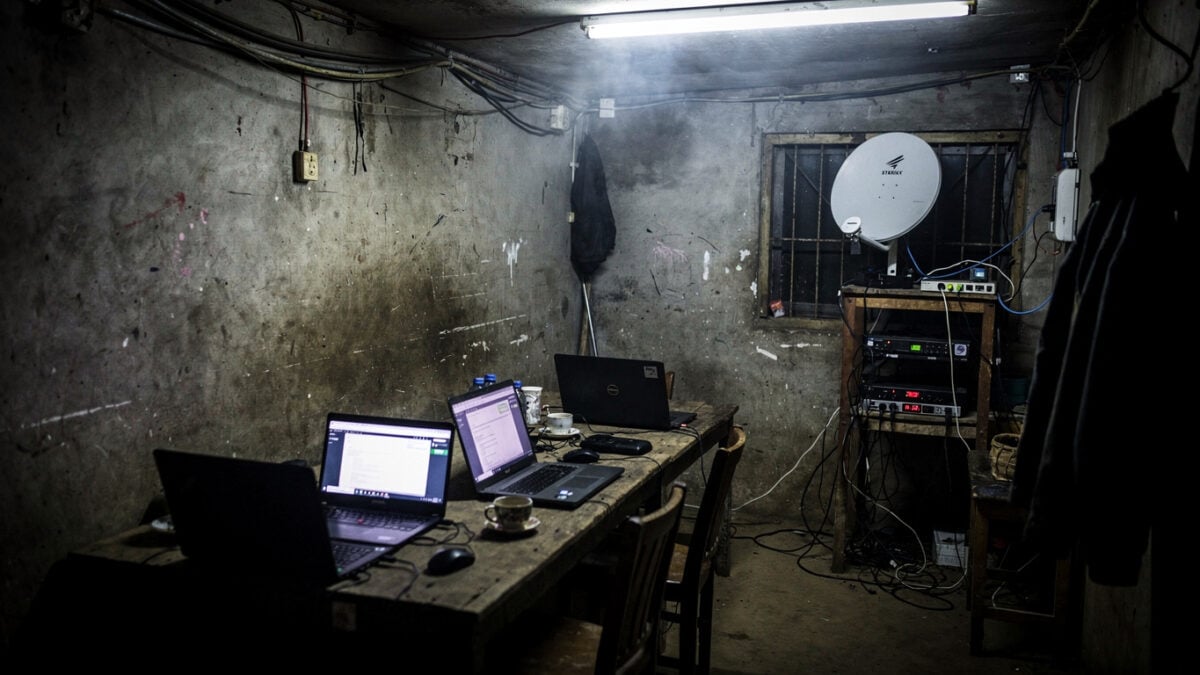
In Iran, a man identified only as Sahand coordinates a clandestine global network physically smuggling Starlink satellite terminals across international borders. In Myanmar, a woman called Phyu — not her real name — runs a secret internet café serving roughly 30 displaced people daily, switching off the lights when military aircraft pass overhead. In Venezuela, Andrés Azpúrua fled the country in late 2024 after his NGO, La Conexión Segura y Libre, built what may be the first news application with a built-in VPN, removing the technical barrier that kept most Venezuelans away from independent journalism.
These are not temporary workarounds invented during a crisis. They are the visible edge of an infrastructure that, once built, does not dismantle itself.
RELATED
How the censorship architecture works — and what it costs to fight it
The scale of what these networks are fighting is documented in granular detail. The GreatFire URL testing database records more than 10,000 major foreign websites currently blocked in China, including virtually all global social media platforms and most international news outlets. Chinese President Xi Jinping has stated publicly that the Communist Party’s long-term survival depends on controlling the internet — a candid framing that explains why the infrastructure is so comprehensive. The Great Firewall does not simply block sites; it filters ISP-level traffic, enforces platform responsibility for keyword removal, and imposes legal penalties for what authorities classify as “rumor-mongering.”
Iran’s architecture increasingly mirrors China’s. Iran’s parliament passed amendments to its Cyber Crimes Law in October 2023, expanding state powers to block platforms and prosecute circumvention. Judiciary orders targeting VPN distributors — referred to officially as “dealers” — have continued into 2025. A parallel legislative instrument, the Regulation of Cyberspace Services bill (widely called the User Protection Bill), has been partially implemented through Supreme Council of Cyberspace decisions since 2022, mandating data localisation and giving authorities authority to throttle foreign services that refuse to cooperate.
Myanmar’s 400-plus documented internet shutdowns since the February 2021 military coup have affected 40% of the population, according to the Myanmar Internet Project. Starlink terminals — the same technology sustaining Phyu’s café — have become the primary workaround in conflict-affected areas, though the military has moved to block satellite signals in some zones. Clandestine VPN accounts in Myanmar sold via Telegram and Facebook Marketplace now cost between US$8 and US$15 per month. In Venezuela, shared residential proxies for accessing blocked news and payment platforms run US$5 to US$10 monthly — significant sums in an economy where formal wages remain compressed.
Freedom House data confirms that 293 million people in China alone were estimated to use VPN services in 2025, spanning both legal corporate tools and grey-market consumer products. The verified economic cost of major internet shutdowns globally reached US$7.1 billion in 2023, with Iran and Myanmar among the largest contributors.
Adrian Shahbaz, Vice President for Research and Analysis at Freedom House, argues that since 2020 authoritarian governments have shifted from ad-hoc shutdowns to building comprehensive “digital repression ecosystems” — combining technical blocking, legal instruments, and direct intimidation of users and service providers. The shift matters because it means each new law or shutdown leaves permanent machinery in place for the next one. The external link to Freedom House’s Freedom on the Net 2025 global figures provides the full comparative dataset across all four countries.
How emergency shutdowns became standard governance tools
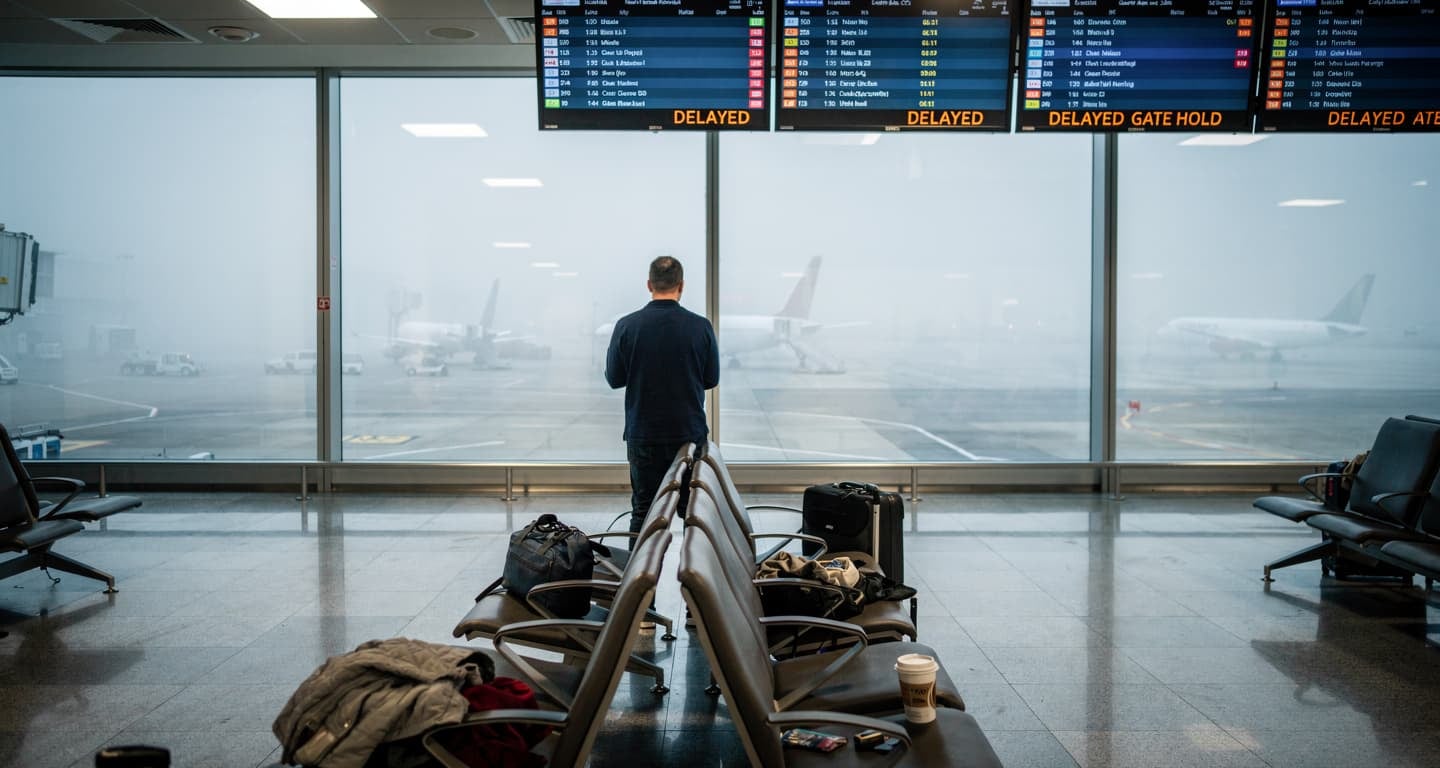
The pattern across these four countries is not coincidental. Street protests or disputed elections trigger blocks on communication platforms. Targeted arrests of digital organisers follow. New legislation then locks the “emergency” measures into permanent legal infrastructure, lowering the threshold for the next deployment. Iran’s 2022 shutdown during the Mahsa Amini protests lasted 115 hours at near-total national level; by 2025, with conflict involving the United States and Israel, a further shutdown arrived with markedly less domestic political debate than the first. Each cycle leaves the machinery more refined and the public less surprised.
The historical roots run deep in both China and Iran. China’s Central Propaganda Department established the norm that information exists to serve the party’s political line decades before the internet existed. The Great Firewall, built from the early 2000s onward, translated that norm into a layered technical system rather than outright prohibition — a design that proved far more durable than simple bans. Iran’s clerical establishment after 1979 fused religious authority with state broadcasting monopolies; when satellite television and then the internet eroded that monopoly, filtering, mandatory licensing, and periodic shutdowns were framed domestically as defending Islamic values against foreign cultural invasion rather than as censorship.
Access Now’s #KeepItOn 2025 report records that 90% of documented shutdown incidents in 2023 were associated with protests, elections, or coups — confirming that the trigger mechanism is consistent across jurisdictions and political systems. What varies is how quickly the exceptional becomes routine. Venezuela’s trajectory illustrates the end state: a country where independent news websites are effectively inaccessible to most citizens not because of a declared emergency, but because pervasive censorship has simply become the ambient condition.
Beyond the headline
The Bigger Picture
The documentary’s stories sit inside a wider transition from a single, globally interoperable internet to fragmented national networks shaped by security doctrines and political ideology. Over the next decade, that fragmentation is likely to deepen: rather than one open web with censored exceptions, users in places like China, Iran, Myanmar, and Venezuela may experience entirely different platform ecosystems, app stores, and addressable content than users in liberal democracies.
The Pattern
What looks like isolated crackdowns in these four countries follows a recurring pattern: street protests or contested elections trigger blocks on platforms, then targeted arrests of digital organisers, followed by new laws tightening official control over infrastructure. Each round leaves more technical and legal machinery in place, so that the “exceptional” shutdown gradually becomes a standard governance tool that can be deployed earlier and with less domestic debate.
The Reach
For Western technology companies that still operate at the edge of these markets, the main implication is not just lost users but a growing demand from authoritarian regulators to embed content controls, data localisation, and real-time cooperation mechanisms. Accepting such conditions in one jurisdiction risks normalising them as a bargaining baseline elsewhere, pressuring firms to choose between access to large emerging markets and commitments to global free-expression and privacy standards.
What the shadow internet means for you
With censorship infrastructure now codified in statute across China, Iran, Myanmar, and Venezuela, the implications extend well beyond the people physically operating these networks.
-
Travellers to China, Iran, and Myanmar
Carrying a personal device into any of these countries now involves navigating legal frameworks that give authorities broad powers to inspect data and compel platform compliance. Chinese authorities can search devices under the Data Security Law and Personal Information Protection Law; border officials in Myanmar operate under informal military directives with no clear legal limit. If you are travelling to China for business or as a tourist, the practical steps for protecting sensitive data — including the use of clean devices and awareness of exit-ban risks — are covered in detail in this guide to digital privacy and exit bans in China for European travellers. For Iran, the situation is more acute: VPN use is technically illegal and judiciary enforcement has escalated since October 2023.
-
Journalists, activists, and researchers
Anyone communicating with sources inside China, Iran, Myanmar, or Venezuela faces a specific risk: the circumvention tools your contacts recommend may themselves be compromised. The 2024 Citizen Lab study of 80 VPN and proxy services found hard-coded credentials, absent encryption, and cooperation with state surveillance in a significant share of products. Use only audited, open-source tools — Access Now’s Digital Security Helpline at accessnow.org/help offers direct technical support and vetting guidance for high-risk communications.
-
Technology investors and platform operators
Iran’s Protection Bill is expected to reach the Guardian Council for full codification by late 2026; if enacted, it will lock nationwide data localisation and platform blocking into statute rather than relying on ad-hoc security-agency orders. Myanmar’s draft Cybersecurity Law, with renewed consultations reported in 2025, would formalise ISP and VPN licensing if passed. Both developments will force fresh compliance decisions for any company still operating at the margins of these markets — and, as Freedom House’s Shahbaz warns, the terms demanded in one jurisdiction increasingly set the floor for negotiations in others.
-
Policy and civil-society professionals
Freedom House’s Freedom on the Net 2025 report documents that more than three-quarters of the world’s internet users now live in countries where authorities block political or social content as routine policy. The Reporters Without Borders 2025 World Press Freedom Index ranks China 172nd, Iran 178th, Myanmar 171st, and Venezuela 156th out of 180 countries — a cluster that reflects coordinated governance models, not independent failures. Organisations tracking these trends, including Access Now’s #KeepItOn coalition, maintain real-time shutdown monitoring that provides the most current operational picture for advocacy and funding decisions.