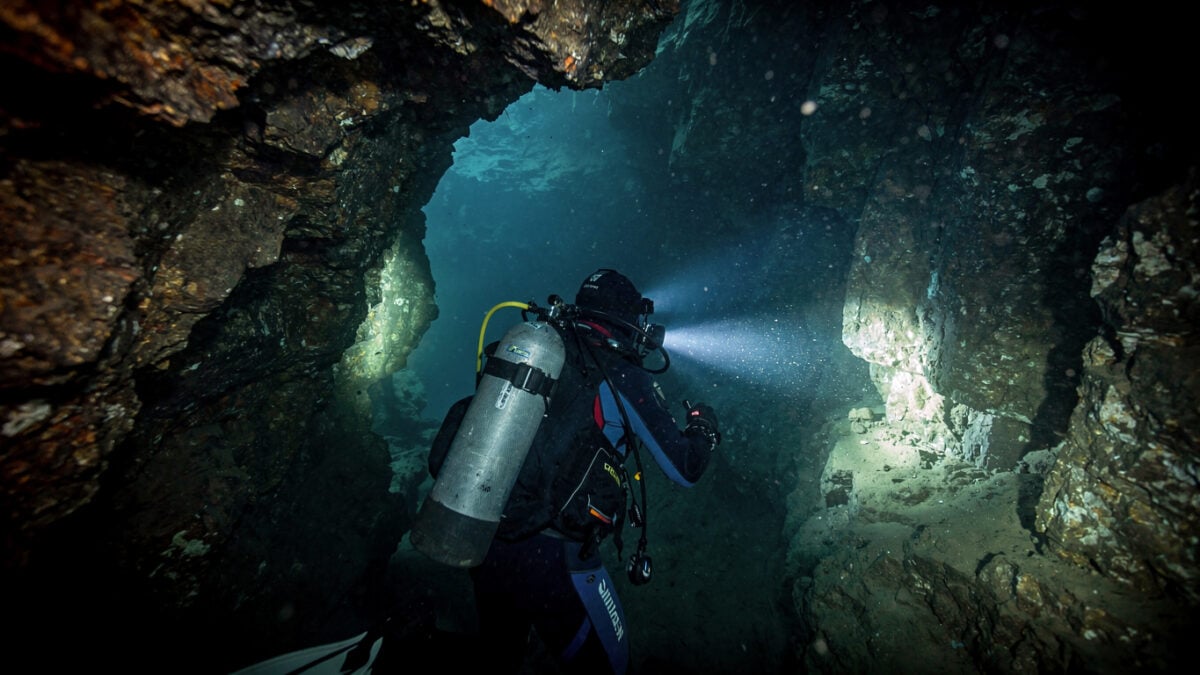
Seven villagers have been trapped inside a flooded gold mine in Laos’ Xaisomboun province since Wednesday, May 21, 2026, after flash flooding sealed the exit to a hand-dug tunnel network approximately 340 metres long. Cave divers — including veterans of the 2018 Thai Tham Luang rescue — are navigating passages as narrow as 23 inches in zero visibility, and as of May 27 had not yet reached the chamber where the group is believed to be sheltering on an elevated, air-accessible ridge.
Rescuers estimate they are roughly 30 metres from that chamber. Laos’ National Disaster Management Plan provides a legal basis for the Thai team’s cross-border involvement, but further foreign specialist support may be formally requested within 24 to 48 hours.
The veterans who pulled off one of the most watched rescues in modern history are back underground — this time in Laos, working through conditions they say are harder than anything they faced in Thailand eight years ago. Finnish technical cave diver Mikko Paasi, who helped extract the Wild Boars football team from Tham Luang in 2018, descended into the Xaisomboun mine on May 26 and had to remove his wing and sidemount system before he could fit through the first restriction. Seven gold prospectors have been trapped inside since May 21, when monsoon rains flooded the only exit from a tunnel system that was never designed to be dived.
Unlike the vast natural chambers of Tham Luang — where some passages ran hundreds of metres across — this is a hand-dug mine, narrow by construction, with constrictions that run for tens or hundreds of metres without relief. The total distance from entrance to the presumed shelter chamber is roughly 340 metres, less than a tenth of the Tham Luang traverse, but Paasi describes it as categorically more dangerous: every centimetre counts, visibility is zero, and a diver of even modest build must exhale to squeeze through the tightest points. One Thai rescue diver surfaced and posted to Facebook that he had reached where the seven should be — and did not find them.
That detail, more than any other, captures where this operation stands on the morning of May 27.
RELATED



Narrow tunnels, zero visibility, and the 30-metre gap
The seven villagers entered the mine in Xaisomboun — a mountainous, sparsely populated province established in 2013 as Laos’ 18th administrative division — carrying supplies for a multi-day underground prospecting trip, a standard practice in the area’s informal gold-mining economy. One member of the group escaped before the flooding sealed the passage and alerted municipal authorities, triggering the cross-border response.
Paasi told interviewers that divers are currently approximately 30 metres from the terminal chamber where the group is assumed to have taken shelter. That chamber, as described to rescuers, contains a dry, elevated section large enough for ten people, with sufficient air volume to sustain the group for several days. Reaching it, however, requires completing a through-dive in which a diver cannot turn around, cannot see, and cannot carry standard equipment. The 1,115-foot total tunnel length — roughly the height of the Empire State Building set on its side — contains multiple constrictions under 60 centimetres that run for extended stretches.
Official statements confirm that Laos and Thai rescue teams are coordinating under Laos’ National Disaster Management Plan, which designates flash floods as a priority hazard and explicitly tasks provincial committees with facilitating cross-border assistance. The legal architecture for a larger international operation is already in place.
Official rescue coordination updates are being tracked by the Associated Press, which has direct access to both the Laos and Thai rescue teams on the ground.Why the 2018 playbook only partially applies here
The Tham Luang rescue succeeded in part because coordinators reduced water volume inside the cave by an estimated 40 percent through aggressive pumping and diversion — a margin that former rescue commander Narongsak Osottanakorn has described as decisive, warning that delayed pumping dramatically narrows survival windows. That lesson is being applied in Xaisomboun, but the physical environment complicates it. Tham Luang is a natural karst system; the Laos site is a hand-dug mine with no natural drainage channels and passages that were, by design, just wide enough for a person carrying a pickaxe.
Paasi puts the contrast plainly: Tham Luang had chambers the size of football pitches between its restrictions; this mine has no such relief. The psychological calculus is also different. The Wild Boars were children facing an unfamiliar environment; the Xaisomboun seven are experienced miners who routinely spend days underground, carry food and water as standard practice, and are, as Paasi noted with some care, probably better equipped mentally for this than almost any other group of adults could be.
Thailand, after Tham Luang, enacted formal monsoon-season cave closure rules through its Department of National Parks. Laos has no equivalent framework — a regulatory gap that goes some way to explaining why prospectors were underground in the first week of monsoon season without a formal warning system in place.
Beyond the headline
The Bigger Picture
This Laos operation sits within a broader regional trend of adventure, religious and economic activity pushing people deeper into Southeast Asia’s cave systems as climate change amplifies extreme rainfall. As monsoon patterns become more erratic, flash-flood cave entrapments are shifting from freak accidents to a recurring disaster risk that local authorities and cross-border rescue networks now have to plan for structurally, not just react to.
The Human Cost
Behind the dramatic dive footage are seven villagers who reportedly entered the cave not for sport but to prospect for gold in one of Laos’ poorer, mountainous provinces. Their families, likely dependent on informal mining income, are enduring days of uncertainty with limited access to information, while local economies temporarily divert scarce personnel and equipment from routine services to sustain a high-risk rescue that could still last many days.
The Pattern
Tham Luang in 2018, repeated flash-flood cave incidents in Vietnam and Malaysia, and now Xaisomboun suggest a pattern: unregulated access to complex karst caves during early monsoon weeks repeatedly ends in multi-day, high-stakes rescues. Each episode has prompted ad hoc closures and safety reviews, but implementation is uneven, leaving a cycle where similar cave systems across the region see near-miss warnings one year and full-blown emergencies the next.
What the Laos cave rescue means for travellers and regional risk
With divers still short of the shelter chamber and monsoon rains forecast over Xaisomboun province, the rescue could extend well beyond the coming days — and the implications for anyone in or travelling to Laos are immediate.
- Medical evacuation cover is non-negotiable in Laos. Healthcare infrastructure in Xaisomboun and most of rural Laos is minimal; any serious incident requires air evacuation to Bangkok or Udon Thani at costs ranging from USD 15,000 to USD 30,000 upfront. Standard travel insurance frequently excludes adventure and informal economic activities. Travellers should verify their policy covers medical evacuation with a minimum USD 100,000 limit before entering the country.
- Avoid caves and mine sites in Xaisomboun province. The province remains an active rescue zone. Provincial authorities have not issued formal cave-closure orders equivalent to Thailand’s post-2018 monsoon rules, meaning access is technically unrestricted even as conditions are dangerous.
- Monitor the Laos Department of Meteorology and Hydrology for rainfall forecasts over Xaisomboun in the next 72 hours. Deteriorating weather would extend the rescue timeline and increase road disruption in a province with limited road infrastructure.
- Watch for a formal Laos government request for international specialist support — expected within 24 to 48 hours if the current dive team cannot reach the shelter chamber. Such a request would signal a longer, larger operation and potential further disruption to the province.
- For those with interests in Laos’ informal mining sector: this incident is likely to accelerate regulatory scrutiny of gold prospecting in Xaisomboun. Laos’ Ministry of Labour and Social Welfare has the legal authority under the existing National Disaster Management Plan to impose emergency access restrictions, and pressure to use it is building.