Air Canada Express jet collides with fire truck at LaGuardia, killing two pilots, injuring 41

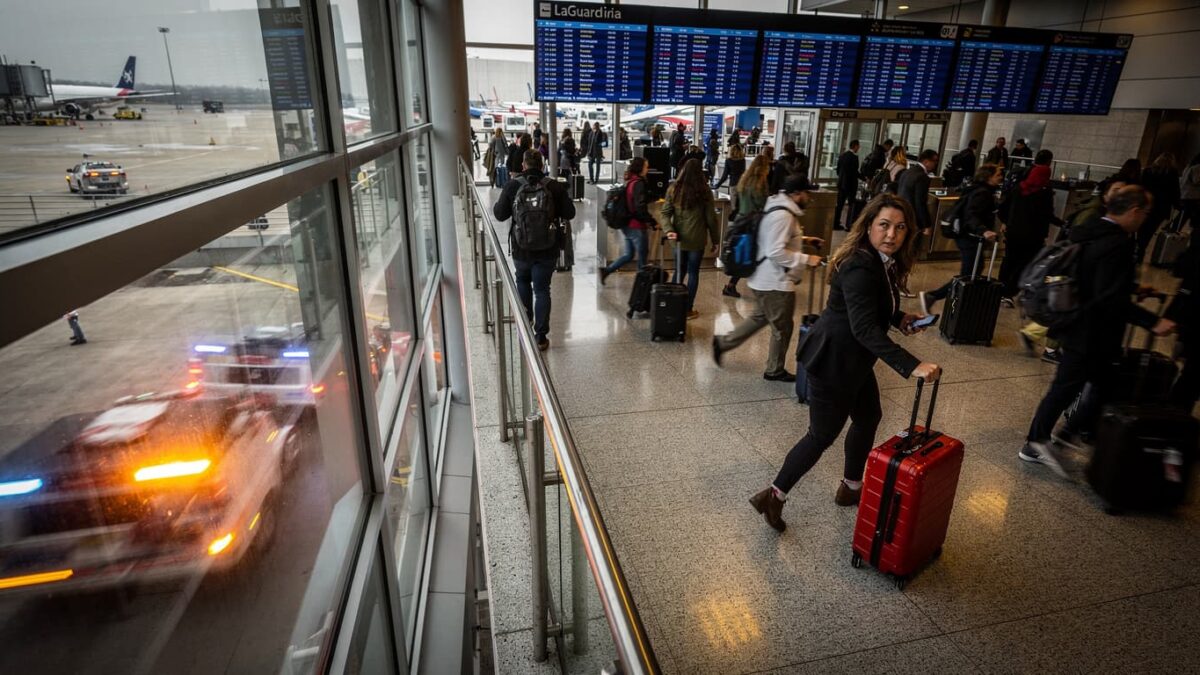
An Air Canada Express regional jet collided with a fire truck on an active runway at LaGuardia Airport late Sunday night, killing both pilots and injuring at least 41 people. The crash closed the airport for 14 hours, stranding thousands of passengers and forcing diversions to JFK and Newark. The airport reopened Monday morning, but one runway remains closed as the NTSB investigates how a fire truck responding to another incident ended up in the path of the landing aircraft.
The wreckage and damaged fire truck were still visible on the runway Monday afternoon. Travelers with bookings through LaGuardia this week face rebooking delays and reduced capacity as investigators lock down the crash site.
Air Canada Express flight 8646 from Montreal struck a Port Authority fire truck at 11:47 PM ET on March 22, 2026, as the CRJ-900 regional jet touched down on runway 4. The collision killed the pilot and copilot instantly and sheared off the cockpit. A flight attendant was ejected from the aircraft but survived.
The fire truck — designated Truck 1 — had been cleared to cross the runway while responding to an unrelated rejected takeoff. Air traffic control issued stop commands as the jet landed at approximately 167 kilometers per hour, but the collision could not be avoided.
Of the 72 passengers and four crew members aboard, 43 were hospitalized. By Monday evening, 32 had been released. Two Port Authority firefighters suffered broken bones. Passenger Jack Cabot described chaos in the cabin as travelers opened emergency exits and evacuated onto the tarmac.
LaGuardia remained closed until Monday morning — a 14-hour shutdown that diverted more than 100 flights to JFK and Newark, stranding an estimated 10,000 passengers overnight.
What the investigation has revealed so far
The NTSB deployed a “go team” to LaGuardia on Monday morning. The FAA is also involved, focusing on air traffic control procedures and runway incursion protocols. As of Monday afternoon, the wreckage and fire truck remained on runway 4, which is closed pending the investigation.
Preliminary accounts suggest the fire truck crew had been responding to another aircraft incident when they were cleared to cross the active runway. The jet was on final approach at the time. Fox News reported that the cockpit was completely severed from the fuselage on impact, and debris scattered across the runway.
This is the first fatal collision between a commercial jet and an airport fire truck at LaGuardia. The closest precedent was a 2009 incident in which an airport rescue and firefighting (ARFF) vehicle overturned during a response, injuring three firefighters but causing no fatalities.
| Time (ET) | Event | Impact |
|---|---|---|
| 11:47 PM, March 22 | Flight 8646 collides with fire truck on runway 4 | 2 pilots killed, 43 injured |
| 11:50 PM | Airport closed, emergency response deployed | All arrivals diverted |
| 1:30 AM, March 23 | NTSB go team dispatched | Investigation begins |
| 1:45 PM, March 23 | Airport reopens, one runway remains closed | Reduced capacity, rebooking delays |
How this compares to past runway incursions
Runway incursions — when vehicles or aircraft enter an active runway without clearance — are rare but not unprecedented. In January 2019, a Delta A320 rejected takeoff at LaGuardia due to a bird strike, prompting an ARFF response. No collision occurred, but the NTSB found gaps in air traffic control and fire coordination. The FAA implemented procedural changes, but those did not prevent Sunday’s crash.
The key difference: the 2019 incident involved a stationary aircraft. Sunday’s collision occurred during an active landing, with the jet traveling at full approach speed. That left no margin for error once the fire truck entered the runway.
The FAA certifies LaGuardia under 14 CFR Part 139, which governs airport operations and ARFF response times. The regulation mandates a response within three minutes and requires strict coordination between air traffic control and ground crews. The current investigation will determine whether those protocols were followed.
What travelers should do now
LaGuardia has reopened, but one runway remains closed and the airport is operating below full capacity. If you have a flight booked through LaGuardia this week, confirm your status immediately.
- Check flight status: Use the Air Canada app, airline website, or call 1-800-247-2262. Do not assume your flight is operating as scheduled.
- Request rebooking if canceled: Air Canada and other carriers are waiving change fees for affected passengers. JFK and Newark are the primary alternates.
- File a DOT complaint if stranded: If your airline does not provide meals, hotel, or rebooking within a reasonable timeframe, file at airconsumer.dot.gov. The DOT mandates care for overnight delays.
- Monitor NTSB updates: The preliminary report is expected within 2–4 weeks. If the investigation finds systemic issues with LaGuardia’s ground operations, expect additional delays through the summer travel season.
Watch: The NTSB preliminary report, expected within 2–4 weeks. If runway incursion is blamed on air traffic control or ARFF coordination, it means enhanced training for all carriers at LaGuardia. If the investigation clears ATC, expect quicker runway clearance and normalized operations by late March.
Can I get compensation for a canceled or delayed flight due to the LaGuardia crash?
US DOT rules do not mandate automatic compensation for delays or cancellations caused by safety incidents. However, airlines must offer rebooking or a full refund within 2–7 days. If you were stranded overnight, the airline is required to provide meals and hotel accommodations. File a complaint at airconsumer.dot.gov if these are not provided.
Is it safe to fly into LaGuardia this week?
Yes. The airport has reopened and is operating under FAA oversight. One runway remains closed for the investigation, which reduces capacity but does not affect safety. The NTSB and FAA are on-site, and all active runways have been cleared for use. Expect delays due to reduced capacity, not safety concerns.
What happens if my flight is diverted to JFK or Newark?
If your flight is diverted, the airline must provide ground transportation to your original destination or rebook you on the next available flight. You are entitled to meals and hotel accommodations if the delay extends overnight. Keep all receipts and file for reimbursement if the airline does not provide these services immediately.