Air India cancels all flights to Abu Dhabi, Sharjah, Ras Al Khaimah due to UAE slot limits

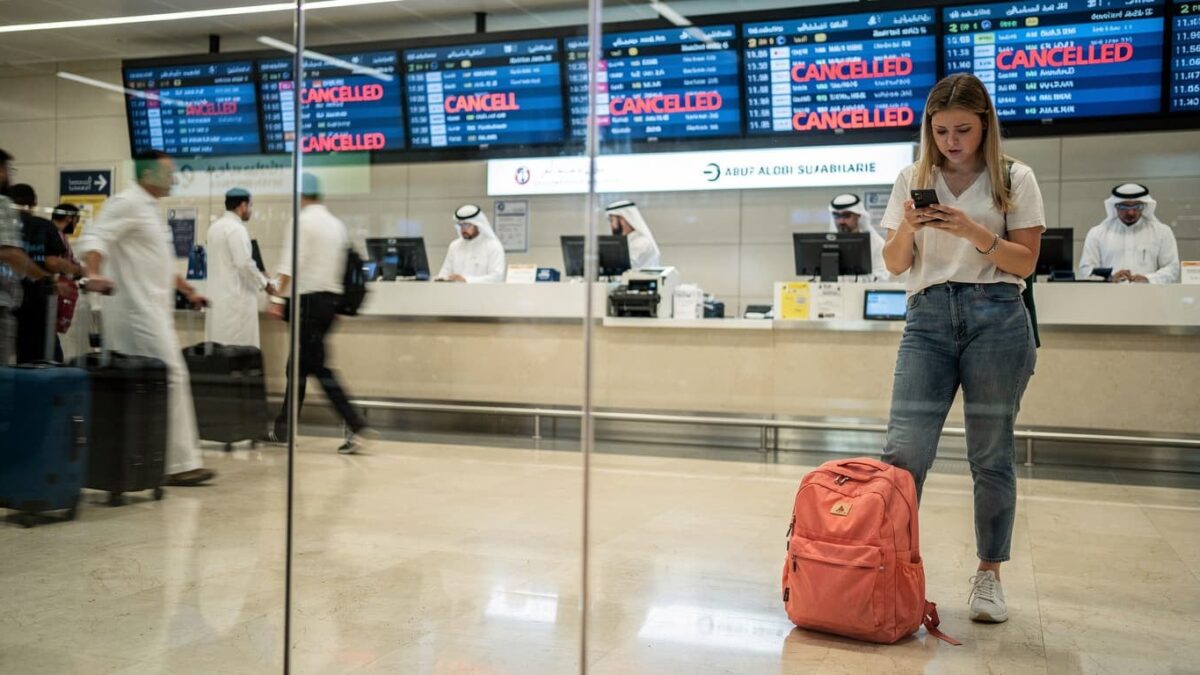
Air India and Air India Express cancelled all flights to Abu Dhabi, Sharjah, and Ras Al Khaimah on March 15, 2026, following UAE airport authority directives on slot constraints and high traffic volumes. Delhi-Dubai operations were reduced to one round trip per carrier, subject to slot availability. Affected passengers can rebook at no charge or claim full refunds through airline websites.
The cancellations stem from UAE air traffic management decisions — not regional unrest as initially reported. Dubai remains the only operational UAE hub for Indian carriers today, with limited capacity.
UAE airport authorities ordered sweeping flight restrictions on March 15, 2026, forcing Air India and Air India Express to cancel dozens of India-UAE services with zero notice. Every flight to Abu Dhabi, Sharjah, and Ras Al Khaimah was grounded. Delhi-Dubai was cut to a single round trip per airline — and even those departures depend on slot availability that may not materialize.
Passengers holding tickets for today face immediate rebooking or refund claims. The airlines are prioritizing stranded travelers from earlier March cancellations, but capacity is severely constrained.
The disruption affects short-haul India-UAE routes across 14 city pairs, with knock-on impacts for connecting passengers from North America, Europe, and Australasia transiting through Indian hubs. UAE Civil Aviation Authorities cited slot management and maintenance requirements — operational constraints, not security threats — as the reason for the restrictions.
What the airport directives actually say
UAE airport authorities issued instructions to curtail both scheduled passenger flights and ad-hoc operations on March 15 due to high traffic volumes and infrastructure limitations. Air India Express bore the brunt: all flights to Abu Dhabi, Sharjah, and Ras Al Khaimah were cancelled, stranding passengers across multiple Indian departure cities.
Air India and Air India Express each retained one Delhi-Dubai round trip, but the airlines confirmed these services are “subject to slot availability” — meaning they could be cancelled if Dubai International Airport cannot accommodate them. The Indian Embassy in Abu Dhabi advised travelers to verify flight status directly with carriers before heading to airports.
| Carrier | Route | Status | Reason |
|---|---|---|---|
| Air India Express | India–Abu Dhabi | All cancelled | UAE slot directive |
| Air India Express | India–Sharjah | All cancelled | UAE slot directive |
| Air India Express | India–Ras Al Khaimah | All cancelled | UAE slot directive |
| Air India | Delhi–Dubai | 1 round trip (if slots available) | Limited capacity |
| Air India Express | Delhi–Dubai | 1 round trip (if slots available) | Limited capacity |
Why this matters beyond today’s cancellations
This is the second major India-UAE disruption in two weeks. The earlier March 9–13 suspension left thousands of travelers stranded across the Gulf, prompting the 62-flight repatriation effort that was supposed to clear the backlog by mid-March. Instead, the March 15 restrictions created a new wave of cancellations before the first wave was fully resolved.
The pattern reveals a structural problem: UAE airports are operating at capacity limits, and when regional conditions require rapid schedule changes, the India-UAE corridor — with its high frequency and mix of full-service and low-cost carriers — becomes the pressure valve.
For connecting passengers, the risk compounds. A European traveler flying London–Delhi–Dubai on separate tickets faces two potential failure points. If the Delhi–Dubai leg is cancelled, Air India has no obligation to rebook the London–Delhi segment, and the passenger absorbs the cost of alternative routing. Gulf hub connections, long marketed as seamless, are proving fragile under operational stress.
Rebook or refund — priority order
UAE airport restrictions remain in effect with no confirmed end date, and airlines are prioritizing passengers stranded from earlier March cancellations.
- Check flight status now: Use airindia.com or airindiaexpress.in “Manage Booking” — do not wait for SMS/email alerts, which are delayed by 6–12 hours in high-volume disruptions.
- Rebook to future date: Both carriers waive change fees and fare differences for affected March 15 tickets. Dubai is the only UAE city with confirmed capacity; request it explicitly if your original routing was Abu Dhabi, Sharjah, or Ras Al Khaimah.
- Claim full refund: If rebooking is not viable, request a refund through the airline website. Processing takes 7–10 business days for credit cards, longer for other payment methods.
- Monitor Embassy updates: The Indian Embassy in Abu Dhabi is coordinating with UAE Civil Aviation Authorities and will post schedule changes at flights from North America to India and flights from Europe to India as they are confirmed.
Watch: Air India has not yet filed schedule adjustments beyond March 15 — the next 48 hours will reveal whether restrictions extend into the weekend or normalize by March 17.
Are the cancellations due to regional conflict or operational issues?
UAE airport authorities cited slot constraints, high traffic volumes, and maintenance requirements — operational capacity limits, not security threats. Earlier March cancellations were tied to regional tensions, but the March 15 restrictions are air traffic management decisions.
Can I get compensation for the cancelled flight?
Indian carriers are not required to pay cash compensation for cancellations caused by airport authority directives. You are entitled to a full refund or free rebooking to a future date. EU passengers departing from EU airports may claim under EU261 if the airline cannot prove extraordinary circumstances, but this applies only to EU-originating flights.
What if I have a connecting flight through India to UAE?
If both segments are on the same ticket, the airline must reroute you at no charge. If you booked separate tickets, the India-UAE cancellation does not obligate the first carrier to refund or rebook your inbound flight — you absorb the cost of alternative routing. This is the risk of self-connecting through Indian hubs during periods of Gulf airspace volatility.
Is Dubai safe to use as a connection point right now?
Dubai remains operational with limited capacity. The March 15 restrictions reduced Delhi-Dubai to one round trip per carrier, but those flights are operating subject to slot availability. If you must connect through UAE, Dubai is the only viable option — but verify your specific flight status within 24 hours of departure.