Air Canada fined $426,000 for 71 violations during 2025 strike, airline fights back

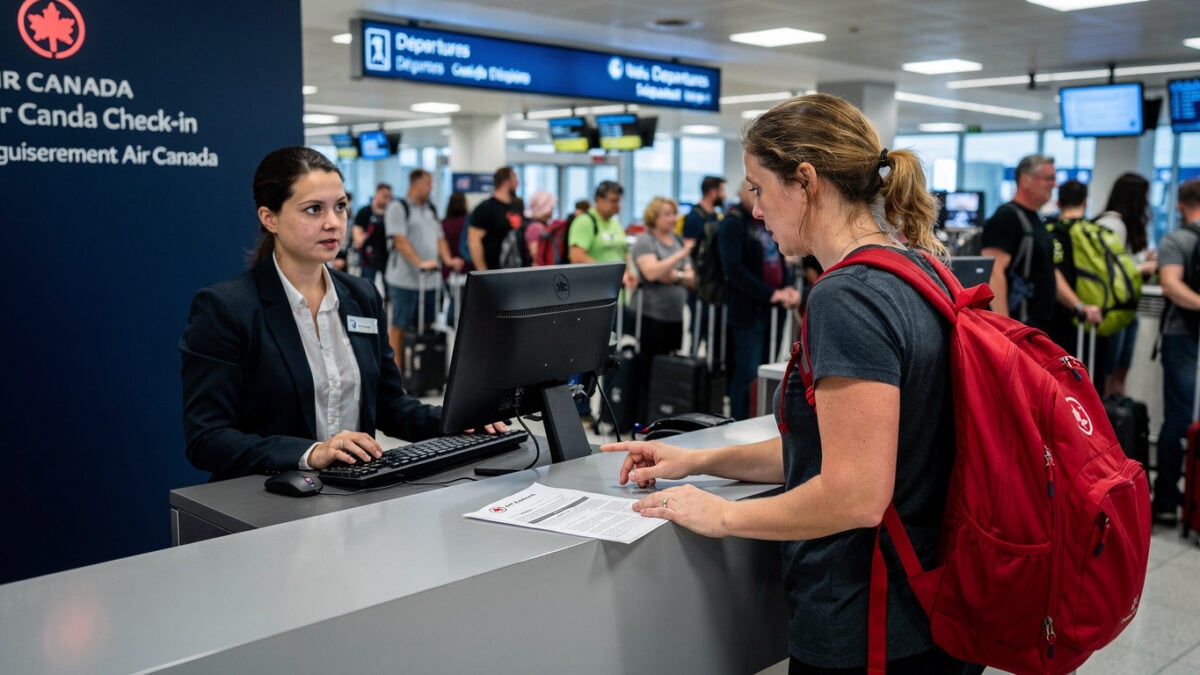
Air Canada has been fined $426,000 by Canada’s Transportation Agency for 71 violations of passenger protection rules during the August 2025 flight attendant strike — the airline failed to refund or rebook passengers as legally required. The carrier is now contesting the fine, claiming regulators are holding airlines to “impossible standards,” with a review deadline of April 18, 2026.
If Air Canada’s appeal succeeds, it could weaken enforcement of refund rights during labor disruptions. Travelers with unresolved claims from the August strike face payout delays while the case proceeds through Canada’s Transportation Appeal Tribunal.
Canada’s aviation regulator has fined Air Canada $426,000 for refusing to refund or rebook passengers during last summer’s flight attendant strike — and the airline is fighting back. The Canadian Transportation Agency (CTA) issued the penalty on March 30, 2026, after investigating 3,200 flight cancellations between August 15–20, 2025, when 10,000 cabin crew walked off the job.
The violations center on a straightforward legal requirement: when flights are canceled for reasons outside the carrier’s control, passengers must be offered a choice — a full refund for the unused portion of their ticket, or free rebooking on the next available flight operated by any carrier. Air Canada failed to provide this choice in 71 sampled cases, despite the airline’s claim that it successfully rebooked 200,000 travelers and issued $90 million in reimbursements for hotels, meals, and alternative transport.
The airline’s response has been blunt: the fine is “unfounded in law,” and it has filed a notice for review with the Transportation Appeal Tribunal of Canada. Air Canada argues the CTA is demanding perfection during peak summer travel when seat availability across the industry was already constrained. The tribunal’s review deadline is April 18, 2026 — until then, enforcement of the fine is on hold, and the precedent for how Canadian passenger rights apply during labor disputes remains unsettled.
What the investigation found
The CTA’s enforcement action followed a comprehensive investigation into the August 2025 labor disruption, which grounded hundreds of aircraft and stranded thousands of travelers during the busiest week of the summer travel season. Regulators examined a targeted sample of affected passengers and identified 71 violations of subsection 18(1.1) of the Air Passenger Protection Regulations — the rule requiring large carriers to offer refunds or rebookings when cancellations occur for reasons outside their control.
Labor strikes fall into this “outside control” category under Canadian law, meaning the airline is not required to pay compensation — but it must still provide the refund-or-rebooking choice. The CTA found that Air Canada failed to meet this standard in the sampled cases, even as the airline processed rebookings for 200,000 passengers using what it described as “some of the best technology available.”
The strike began on August 16, 2025, after contract negotiations collapsed. The federal government intervened within 12 hours, ordering workers back on the job — but union officials ignored the directive, and the strike continued until a tentative deal was announced on August 19. Full service did not resume for another week. The disruption cost the airline $430 million in lost revenue and $375 million in operating income.
| Metric | Figure | Context |
|---|---|---|
| Flight cancellations | 3,200 | Aug 15–20, 2025 |
| Passengers rebooked | 200,000 | Airline claim |
| Reimbursements issued | $90 million | Hotels, meals, other transport |
| CTA violations found | 71 | Sampled cases |
| Fine levied | $426,000 | $6,000 per violation |
| Revenue loss | $430 million | Disclosed September 2025 |
Why the airline is pushing back
Air Canada argues the CTA failed to account for the operational reality of rebooking 200,000 passengers during the peak summer travel window, when competing carriers had minimal spare capacity. The airline’s statement to National Post described the fine as implying “airlines should be held to a standard which is impossible to achieve” — a direct challenge to how regulators interpret the Air Passenger Protection Regulations during labor disruptions.
The carrier’s defense hinges on demonstrating diligence: it deployed rebooking technology, issued $90 million in reimbursements, and processed a massive volume of passenger movements in less than a week. The question now before the Transportation Appeal Tribunal is whether the CTA must consider these efforts when determining compliance — or whether the law’s refund-or-rebooking mandate is absolute, regardless of circumstances.
This is not the first time a Canadian carrier has been fined for Air Passenger Protection Regulations violations during uncontrollable events. In 2022, WestJet was fined $38,000 for five violations during weather disruptions — but that carrier paid without contest. Air Canada’s decision to fight sets up the first major legal test of how passenger rights apply when labor disputes collide with capacity constraints.
What happens next
The Transportation Appeal Tribunal review deadline is April 18, 2026. Until a decision is issued — likely by mid-2026 — the fine remains unenforceable, and the precedent for how Canadian passenger rights apply during labor disruptions stays unresolved.
If Air Canada prevails, it weakens the CTA’s ability to penalize carriers for rebooking failures when external factors limit seat availability. That shifts the burden to passengers, who would need to pursue individual complaints rather than relying on regulatory enforcement. If the CTA’s fine is upheld, it signals that the refund-or-rebooking mandate is absolute — airlines must find a way to comply, even during peak-season strikes.
The outcome will shape how carriers approach future labor disputes. A win for Air Canada could prompt other airlines to contest fines more aggressively, arguing that operational constraints justify non-compliance. A loss reinforces the regulator’s authority to hold carriers accountable, regardless of circumstances.
Watch: The tribunal’s decision will likely be published at tatc.gc.ca by June 2026. If Air Canada loses, expect the airline to escalate to Federal Court — this case is far from over.
Can Air Canada refuse refunds during a strike?
No. Under Canada’s Air Passenger Protection Regulations, when flights are canceled for reasons outside the carrier’s control — including labor strikes — passengers must be offered a choice: a full refund for the unused portion of their ticket, or free rebooking on the next available flight operated by any carrier. The airline is not required to pay compensation, but the refund-or-rebooking option is mandatory.
What happens to my claim if Air Canada wins the appeal?
If the Transportation Appeal Tribunal overturns the fine, it does not erase your individual right to a refund or rebooking under the Air Passenger Protection Regulations. However, it weakens the CTA’s enforcement power, meaning you may need to pursue your claim through the agency’s complaint process rather than relying on regulatory penalties to pressure the airline. File your complaint at otc-cta.gc.ca/eng/file-air-passenger-complaint regardless of the appeal outcome.
How does this compare to passenger rights in the US or Europe?
In the US, the Department of Transportation requires refunds within seven days for controllable cancellations, but labor strikes are not covered — passengers are entitled only to rebooking, not refunds. In Europe, EU261 and UK261 do not apply to non-EU carriers like Air Canada on flights departing from outside the EU. Canada’s Air Passenger Protection Regulations are more passenger-friendly than US rules for uncontrollable events, but enforcement depends on the CTA’s ability to levy fines — which this case now challenges.