

Air Canada Express CRJ900 collides with fire truck at LaGuardia, killing two pilots

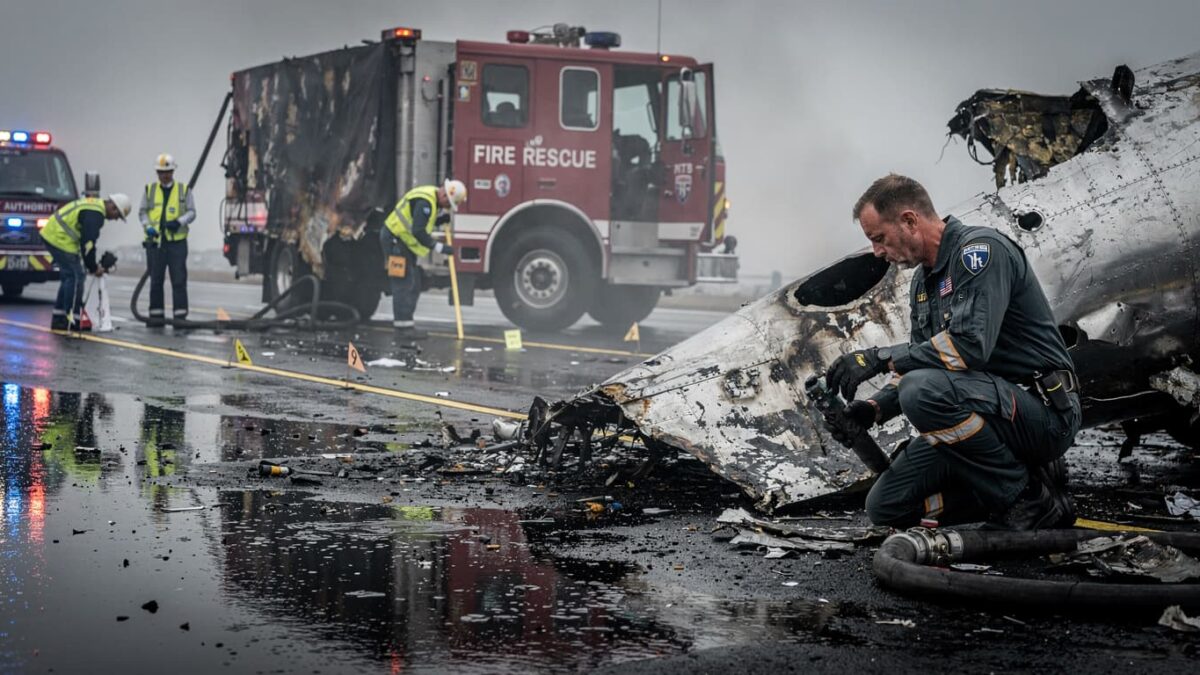
Both pilots died when Air Canada Express Flight 8646 collided with a Port Authority fire truck at LaGuardia Airport on March 22, 2026, at 11:38 p.m. EDT. The Bombardier CRJ900 was traveling at 81–91 knots when it struck the vehicle, destroying the cockpit and forward galley. 41 people were hospitalized; 6 remained under medical care as of March 24. This is LaGuardia’s first fatal accident in 34 years.
The NTSB and Transport Canada are jointly investigating. Runway 4/22 reopened March 26 after a four-day closure, but regional flight disruptions continue as Jazz Aviation redeploys aircraft.
The cockpit section of Jazz Aviation Flight 8646 was obliterated on impact, killing Captain Antoine Forest and First Officer Mackenzie Gunther instantly. The CRJ900 had just touched down on Runway 4 when it collided with a Port Authority firefighting truck crossing the active runway — the aircraft was still decelerating through 150–169 km/h when the collision occurred.
39 passengers and crew were transported to area hospitals with injuries ranging from minor to critical. Air Canada’s March 24 update confirmed 6 remained hospitalized, though the airline has not released details on the nature of injuries or patient identities. The two firefighters in the truck were also hospitalized.
The incident marks the first fatal accident at LaGuardia since March 22, 1992 — exactly 34 years prior — when USAir Flight 405 crashed during takeoff in icy conditions, killing 27.
What the investigation has revealed so far
The National Transportation Safety Board and Transportation Safety Board of Canada opened a joint investigation within hours of the crash. Preliminary findings indicate the fire truck entered the active runway while Flight 8646 was on final approach, though the sequence of events leading to the incursion remains under review.
Runway 4/22 remained closed for four days while investigators documented the wreckage and collected flight data recorder information. The runway reopened at approximately 10 a.m. EDT on March 26, but LaGuardia’s overall capacity remains constrained — a separate ground stop at Newark on March 23 due to smoke in the air traffic control tower compounded regional congestion across the New York airspace.
The FAA has not issued operational directives to other airports, but the NTSB’s preliminary factual report — expected in late April — will determine whether systemic failures in ground operations coordination protocols contributed to the collision. If the report identifies gaps in emergency vehicle coordination during concurrent runway operations, expect FAA mandates affecting all US airports with active firefighting operations.
Air Canada has published updates on passenger support and investigation cooperation, confirming that all hospitalized passengers have been contacted and that the airline is working with authorities to determine the cause.
| Category | Count | Status |
|---|---|---|
| Fatalities (crew) | 2 | Both pilots killed on impact |
| Hospitalized | 41 | 6 remained as of March 24 |
| Discharged | 32 | Released within 24 hours |
| Runway closure | 4 days | Reopened March 26, 10 a.m. |
| Ground speed at impact | 81–91 knots | 150–169 km/h |
How this differs from LaGuardia’s last fatal accident
USAir Flight 405 crashed on takeoff in 1992 due to ice accumulation on the wings — a mechanical and weather-related failure. Flight 8646’s collision represents a fundamentally different failure mode: a ground operations breakdown during an active landing. The 1992 crash led to sweeping changes in de-icing procedures and pilot training on winter operations. This incident will likely trigger a review of runway incursion protocols, particularly how emergency vehicles coordinate with air traffic control during simultaneous operations.
LaGuardia handles approximately 400 daily flights across two runways, making ground coordination critical. The Port Authority of New York and New Jersey operates all firefighting and emergency response vehicles at the airport — the truck involved in the collision was responding to a separate emergency when it entered the active runway.
What to do if you’re booked on Air Canada Express
Jazz Aviation’s CRJ900 fleet remains operational, but aircraft redeployment to cover the damaged plane has reduced frequency on some routes — monitor your booking daily for schedule changes through early April.
- Check flight status 24 hours before departure — Air Canada is proactively rebooking passengers on affected flights, but you may need to accept an alternate airport (Newark or JFK instead of LaGuardia).
- Build connection buffers — if you’re connecting through New York to an international flight, add at least 3 hours to your layover. Regional delays are compounding as LaGuardia works through the backlog.
- Contact Air Canada at 1-800-961-7099 if your flight was canceled or diverted — Canadian Air Passenger Protection Regulations may entitle you to compensation, though the airline may classify this as an “extraordinary circumstance” (third-party vehicle incursion).
- Consider alternate carriers — United and American operate higher frequencies on the Montreal–New York route with larger aircraft (E175/CRJ550), reducing rebooking risk if your Air Canada Express flight is canceled.
Watch: The NTSB’s preliminary factual report, expected late April, will reveal whether systemic failures in LaGuardia’s ground operations contributed to the collision — if so, expect FAA directives that could further disrupt regional flight schedules through summer 2026.
Will Air Canada Express flights to New York be canceled in the coming weeks?
Jazz Aviation’s fleet remains operational, but reduced aircraft availability has led to schedule adjustments on some routes. Air Canada is proactively rebooking affected passengers — check your flight status daily through early April, as the airline works through the backlog caused by the four-day runway closure.
Am I entitled to compensation if my Air Canada Express flight was canceled due to this incident?
Canadian Air Passenger Protection Regulations (APPR) may apply, but Air Canada could classify the collision as an “extraordinary circumstance” caused by a third party (Port Authority vehicle), which would exempt the airline from compensation. Contact Air Canada at 1-800-961-7099 to determine your eligibility based on your specific booking.
Is it safe to fly Air Canada Express after this accident?
Jazz Aviation holds a valid Air Operator Certificate from Transport Canada with no outstanding safety directives as of March 2026. The collision was caused by a ground operations failure (fire truck entering an active runway), not an aircraft mechanical issue or crew error. The NTSB and Transport Canada are investigating to prevent similar incidents, but the CRJ900 fleet itself remains airworthy.