

Asia-Pacific flight crisis: 774 cancellations, 2,146 delays on March 11 signal systemic issues

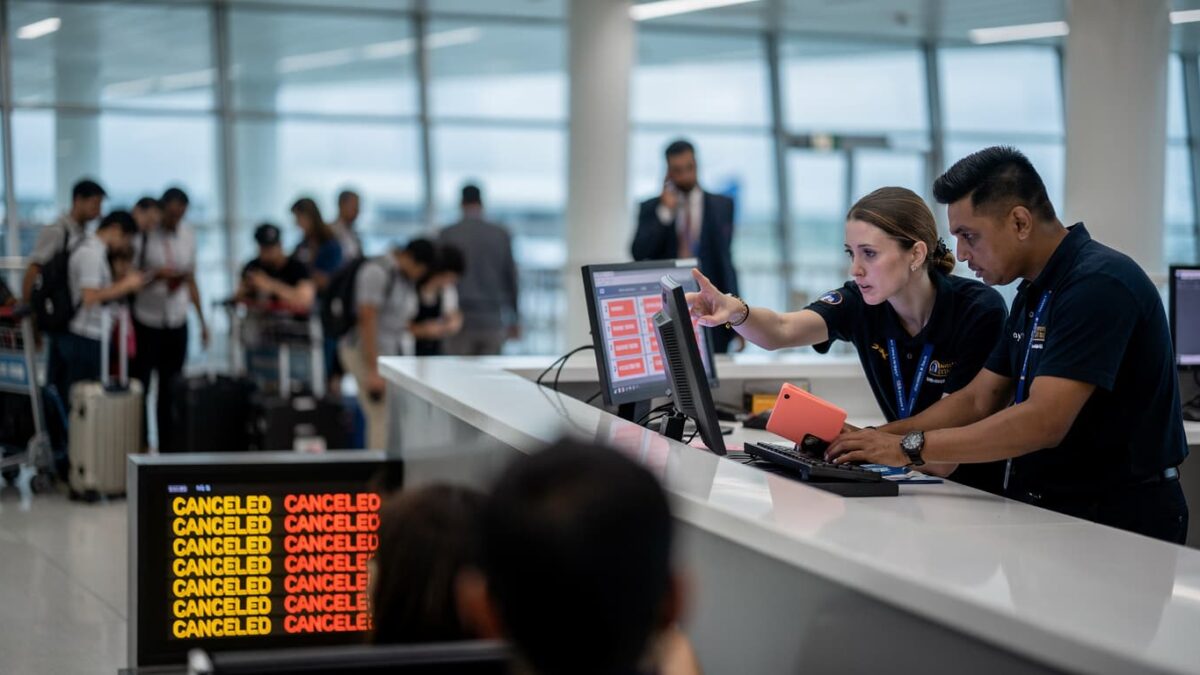
Asia-Pacific aviation remains in crisis through at least March 31, 2026, with 774 flights canceled and 2,146 delayed on March 11 alone across major hubs including Singapore, Shanghai, Bangkok, Delhi, and Kuala Lumpur. Qatar Airways grounded 254 flights during the peak disruption, while Cathay Pacific extended Middle East flight suspensions through month-end, signaling geopolitical tensions and cascading aircraft rotation failures as persistent factors beyond weather.
Singapore Changi absorbed 396 delays with zero cancellations, revealing the crisis is operational rather than infrastructural — less-capitalized airports buckled under identical pressure. Travelers with existing bookings on routes between Asia-Pacific and the Middle East, or within Asia’s major hubs, face minimum 2–4 hour delays and potential rebooking onto alternate carriers.
Multiple waves of flight disruptions across Asia-Pacific that began in late February have escalated into a systemic capacity crisis, with airlines now canceling rather than delaying flights — a structural shift that signals zero operational margin for multi-region shocks.
The March 11 disruption forced carriers to ground aircraft rather than absorb delays because slot allocation revisions and crew duty-time violations left no room for recovery. China’s domestic network collapsed that day, with Air China, China Southern, and China Eastern canceling over 100 flights across Beijing, Shanghai, and Guangzhou, cascading into international routes to the Middle East and Southeast Asia.
Cathay Pacific extended its Middle East flight suspensions through March 31, canceling daily passenger flights to Dubai and Riyadh. This is not a weather decision — it’s a geopolitical one, and it’s not resolving on the timeline airlines initially projected.
How the crisis compounds across Asia’s hub network
The disruption pattern reveals which airports have operational resilience and which are running at capacity with no buffer. Singapore Changi reported 396 delays but zero cancellations on March 11, absorbing the same pressure that forced Kuala Lumpur (155 delays), Shanghai Pudong (111 delays), and Incheon Seoul (100 delays) to buckle under strain.
Low-cost carriers including AirAsia, IndiGo, and Thai AirAsia recorded over 300 delays in early March due to high-frequency networks operating on 30–45 minute turnaround windows. When one flight misses its slot, the entire day’s schedule collapses. Full-service carriers with wider spacing absorbed the same weather and geopolitical shocks without systemic failure.
The March 11 event represents a structural escalation from the January 28 disruption, which recorded 2,975 flight disruptions but only 72 cancellations — primarily delays. The system can no longer absorb simultaneous weather, geopolitical, and staffing pressures through delay alone.
| Hub/Carrier | Delays | Cancellations | Key cause |
|---|---|---|---|
| Singapore Changi | 396 | 0 | Operational resilience absorbed pressure |
| Qatar Airways | Data pending | 254 | Geopolitical + crew duty limits |
| Kuala Lumpur | 155 | Data pending | Slot allocation failures |
| Shanghai Pudong | 111 | Data pending | Domestic network collapse cascaded |
| Incheon Seoul | 100 | Data pending | Aircraft rotation failures |
| Dubai International | 239 | 119 | Geopolitical + weather convergence |
What changed from January to March
On January 28, Asia-Pacific aviation recorded 2,903 delays and 72 cancellations — a disruption absorbed primarily through schedule adjustments. The March 11 event forced airlines to cancel 774 flights because the system had no remaining capacity to delay and recover.
The difference is structural, not seasonal. Airlines operating Asia-Pacific routes are running aircraft rotations with no buffer for multi-region shocks. When China’s domestic network collapsed March 10–11, it cascaded into international routes because the same aircraft serve both networks. Air China, China Southern, and China Eastern canceled over 100 flights domestically, which grounded the wide-body aircraft scheduled for Middle East and Southeast Asia routes the following day.
Chinese carriers have expanded capacity aggressively over the past 18 months, but operational resilience has not kept pace. When disruptions hit, they lack the spare aircraft, crew reserves, and slot flexibility that legacy carriers in Europe and North America maintain as operational insurance.
Protect your connection if you’re routing through Kuala Lumpur
Current situation: Kuala Lumpur recorded 155 delays on March 11, and the hub remains under operational strain through month-end. If you’re routing through KUL on a budget carrier, your connection is at risk.
- Book “Fly-Thru” itineraries only. AirAsia’s Fly-Thru program checks bags through to your final destination and protects you if the first flight is delayed. Booking separate tickets to save $50 is dangerous — if you miss the connection, you lose the second ticket entirely.
- Avoid connections under 3 hours. Airlines are rebooking disrupted passengers onto the next available flight, which means flights that were 60% full yesterday are 95% full today. Tight connections have no recovery margin.
- Check visa requirements before booking. If you miss your connection and must pass immigration to collect bags, you may need a visa entry for Malaysia. Australian and New Zealand passport holders receive visa-free entry, but US and Canadian travelers require an eVisa.
- Monitor CAAC announcements. China’s Civil Aviation Administration is expected to release operational capacity revisions within 7–14 days. If China’s domestic network stabilizes, international cascades to Middle East and Southeast Asia routes will ease.
Watch: If cascades persist beyond April 5, expect airlines to file permanent schedule reductions to Asia-Pacific, signaling structural capacity constraints rather than temporary disruption.
Am I entitled to compensation if my Asia-Pacific flight is canceled?
It depends on where your flight departs. EU261/2004 applies to flights departing EU airports and triggers €250–€600 compensation for cancellations within 14 days, though weather and geopolitical events may exempt airlines. US and Canadian passengers are entitled to rebooking or refund but no automatic compensation for weather-related cancellations. Australian and New Zealand passengers receive rebooking or refund under consumer protection laws, with accommodation and meals required for delays exceeding 3 hours.
Which Asia-Pacific airlines are most affected by the disruptions?
Qatar Airways grounded 254 flights on March 11, the highest single-carrier cancellation count. Cathay Pacific extended Middle East flight suspensions through March 31. China’s three major carriers — Air China, China Southern, and China Eastern — canceled over 100 domestic flights March 10–11, cascading into international routes. Low-cost carriers including AirAsia, IndiGo, and Thai AirAsia recorded over 300 delays due to tight turnaround schedules with no recovery margin.
Should I avoid booking through certain hubs right now?
Singapore Changi absorbed 396 delays with zero cancellations on March 11, demonstrating superior operational resilience. Kuala Lumpur, Shanghai Pudong, and Incheon Seoul recorded significant delays and remain under strain through month-end. Dubai International recorded 119 cancellations and 239 delays due to geopolitical factors. If you’re booking a new trip, prioritize Singapore or direct routes that avoid Middle East hubs until April 5.
What should I do if my flight is canceled while I’m already traveling?
Contact your airline immediately via mobile app or phone — airport counter queues are 2+ hours. Airlines must rebook you on the next available flight at no additional cost or provide a refund. If you’re stranded overnight, EU/UK departures are entitled to accommodation and meals under EU261. US/Canadian and AU/NZ passengers should request accommodation vouchers, though airlines may cite extraordinary circumstances to deny them. Document all expenses for potential reimbursement claims.