
Batik Air, Malaysia Airlines, Cathay Pacific, United, China Airlines, and More Trigger Asia Travel Disruption


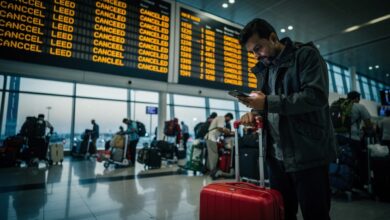
Fifty-eight flights were cancelled and 2,120 delayed across Asia on February 28, 2026, stranding passengers at Jakarta, Kuala Lumpur, Bangkok, and Tokyo. Batik Air suffered the worst disruption with 23 cancellations and 75 delays, while AirAsia saw 5 cancellations and 213 delays at Kuala Lumpur International Airport alone. Malaysia Airlines, Japan Airlines, All Nippon Airways, Garuda Indonesia, and Thai Airways all reported significant operational impacts.
This follows 89-93 cancellations the previous day, creating cascading crew and aircraft positioning problems. The full article covers which routes face the highest risk of further delays, how to rebook immediately, and compensation rights for stranded travelers.
A wave of flight cancellations swept across eight Asian countries on February 28, 2026, leaving thousands of passengers stranded at major hubs. The disruption hit low-cost carriers hardest, with Batik Air cancelling 23 flights and delaying 75 more across its Jakarta and Makassar network.
Travelers should check flight status immediately via Flightradar24 or airline apps. Batik Air passengers can rebook at managebooking.batikair.com.my, while Malaysia Airlines operates a 24-hour contact centre at +603-7843 3000.
The disruption spans Indonesia, Malaysia, Singapore, Japan, Thailand, India, and the UAE. Jakarta’s Soekarno-Hatta Airport recorded 18 Batik Air cancellations and 192 delays. Kuala Lumpur International Airport saw 9 cancellations and 436 delays, with AirAsia accounting for 5 cancellations and 213 delays.
Which airlines and routes face the worst disruption
Batik Air leads the cancellation count with 23 flights grounded and 75 delayed, concentrated on Jakarta-Makassar and domestic Indonesian routes. Lion Air, its sister carrier, reported 113 delays without cancellations, suggesting crew shortages rather than weather as the primary cause.
Japan Airlines cancelled 1 flight and delayed 105 more at Tokyo and Kumamoto. All Nippon Airways cancelled 3 flights with 66 delays. Garuda Indonesia grounded 7 flights with 13 delays at Jakarta.
AirAsia’s 213 delays at Kuala Lumpur International Airport represent the single largest bottleneck for connecting passengers. Affected cities include Phuket, Kolkata, Dubai, Fukuoka, and Taipei, where knock-on effects from crew and aircraft repositioning compound the original delays.
The full disruption tally across the region reached 2,120 delays and 58 cancellations on February 28 alone.
Why low-cost carriers struggle with cascading delays
This disruption follows 89-93 cancellations and 1,182-1,400 delays on February 27, creating a compounding crisis for airlines operating high-utilization schedules. Low-cost carriers like AirAsia and Batik Air typically fly aircraft 12-14 hours daily with minimal ground time, leaving no buffer when weather or operational issues strike.
A single cancelled morning flight forces crew out of position for afternoon departures. Aircraft stuck in Jakarta cannot operate evening flights from Kuala Lumpur. The effect multiplies across networks designed for maximum efficiency rather than resilience.
Full-service carriers like Japan Airlines and Malaysia Airlines maintain spare aircraft and crew reserves, explaining why their cancellation rates remain lower despite similar delay counts. Winter aviation conditions across Asia — fog in Delhi, thunderstorms in Southeast Asia, snow in Japan — strain the entire system during peak travel periods.
What to do if your flight is cancelled or delayed
- Check real-time status on Flightradar24 or your airline’s mobile app before leaving for the airport — gate agents cannot rebook faster than online systems during mass disruptions.
- Arrive 4 hours early at Jakarta Soekarno-Hatta or Kuala Lumpur International Airport if connecting through affected hubs — rebooking queues exceed 2 hours during peak disruption.
- Retain all boarding passes and receipts if your flight qualifies for EU Regulation 261 or UK261 compensation (flights departing EU/UK airports or arriving on EU/UK carriers). Delays exceeding 3 hours trigger €250-600 claims via services like AirHelp.
- Request meal vouchers and hotel accommodation in writing if your delay exceeds 5 hours — airlines must provide care regardless of disruption cause under most Asian consumer protection rules.
Can I claim compensation for weather-related cancellations in Asia?
Most Asian airlines classify weather as an extraordinary circumstance exempting them from compensation, but they must still provide meals, accommodation, and rebooking. EU/UK rules apply stricter standards if your flight departs from or arrives in Europe on a European carrier, regardless of the disruption cause.
Which connecting airports should I avoid during this disruption?
Jakarta Soekarno-Hatta and Kuala Lumpur International Airport face the highest delay counts. If rebooking, consider routing through Singapore Changi or Bangkok Suvarnabhumi, which reported fewer operational issues on February 28. Tokyo Narita remains stable despite Japan Airlines delays at secondary airports.
How long do cascading delays typically last after mass cancellations?
Low-cost carriers require 48-72 hours to restore normal operations after disruptions of this scale, as crew and aircraft must return to their scheduled positions. Full-service carriers with spare capacity recover within 24-36 hours. Expect residual delays through March 2, 2026.
Will travel insurance cover rebooking costs if I miss a connection?
Standard policies cover missed connections only if the delay exceeds the minimum threshold stated in your policy (typically 6-12 hours) and you allowed the recommended connection time. Policies rarely cover convenience rebooking to avoid predicted delays. Read your certificate of insurance for specific terms.