US Secretary of State Marco Rubio met Indian Foreign Minister Subrahmanyam Jaishankar in New Delhi on Saturday, May 23, 2026, citing progress in the preceding 48 hours on a framework to de-escalate tensions around the Strait of Hormuz — the chokepoint through which approximately one-fifth of global petroleum liquids pass daily, according to the US Energy Information Administration. Rubio signalled the possibility of “good news” within hours, while the two ministers also addressed a bilateral trade deal, visa access for Indian workers, and maritime security.
The talks come as Washington insists Iran will never be permitted to acquire a nuclear weapon. India’s position — uninterrupted crude flows while preserving ties with both Gulf suppliers and Tehran — makes New Delhi an indispensable interlocutor in any Hormuz de-escalation.
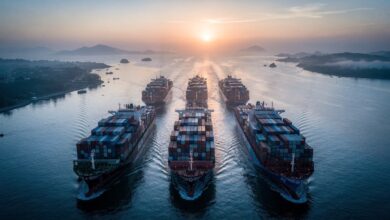
The fastest way to move global markets is still through a waterway 33 kilometres wide. When Marco Rubio stood beside Jaishankar in New Delhi on Saturday and said progress had been made toward resolving the Strait of Hormuz situation, he was not delivering a diplomatic courtesy — he was signalling that the world’s most critical oil chokepoint may be stepping back from the edge. Rubio said “good news” could follow within hours of the press conference, a phrase that carries unusual weight from a sitting US secretary of state on an active security crisis.
The bilateral meeting covered an agenda that reflects how thoroughly the Middle East crisis has colonised every other diplomatic conversation: trade deal timelines, Indian worker visas, energy procurement, and maritime security were all on the table alongside Iran. Jaishankar confirmed that discussions with Prime Minister Narendra Modi the previous day had already covered global and regional issues, with the ministerial session deepening that work.
For Western governments and businesses, the stakes are not abstract. A sustained disruption to Hormuz shipping would transmit into tanker insurance costs, freight rates, and energy prices within days — a sequence European capitals and North American refiners have already experienced in recent months.
RELATED



The details
Rubio’s central message was non-negotiable on one point: Iran cannot be permitted to develop a nuclear weapon. He described attacks on commercial vessels in the strait as “totally illegal” and said Washington had made tangible progress on an outline framework — without specifying its terms — that could reduce the immediate risk around Hormuz. The Joint Comprehensive Plan of Action, which Iran and the P5+1 concluded on July 14, 2015, with implementation beginning on January 16, 2016, remains the reference architecture for any formal nuclear agreement, though the US withdrew from it in 2018. The current diplomatic effort operates in the shadow of that framework without formally resurrecting it.
On trade, Jaishankar confirmed both sides discussed concluding a bilateral deal “at an early date.” Under the current executive-to-executive format — there is no ratified free trade agreement between Washington and New Delhi — outcomes can range from sectoral arrangements to a limited package, all implementable without congressional ratification. Rubio also extended a White House invitation from President Donald Trump to Prime Minister Modi for a visit “in the near future,” a signal of the relationship’s political priority for both capitals.
IAEA Director General Rafael Mariano Grossi has consistently warned through 2025 and into 2026 that Iran’s cooperation with nuclear inspectors remains the central variable in any diplomatic pathway. His public position: transparency gaps are not a technical inconvenience but a proliferation risk that can close off negotiating space rapidly. The Iran file formally operates under UN Security Council Resolution 2231, which endorsed the JCPOA and governs snapback and dispute procedures — giving the nuclear question an international legal wrapper that outlasted the US withdrawal from the deal itself. More detail on the Hormuz energy exposure is available from the US Energy Information Administration’s chokepoint analysis.
Three governments, one narrow waterway
The diplomatic geometry here is worth mapping precisely, because the interests only partially overlap. Washington wants Hormuz de-escalated without conceding on nuclear non-proliferation — a combination that requires Iran to accept constraints without receiving the full sanctions relief Tehran has sought. New Delhi wants uninterrupted crude flows; India has maintained ties with both Gulf Arab suppliers and Iran as a matter of longstanding strategic autonomy, and that dual positioning gives it a role in this conversation that neither Washington nor Tehran can easily replicate. Tehran, for its part, wants leverage: deterrence, some form of sanctions relief, and strategic ambiguity. The three interests converge only at the narrow point where none of the governments wants a wider regional war.
Washington’s approach has been to mix pressure with diplomacy. Sanctions enforcement — the Treasury Department’s stated posture has been to constrain Iran’s oil revenues while keeping diplomatic channels open — runs alongside public signals of progress. European capitals have generally aligned with the IAEA and UN framework rather than offering an independent track. Australia and the United Kingdom have stayed close to the US position on both sanctions and maritime security. New Delhi’s calculation is different: it has watched Washington’s recent engagement with both Beijing and Islamabad with unease, and the Rubio visit is partly a reassurance exercise for an Indian government that wants to know it remains a priority.
Successive US administrations have sought to draw India closer as a counterweight to Chinese influence in the Indo-Pacific — a project that gained momentum under Trump’s first term and has continued despite the tariff friction that strained ties after Washington imposed steep duties on Indian goods. The visa issue Jaishankar raised is not incidental: Indian technology workers face significant access barriers to the US market, and resolving that is a domestic political priority for Modi.
Beyond the headline
The bigger picture
This is what great-power de-risking looks like in 2026: Washington is attempting to contain a Middle East flashpoint while keeping India close as both a strategic partner and a commercial one. The result is a foreign-policy triangle where energy security, nuclear restraint, and trade bargaining are being negotiated simultaneously — and where progress on any one dimension depends on not blowing up the others.
The reach
For European and Asian importers, the immediate exposure is not diplomacy but shipping costs, fuel procurement, and industrial input prices if Hormuz jitters persist. For Western governments, the issue reaches into sanctions enforcement, naval posture, and inflation management — all of which can tighten fast if oil flows become uncertain. The earlier Hormuz ceasefire’s effect on European aviation fuel prices showed how quickly the strait’s status transmits into consumer-facing costs.
Our take
This is not just another India-US bilateral meeting with Middle East language attached. Rubio’s “good news within hours” framing is either the most consequential thing said in New Delhi on Saturday or a diplomatic overclaim that will need walking back — and in either case, the trade and visa agenda that fills the official readout is secondary to the question of who keeps Hormuz calm without looking weak on Iran. The real leverage in this conversation belongs to whoever can answer that question.
What this means for energy markets, trade, and Western governments
With Rubio’s “good news within hours” framing setting a short diplomatic clock as of Saturday, May 23, Western governments, businesses, and investors face decisions across three distinct tracks simultaneously.
- Monitor official US statements on Hormuz within days: The US Department of State’s Iran nuclear and diplomatic page is the primary channel for any formal announcement. A published framework or ceasefire confirmation would signal shipping markets can begin unwinding the disruption premium; silence beyond 72 hours suggests diplomacy has moved behind closed doors and uncertainty pricing persists.
- Track tanker insurance and freight rates as the leading indicator: Energy traders and procurement teams should watch Gulf tanker rates and war-risk insurance premiums before headline announcements — these markets price in Hormuz risk faster than diplomatic communiqués. A sustained drop would confirm de-escalation is credible; a spike would precede any official acknowledgement of breakdown.
- Assess US-India trade deal exposure by sector: The executive-to-executive format of current US-India trade negotiations means sectoral agreements on technology, pharmaceuticals, or agriculture can move without congressional ratification. Western companies operating in either market should identify which product categories are under active negotiation and what preferential access shifts could mean for their competitive position.
- Watch the IAEA’s Iran safeguards reporting: IAEA Director General Grossi’s public statements — available through the IAEA newsroom — remain the most authoritative signal of whether Iran’s nuclear transparency is improving or deteriorating. Any deterioration in inspector access would close diplomatic space rapidly, regardless of Rubio’s optimism.
- Indian worker visa constraints have corporate implications: Jaishankar’s explicit raising of visa barriers for Indian workers signals this is a live negotiating item. Western technology companies with significant Indian talent pipelines — in the US and in India — should track whether any executive-level visa facilitation emerges from the current diplomatic momentum.
FAQ
Why does the Strait of Hormuz matter so much to global energy prices?
The Strait of Hormuz is the world’s most critical oil chokepoint: approximately one-fifth of global petroleum liquids consumption passes through it daily, according to the US Energy Information Administration. Any credible disruption — even without a physical blockage — raises tanker insurance premiums, freight rates, and energy hedging costs across European and North American markets within days, feeding through to fuel bills and industrial input prices.
What is the current legal framework governing the Iran nuclear issue?
The Iran nuclear file formally operates under UN Security Council Resolution 2231, which endorsed the Joint Comprehensive Plan of Action concluded on July 14, 2015. That resolution’s dispute-resolution architecture — including snapback sanctions procedures — remains in force even after the US withdrew from the JCPOA in 2018, giving the nuclear question an international legal wrapper that any new agreement would need to navigate or supersede.
What form would a US-India trade deal actually take, and how quickly could it happen?
Current US-India trade negotiations operate under executive-to-executive authority rather than a full ratified free trade agreement. This means both governments can implement sectoral arrangements — covering tariffs, market access, or visa facilitation — without congressional approval in Washington or parliamentary ratification in New Delhi. The practical ceiling is whatever both sides can deliver administratively, which can move faster than a treaty but carries less legal permanence.
Why does India’s position matter specifically in the Iran-Hormuz situation?
India maintains active commercial and diplomatic ties with both Gulf Arab oil suppliers and Iran, a product of its longstanding strategic autonomy doctrine. That dual positioning gives New Delhi a channel to Tehran that Washington cannot replicate directly. India also depends heavily on Gulf crude imports, meaning it has a direct economic stake in Hormuz stability — making it a natural interlocutor and a government whose alignment Washington actively courts on this issue.