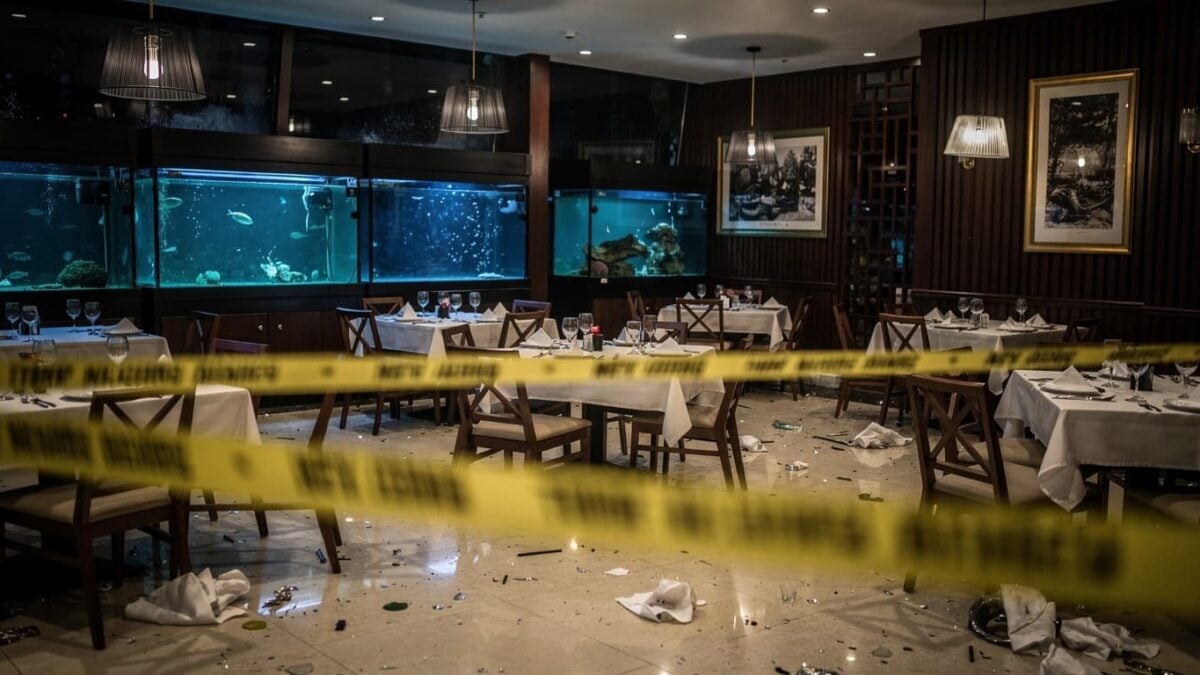
Lorenzo Lomalu, the 24-year-old leader of Sydney’s Coconut Cartel, was shot dead in a seafood restaurant in Ho Chi Minh City on the night of May 23, 2026, in what New South Wales Police sources believe was an assassination ordered by the rival Alameddine-linked network. The killing marks the first major test of the Australia–Vietnam Comprehensive Strategic Partnership, signed on March 7, 2024, which explicitly committed both governments to deeper cooperation on transnational crime and law enforcement.
Australia and Vietnam have a Mutual Legal Assistance in Criminal Matters Treaty in force since July 5, 2015, but no bilateral extradition treaty — a gap that now sits at the centre of the investigation. Whether Hanoi moves quickly to charge suspects will determine whether the 2024 partnership holds any operational weight.
A Sydney gangland feud crossed an international border on the night of May 23, 2026, when Lorenzo Lomalu was shot dead inside a busy Ho Chi Minh City restaurant — an assassination that Australian police believe was orchestrated from Sydney and executed thousands of kilometres from the streets where the war began. Lomalu, 24 years old, led the Coconut Cartel, a Pacific Islander-linked criminal network that publicly declared war on the Alameddine-linked organisation in January 2026, triggering a wave of shootings, firebombings, and kidnappings across Sydney in the months that followed.
The killing is not simply another chapter in an increasingly brutal domestic feud. It is the moment that feud became a transnational law-enforcement problem — and an immediate test of whether the diplomatic architecture Australia and Vietnam built in March 2024 can do anything useful under pressure.
New South Wales Police Commissioner Karen Webb has warned repeatedly since 2023 that organised crime networks in Sydney have shifted their targeting upward, going after the figures who direct violence rather than those who carry it out. Lomalu’s murder suggests his rivals reached the same conclusion — and were willing to act on it abroad.
RELATED
The treaty framework now under pressure
The legal architecture governing this investigation is real but limited. The Mutual Assistance in Criminal Matters Act 1987 (Cth) designates Australia’s Attorney-General’s Department as the central authority for all outgoing and incoming legal assistance requests, assessed against criteria including dual criminality and the impact on active domestic investigations. Vietnam’s 2015 Criminal Procedure Code assigns responsibility for handling foreign requests in serious criminal cases — murder and organised crime both qualify — to the Supreme People’s Procuracy and the Ministry of Public Security.
Under the 2015 treaty, the two countries can exchange evidence, witness statements, and banking data through those channels. What they cannot do is compel extradition: there is no bilateral extradition treaty between Australia and Vietnam, meaning any suspect identified in Ho Chi Minh City can only be brought to Australian justice through Vietnamese prosecution or through case-by-case diplomatic arrangements. That constraint will shape every decision investigators make over the coming weeks.
Australian Federal Police liaison officers based in Hanoi provide an operational shortcut, facilitating direct information-sharing outside the slower formal treaty process. Andrew Goledzinowski, Australia’s Ambassador to Vietnam, has previously identified law-enforcement cooperation as a central pillar of the bilateral relationship — a statement that now carries operational rather than rhetorical weight.
Taskforce Magnus, established by New South Wales Police in August 2023 specifically to investigate public-place shootings and firebombings linked to Sydney’s rival crime networks, had already charged 36 people and seized 68 firearms by March 2024. The taskforce’s files on both the Coconut Cartel and the Alameddine network represent the intelligence base Australian investigators will now be sharing with Ho Chi Minh City police under the Australia–Vietnam mutual legal assistance framework.
How Australian crime networks reached Southeast Asia
The pattern here is not new, but Lomalu’s murder makes it impossible to ignore. Australian organised crime networks — historically concentrated in domestic drug markets and extortion — have over the past decade treated Southeast Asia as an operational buffer zone: a place to rest, plan, and spend money beyond the reach of Australian warrants. The Coconut Cartel’s use of Vietnam fits that template precisely.
What has changed is the diplomatic environment. The elevation of Australia–Vietnam ties to a Comprehensive Strategic Partnership on March 7, 2024 was framed in Canberra primarily as a trade and security response to regional power shifts. Its law-enforcement provisions were largely unnoticed at the time. A gangland assassination in a Ho Chi Minh City restaurant has now made those provisions the most consequential part of the document.
The precedent that matters here is not another Sydney shooting. It is closer to the killing of a key witness in the SriLankan Airlines bribery case — found dead in Colombo in May 2026 just hours after a re-arrest order — which demonstrated how criminal cases with cross-border dimensions can unravel when institutional cooperation fails at the critical moment. In both cases, the question is not whether the legal framework exists. It is whether the political will to use it does.
Vietnam’s calculation is straightforward: a foreign gang war being settled on Vietnamese soil is a sovereignty problem as much as a policing one. Ho Chi Minh City police have strong institutional incentives to move quickly — and to be seen doing so.
Beyond the headline
The bigger picture
A Sydney gang boss dying in a Ho Chi Minh City restaurant is not a lurid outlier — it is a snapshot of how Australian crime networks have matured into genuinely transnational enterprises that treat Southeast Asia as an extension of their operational territory. The incident illustrates how domestic law-and-order politics in wealthy countries now collide directly with the policing capacity and legal systems of their regional partners, whether those partners are ready for it or not.
The reach
For Australians and other Western visitors, this raises the realistic possibility of being caught in the crossfire of foreign score-settling, or facing tighter scrutiny at borders and in entertainment districts as Vietnamese, Thai, and Cambodian police react to the presence of Australian criminal networks in their jurisdictions. For banks, remittance providers, and cryptocurrency platforms servicing Australian clients, the case will accelerate compliance demands as investigators follow money trails stretching from Sydney to Ho Chi Minh City, Bangkok, and Manila.
Our take
This killing will harden political appetite in Canberra for aggressive organised-crime policing at home and more intrusive law-enforcement partnerships across Southeast Asia — and that instinct is not wrong. But dramatic arrests of gunmen have never dismantled a syndicate; the Taskforce Magnus figures of 36 charged and 68 firearms seized demonstrate the limits of that approach. Unless the Australia–Vietnam partnership pivots toward financial disruption and corruption — following the money rather than the shooters — the cycle of spectacular overseas hits will continue while syndicate structures quietly adapt around them.
What this means for Australians in Southeast Asia
With Vietnamese police now managing an active murder investigation involving Australian nationals and potential Australian suspects, and Sydney bracing for retaliatory violence, the situation carries immediate implications for travellers, financial institutions, and anyone with professional dealings in the region.
- Monitor New South Wales Police and Australian Federal Police statements closely: Any announcement of new Taskforce Magnus operations or joint Australian–Vietnamese enforcement actions in the coming days will signal that authorities believe retaliatory violence in Sydney is imminent. The NSW Police newsroom at police.nsw.gov.au is the primary official channel.
- Australian travellers with any criminal history should review their position: Under the 2024 Comprehensive Strategic Partnership, Vietnamese authorities are likely to be more responsive to Australian requests for information on specific individuals. Quiet scrutiny of young male Australian visitors at Vietnamese border points is a plausible near-term response.
- Financial institutions servicing Australian clients in Southeast Asia should expect increased compliance requests: The mutual legal assistance treaty allows Australian investigators to request banking data from Vietnamese authorities. Remittance providers, crypto platforms, and regional banks transiting funds through Singapore’s Changi corridor or Kuala Lumpur may face expanded monitoring of Australian-linked accounts.
- Businesses operating in Ho Chi Minh City’s hospitality sector should note the security environment: A high-profile gangland assassination in a busy restaurant is precisely the kind of incident that prompts Vietnamese authorities to increase visible policing in tourist and nightlife districts — a short-term disruption to normal operations.
- Track the extradition gap: Australia has no bilateral extradition treaty with Vietnam. Any suspects identified in this investigation can only face Australian justice through Vietnamese prosecution or ad hoc arrangements. DFAT’s international crime cooperation guidance at dfat.gov.au is the authoritative reference for how this process works in practice.
FAQ
Can Australia extradite suspects from Vietnam if they are identified in the Ho Chi Minh City murder?
No. Australia and Vietnam have no bilateral extradition treaty. Any suspect identified in Vietnam can only face Australian justice if Vietnam chooses to prosecute them domestically or if both governments reach a specific case-by-case arrangement. Australia’s Mutual Assistance in Criminal Matters Act 1987 allows evidence-sharing and banking data requests, but it does not compel Vietnam to hand over individuals for trial in Australia.
What is Taskforce Magnus and how does it connect to this killing?
Taskforce Magnus is a dedicated New South Wales Police unit established in August 2023 to investigate public-place shootings and firebombings linked to Sydney’s rival crime networks, including those associated with the Alameddine family. By March 2024 it had charged 36 people and seized 68 firearms. Its intelligence files on both the Coconut Cartel and the Alameddine network are the primary material Australian investigators will share with Vietnamese authorities under the bilateral legal assistance treaty.
How does the 2024 Australia–Vietnam Comprehensive Strategic Partnership affect this investigation?
The partnership, signed on March 7, 2024, formally committed both governments to deeper cooperation on transnational crime, law enforcement, and cybersecurity. It does not create new extradition powers, but it establishes a political framework that makes it harder for either side to treat this killing as a routine consular matter. Australian Federal Police liaison officers in Hanoi can use the partnership’s provisions to facilitate faster operational information-sharing outside the slower formal treaty process.
Should Western travellers be concerned about visiting Ho Chi Minh City following this incident?
The immediate risk to unconnected Western visitors is low. The killing was targeted — Lomalu was ambushed while dining with associates — not indiscriminate. The more realistic effect for ordinary travellers is increased police visibility in entertainment districts and potentially tighter scrutiny of Australian nationals at Vietnamese border points as authorities respond to the presence of foreign criminal networks operating in the country.