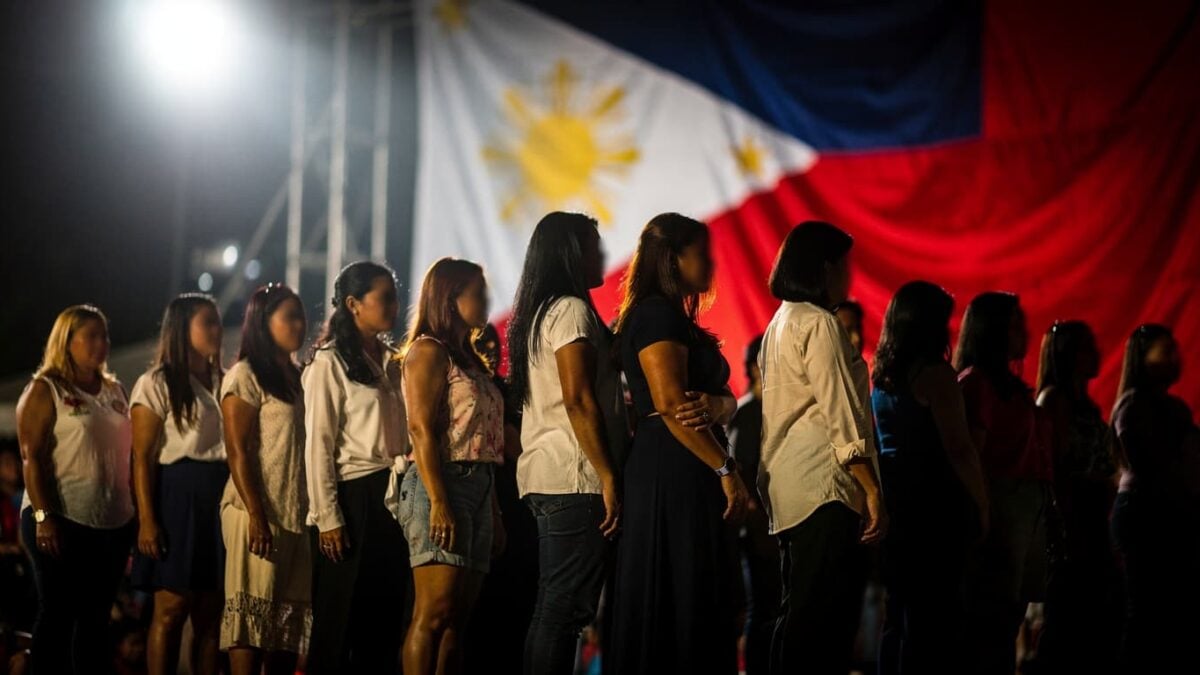
The 2026 Miss Universe Philippines title, won by Bea Millan-Windorski — a half-Filipina, half-Polish-German woman raised in the United States who previously represented the US at a Miss Earth competition — has ignited a national debate about diaspora identity, colonial beauty standards, and who holds the right to represent a country that claims more pageant titles than any other in Asia. The Philippines has won four Miss Universe crowns (in 1969, 1973, 2015, and 2018), and the contest carries a weight in Filipino public life that has no close equivalent elsewhere in the world.
Millan-Windorski is legally eligible: Miss Universe Philippines rules require only a valid Philippine passport and citizenship. The backlash, however, is about something the rulebook cannot settle — who gets to be Filipino enough.
When Bea Millan-Windorski was crowned Miss Universe Philippines in 2026, the applause barely had time to fade before the criticism arrived. She had grown up in the United States, held a Polish-German father, and — the detail that sharpened the debate most — had previously competed as a US representative at a Miss Earth pageant. To her detractors, the crown was an act of opportunism. To her defenders, it was proof that Filipino identity travels.
The dispute is not, at its core, about one woman. It is about a country of more than 110 million people, with a diaspora estimated at over 10 million living abroad, that has built pageantry into a form of national expression — and that must now decide whether the women who embody it need to have lived it.
What makes the controversy legible to outsiders is the buried question beneath it: in a nation whose modern identity was forged by 330 years of Spanish colonial rule, followed by American occupation, followed by mass labour emigration, what does an “authentic” Filipino face even look like?
RELATED


The details
Millan-Windorski’s eligibility is not in dispute on paper. Official competition rules published by the Miss Universe Philippines Organization (MUPO) specify that candidates must be Filipino citizens — natural-born or naturalised — aged between 18 and 28 and holding a valid Philippine passport. The Philippines’ Republic Act No. 9225, the Citizenship Retention and Re-acquisition Act of 2003, allows Filipino-born migrants and their children to hold Philippine citizenship while residing abroad, giving diaspora contestants a clear legal footing.
The MUPO itself is a relatively new power centre. Binibining Pilipinas Charities, Inc. (BPCI), founded in 1964 by Stella Marquez-Araneta, held the Miss Universe Philippines franchise for more than five decades before MUPO took over the national licence from the Miss Universe Organization in 2019. That franchise transfer intensified competition between rival pageant camps and raised the stakes around who each organisation crowns as a national symbol.
At the international level, the Miss Universe Organization itself has been reshaping eligibility norms. Under Thai media entrepreneur Anne Jakrajutatip, who acquired the franchise in 2022, the 72nd Miss Universe held in El Salvador in November 2023 was the first to allow married women, mothers, and divorced women to compete. At that same edition, more than 10 contestants were diaspora members or dual nationals, signalling that transnational identities have become structurally normal at the top tier of the competition.
Ariella Ara Arida, who was crowned Miss Universe Philippines in 2013 and now serves as the organisation’s National Director for Training and Development, told the BBC’s Asia Specific podcast that the decision ultimately rests with judges, not public sentiment. “When all is said and done, it really boils down to what the judges think of the candidate,” she said.
Why the Philippines became a pageant powerhouse
Jayeel Cornelio, Associate Professor of Development Studies at Ateneo de Manila University, argues that Filipino enthusiasm for pageants functions as a form of aspirational nationalism: queens become symbolic overseas Filipino workers (OFWs) of beauty, projecting success and respectability internationally in a way that mirrors the country’s labour-export economy. Katrina Alba, Assistant Professor of Sociology and Anthropology at the same university, adds that pageants offer women from modest backgrounds a rare path to endorsements, upward mobility, and political capital — which is precisely why debates about winners quickly become emotionally charged arguments about class and representation.
A 2023 Social Weather Stations survey found that over 60% of adult Filipinos reported regularly following at least one major international beauty pageant, with viewership strongest among women and lower-income households. A 2022 Ateneo Policy Center study on youth civic life found that many respondents criticised pageants as sexist while still engaging with them on social media — a tension that mirrors the Millan-Windorski debate itself.
Rico Hizon, broadcaster and former BBC Asia anchor, traces his own obsession to Margie Moran’s Miss Universe win in 1973 — the country’s second title after Gloria Diaz in 1969. “It’s a cultural fascination,” he told Asia Specific. “Even oil companies have their own beauty pageants.” That ubiquity, from university campuses to provincial fiestas, is the infrastructure that produces world-class competitors: Filipino trainers are now sought out by international contestants who travel to Manila specifically for coaching.
Beyond the headline
The bigger picture
This dispute is really about who gets to define “the Filipino” in an era when millions live abroad and identities are transnational. Pageants have become one of the few mass spectacles where that definition is made visible — and contested — in real time, forcing a reckoning with class, colour, language, and migration hierarchies that official politics rarely addresses so directly.
The reach
Arguments over a Filipina American queen echo wider Western debates about representation in film, sport, and politics, where diasporic or dual-national figures routinely face authenticity tests. For brands, broadcasters, and cultural institutions that court global audiences, the Philippine case is a reminder that diversity casting without deeper engagement with local identity politics can quickly generate the backlash it was meant to prevent.
Our take
Treating pageant eligibility as a purity test misreads how Filipino identity has always been shaped by movement, mixing, and reinvention. The backlash reveals genuine grievances about inequality and the long shadow of colonial aesthetics, but scapegoating a diaspora winner obscures the real power holders: the organisers, sponsors, and media franchises that profit from beauty nationalism while doing little to broaden whose stories — and bodies — are seen as truly Filipino.
What the pageant debate tells Western audiences about Filipino identity
With the MUPO’s next national search cycle expected to be announced in late 2026, the eligibility rules that govern who can compete are under more scrutiny than at any point since the franchise changed hands in 2019.
- Watch the eligibility rules: The MUPO’s official terms and conditions are the document to monitor. If residency or prior-representation clauses are added before the next cycle, it will signal organisers responding to authenticity critics. Unchanged rules will confirm that global branding goals are winning the internal argument.
- Understand the diaspora dimension: For the estimated 4 million Filipinos living in the United States alone, a diaspora-raised winner is a mirror of their own hyphenated identity. Community media in the US, Canada, and the UK will track this story in ways that mainstream Western outlets may not — it is a useful barometer of diaspora sentiment on belonging and citizenship.
- Context for brands and media: Companies and broadcasters entering the Philippine market — or courting its diaspora — should treat this debate as a live case study in how identity politics operates in a country where colonial history, labour migration, and social media intersect at high speed. Sponsoring pageants without understanding that context carries reputational risk.
- The colourism question is unresolved: Skin-whitening products remain a multi-billion-peso industry in the Philippines, and the preference for lighter-skinned or mixed-race winners is documented, not merely alleged. Western beauty brands operating in the Philippine market face a specific question: whether their marketing reinforces or challenges the hierarchy this controversy has put back in the spotlight.
- Travel and cultural context: Visitors to the Philippines — particularly around pageant season — will find the contest covered with the intensity of a general election. For travellers interested in understanding Philippine popular culture, the expanded Avios redemption options on Philippine Airlines now make reaching Manila more accessible for points collectors, with Qatar Airways Privilege Club members able to book award seats through the carrier’s online flow.